FONT-CY BAG TUTORIAL

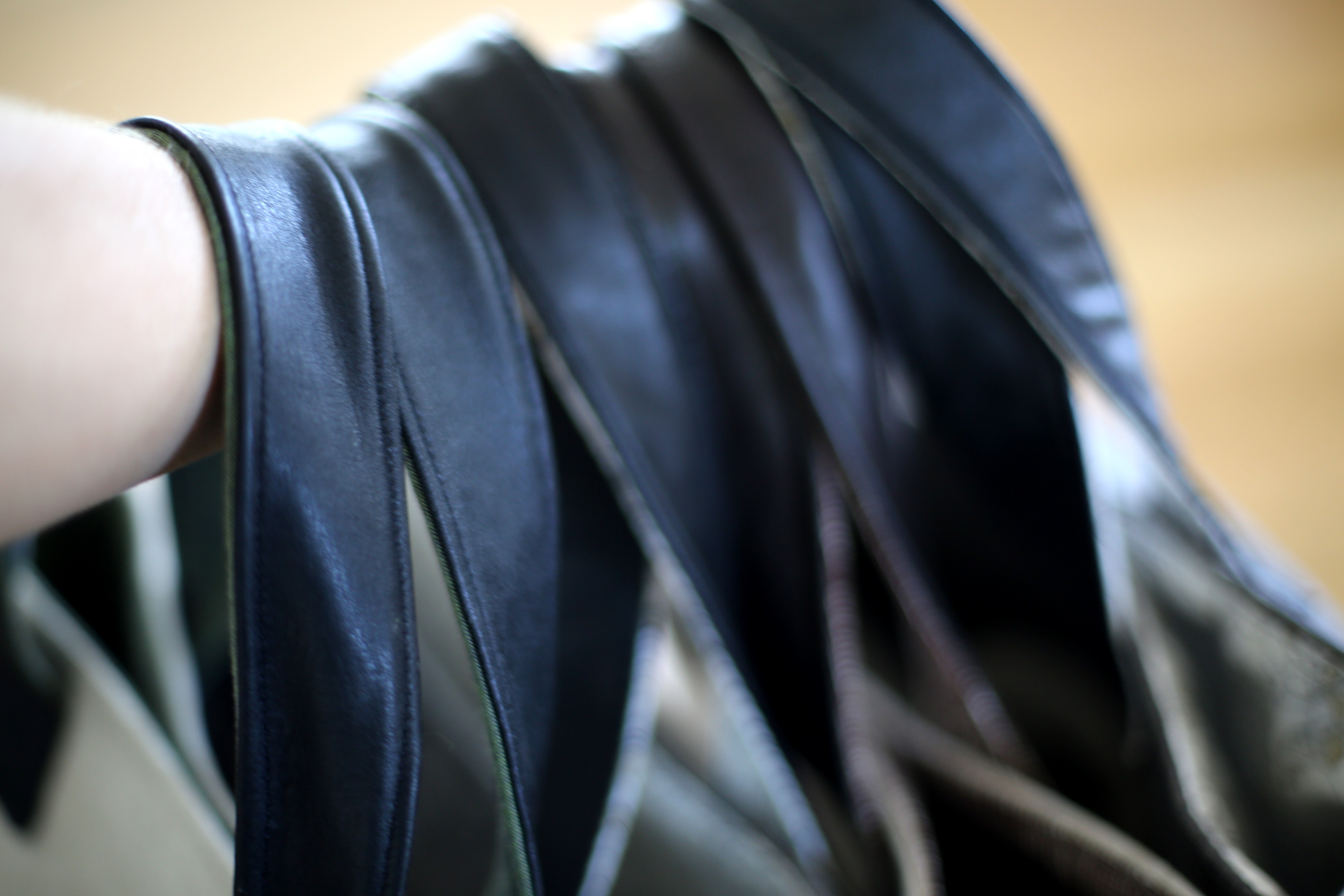
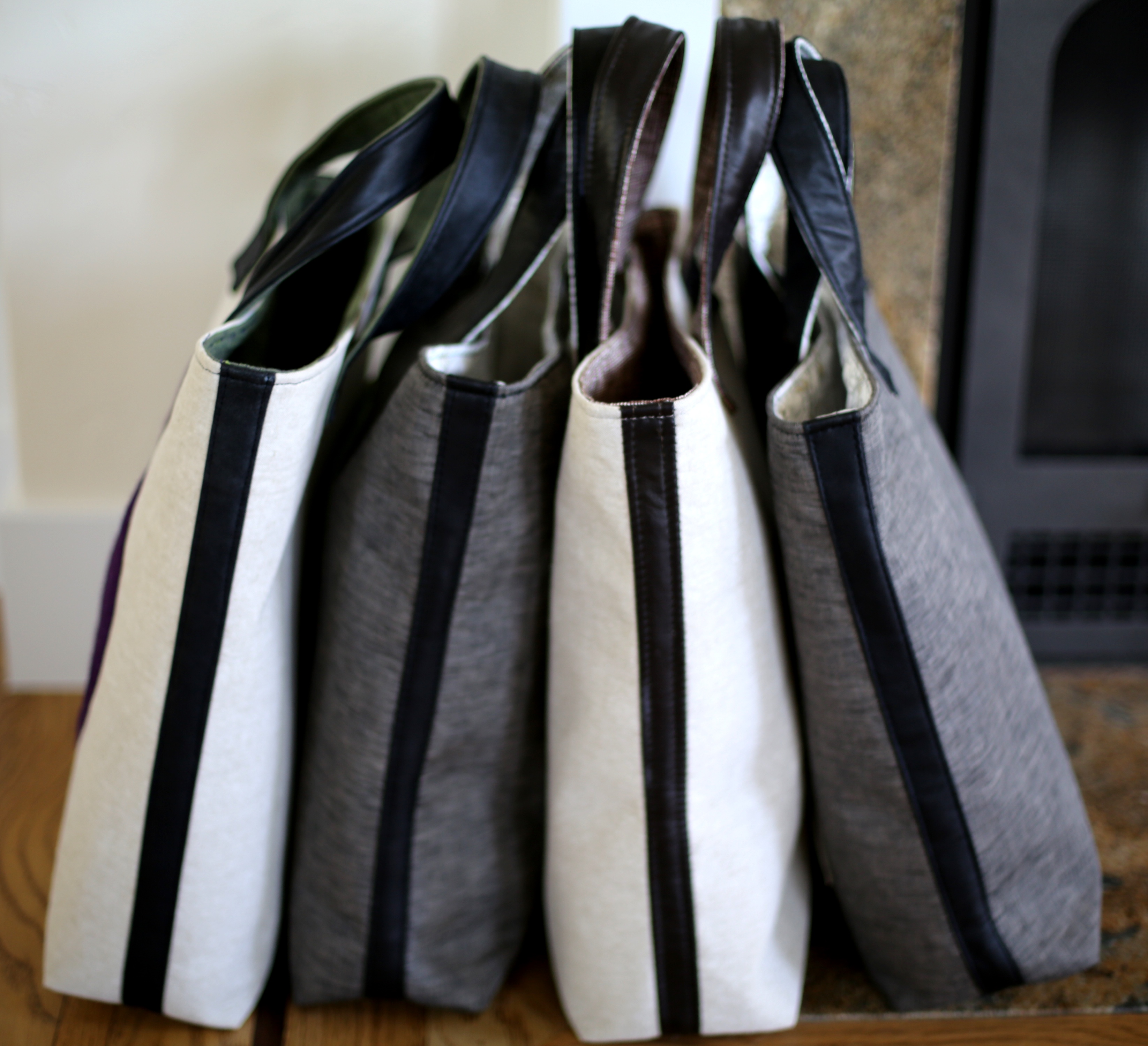
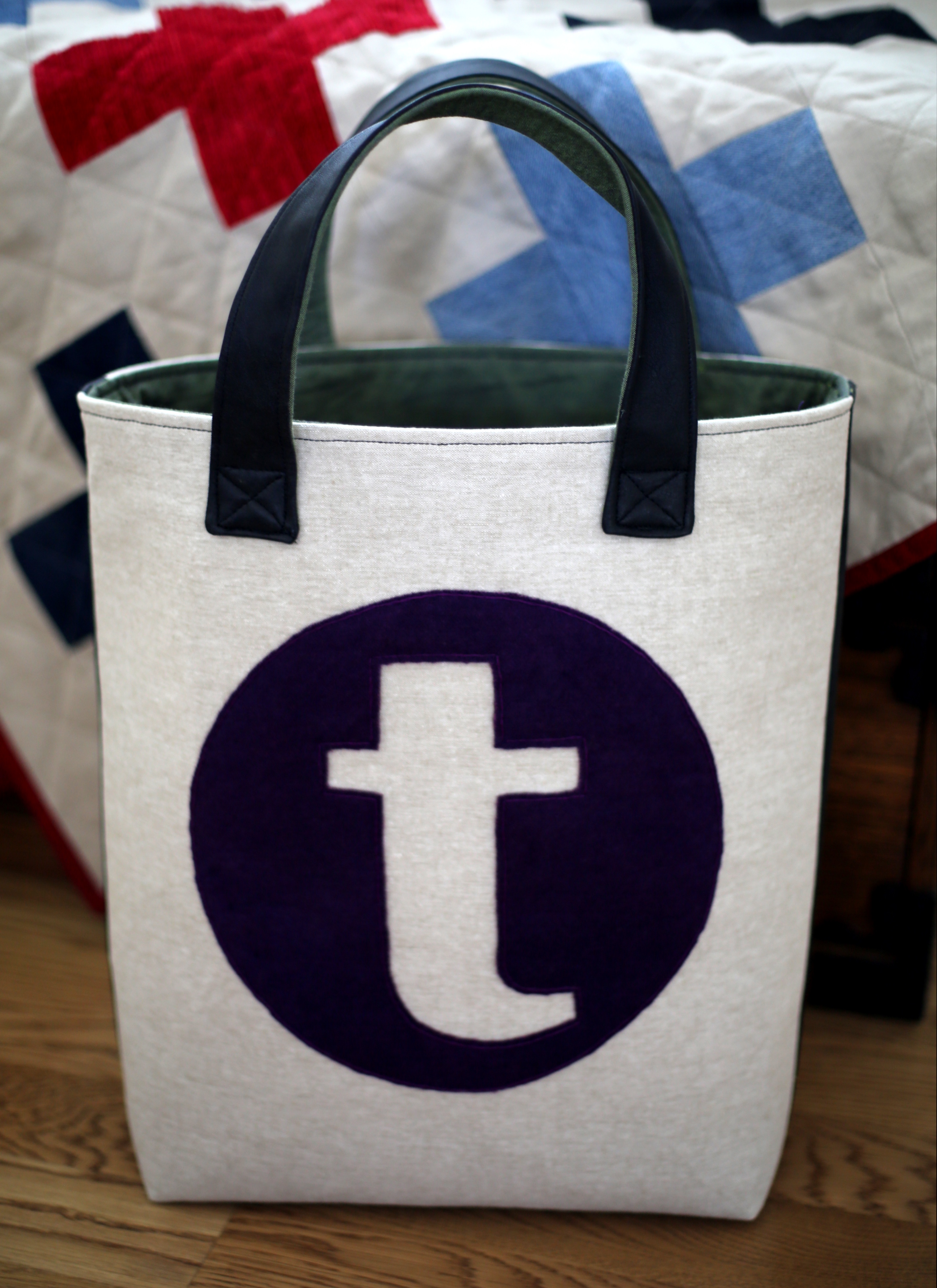
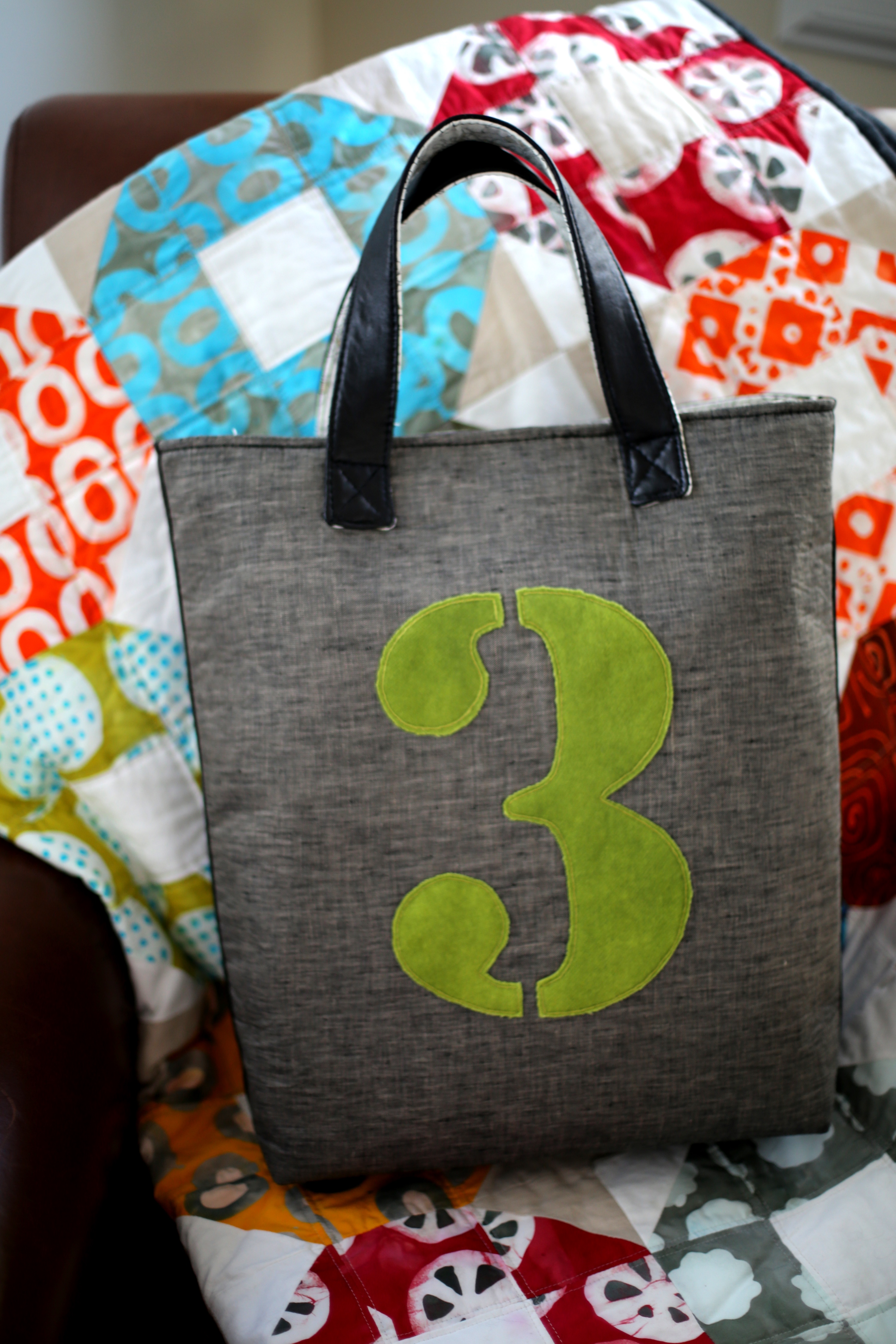
I’ve had so much fun making up my these simple bags that feature letters and symbols in fancy fonts and recycled leather accents, I thought I would write up a quick tutorial.  These are guidelines on how I have made my bags but I would delight in people taking my idea and modifying to make it their own.  I have used both my industrial Juki machine to sew these up as well as my Janome Memory Craft machine with no problem so I know it can be done either way.  The limiting factor in using a traditional machine for this bag is NOT the leather since the repurposed leather I use from coats and skirts is fairly thin, it is the heavy weight interfacing.  Having said that, using the leather needle, going slow and steady, I broke no needles and had no problem using my traditional machine.  I hope the same may be true for you.
IMG_0228

IMG_0226

IMG_0224

Supplies:

Felted Wool for your Number/Letter/Symbol
Embroidery Thread to match the wool
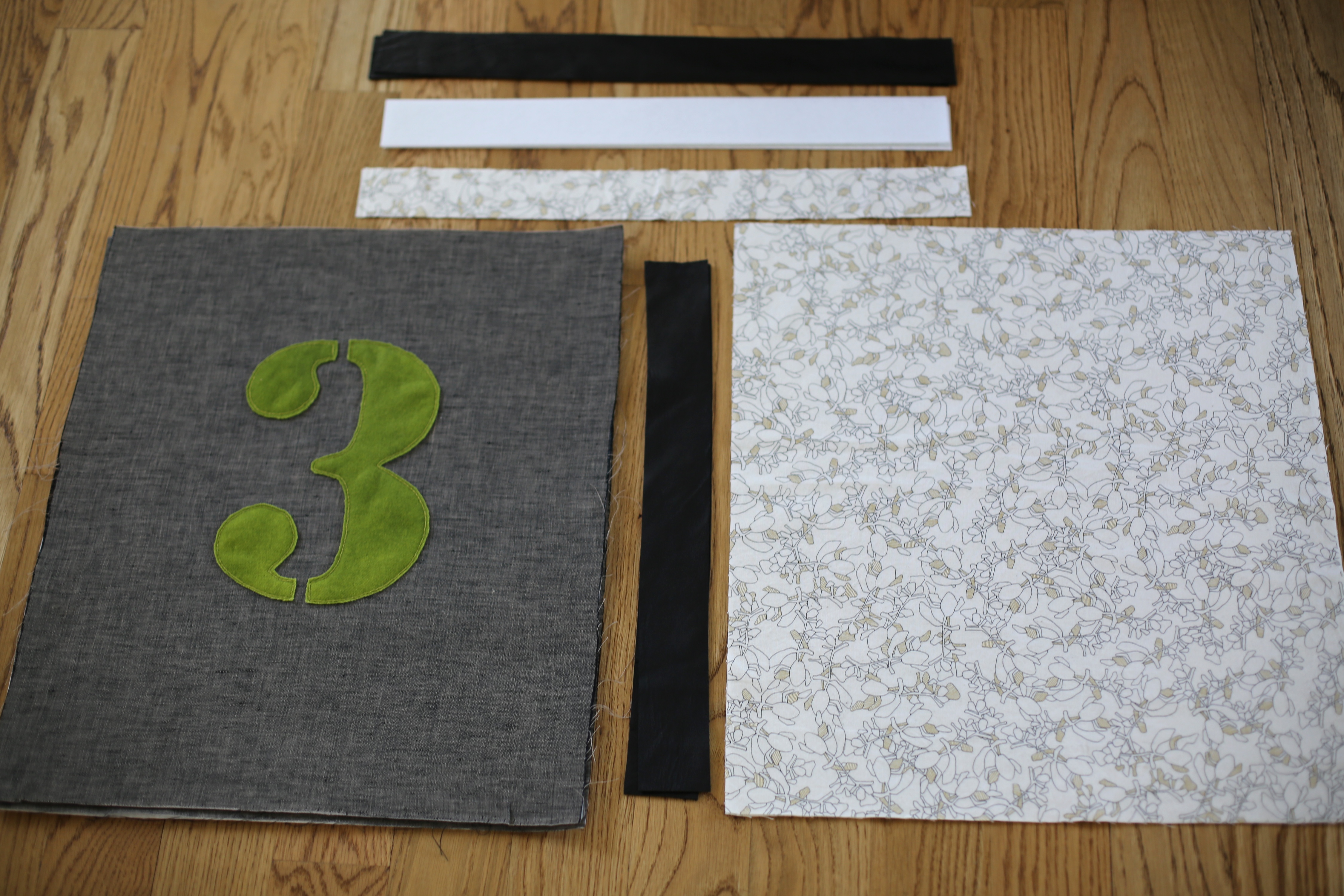
1 yard linen (for the outside bag body) cut into two rectangles (20″x17″)
1 yard cotton (for the bag lining and the inside handles) cut into two rectangles (20″x18″) and two rectangles (20″x2″)
Repurposed Leather (used for the side stripes of the bag and outside handles) cut into two rectangles
(18″x2″) and two rectangles (20″x2″)
1 1/2 yards of Pellon Heavyweight one sided fusible interfacing (for the bag body and handles) cut into two rectangles
(20″x17″)and two rectangles (19″x2″)
Upholstery weight thread
Leather sewing machine needles if using a traditional machine (I used Schmetz #100/16.)
Clover wonder clips (these help so much with sewing leather to prevent needle holes when holding pieces together)

Note: I used a 1/2 inch seam when sewing and a 1/4 inch topstitching unless otherwise noted. RST=Right Sides Together

Step One: Cut out and Sew on your Special Letter/Number/Symbol onto the Bag Front

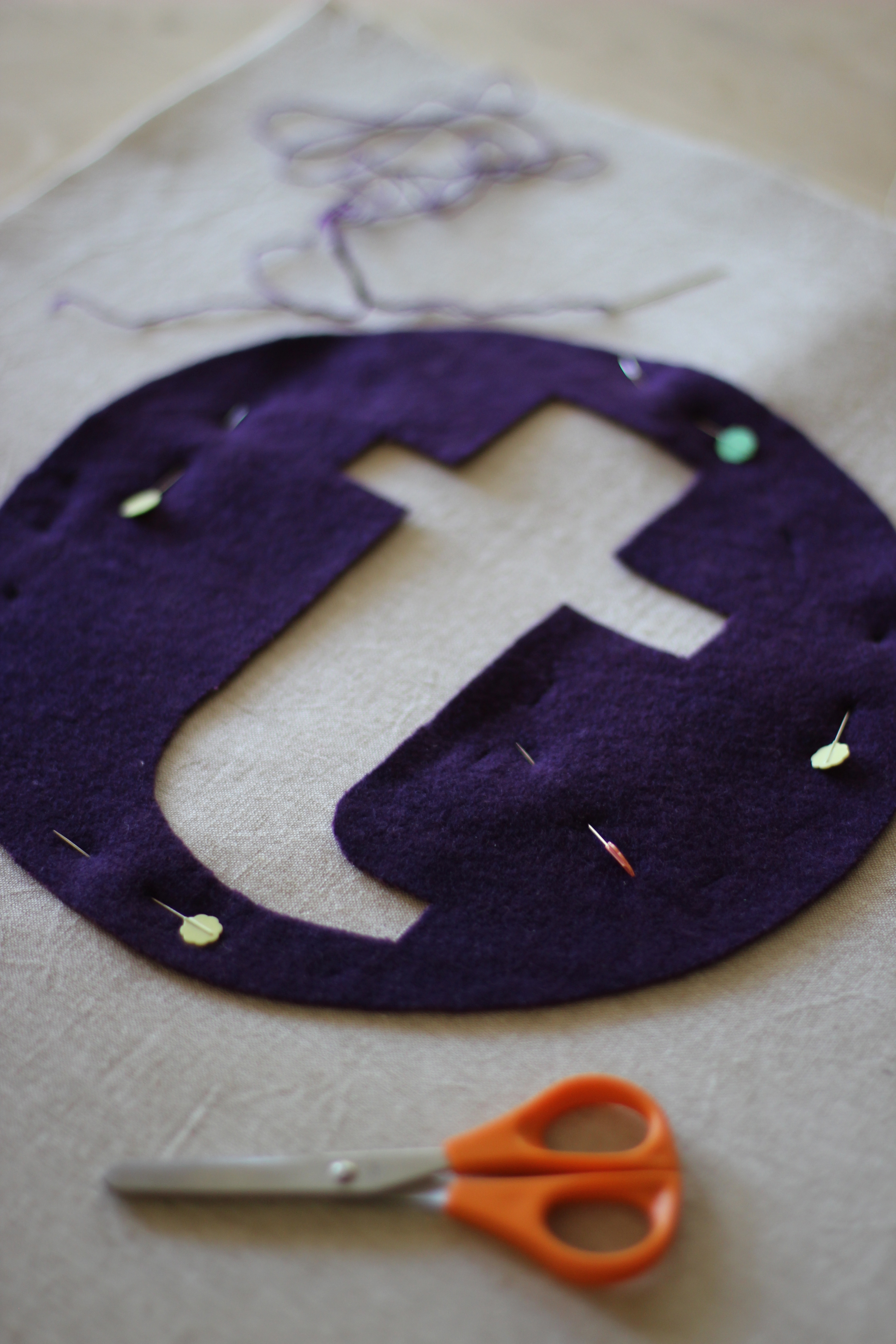
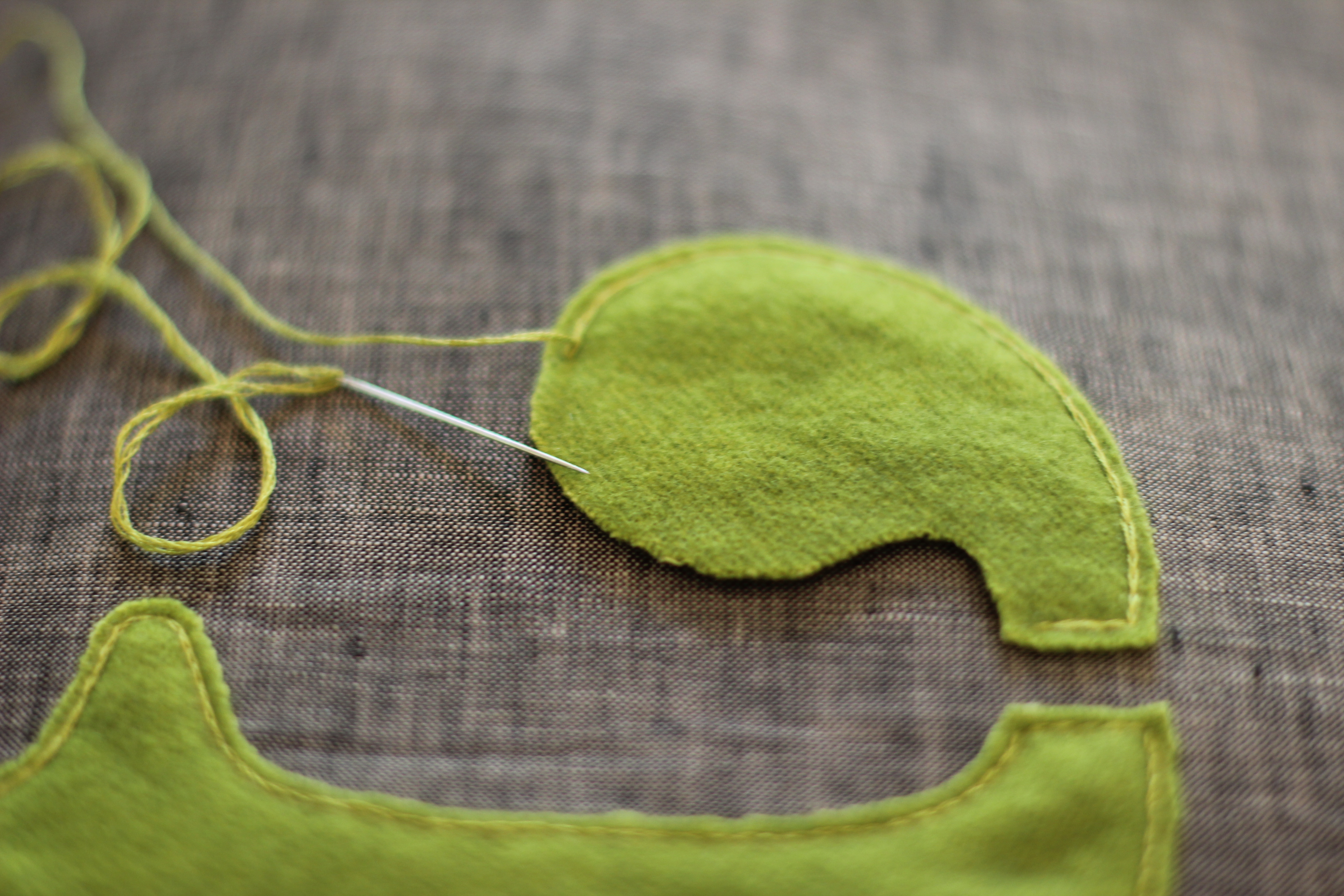
I found several fun fonts on the internet and my computer as well as drawing up some designs on my own.  After fusing the front linen pieces(20″x17″) to the Pellon interfacing pieces (20″x17″), I cut out the image I selected in my wool felt and centered it on one of the rectangles allowing an extra 1 1/2 inch at the bottom to account for the bottom fold and top handles.  I pinned it to the front and then hand stitched 1/8-1/4 from the sides using three strands of the embroidery thread and a split stitch sewing through both the linen and interfacing.
IMG_6235

IMG_6230

IMG_0205

Step Two: Make the Outside Bag

Mark a 2″ square at the bottom of both the front fused linen pieces and the inner cotton lining and cut them out.
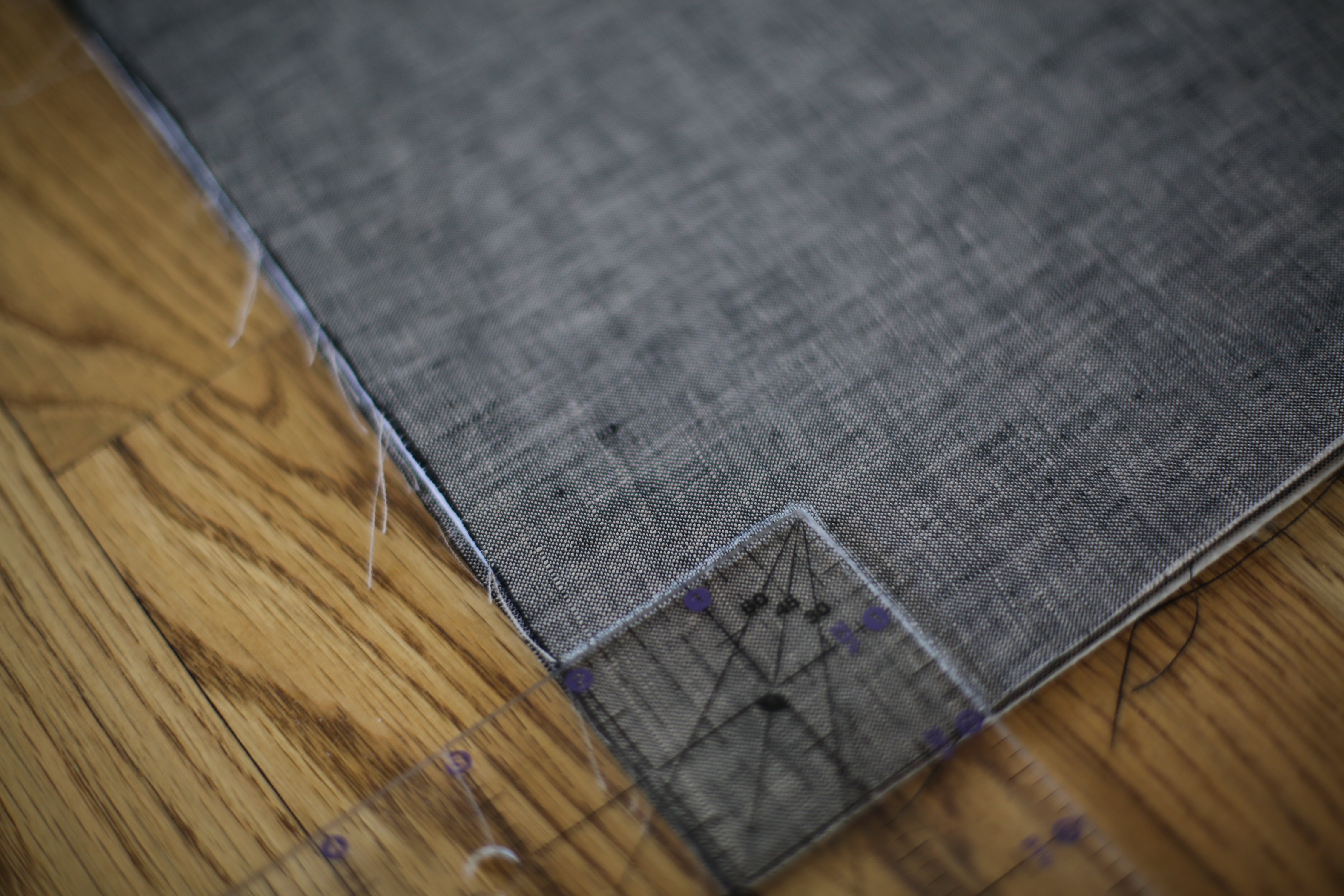
IMG_0206

Using the wonder clips, attach one 18″x2″ leather strips to the side front fused linen piece RST and sew together.
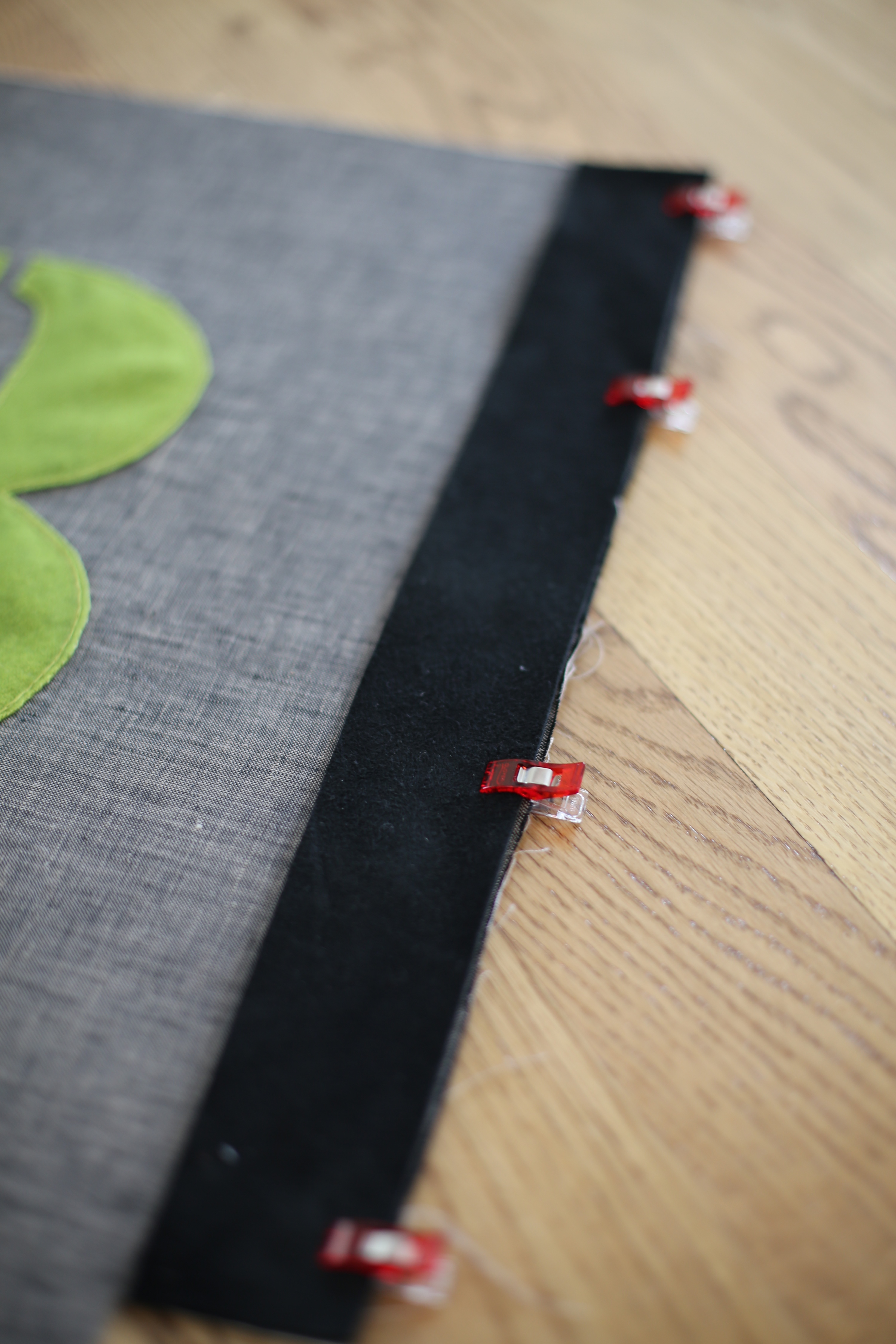
IMG_0209

Do this on the other side of the bag and fold the seam toward the leather and topstitch it down after you sew each seam.
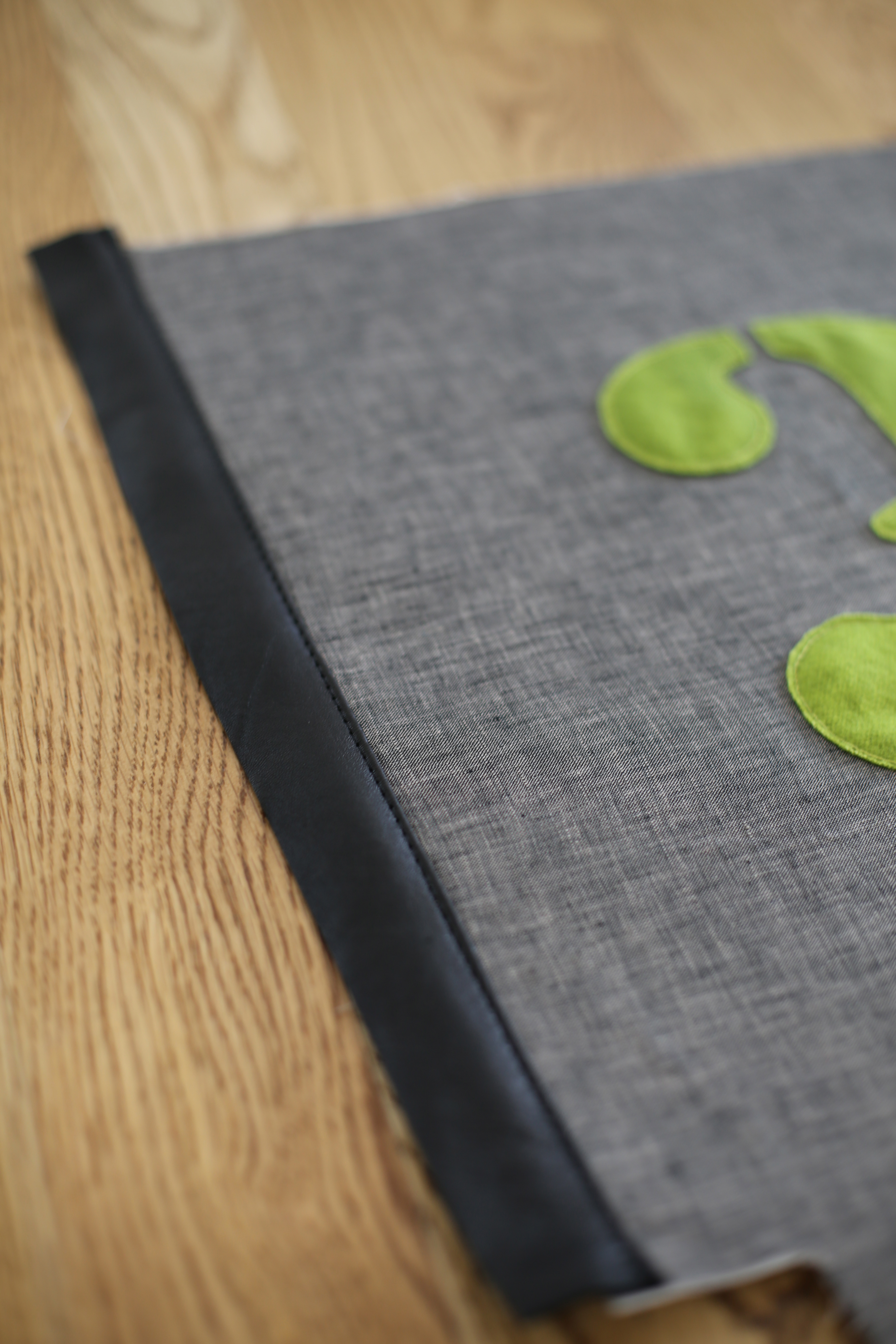
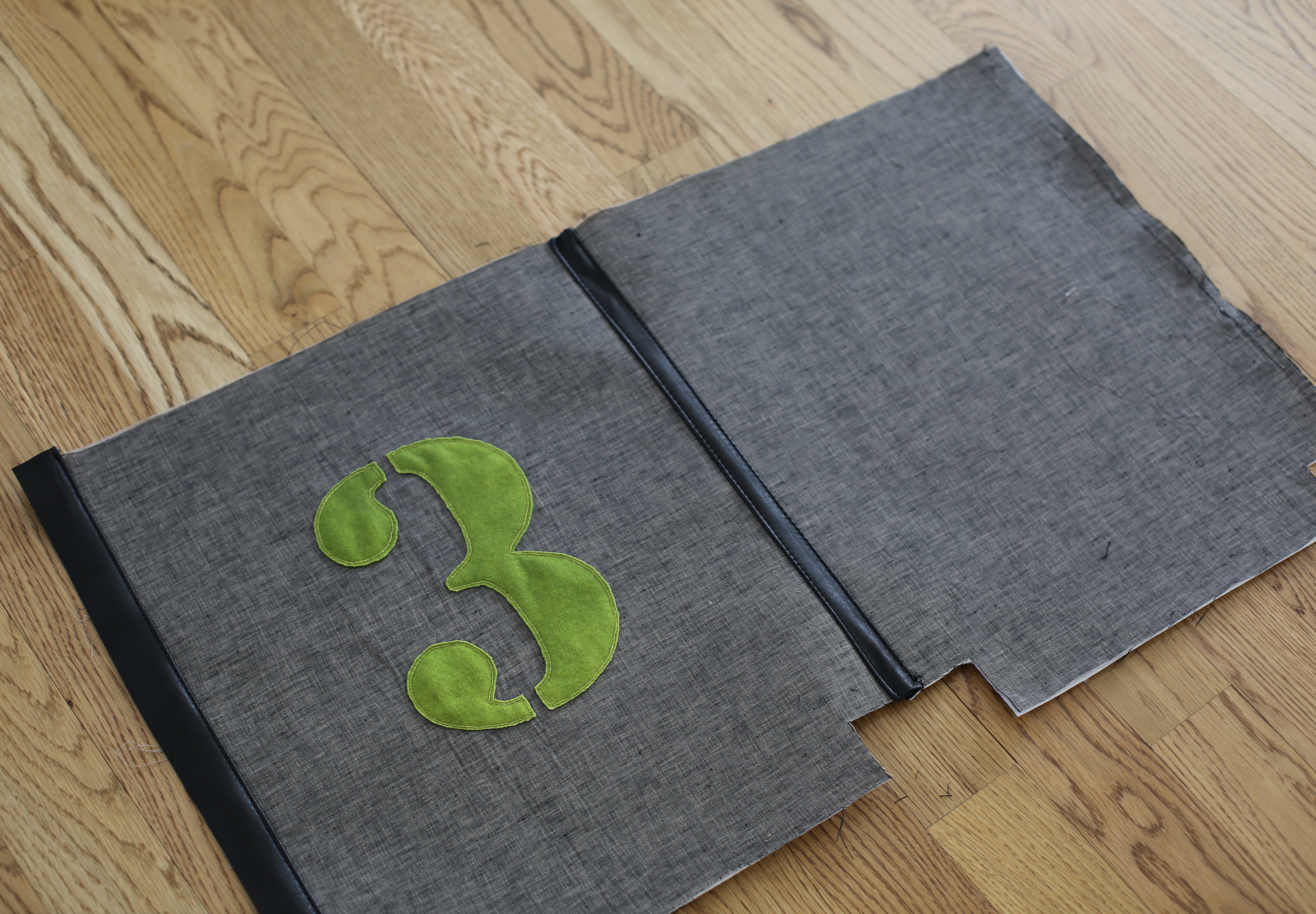
9L4A0028

IMG_0210

Sew the side leather strip to the back so that you have made a bag tube. Turn inside out and topstitch the last leather seam. (This is the hardest part of making this bag as you have to push the other side of the bag tube out of the way while sewing to prevent accidentally sewing the tube together.)
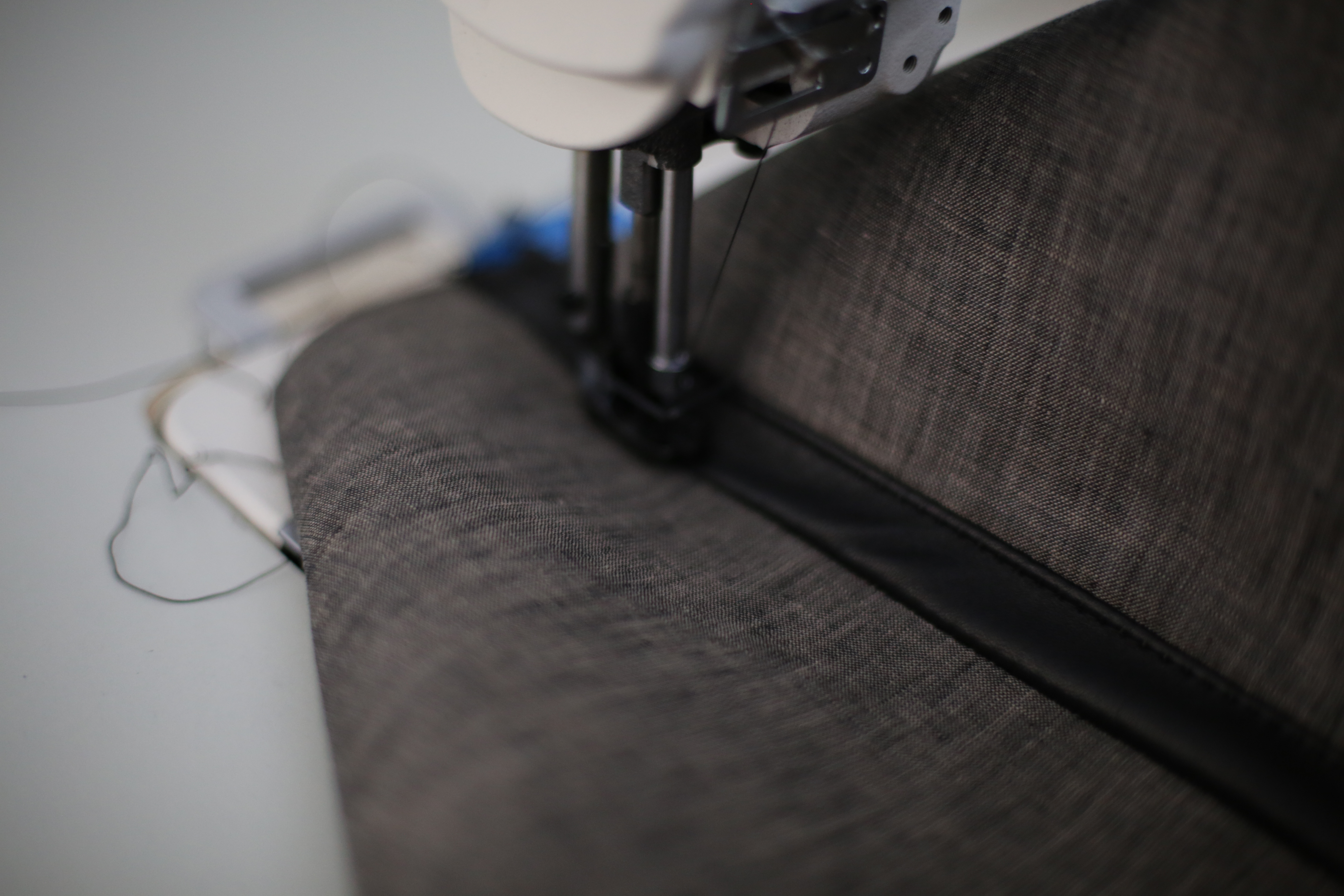
9L4A0040

Flip the tube inside out again and sew the bottom seam together.
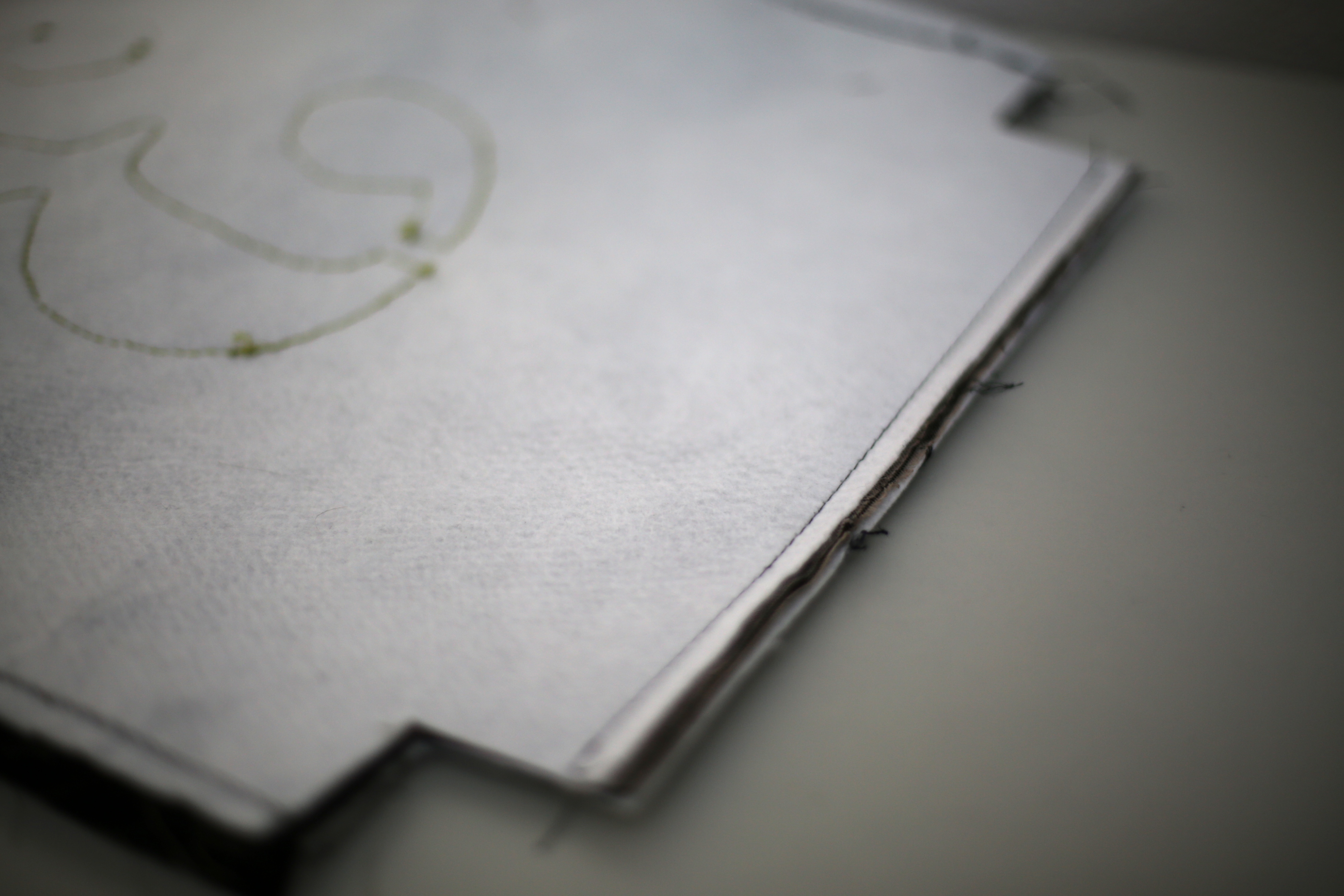
IMG_0214

Next, fold the lines made by cutting out the bottom squares together, matching the center side leather strip to the bottom bag seam and sew these two seams on each side to close the outside bag.
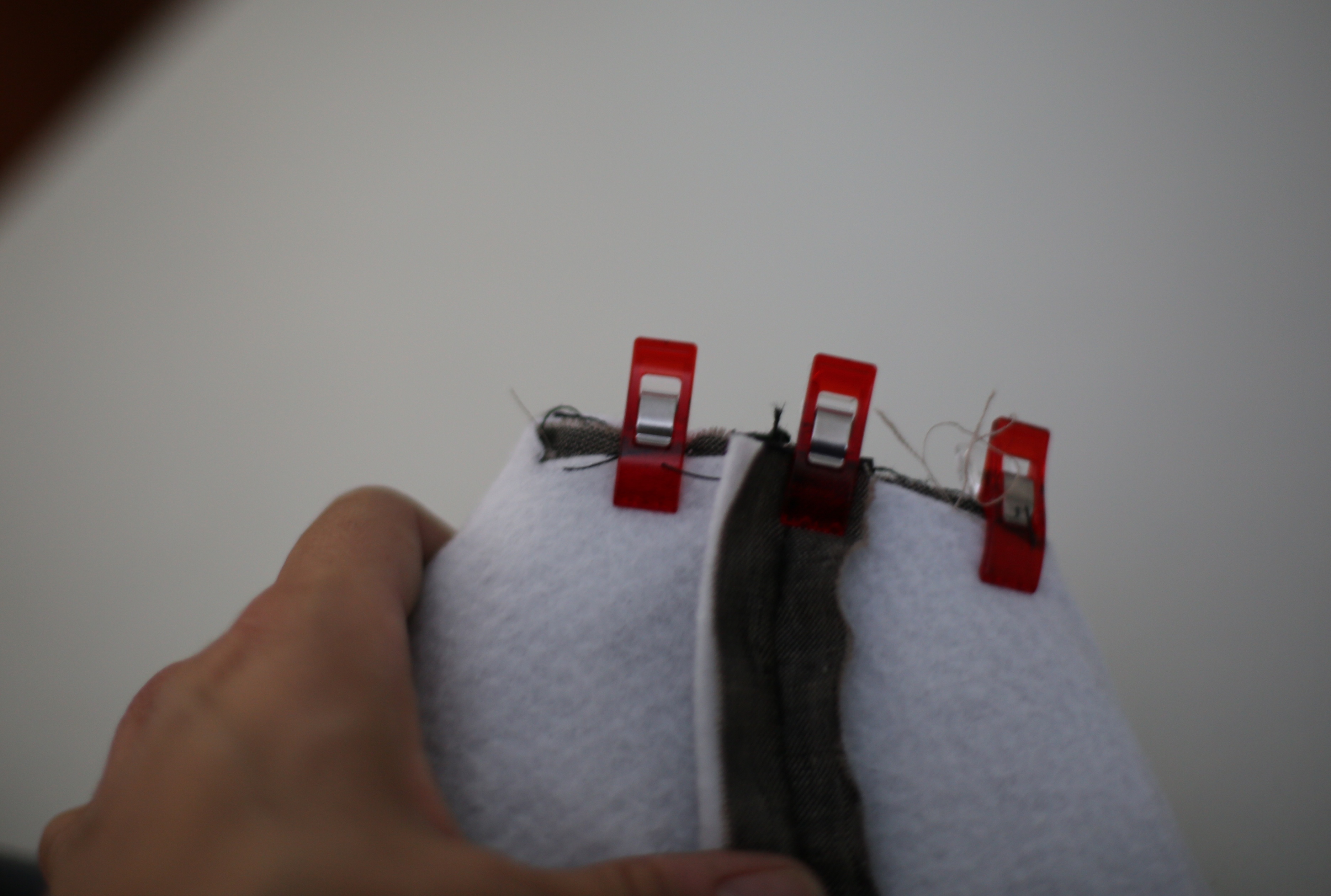
IMG_0215

Step Three: Make and Attach the Handles

Fuse the 20″x2″ cotton rectangles to the heavyweight interfacing rectangles 19″x2″ leaving 1/2″ overlap of the cotton on each side.
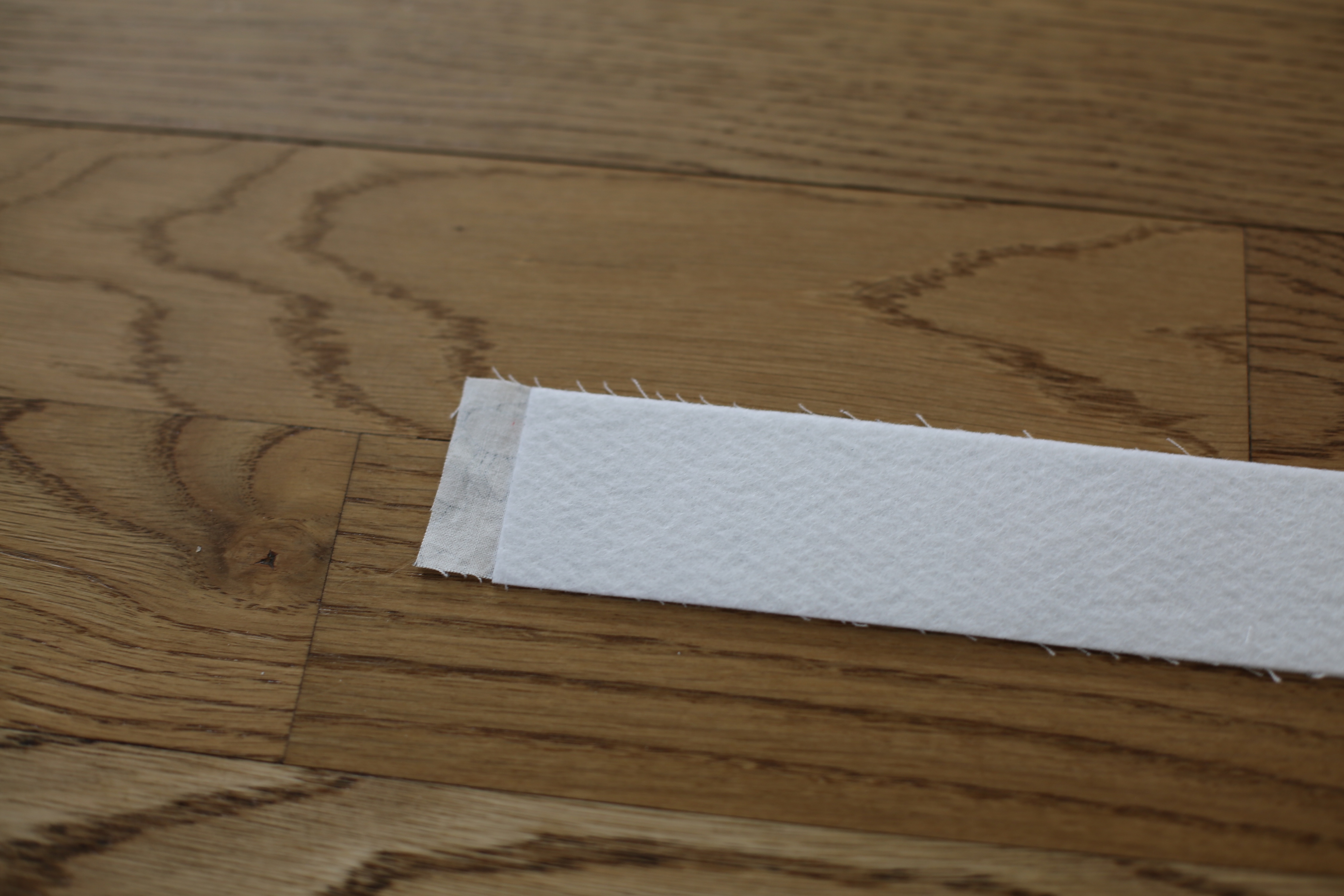
IMG_0212

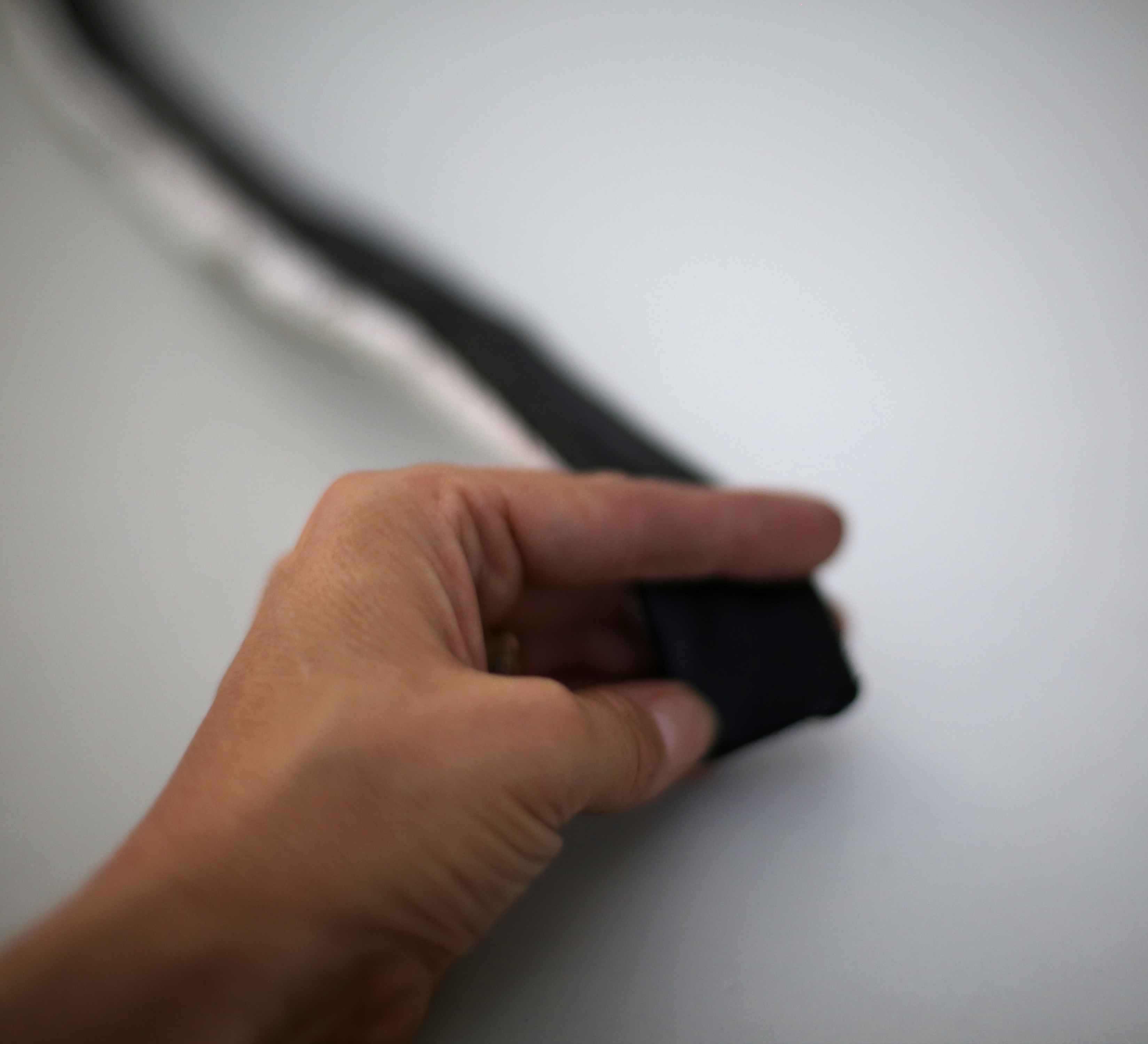
Set the 20″x2″ leather rectangle on top of the 20″x2″ fused cotton rectangle RST. Hold together with the wonder clips and sew a 1/4″ seam along the two long 20″ sides. Turn the tube inside out. At both ends, turn under the leather and cotton by 1/2″ back into the tube and hold with a wonder clip.
IMG_0217

Top stitch along all sides of the handle closing up the ends. Repeat for the other handle. Now you have two handles to attach to your bag front and back.


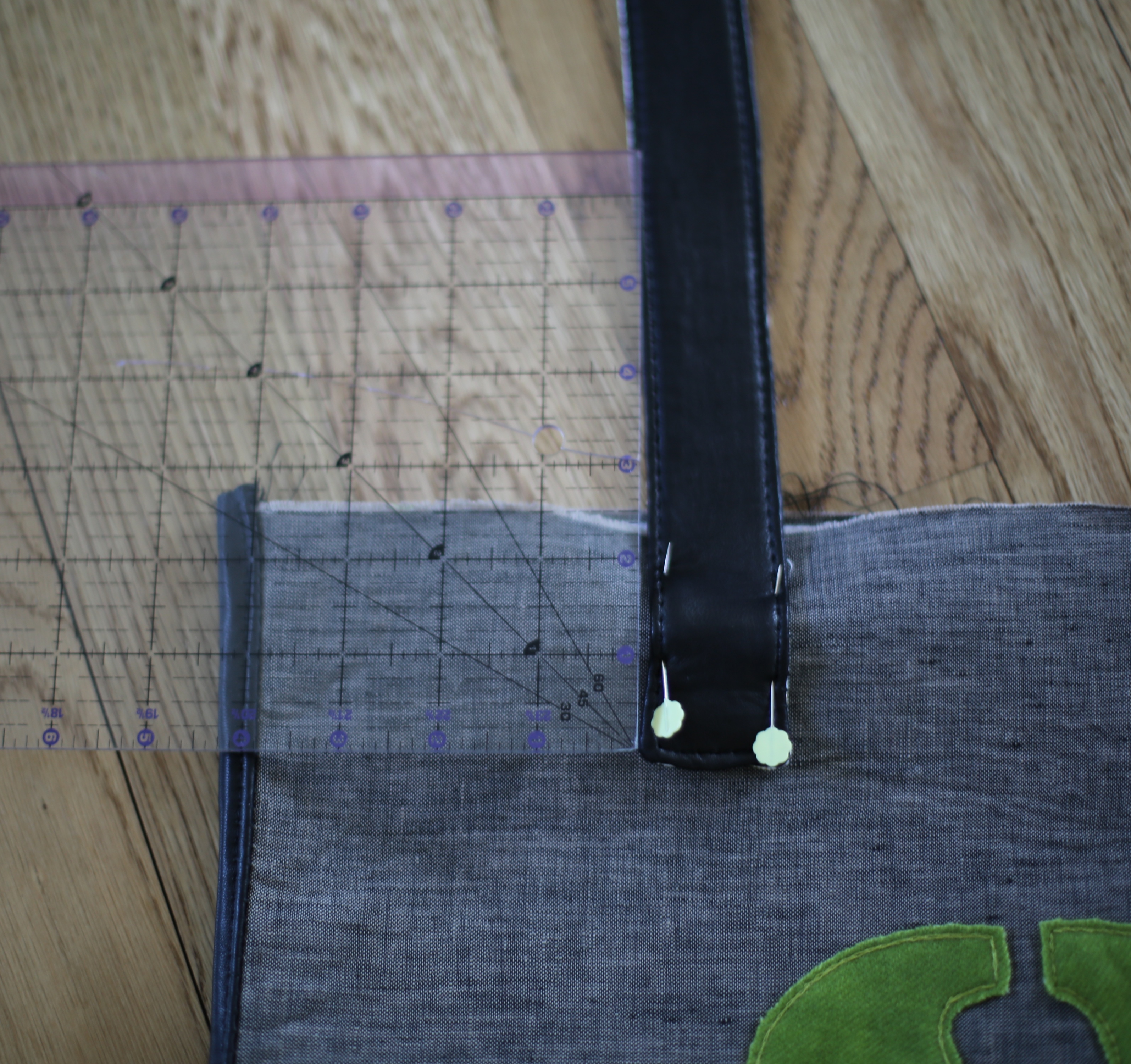
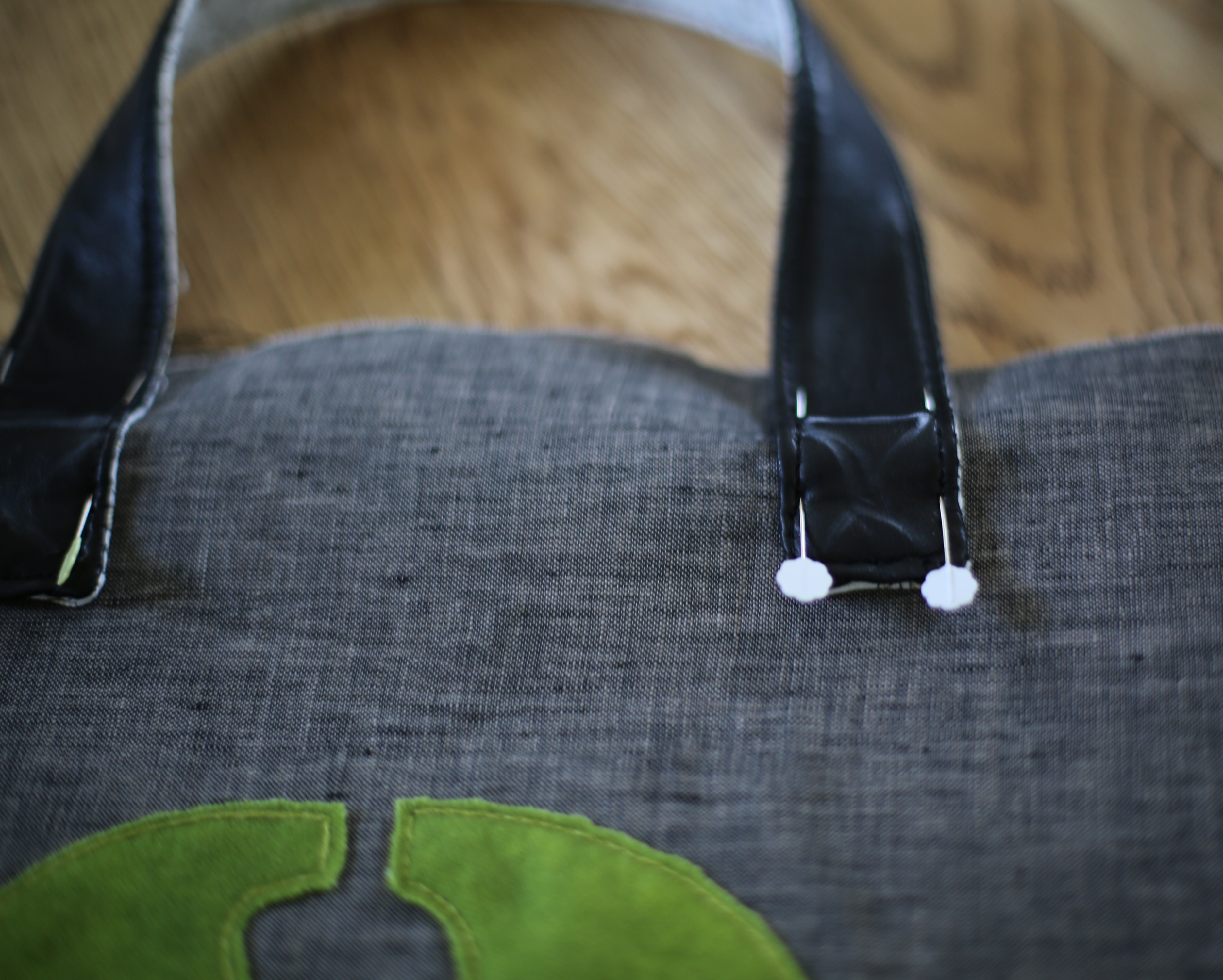
Measure 4″ from each side and 2 1/2″ down from the top to mark the outside edge of your handles. Topstitch a 1″ square and X at the handle bottoms to secure the handles to the bag.
IMG_0218

IMG_0219

Step Four: Finish the bag

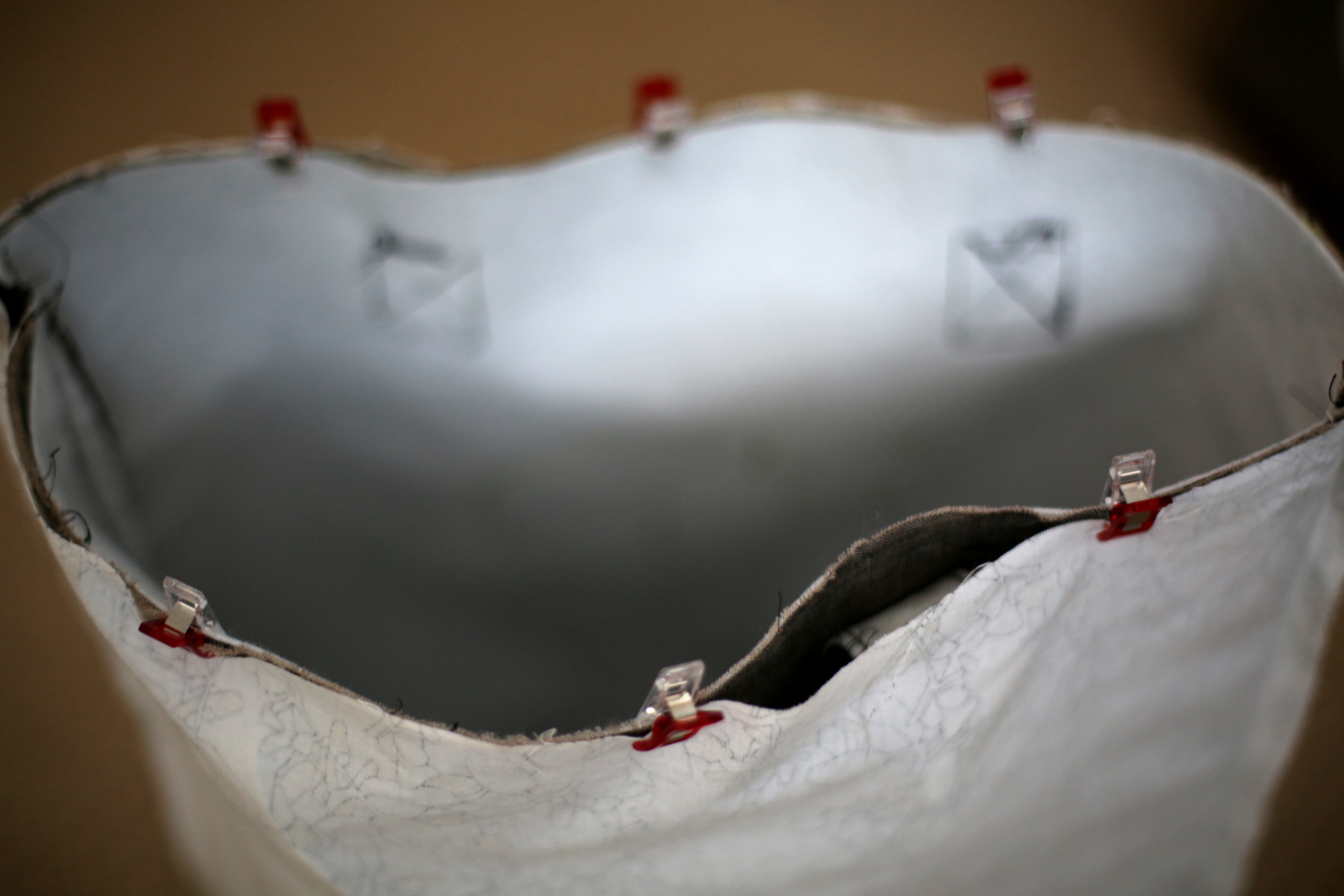
RST, sew the cotton lining pieces (20″x18″ cotton rectangles) together along the sides and bottom, leaving a 4 inch opening at the center bottom. Then sew the bottom side square openings together as you did on the front piece. Slip the lining RST and attach with wonder clips at the top to the main bag piece making sure to keep the handles out of the way. Sew the main bag and lining together at the top.
IMG_0223

Pull the main bag through the opening in the bottom of the bag lining and push the lining into place. Top stitch along the bag at top. Finally sew by hand or machine the bottom opening in the lining together and you are done!
IMG_0203


Although I think I’m done with these bags for a bit, I am by no means done with the idea of leather repurposing.  Check out some of the other repurposed leather projects I have completed:

Recycled Leather Clutch | Entropy Always Wins.

A Birthday Present for My Guy | Entropy Always Wins.

A Tote for my Cargo | Entropy Always Wins.

The Bianca Clutch | Entropy Always Wins.

Ok, Just One More . . . | Entropy Always Wins.

I WOULD LOVE, LOVE, LOVE TO SEE WHAT YOU COME UP WITH IN THIS BAG DESIGN.  IF YOU MAKE UP ONE OF THESE BAGS, SHOOT ME AN EMAIL OR POST IT ON INSTAGRAM AND USE THE HASHTAG #foncy.  (You can find me there @entropyalwayswinsblog.)

I hope you have a wonderful week.  We are off to the Seattle area to visit friends and family.


Hillary
Remnant Bag Tutorial

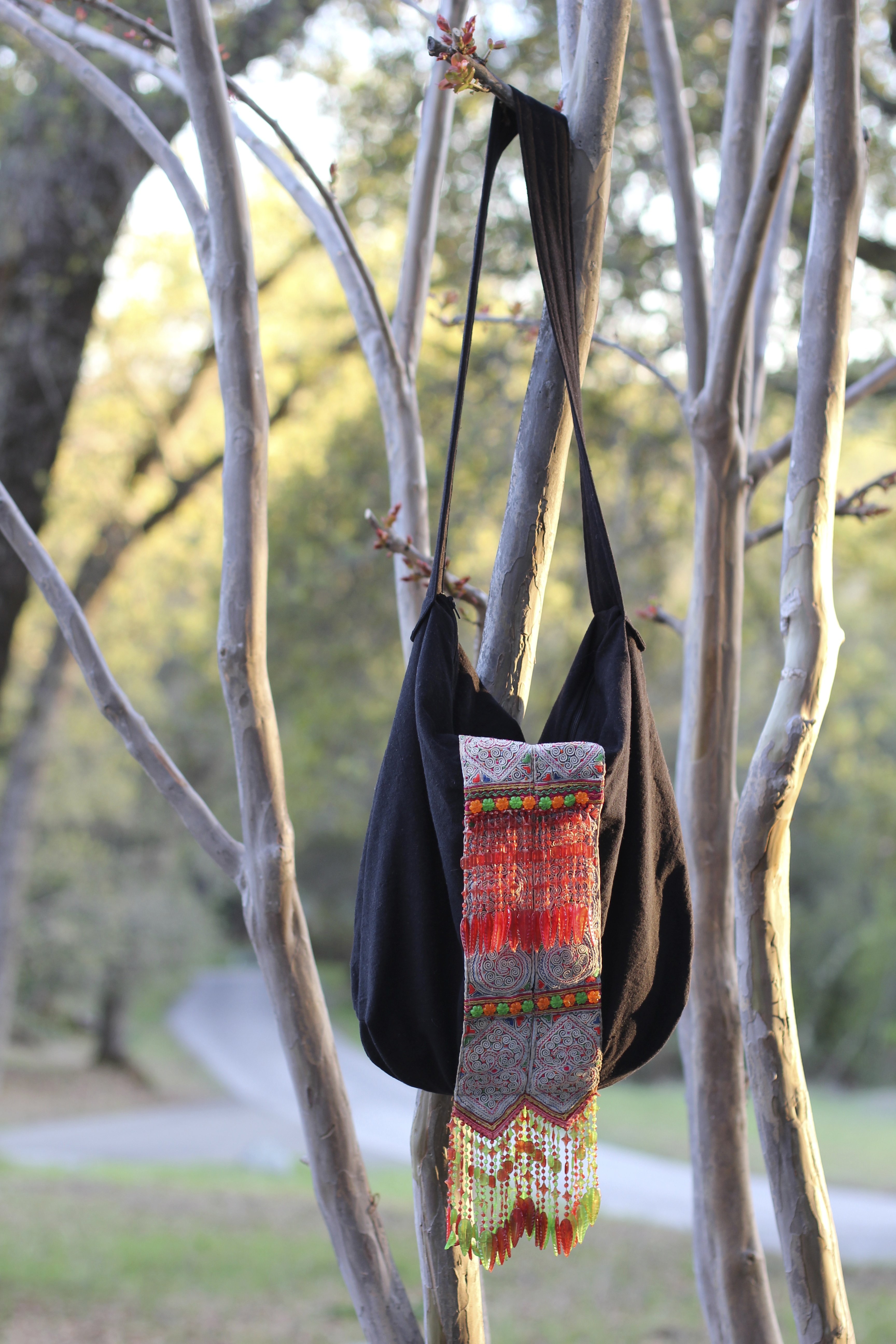
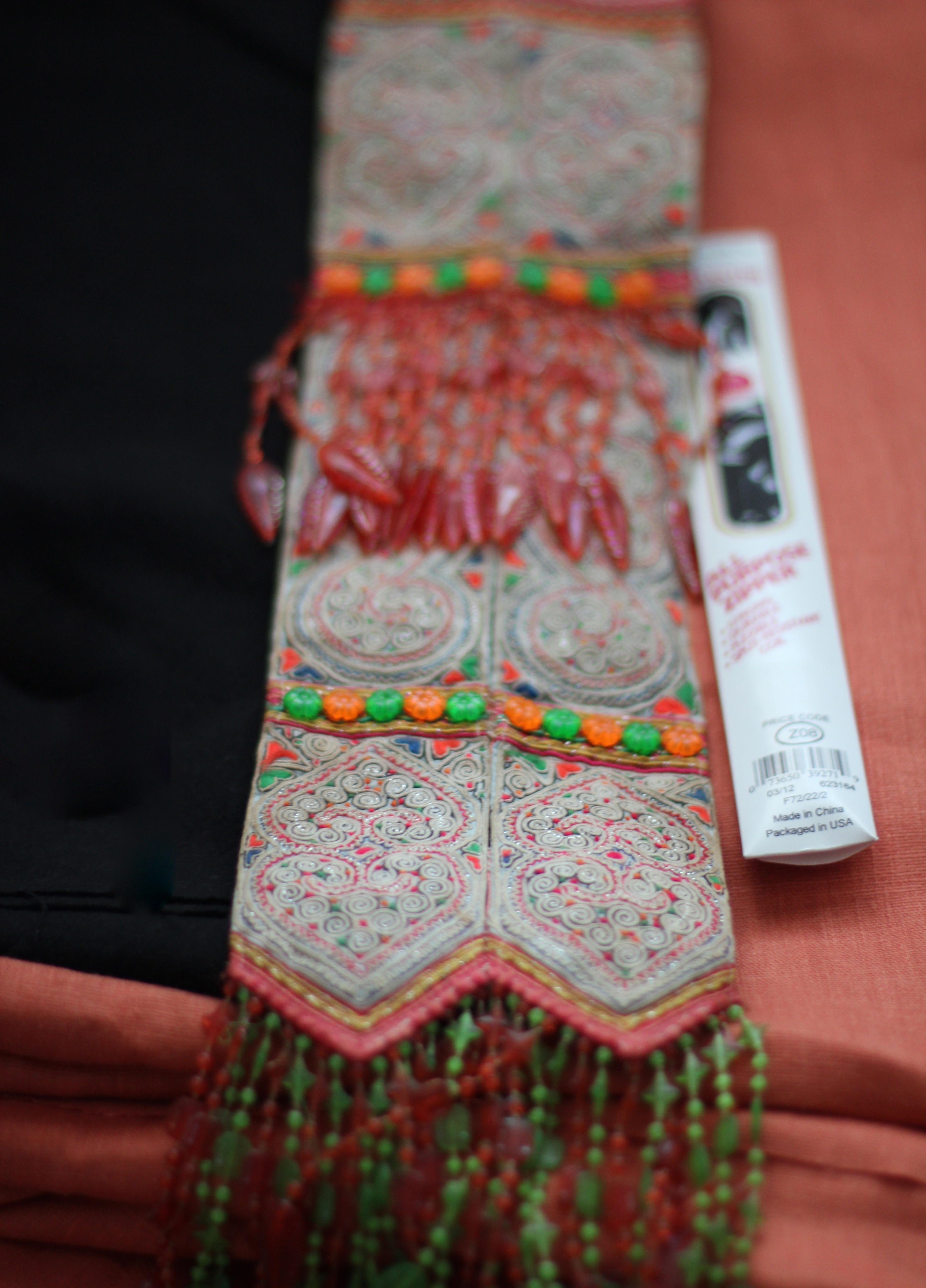
I am a sucker for charity causes and so when my friend contacted me today with an invitation to donate one of my creations to a silent auction in honor of a nurse we worked with who passed yesterday, I could not say no. (Sidenote: I am humbled at how many of the sweetest people in the world are asked to deal with unimaginable suffering. This was true with my friend who contracted a rare cancer in her 20s and now leaves behind her husband and two young children we hope to raise money for. Ugh!) In any case, with this in mind, I dropped my other projects and pulled out a favorite Hmong remnant and whipped up a bag. I came up with this bag design last year when making another Hmong remnant bag for a friend. It is not a particularly unique design but I thought it would be fun to share as these bags always garner compliments and they are a fun way to show off odd-shaped special textiles.

I am a Macgyver kind of sewist. I’m not formally trained and I always figure things out in odd ways so forgive me if the structure and instructions are unusual (and please share your tips if you have better ways of bag making).

IMG_5009

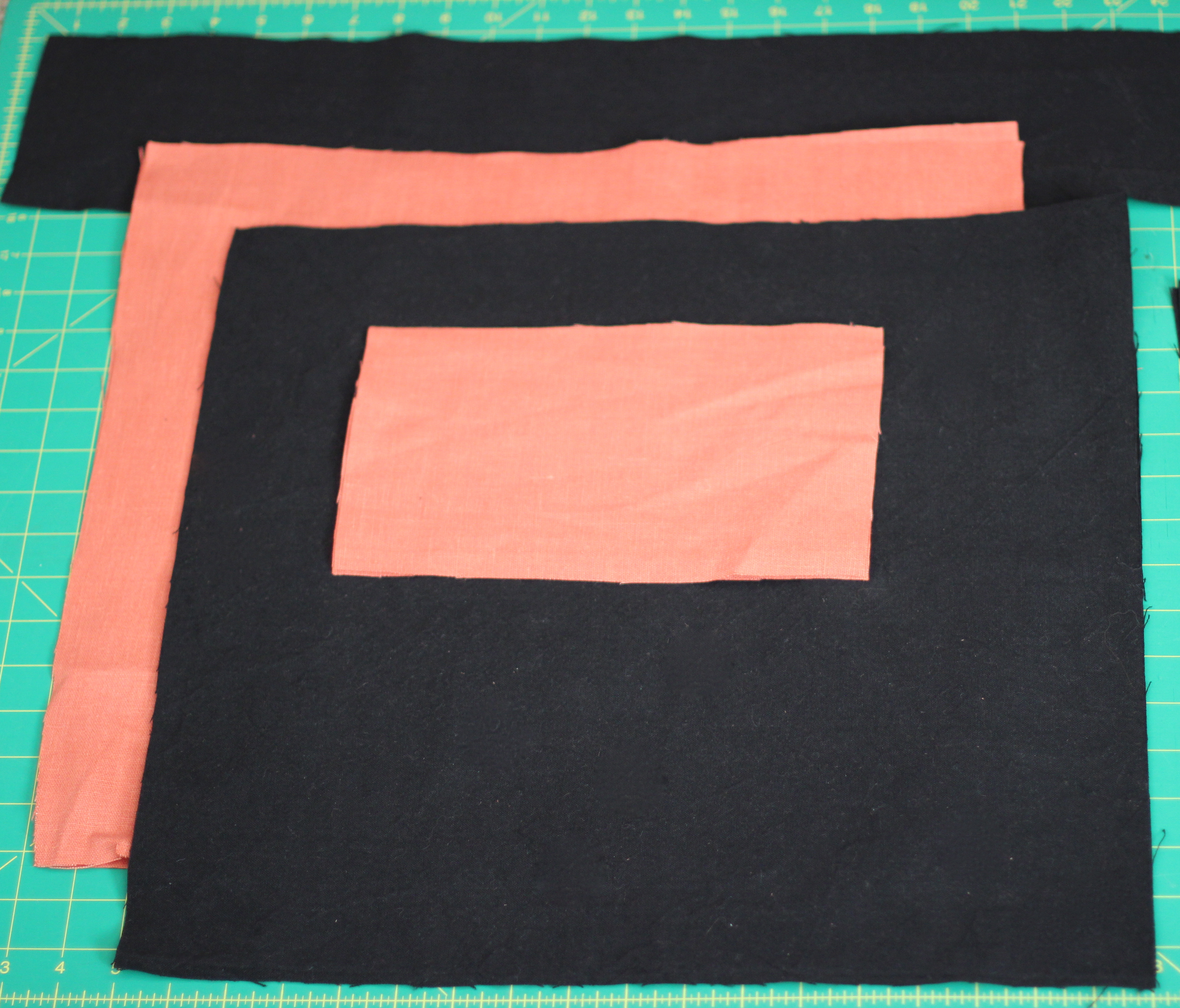
To start off, I gathered some of my fave Marcus Fabric Organic Cotton Canvas for the outside, some peach linen fabric for the lining, my fabric remnant, a heavy sewing needle, fusible fleece, thread to match the outside fabric, the lining and the remnant and a 20 inch black zipper. (for my bag size, anything 18 inches or up would do) I then cut two squares 18×18 inches in the canvas and two same sized squares in the linen lining fabric. I also cut a piece 5×36 inches in the black canvas, two rectangles of the linen lining (6×10 inches) and I cut a piece of the fusible fleece in 2.5×36 inches long.  (Depending on the textile you want to show off, you may need to adjust your bag size.)

IMG_5012


I then stacked up the outer and inner large squares and rounded off the bottom corners.

IMG_5013

IMG_5014

I then drew an isosciles triangle freehand on the center of one of the curved corners, I folded the square in half again and cut the triangle out of all 8 layers.

IMG_5017


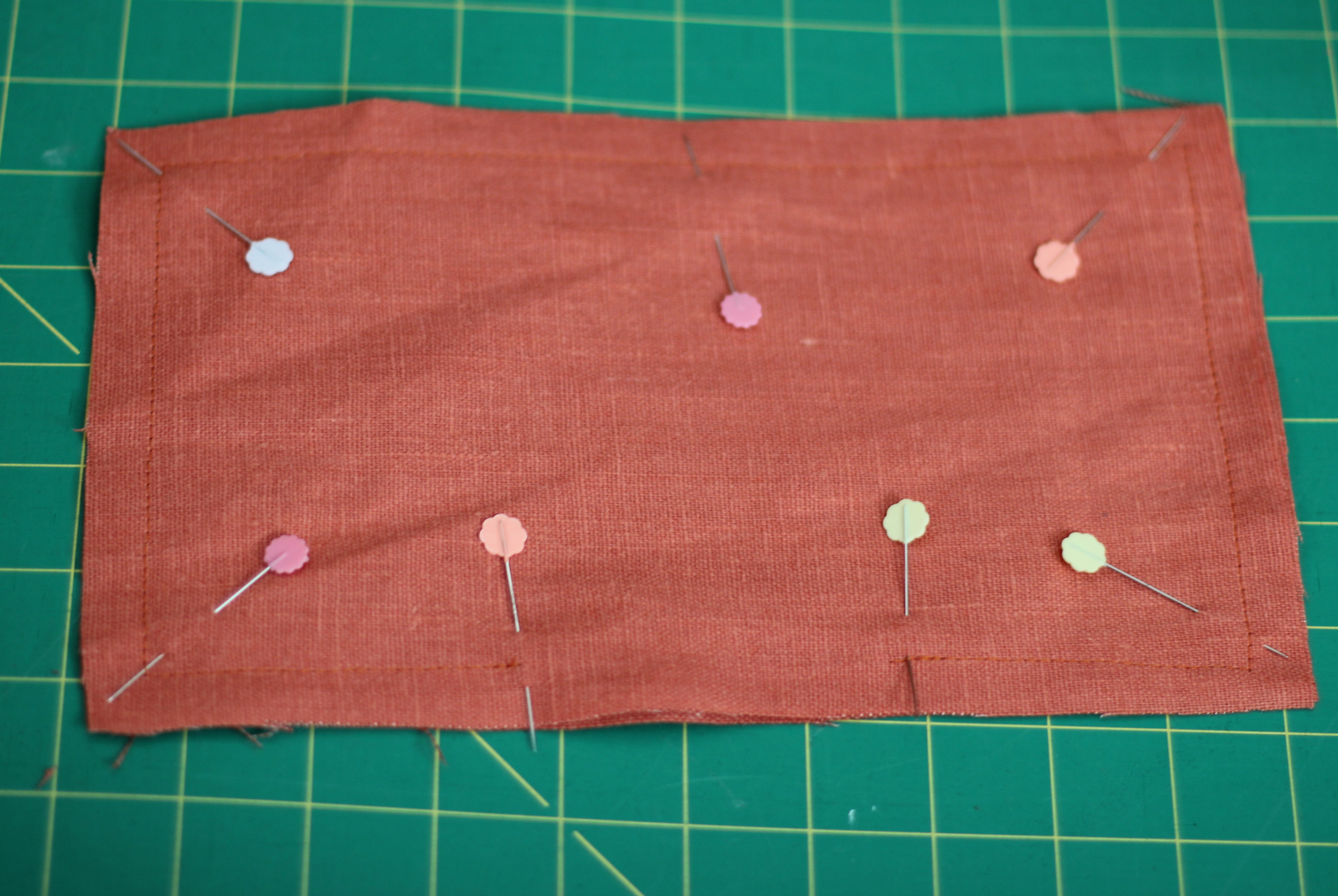
I then sewed the two smaller rectangles of the lining fabric to make an inner pocket leaving a center area at the bottom unstitched for turning inside out.

IMG_5018

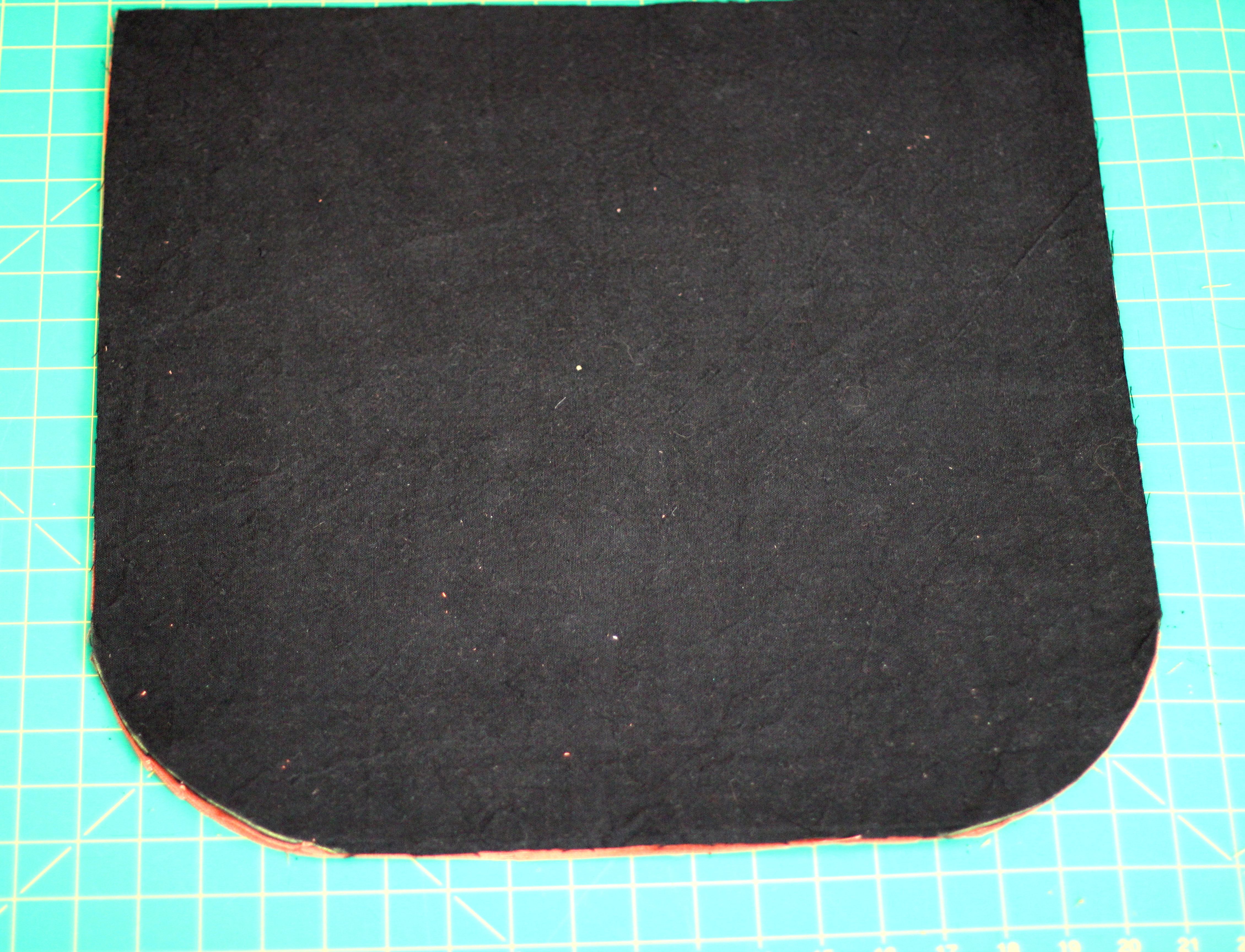
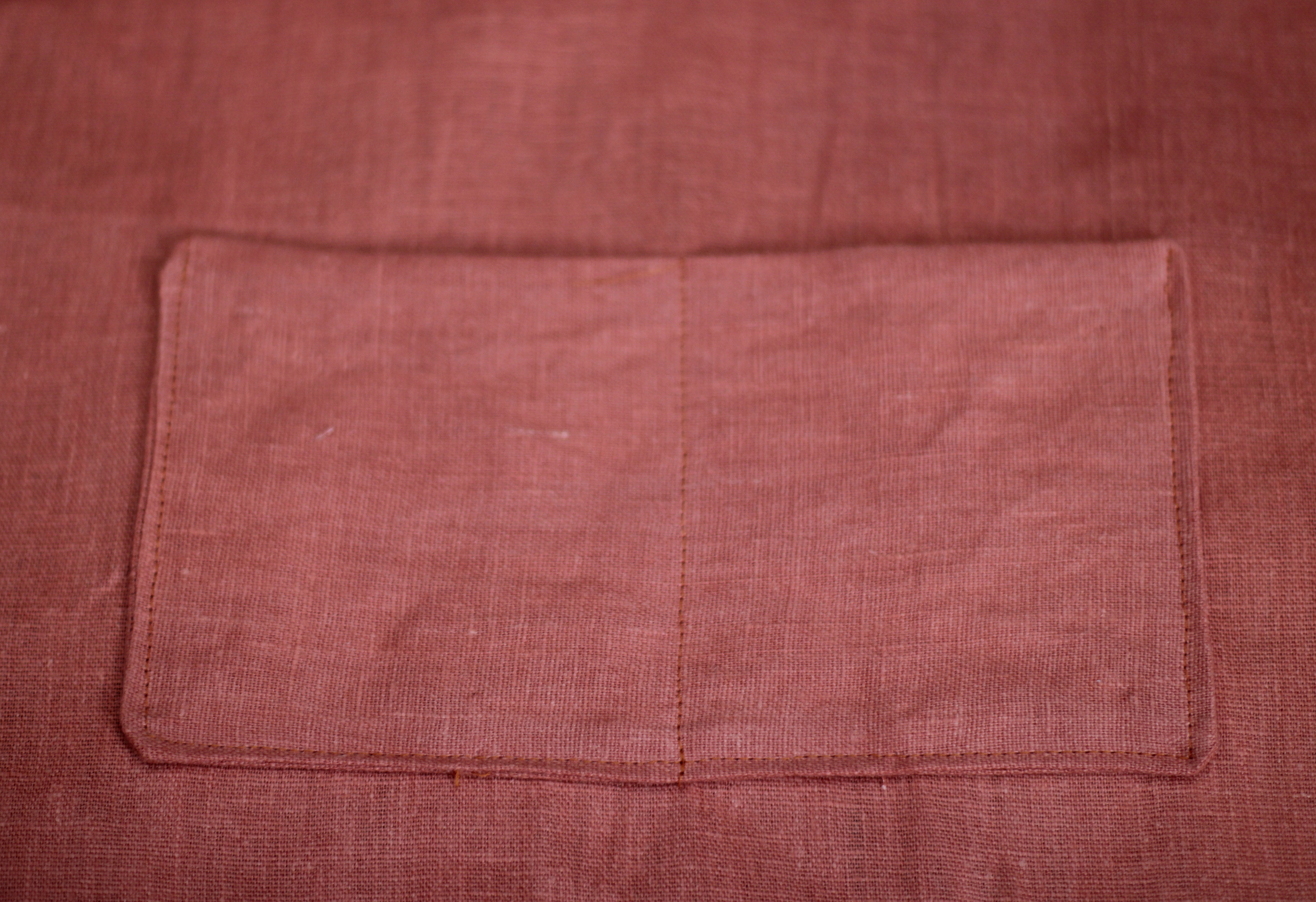
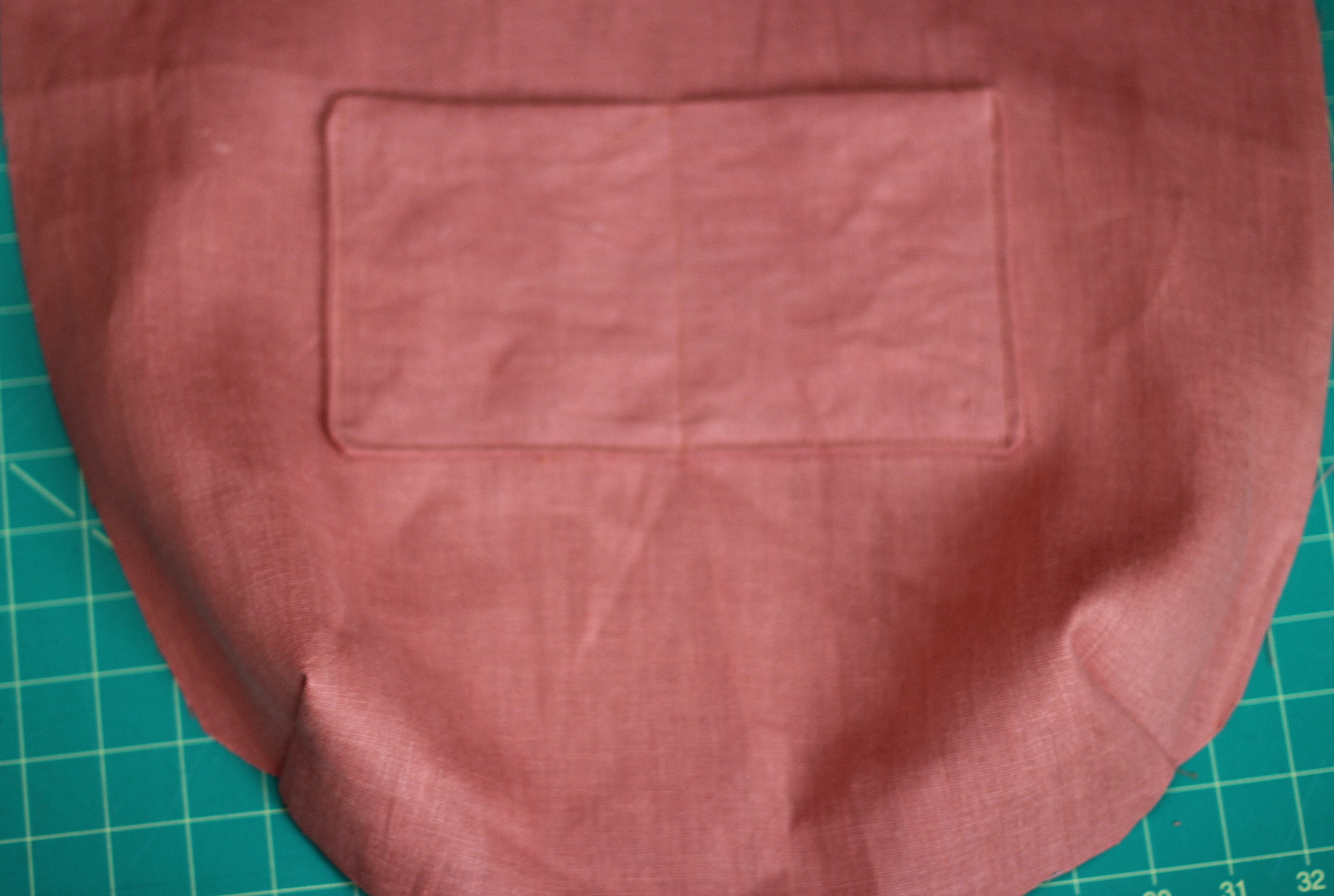
I trimmed the corners of the inner pocket rectangle, turned it inside out, ironed it making sure the opening at the bottom was pressed to match the sides and finally sewed the rectangle on the middle center of the front back lining with a 1/8th inch seam.  I also stitched down the center of the pocket to make it into two separate pockets.

IMG_5019


I then sewed the bottom corner triangles together, right sides together on both the outer fabric squares and the inner lining pieces.  I used a 1/2 inch seam from here on out unless otherwise stated.

IMG_5021

IMG_5020

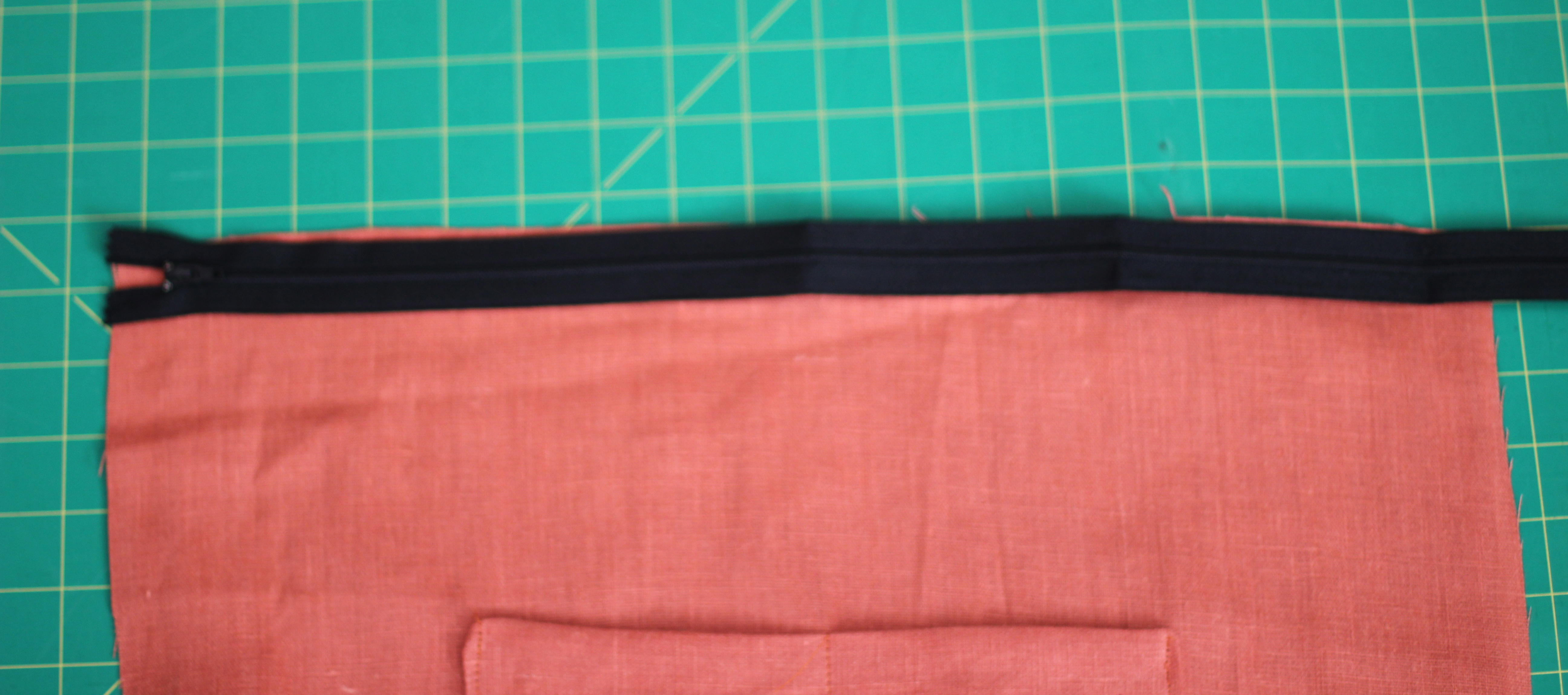
Next, I sewed the bag outer and inner fabrics to the zipper.  This part can be a little confusing but I sandwiched the zipper between the lining and the outer fabric right sides together with the zipper top matching the fabric top and the zipper pull facing the outer fabric.  I used a 1/4 inch seam for the zipper, pushing the zipper pull out of the way when sewing.

IMG_5022


I repeated the sequence on the other side of the zipper and was left with outer fabric and inner fabric wrong sides together on either side of the zipper.

IMG_5024


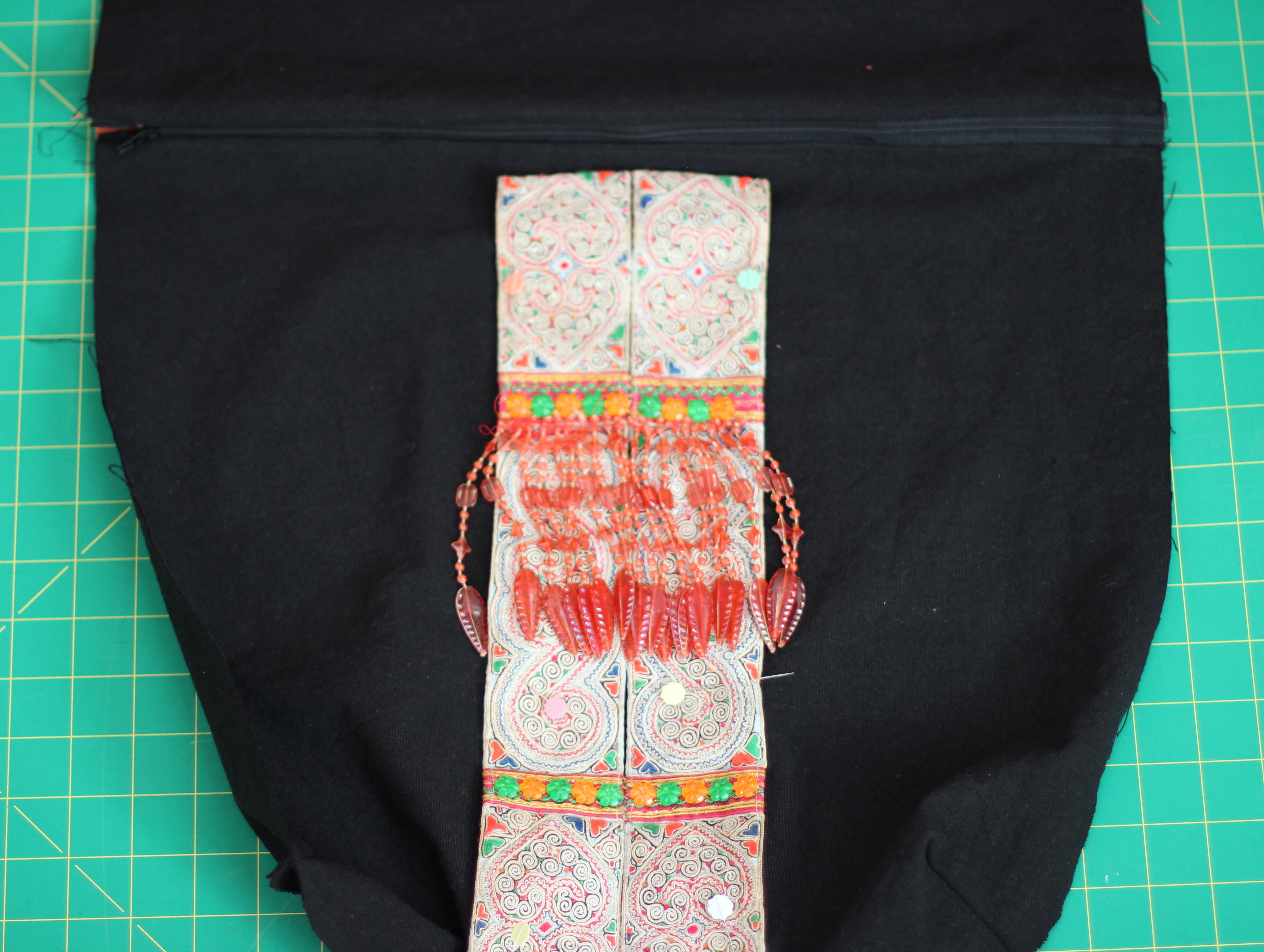
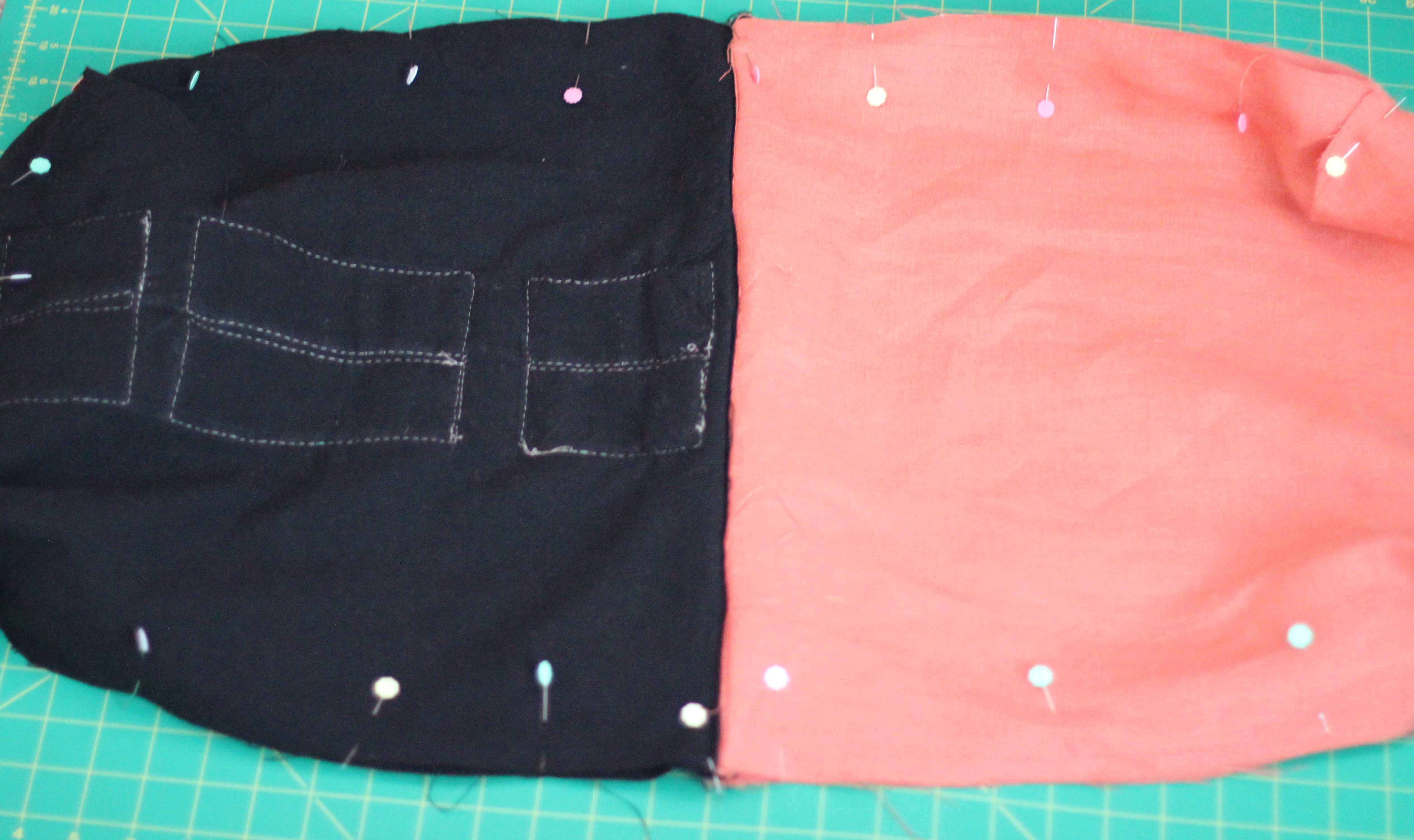
I then placed my fabric remnant on the center of the outer canvas on the side opposite of the one with the inner pocket.  I pulled the lining away and made sure that there was 1/2 free at the bottom to allow the bottom seam to come together.  I sewed the remnant in place using thread that matched.

IMG_5025


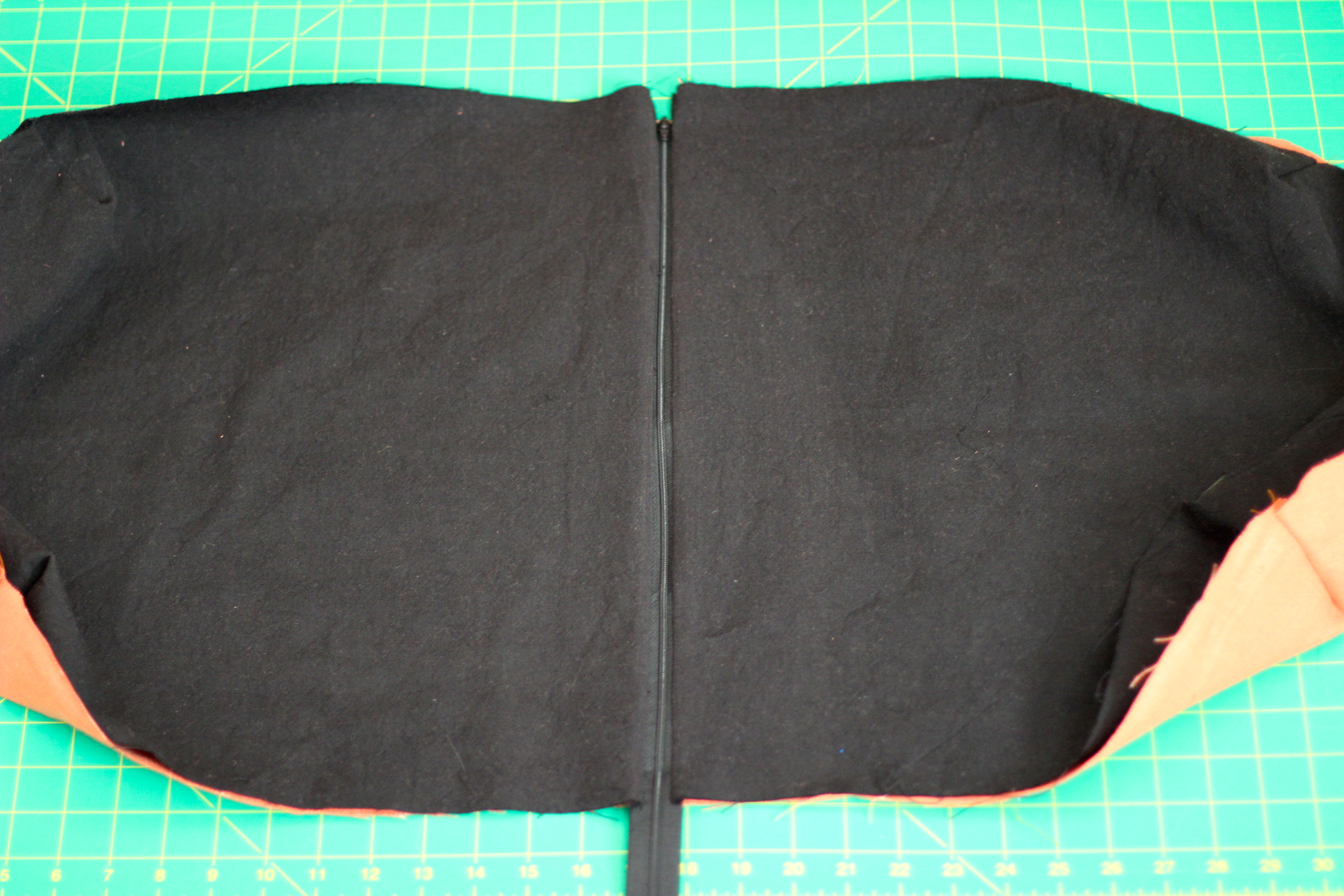
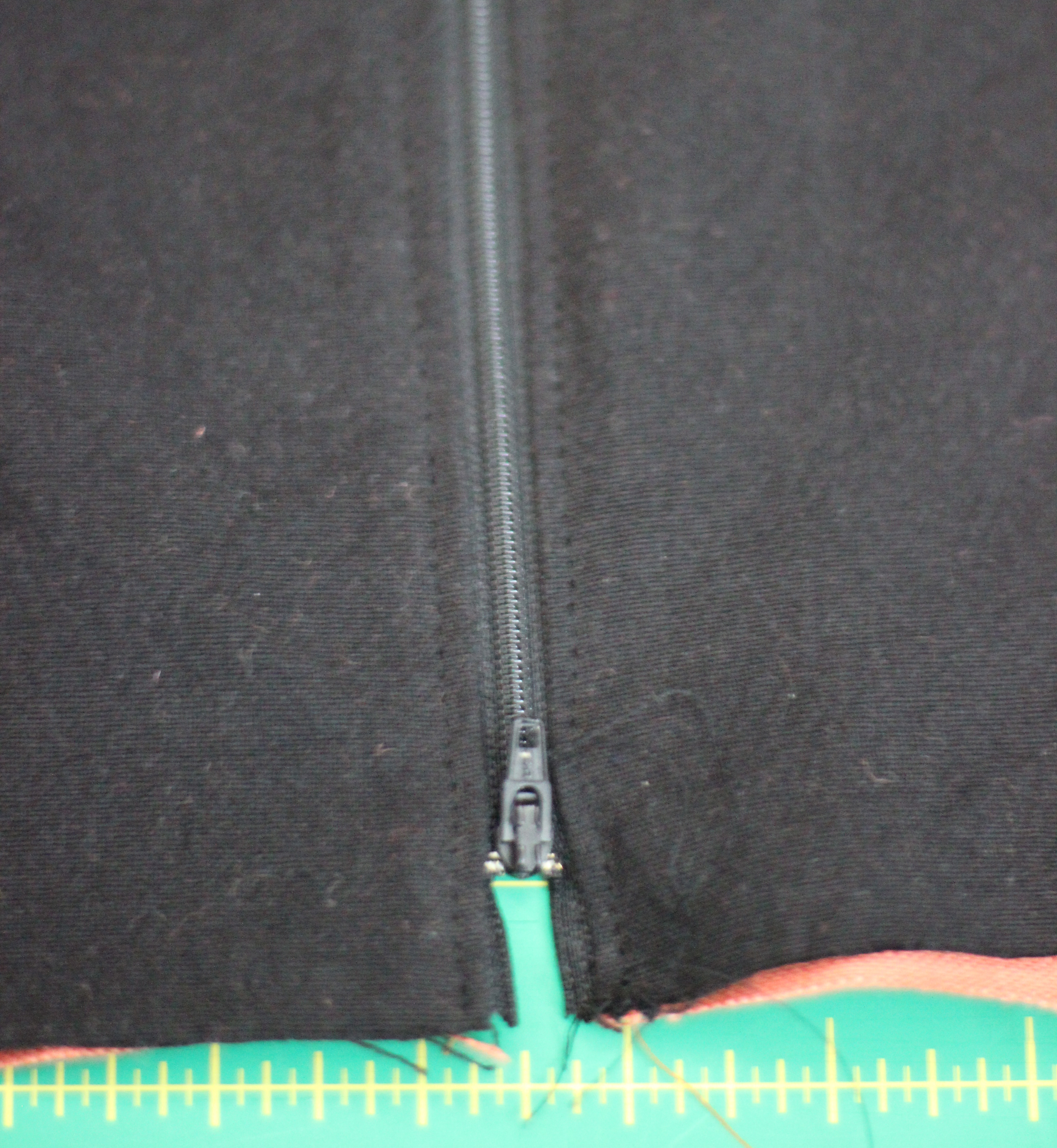
I top stitched along either side of the zipper using a 1/8 inch seam and trimmed the end of the zipper.

IMG_5028


IMG_5029


Next up, I pulled the outer canvas pieces together and the inner lining pieces together wrongs side together and sewed around the whole sandwich leaving a large opening at the bottom of the lining to facilitate flipping it right side out.

I flipped it and started working on the handle.  To make the handle, I folded the 5×36 inch piece in half lengthwise and fused the fusible fleece with an iron to the top.  I sewed around the rectangle leaving an opening in the middle of the long side to facilitate flipping inside out and also made a curve at each long end.  I flipped it and pressed making sure the opening was lined up and topstit hed all around the handle at 1/8 and 1/2 inches.

IMG_5030


Almost done, I reached inside the lining opening and secured the ends of the handle to the both sides of the bag so that the curved end of the handles were 3 inches below the zipper.  Although it was a tight fit, I used my machine to sew the handle to the outer canvas (keeping the lining out of the way) in a u shape following the curve of the handle and sewing across the top of the U a couple times to reinforce.  Lastly, using thread to match the lining I sewed the lining opening closed using a 1/8 inch seam.

IMG_5036

IMG_5042
 

Hope that wasn’t too confusing.  I think this bag would work for remnant of any kind, in fact I have an antique quilted square I want to try next.


The Big and the Small of It

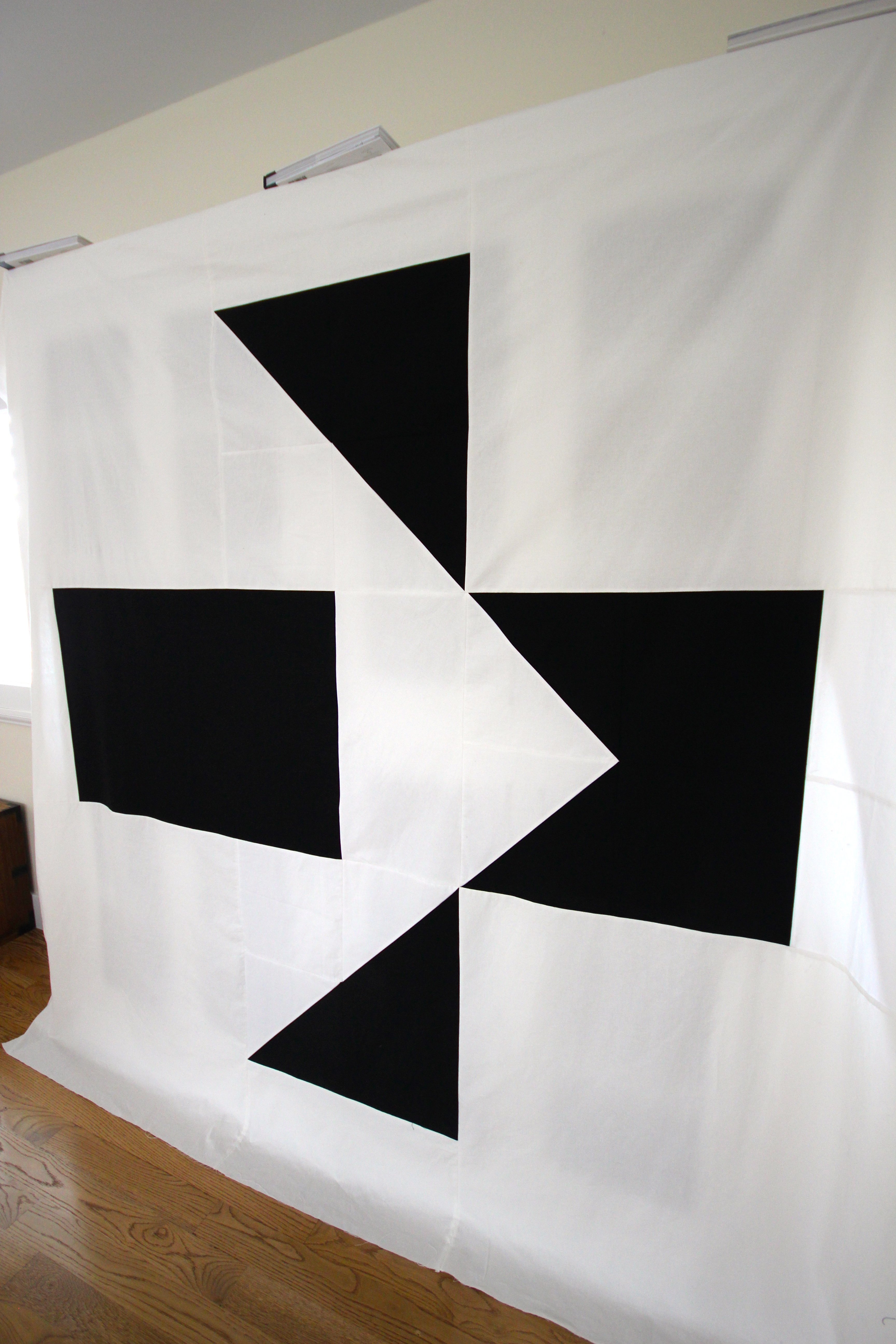
Working both the big and small sides of crafting today. With an image in my mind and 6 yrds of Kona Black and Snow colored fabric at my disposal, another new jumbo geometric quilt top is complete.

IMG_4835

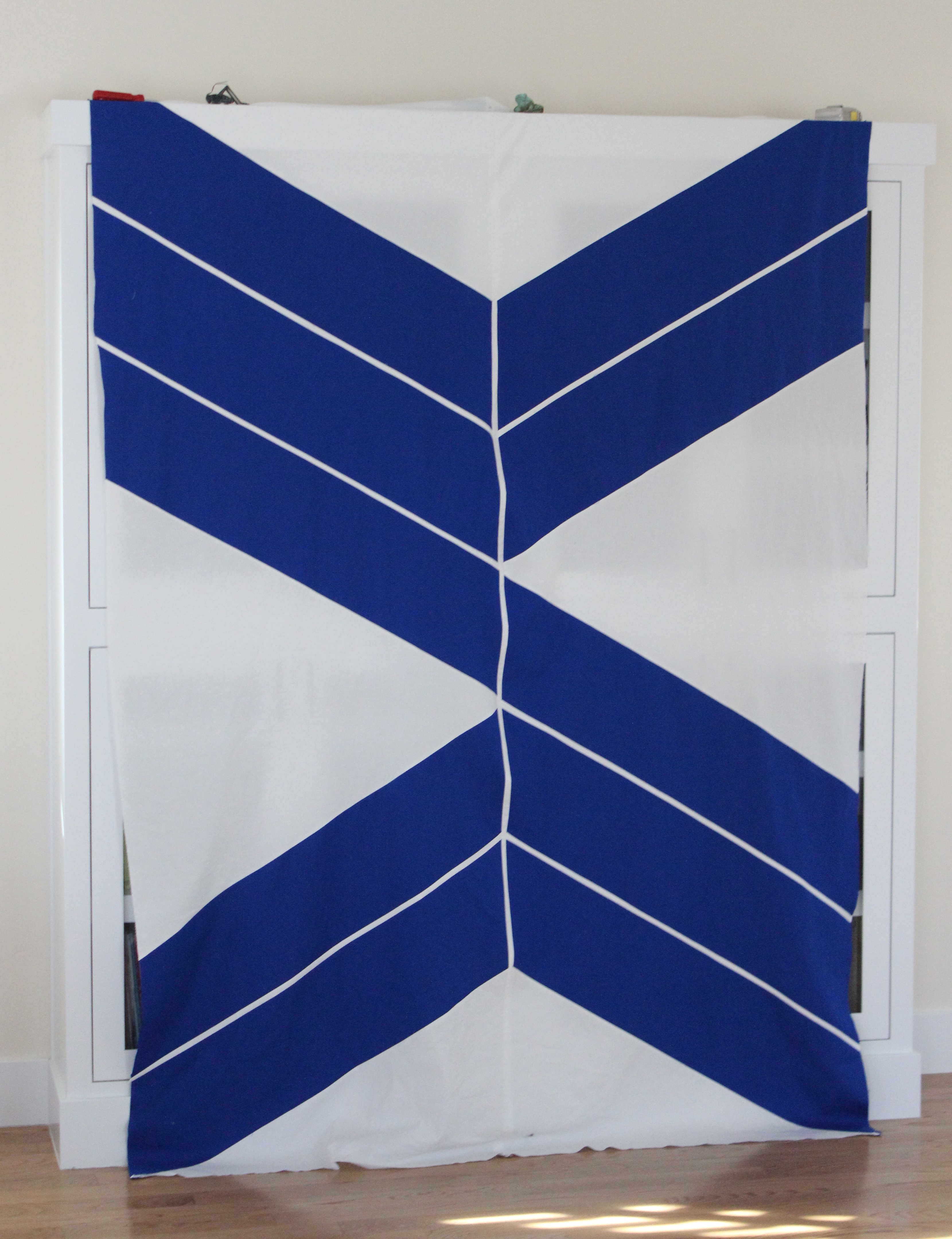
In the jumbo crafting arena, I also finished the back for my Big Blue Quilt top and have sent it off to Emily Sessions for some custom quilting. (https://entropyalwayswinsblog.com/2014/01/02/big-blue/ ) I can’t wait to see what quilting she comes up with!

IMG_3924

I also was kindly invited to join a sew along for the Noodlehead Cargo Duffle (http://www.noodle-head.com/2013/10/cargo-duffle-pattern-for-robert-kaufman.html) being organized by Sophie (http://lescrapdesoph.blogspot.fr/2014/02/announcing-cargo-duffle-sew-along.html). I have never joined a sew-along before but with Sophie leading (her blog and crafts are so beautiful) and the Cargo Duffle as a goal, how could I refuse?! I have about three different versions of this duffle in consideration, one using some recycled leather. This is going to be fun!

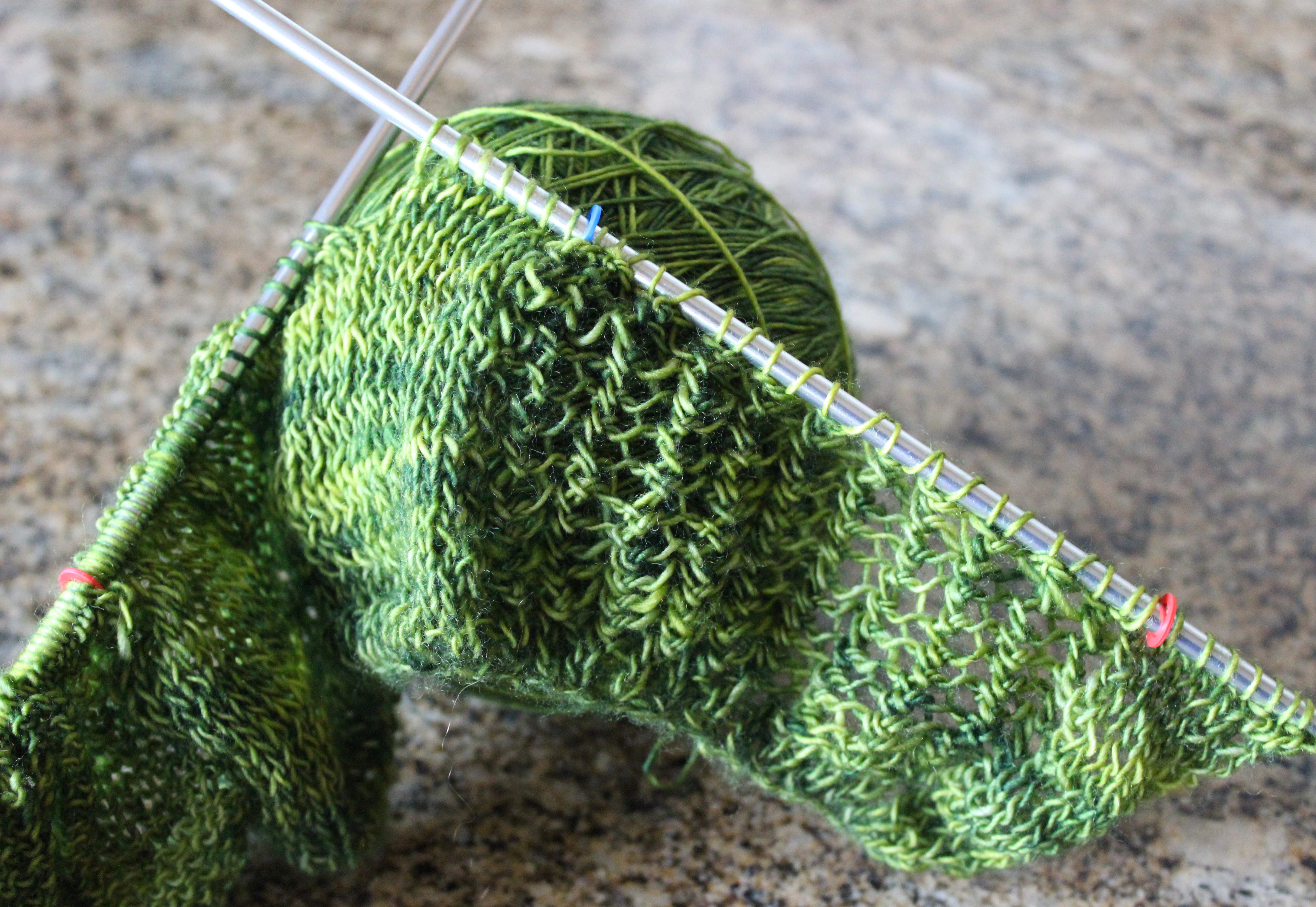
On the small side of Crafting, I have been slowly working on a lace wrap using my Madelinetosh Prairie yarn. Though I have knit lace stitches before, I have never made a lace throw nor worked with lace weight yarn.

IMG_4823

Enjoying all of these projects, big and small. Wishing everyone a relaxing and inspired weekend.

Hillary
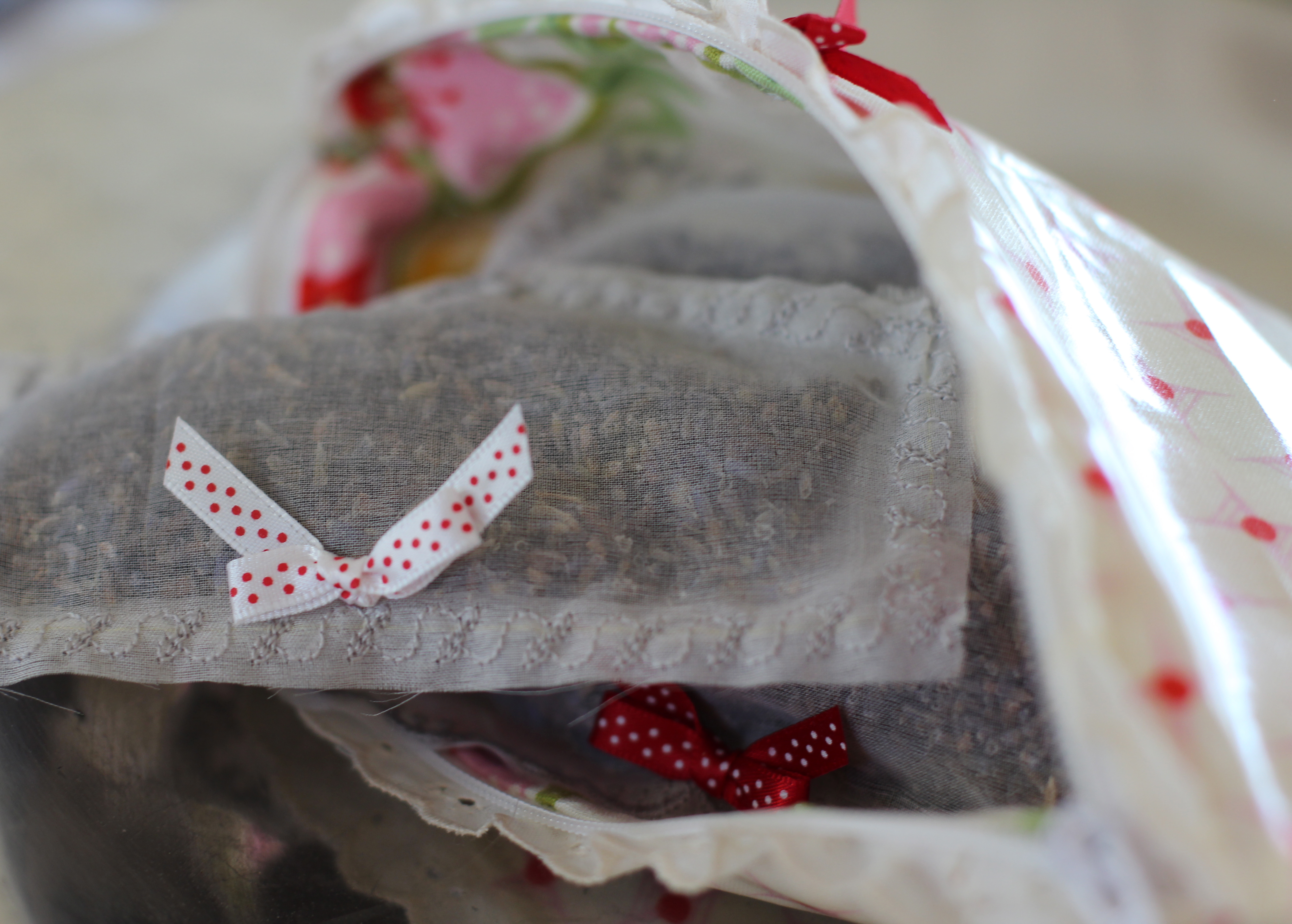
Sachet’s For the Underwear Drawer-A Tutorial

I think I have underwear on the brain. Not sure why, but making panty shaped sachet’s has been pushed front and center on my to do list. I have about three quilt tops to quilt and several projects midway done but after buying silk organza yesterday, all I can think about is sachets.

IMG_4745

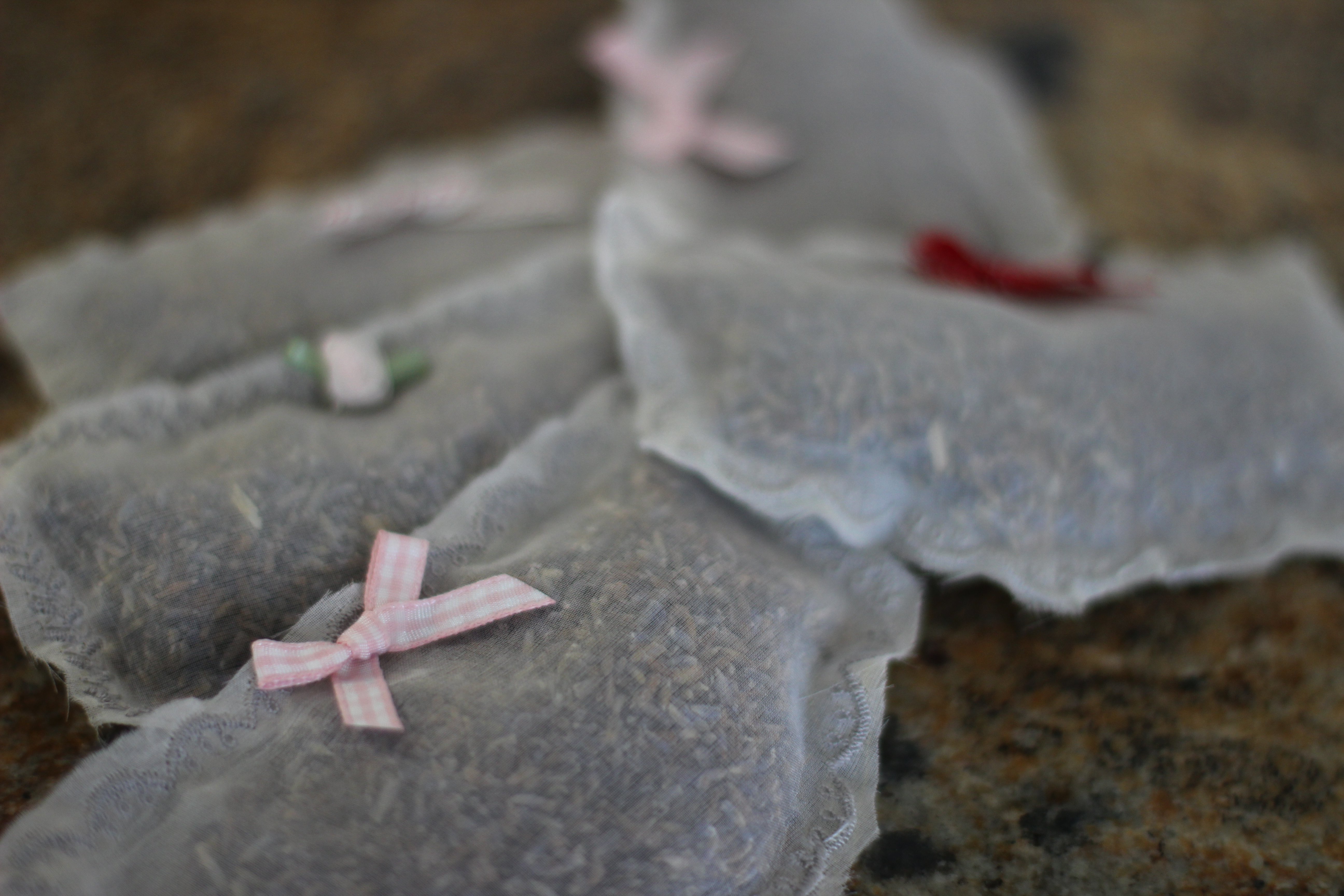
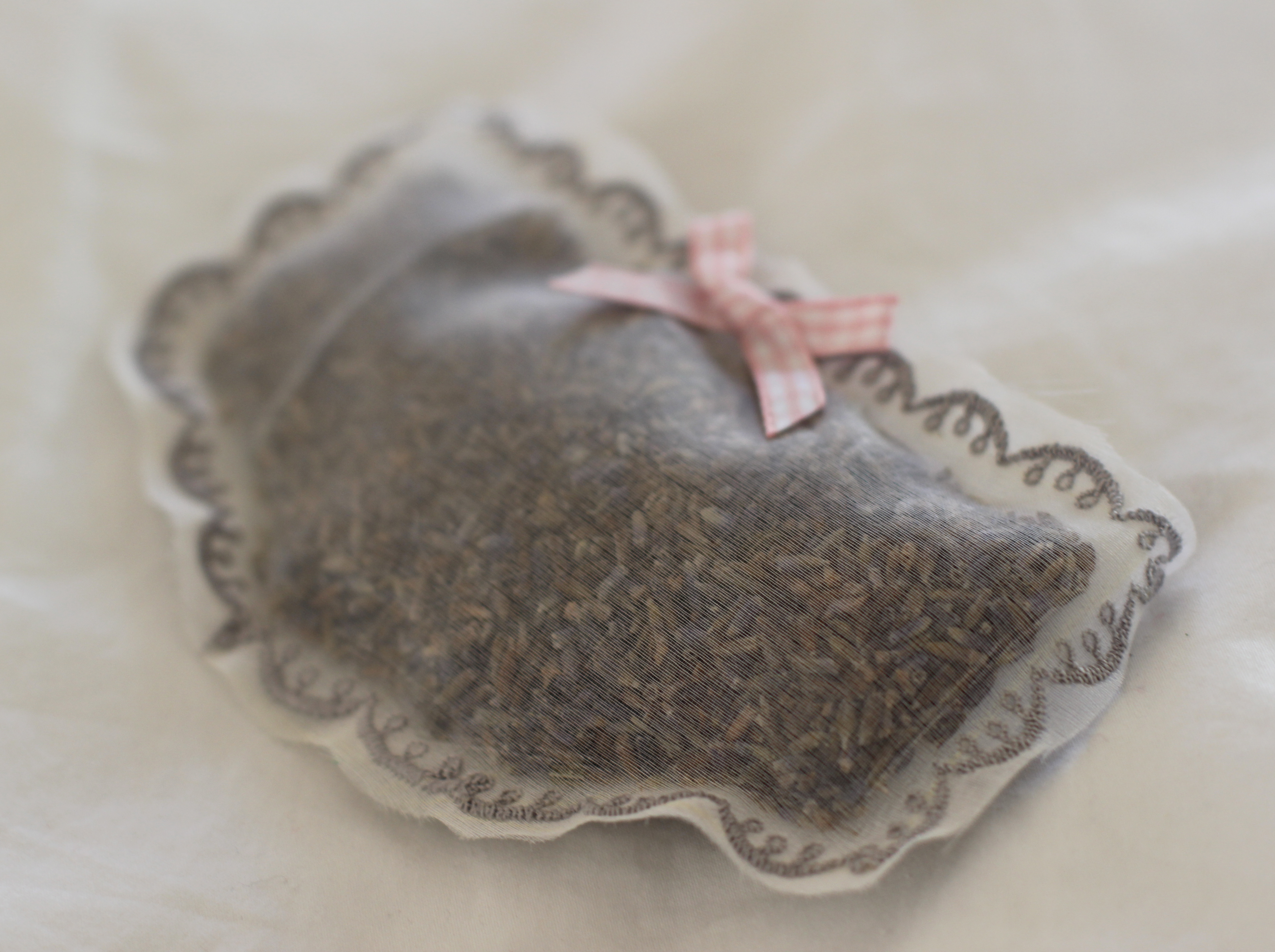
And these have been so darn easy to make that it is hard for me to stop. Another bonus is that with each one, I have been trying out new to me decorative stitches on my Janome.

IMG_4734

IMG_4731

To be honest I am a great Do-er and not the best teacher but these guys were so easy I thought I would pass on the techniques I used.

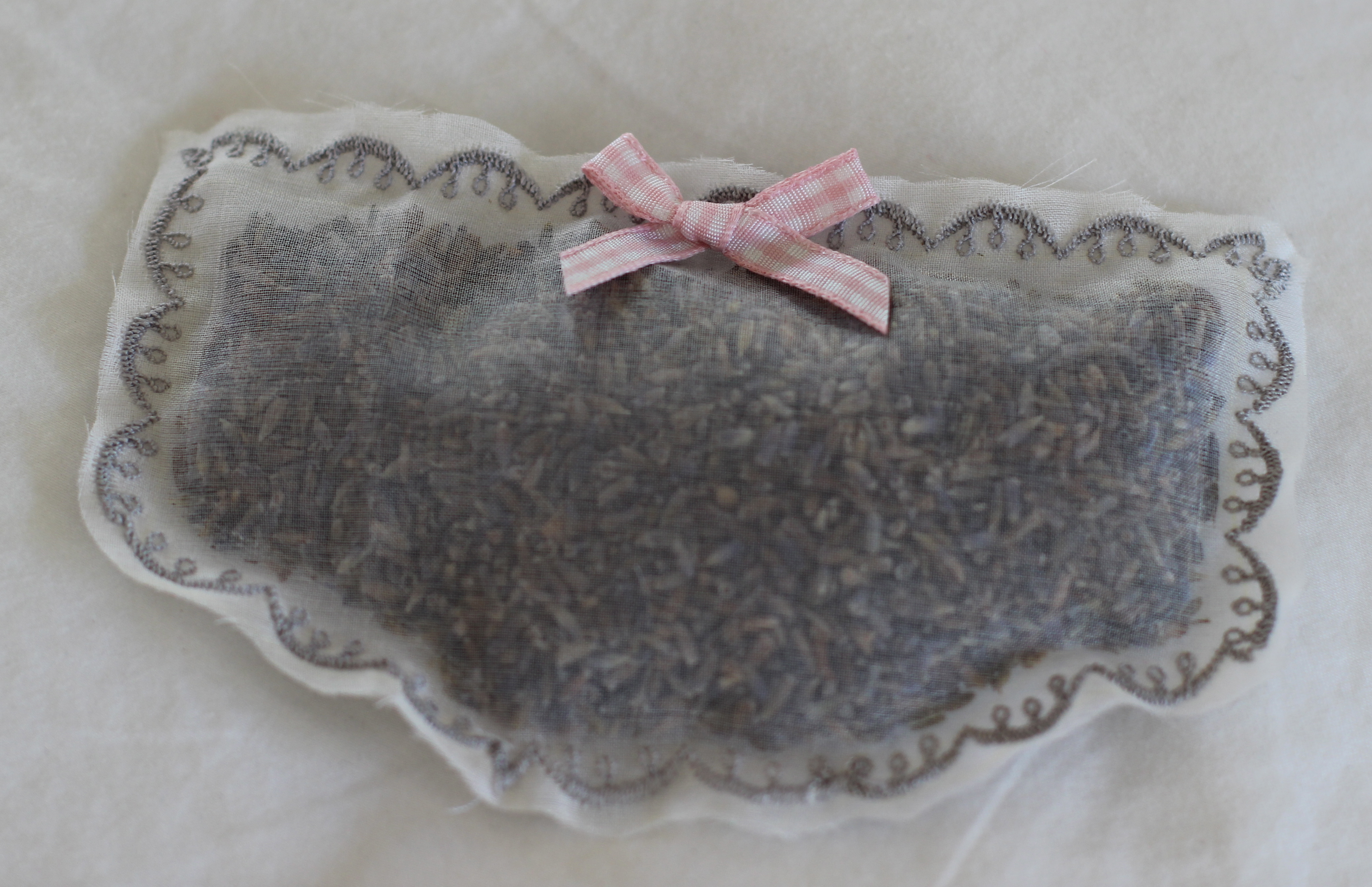
Supplies: Sewing machine, silk organza, thread, small premade bows, a small funnel and lavender flowers. (I used white organza and grey thread to make the decorative stitching more noticeable and I bought my lavender in the bulk section of Whole Foods.)

Basic Instructions: Mark off with fabric marker a rectangle 5 inches by 7 inches and cut around these rectangles in the silk organza allowing a generous 1 inch border to make stitching easier.   Make symmetric diagonal cuts on the lower rectangle corners to make it into the shape of underwear.  Pin the two pieces of organza together in the middle of the rectangle to keep them together when sewing.   Using a decorative stitch, sew around the edges along your marked lines, leaving the bottom open. Using your funnel, fill the sachet with lavender. Finish the bottom with the same decorative stitching to seal the lavender in place.  Trim the edges of the organza on all sides close to the stitching.   Using some of your thread, hand sew one of the small bows in place in the top center and you are done!

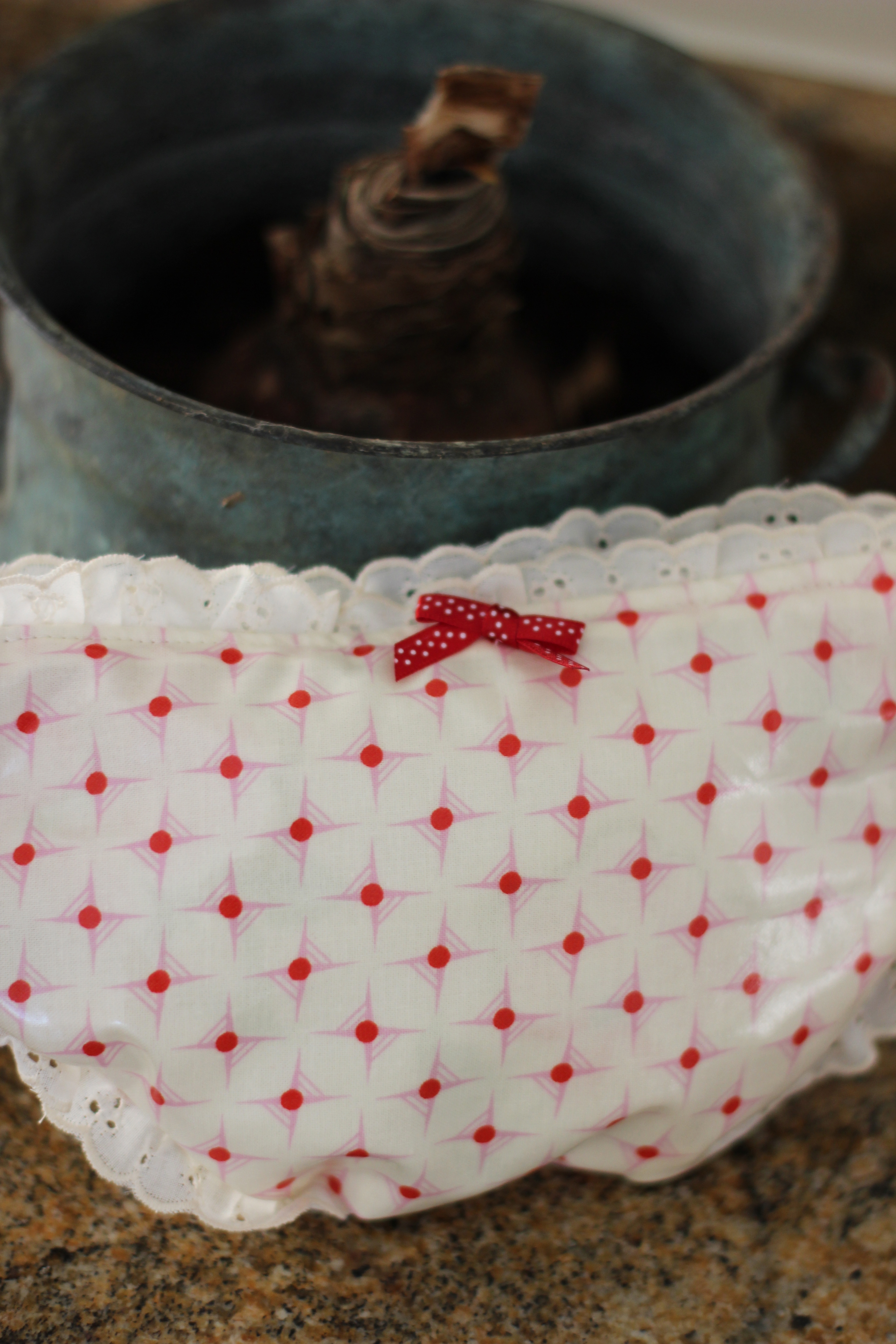
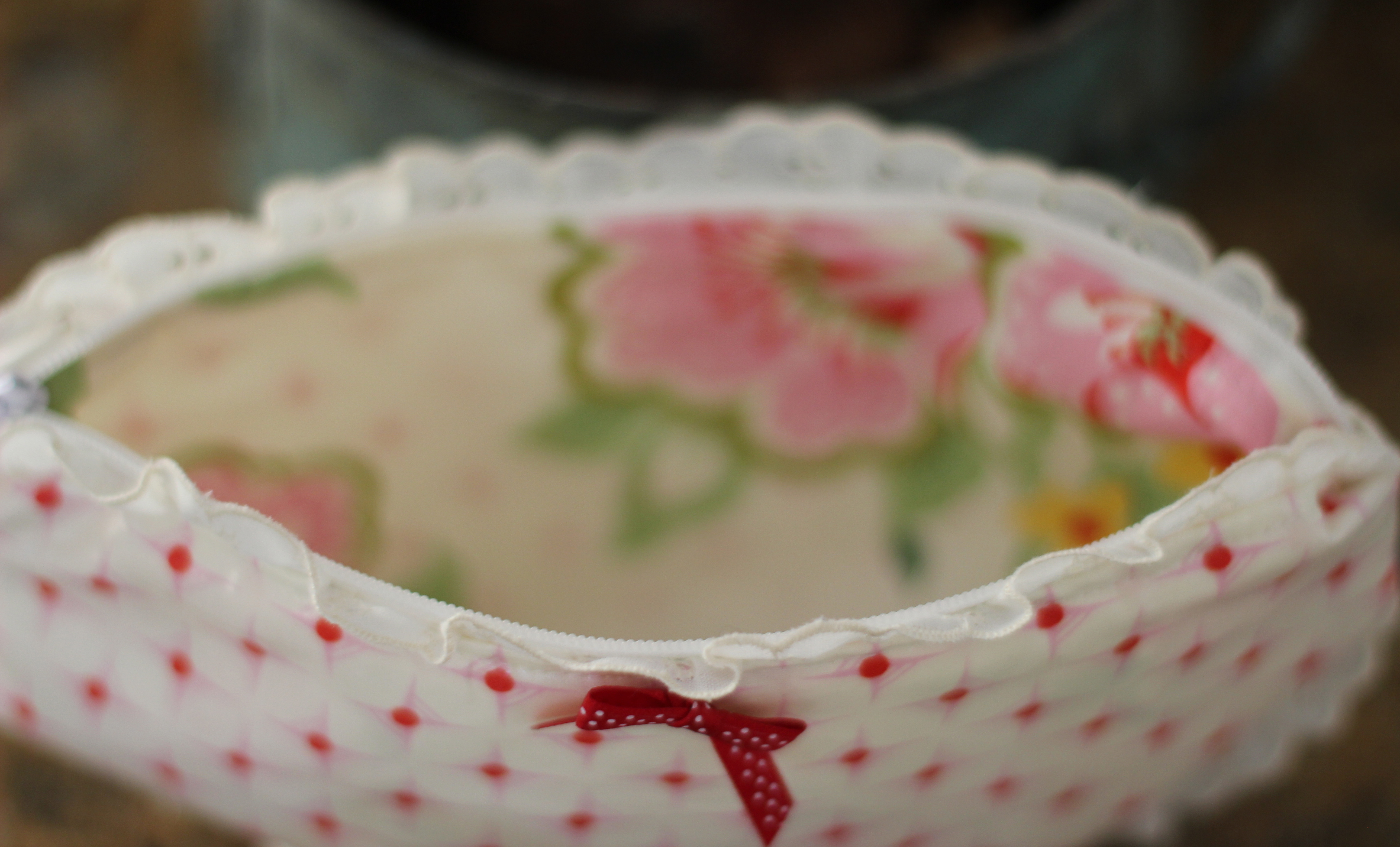
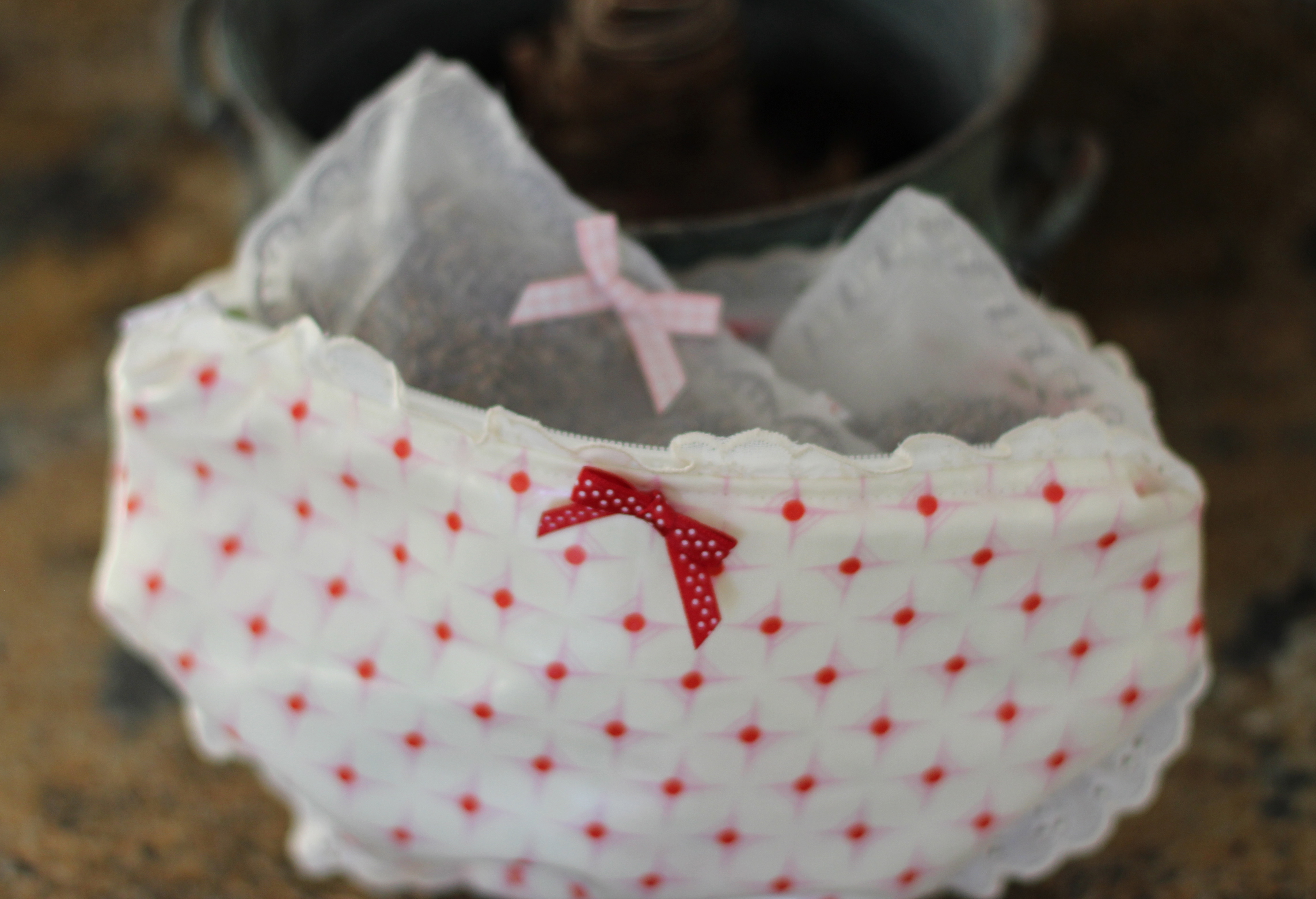
I decided I needed a little bag to hold my sachets so I used some Laminated Cotton from Heather Bailey’s Nicey Jane line and made an underwear shaped bag with frills to match my sachets.

IMG_4725

IMG_4737

IMG_4741

IMG_4740

Tshirts repurposed into a Cardigan with Fabric Flower

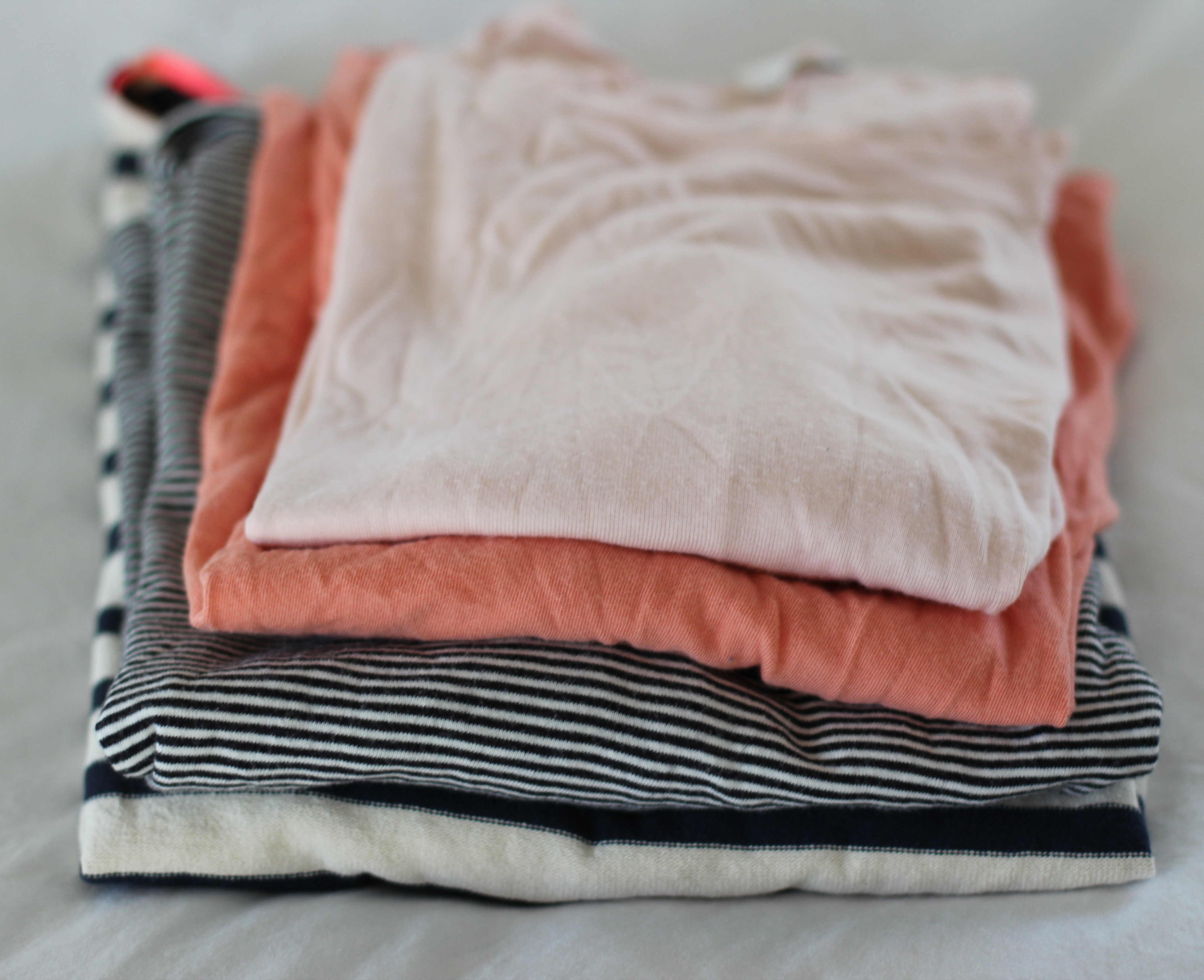
With the weather cooling down, I have been sorting through our drawers. I set aside a stack of old shirts and tshirts for the Goowill.  These shirts were too cute to give away, especially together so I decided to repurpose them into something new.

image

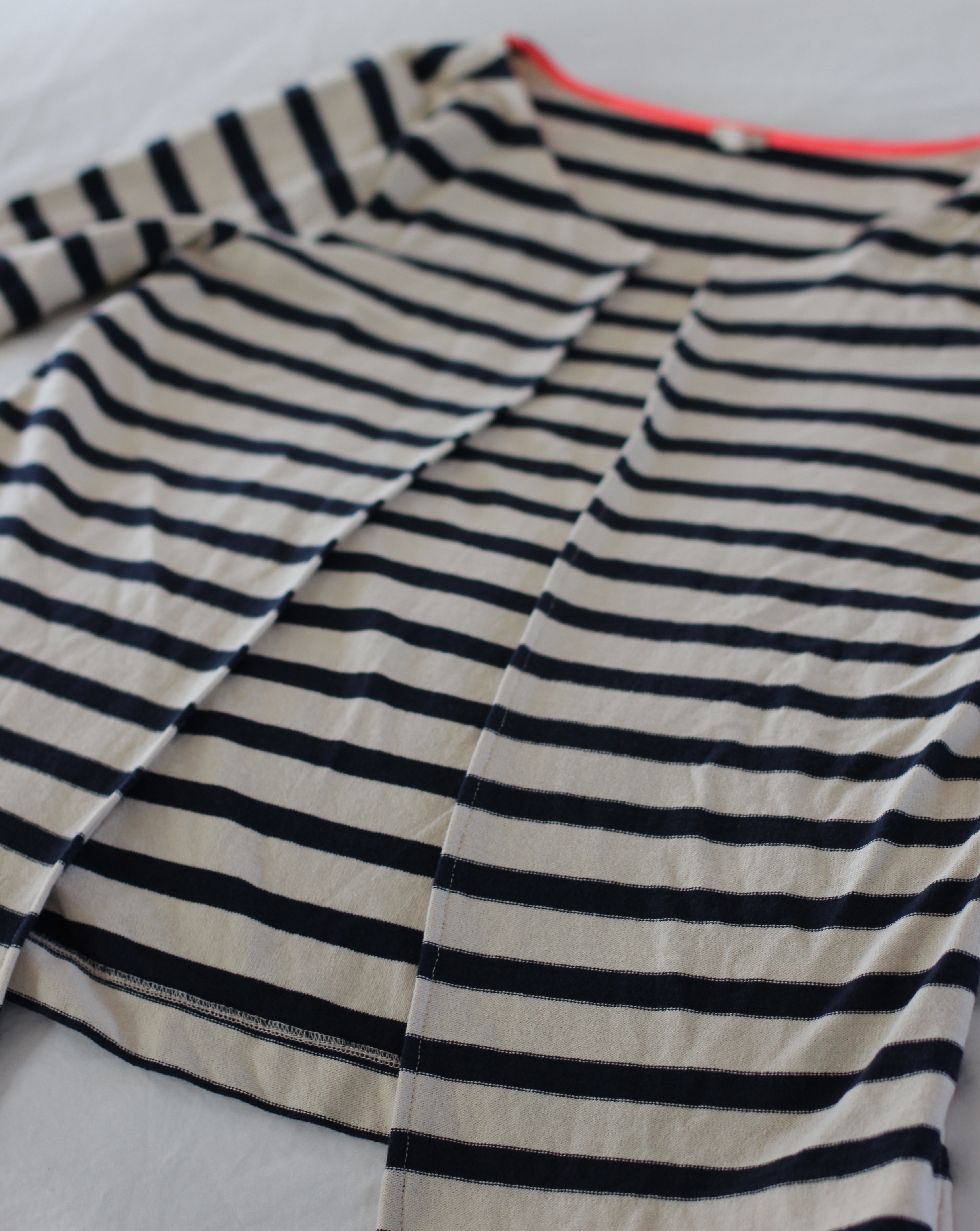
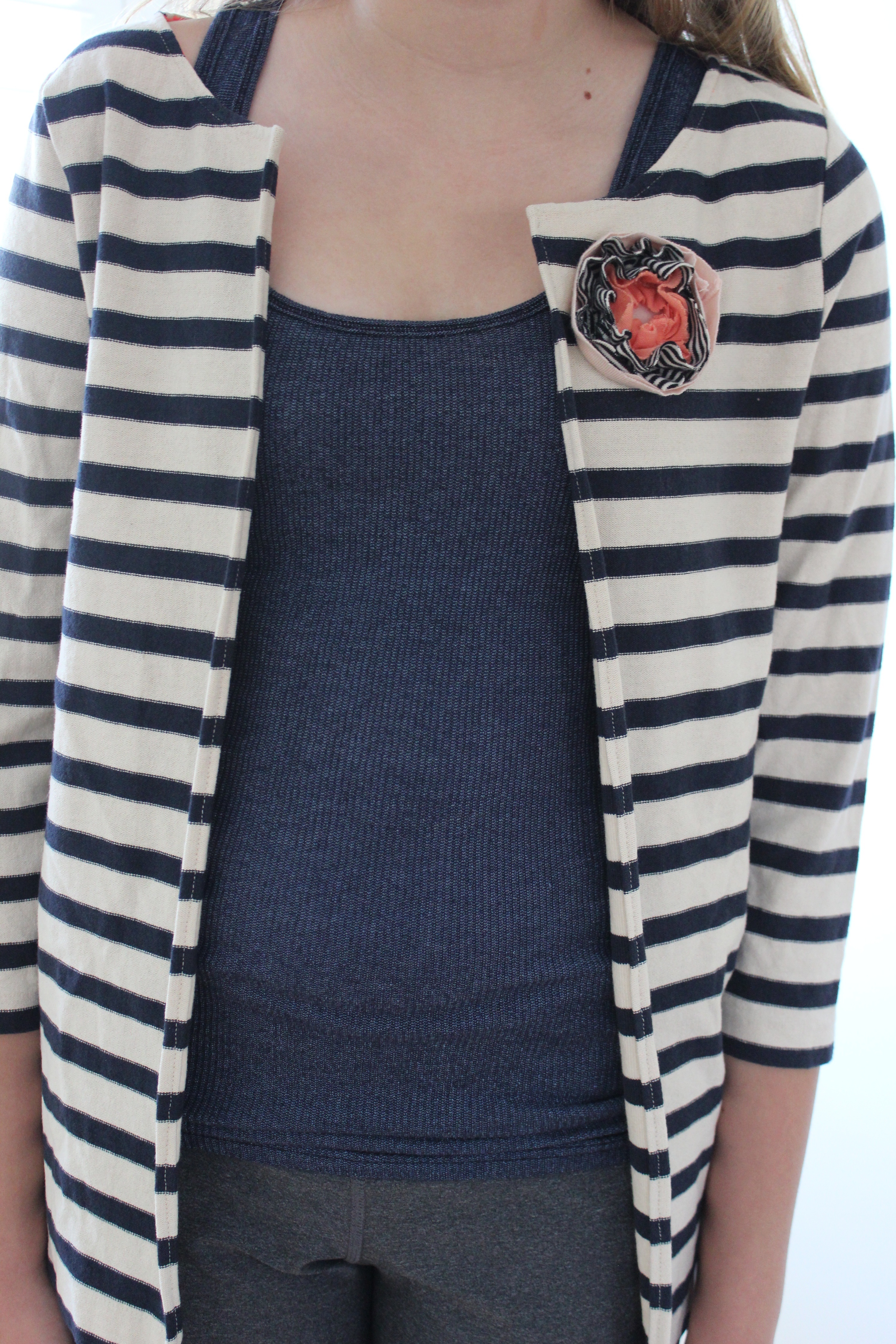
To start off, I picked an old striped shirt and made it into a cardigan by cutting down the middle and finishing the edges (I folded and pressed each edge in by 1/4 inch and folded again then straight stitched to finish.)

image

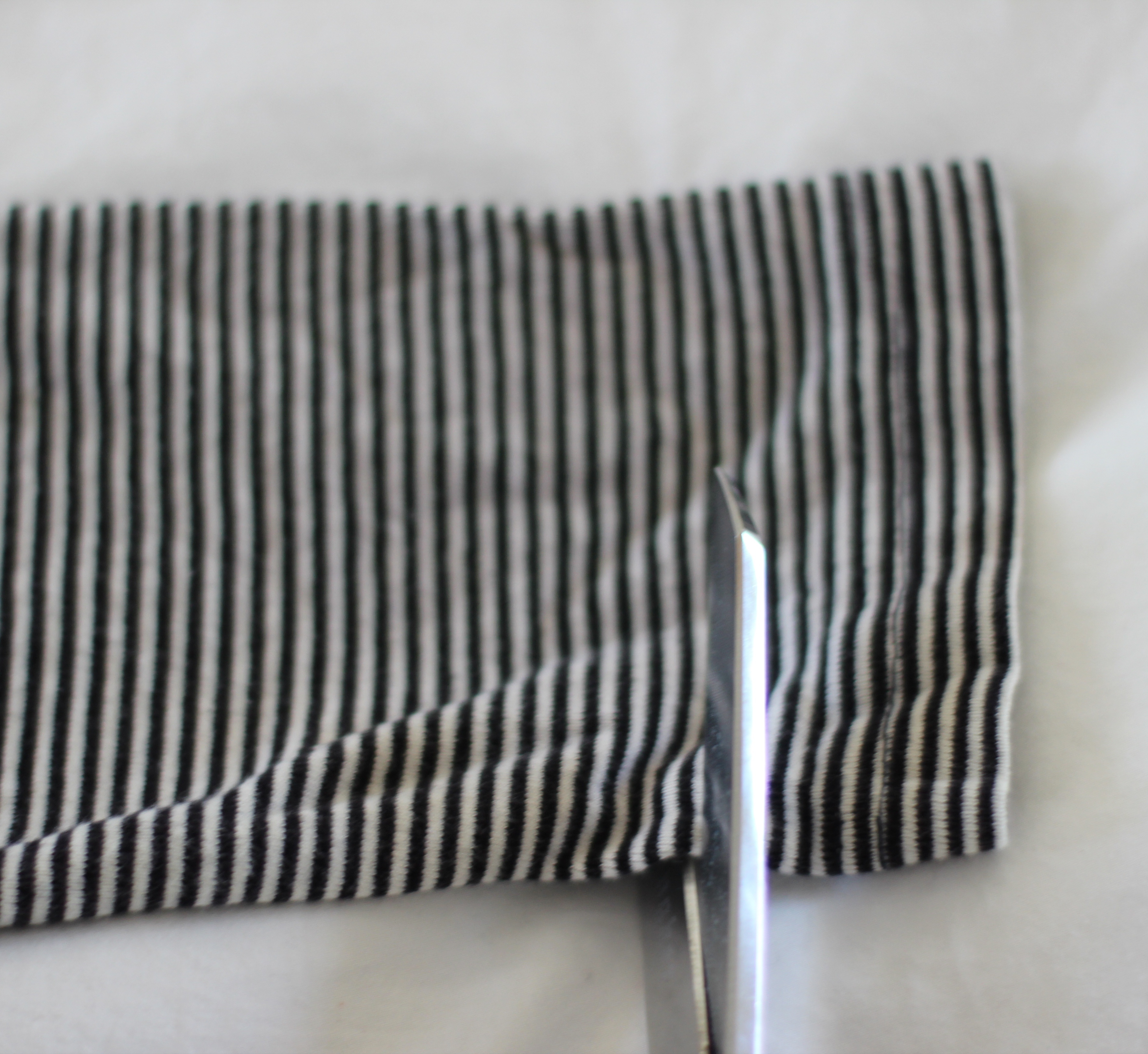
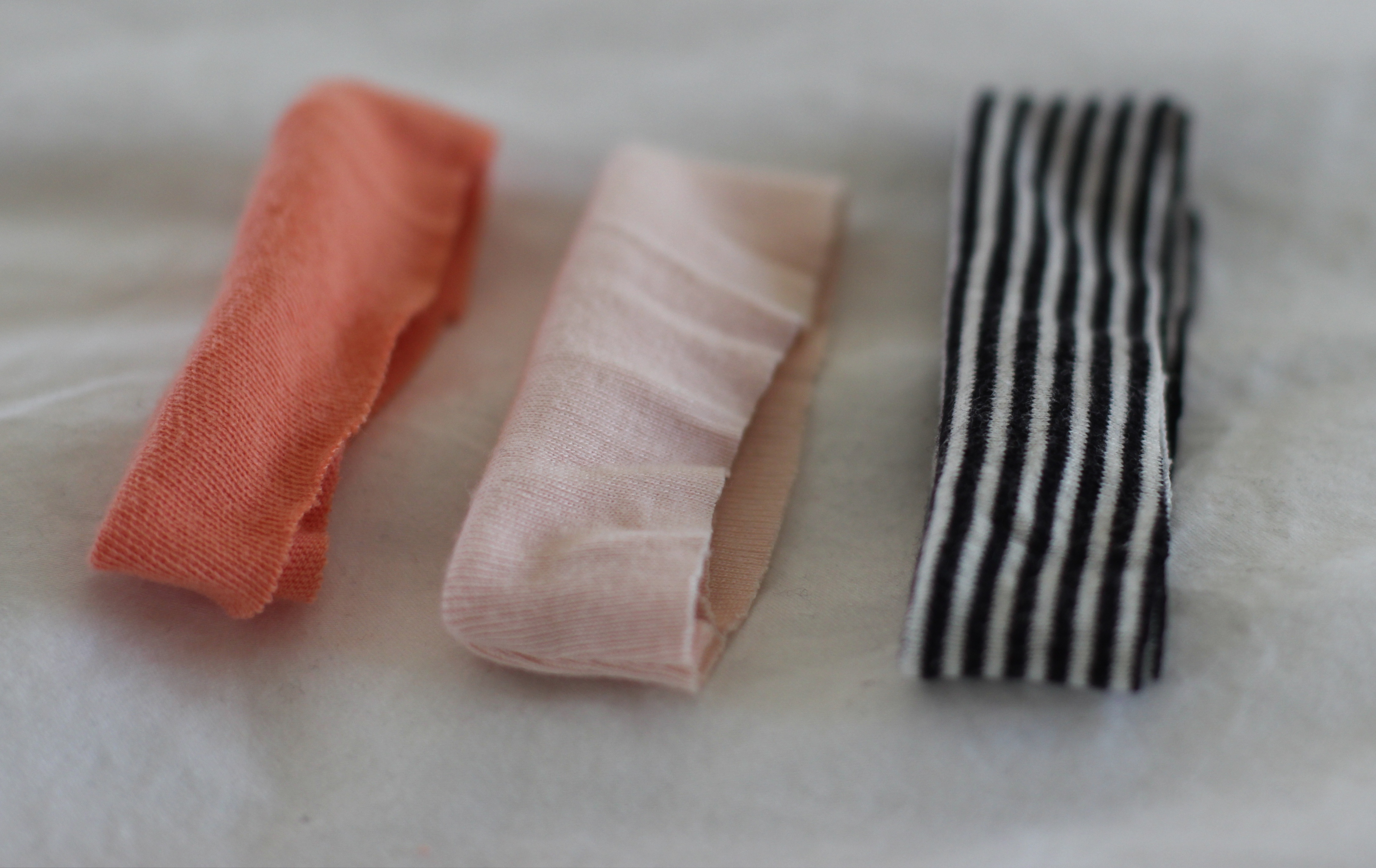
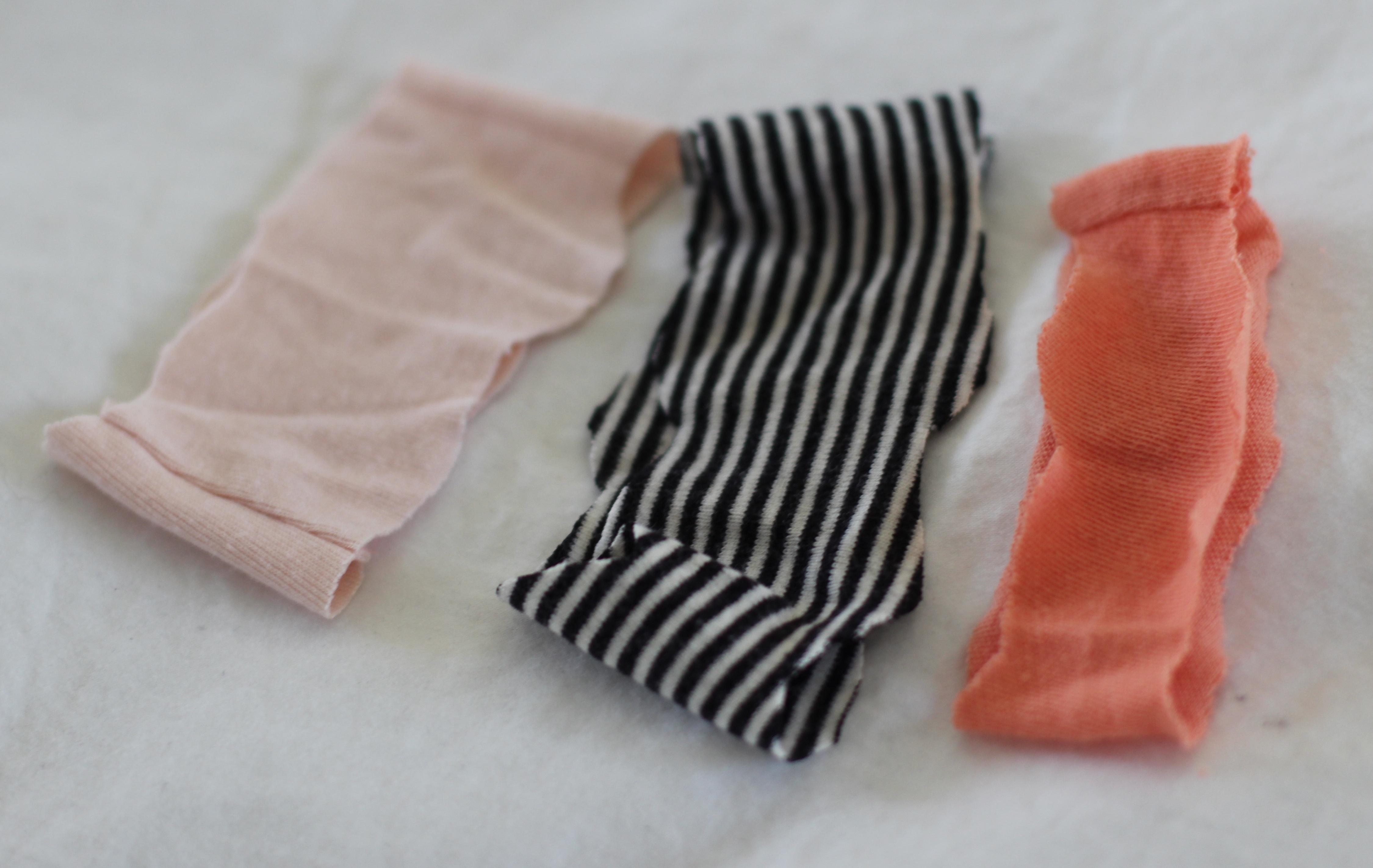
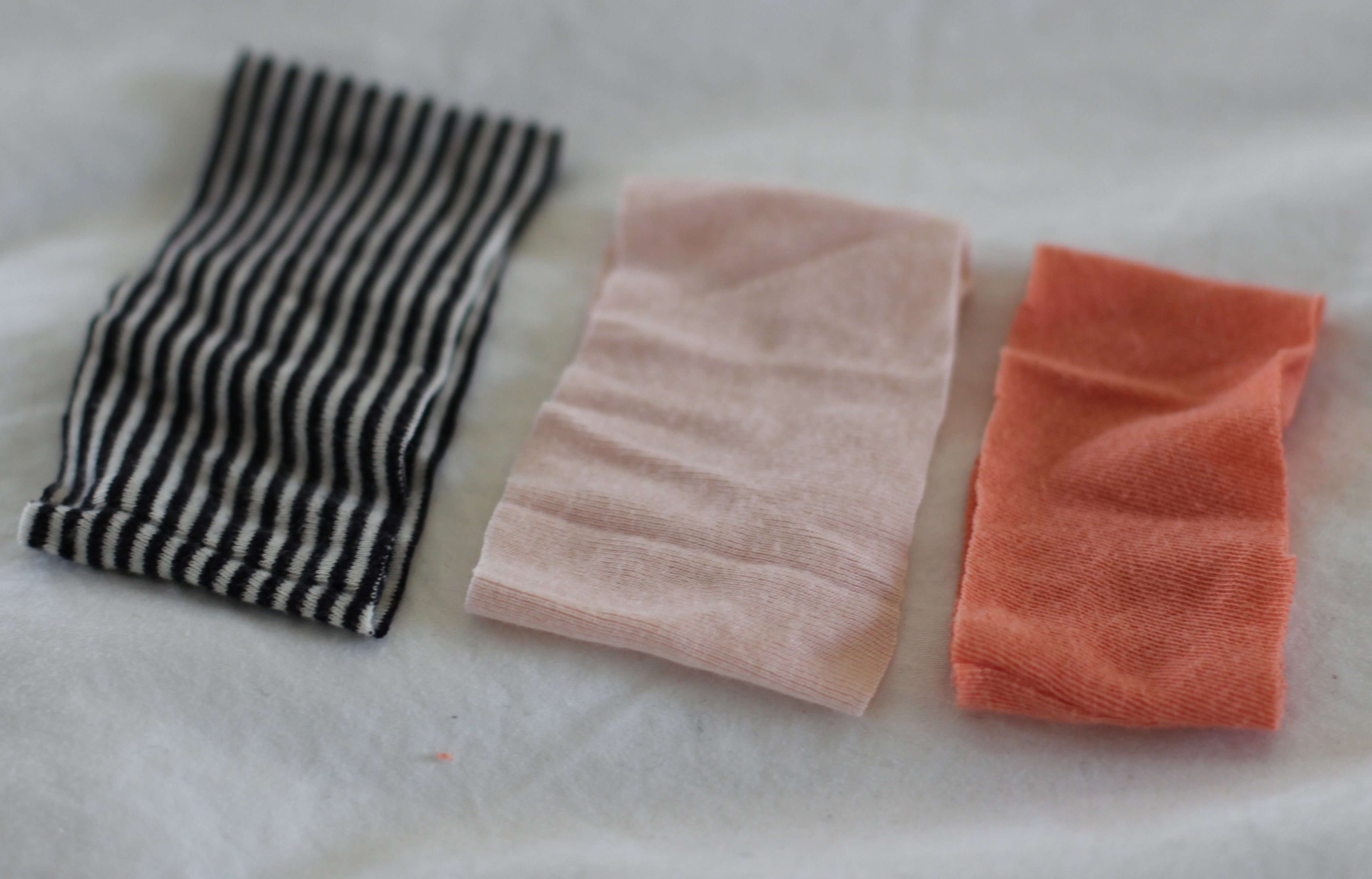
Next, I cut 1 to 2 inch sections from the sleeves of three different tshirts.

image

image

image

I then folded each in half and cut a scalloped pattern at the open edge to give the flower more depth.

image

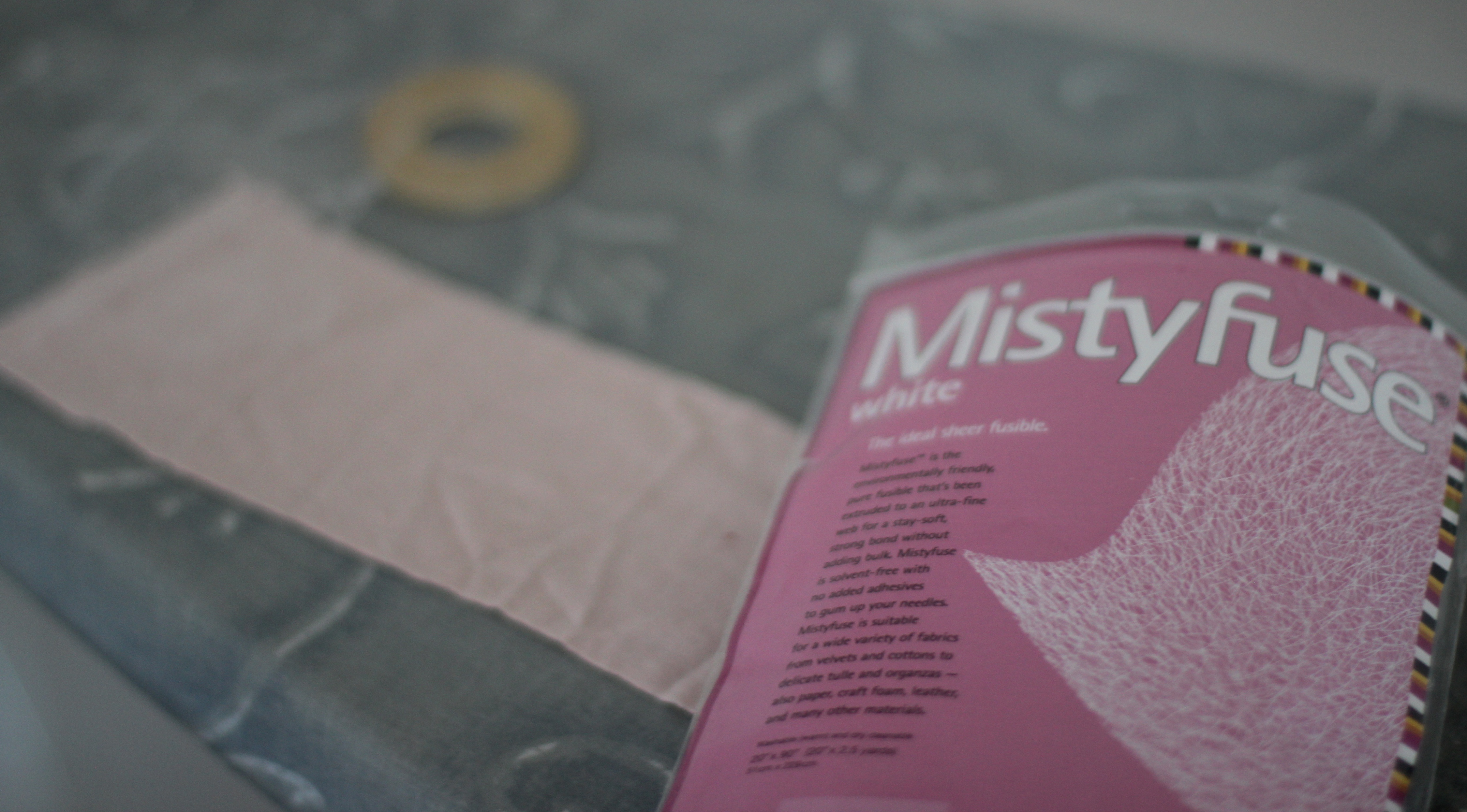
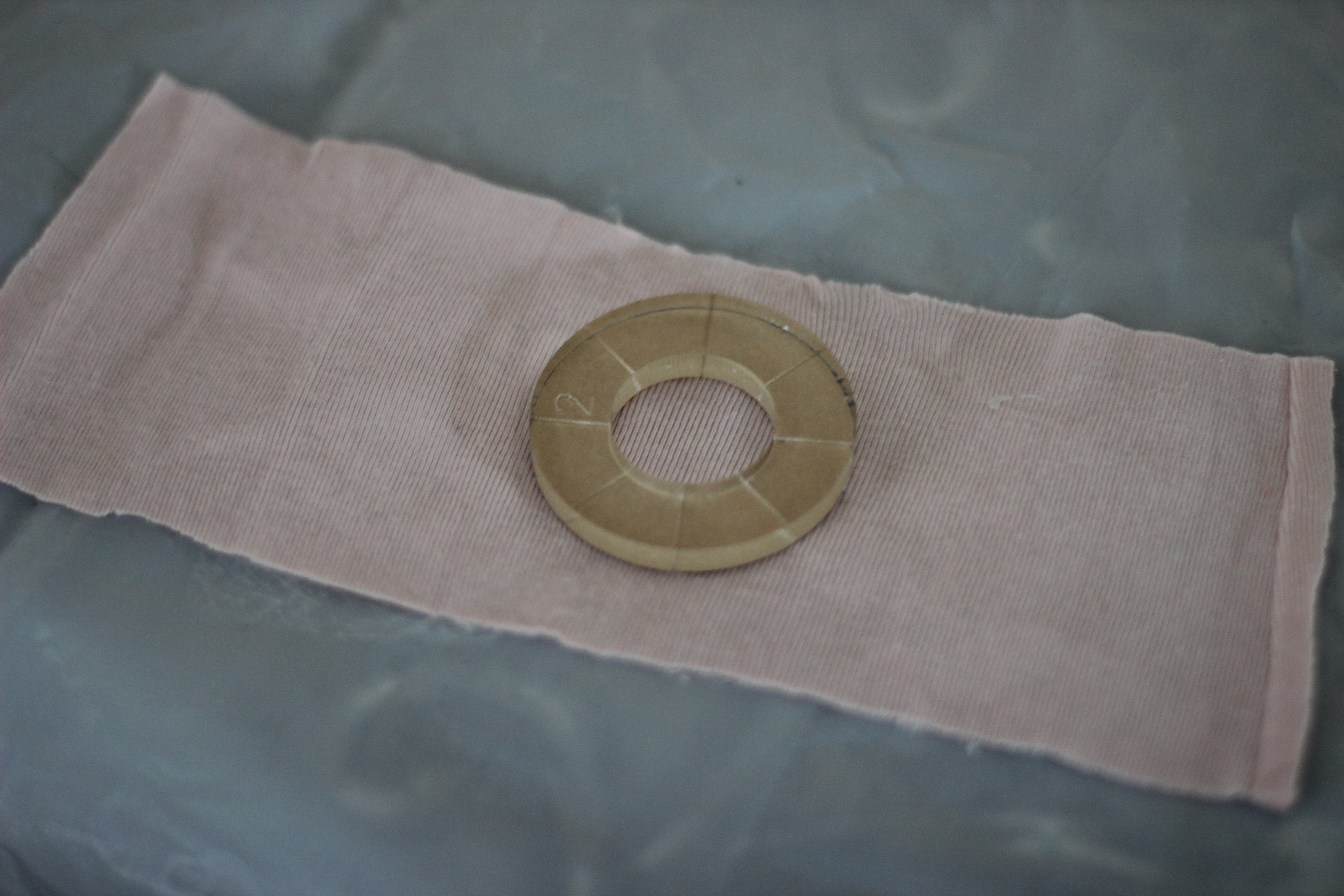
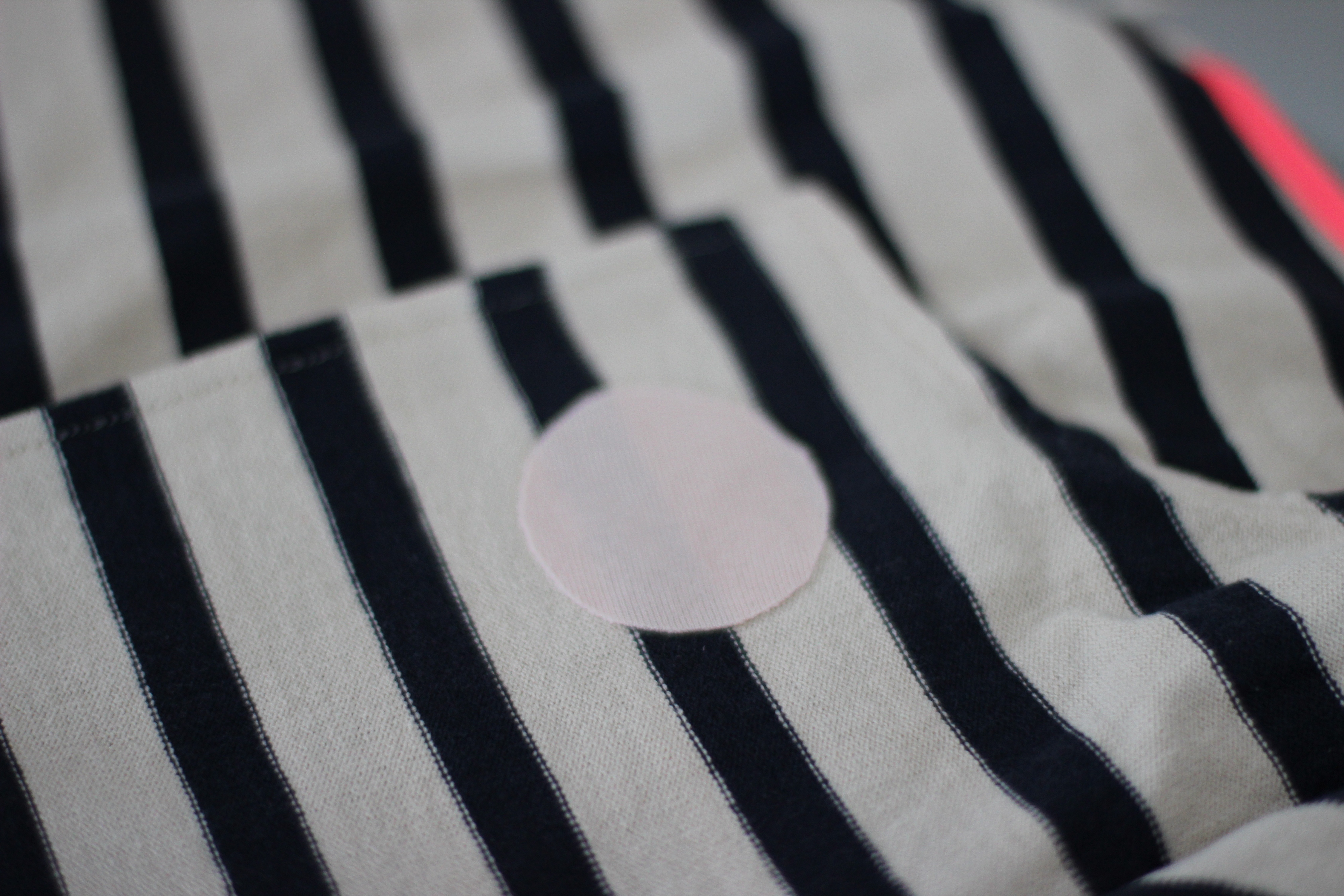
To provide a base for the flower I ironed Misty Fuse onto a small piece of one of the tshirts and cut a two inch circle which I then ironed to the left corner of my new cardigan.

image

image

image

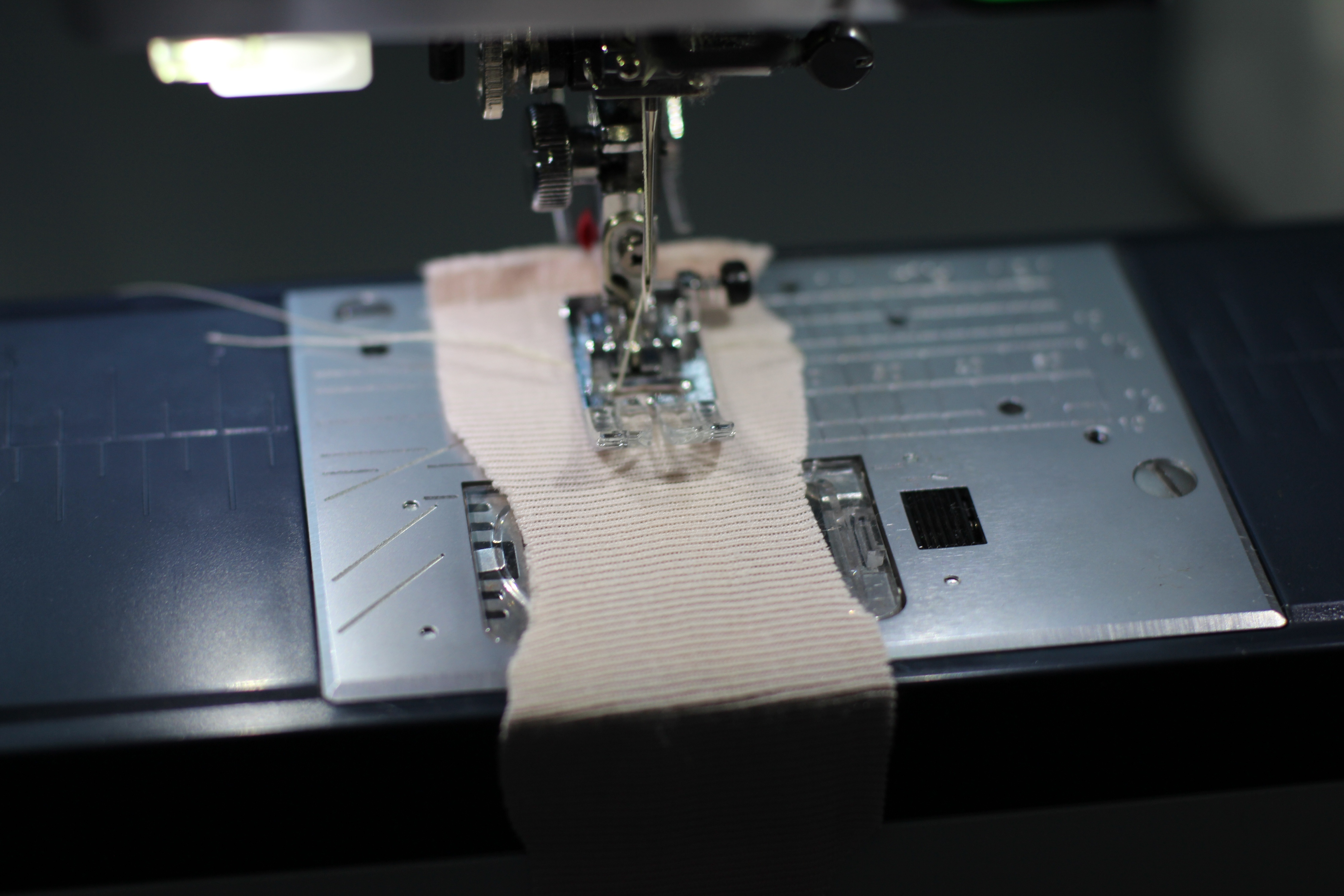
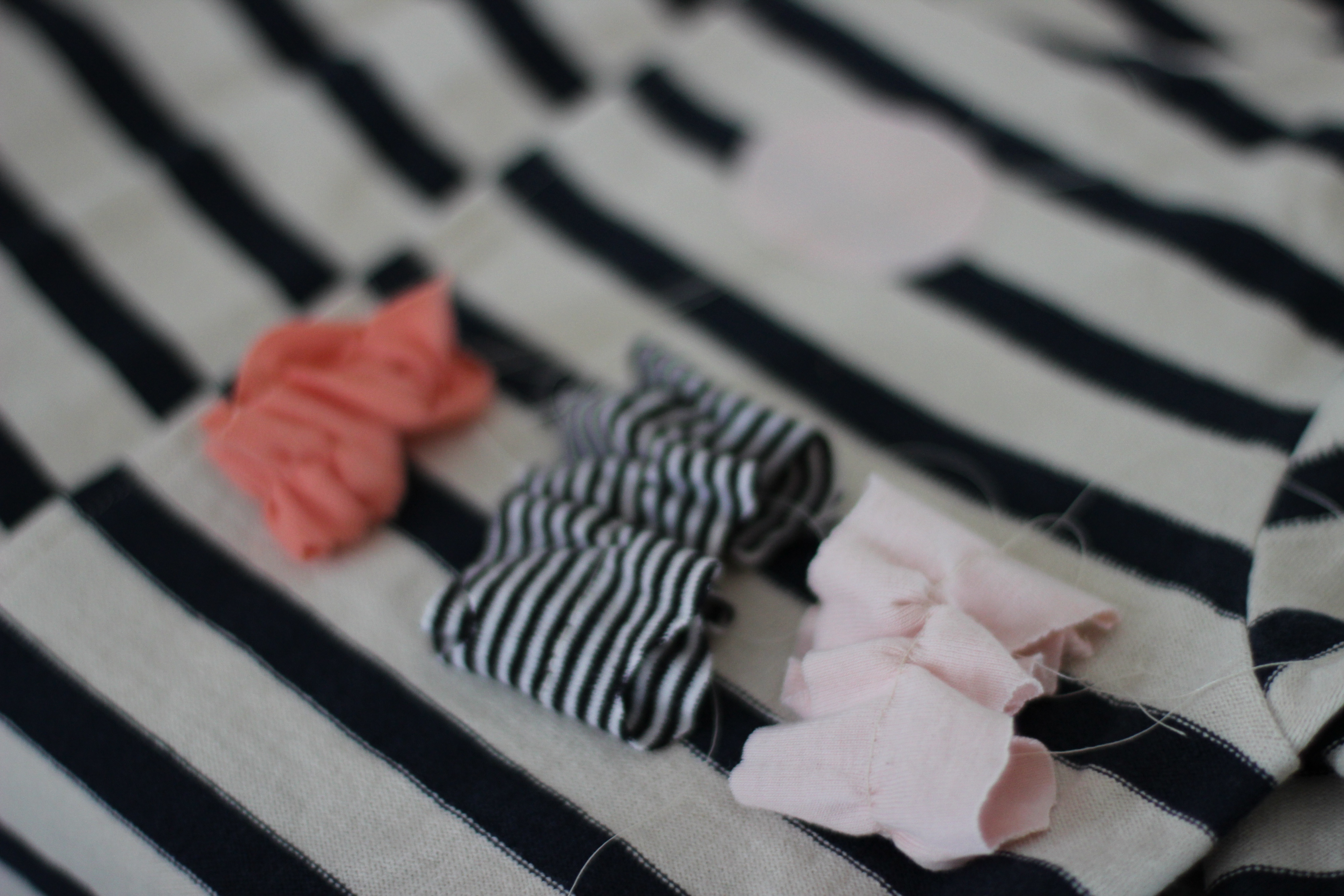
I then sewed down the center of each of the tshirt sleeve bands and pulled the loose stitches to gather them into a size that would fit in my two inch circular flower base.

image

image

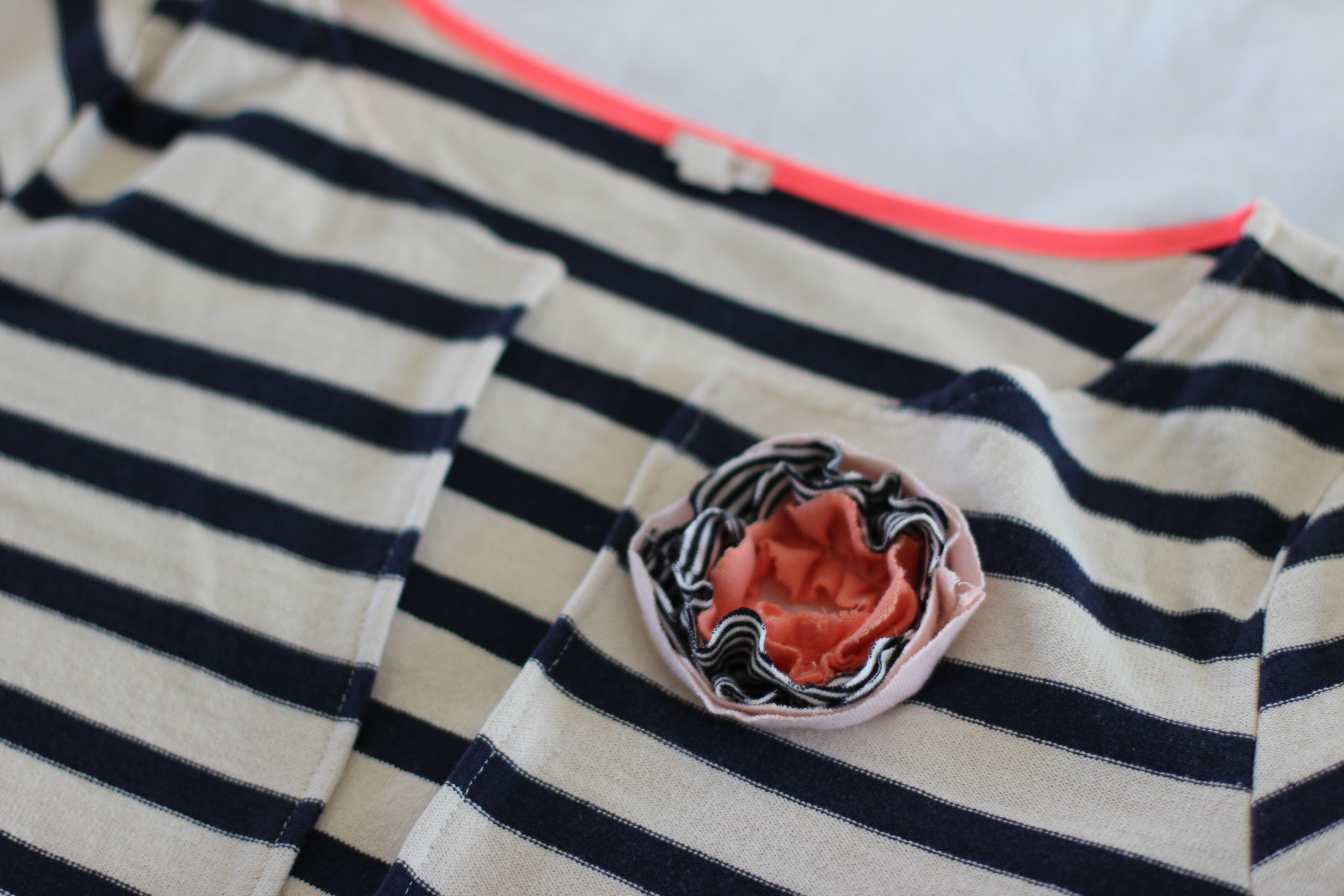
Finally I pinned and stitched down the center of each gathered circle onto the flower base fitting each subsequent circle inside the next.

image

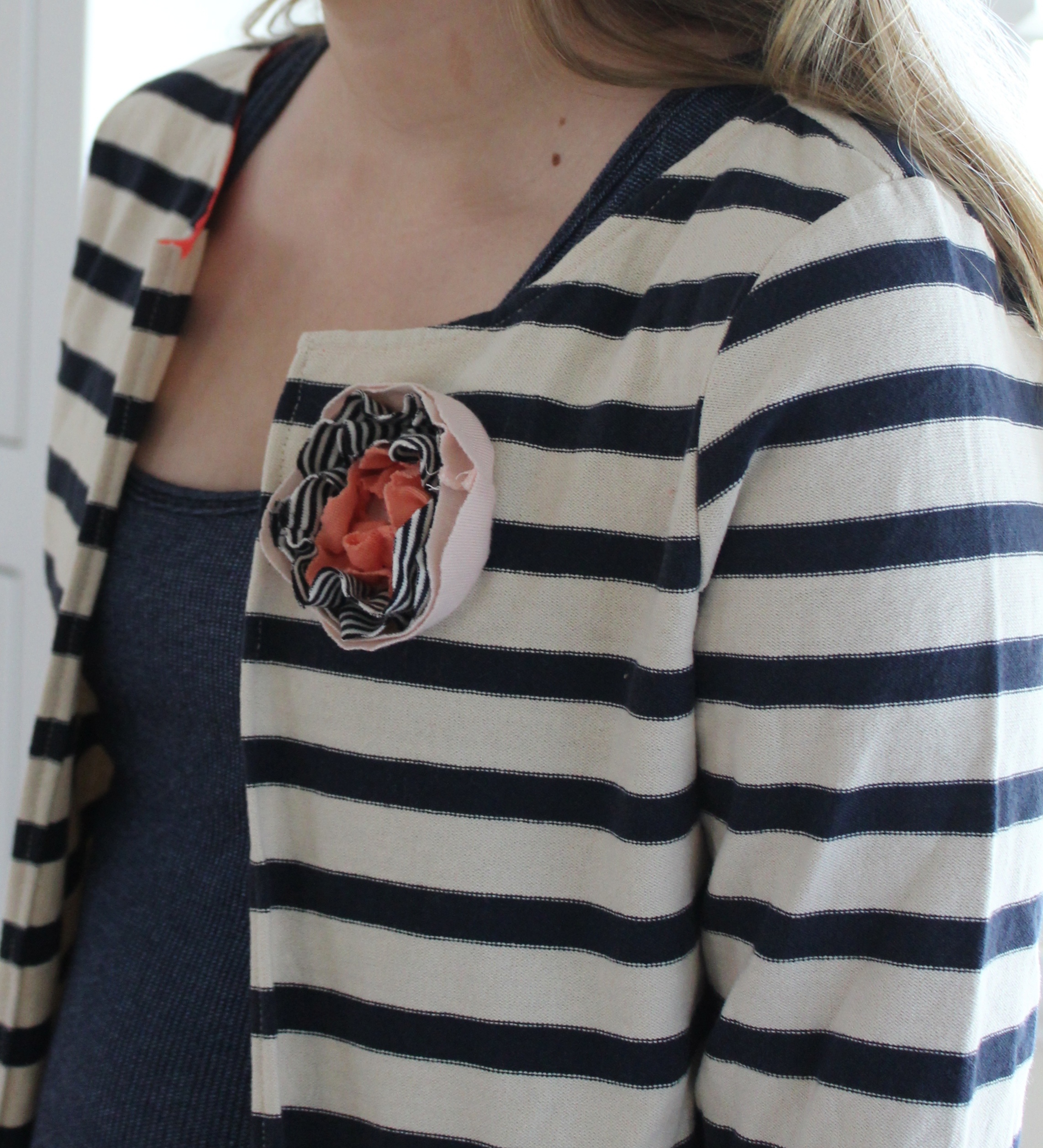
I cut all the loose stitches and within 30 minutes had a new cute cardigan for my daughter. 🙂

image

image

image

Although my girlie is getting a little tired of modeling for me (I have to pay in new books) I think she is genuinely pleased with the results.

African Christmas Bead Necklace/Bracelet

Whenever I travel, I like to 1. explore a new city’s independent coffee shops and 2. keep my hands busy creating.

image

This week my family and I have been in Spokane, Washington. While here, we discovered a fun shop downtown the kids love called Boo-Radleys.

image

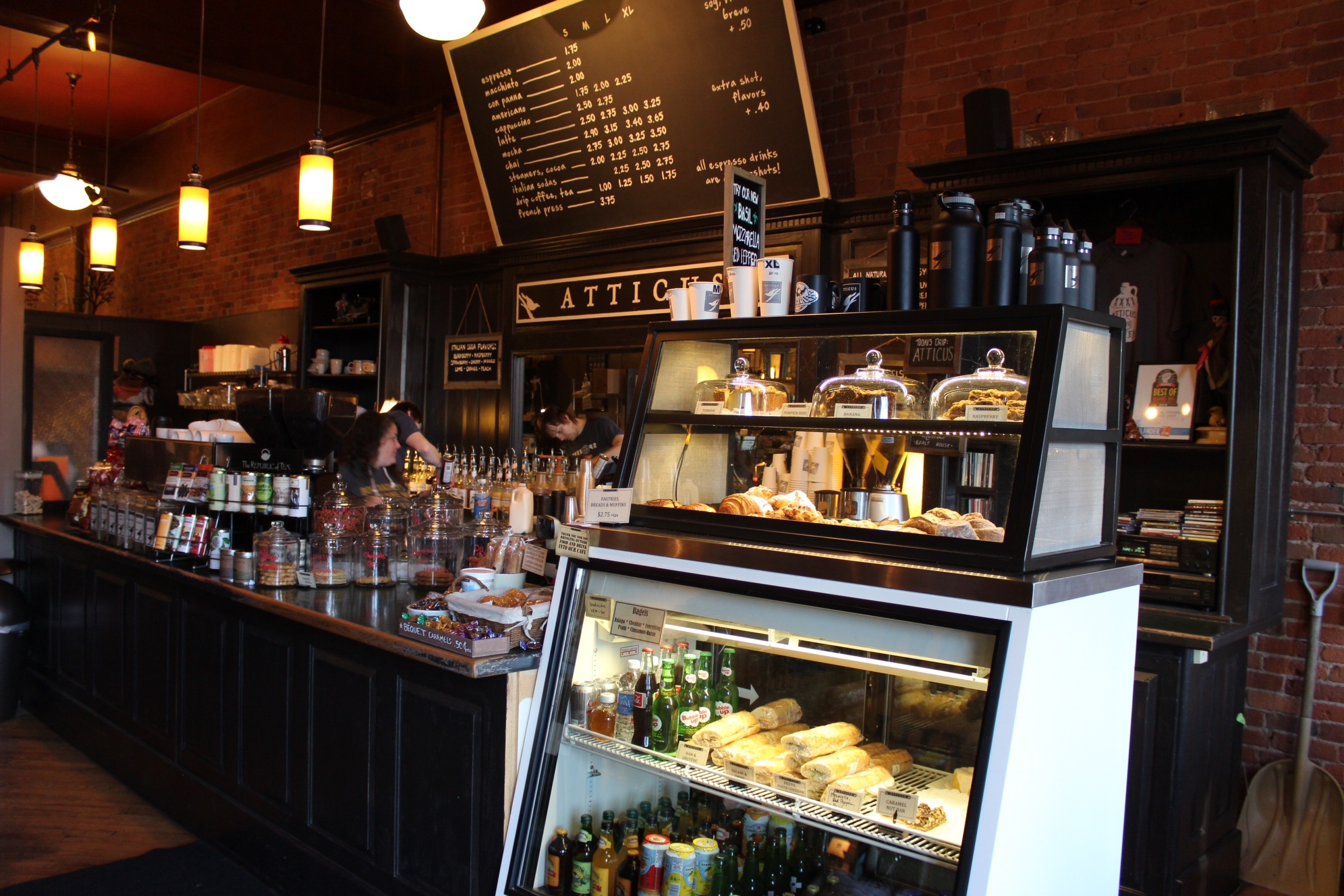
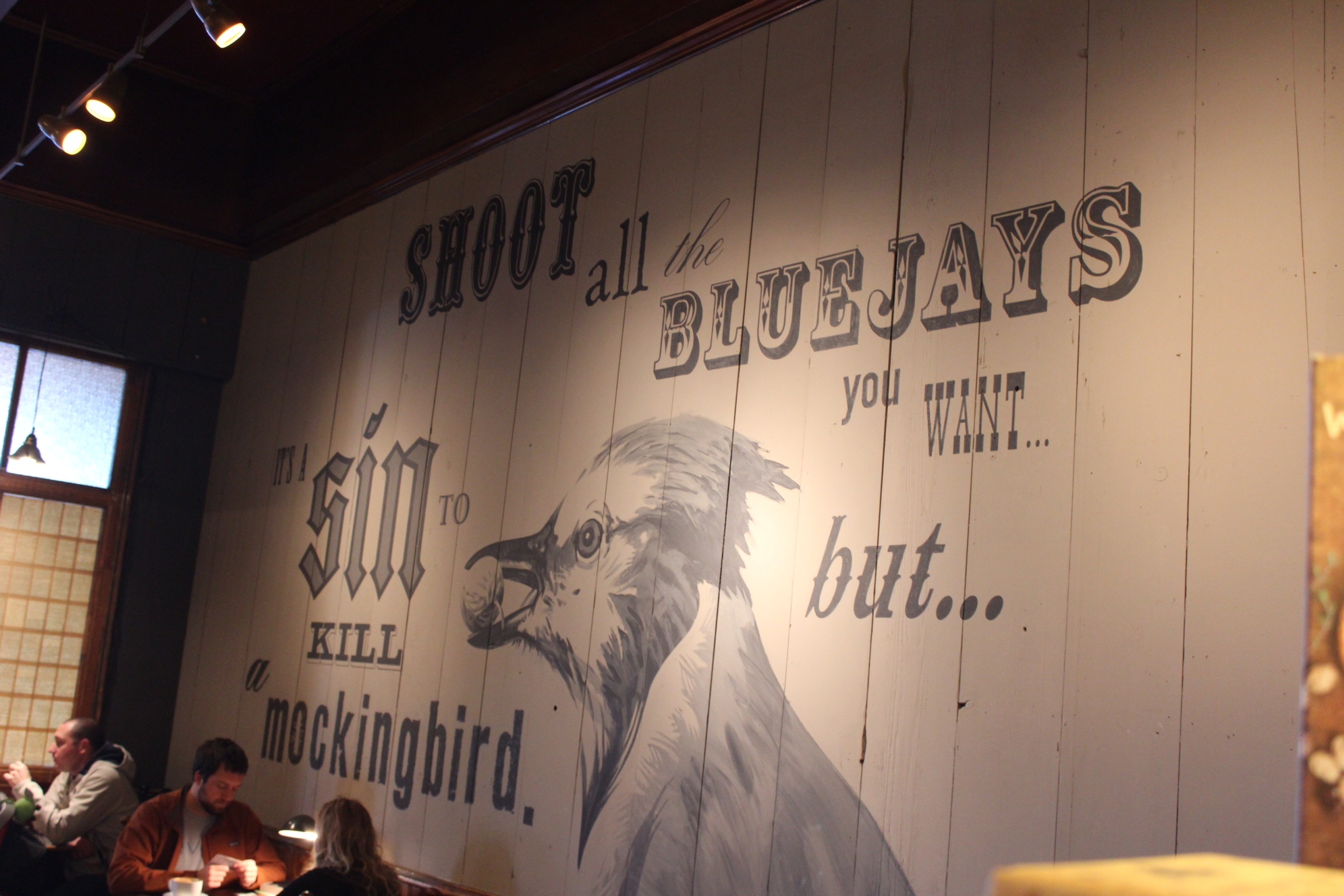
It’s next door neighbor Atticus Finch is equally as cool and has a great cafe where we planted ourselves for a bit. (LOVE the To Kill a Mocking Bird theme!)

image

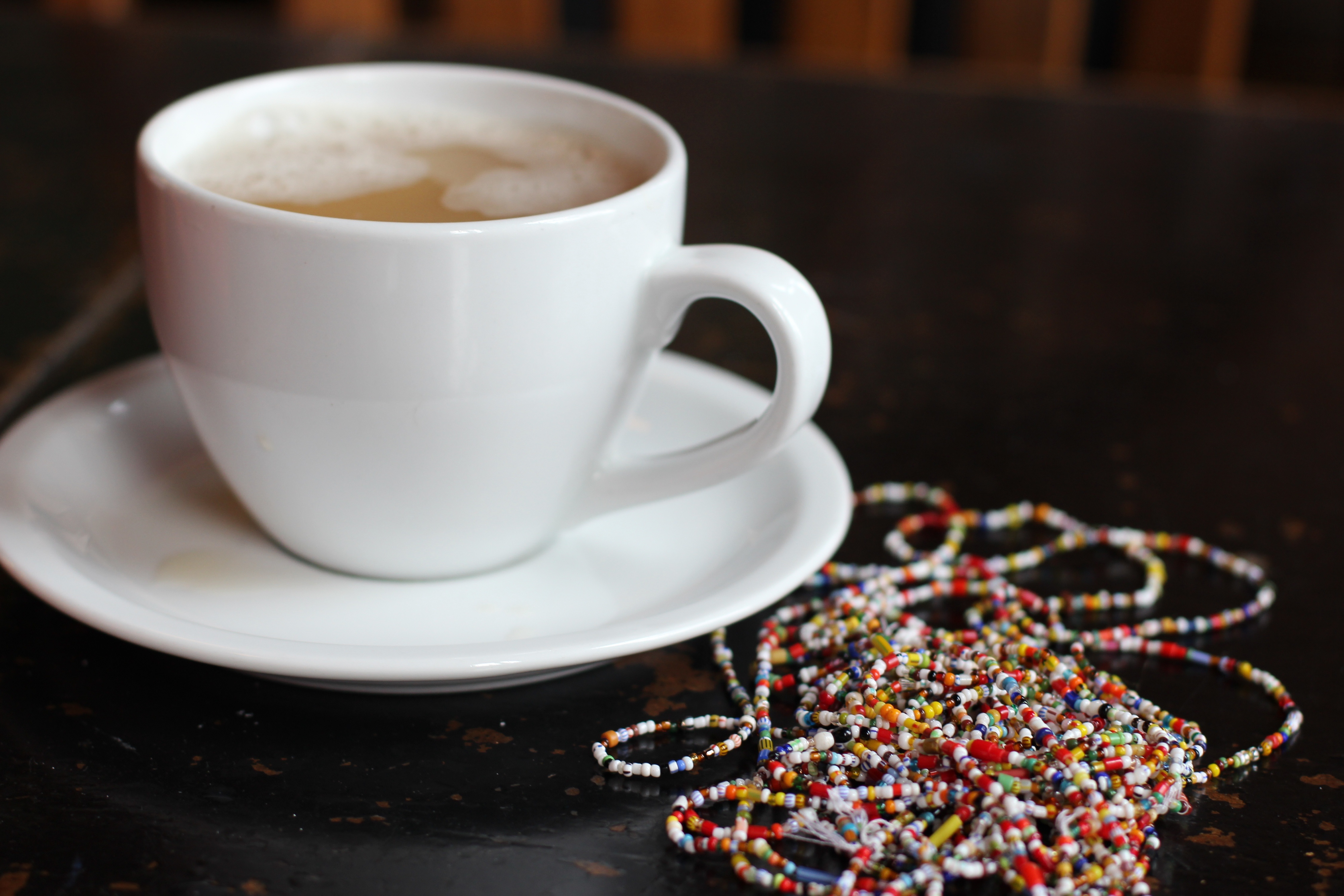
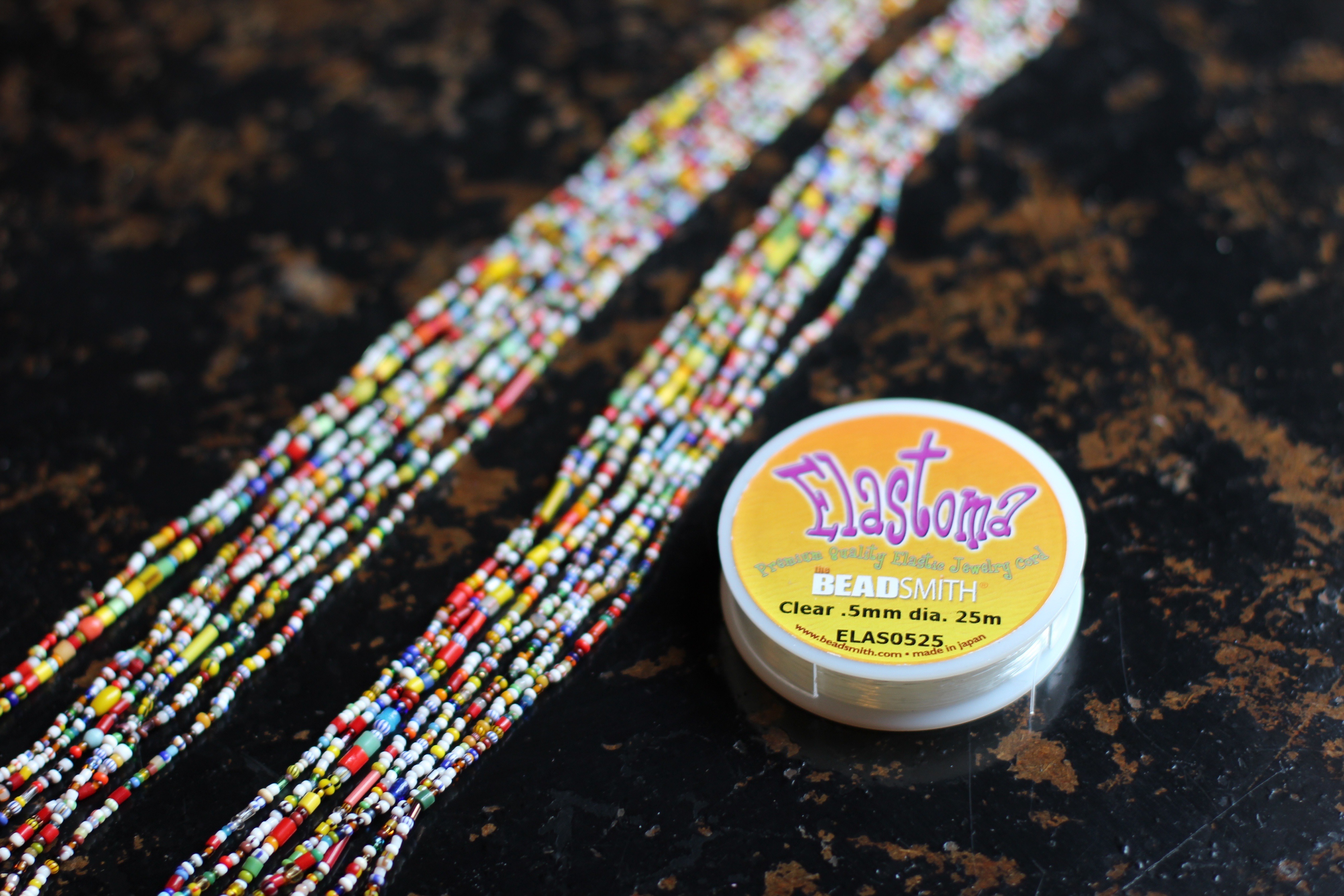
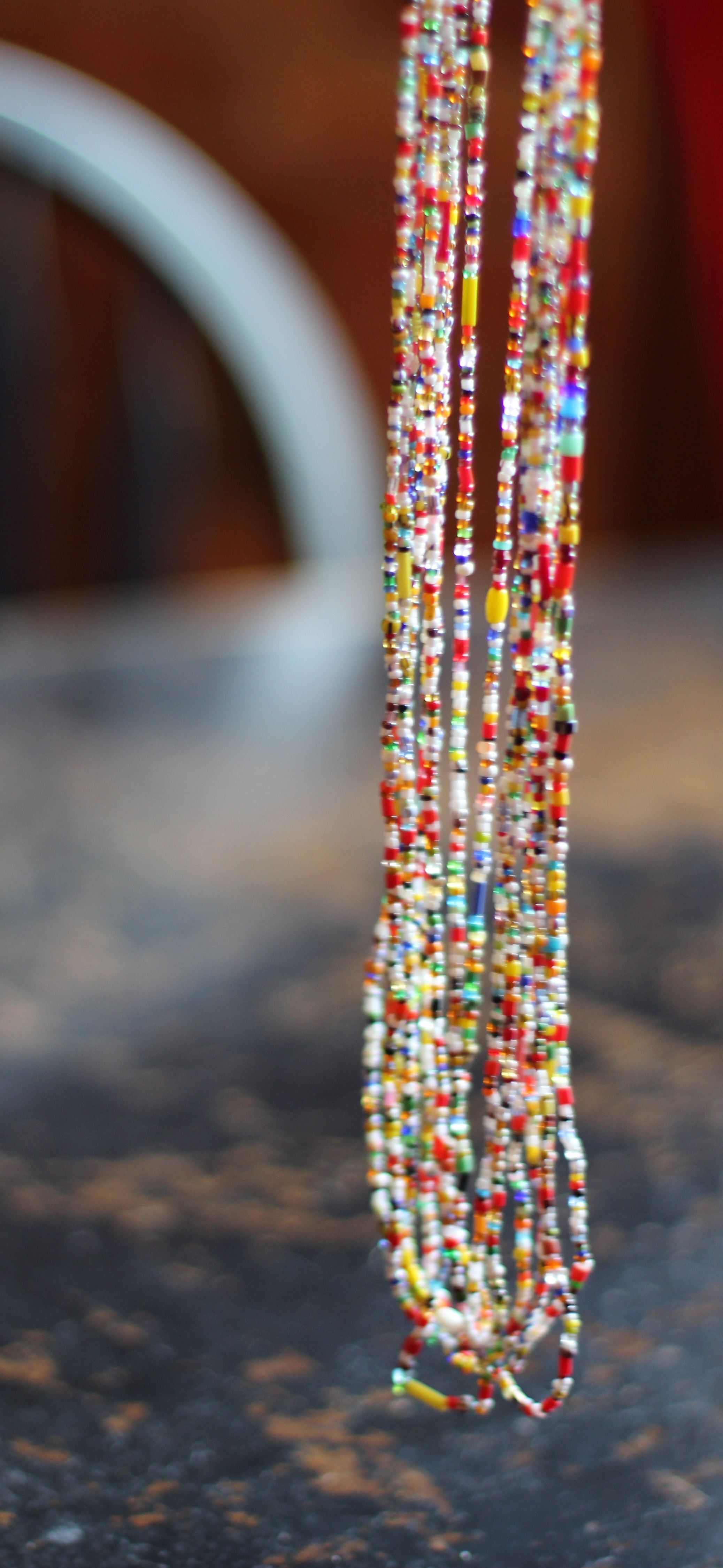
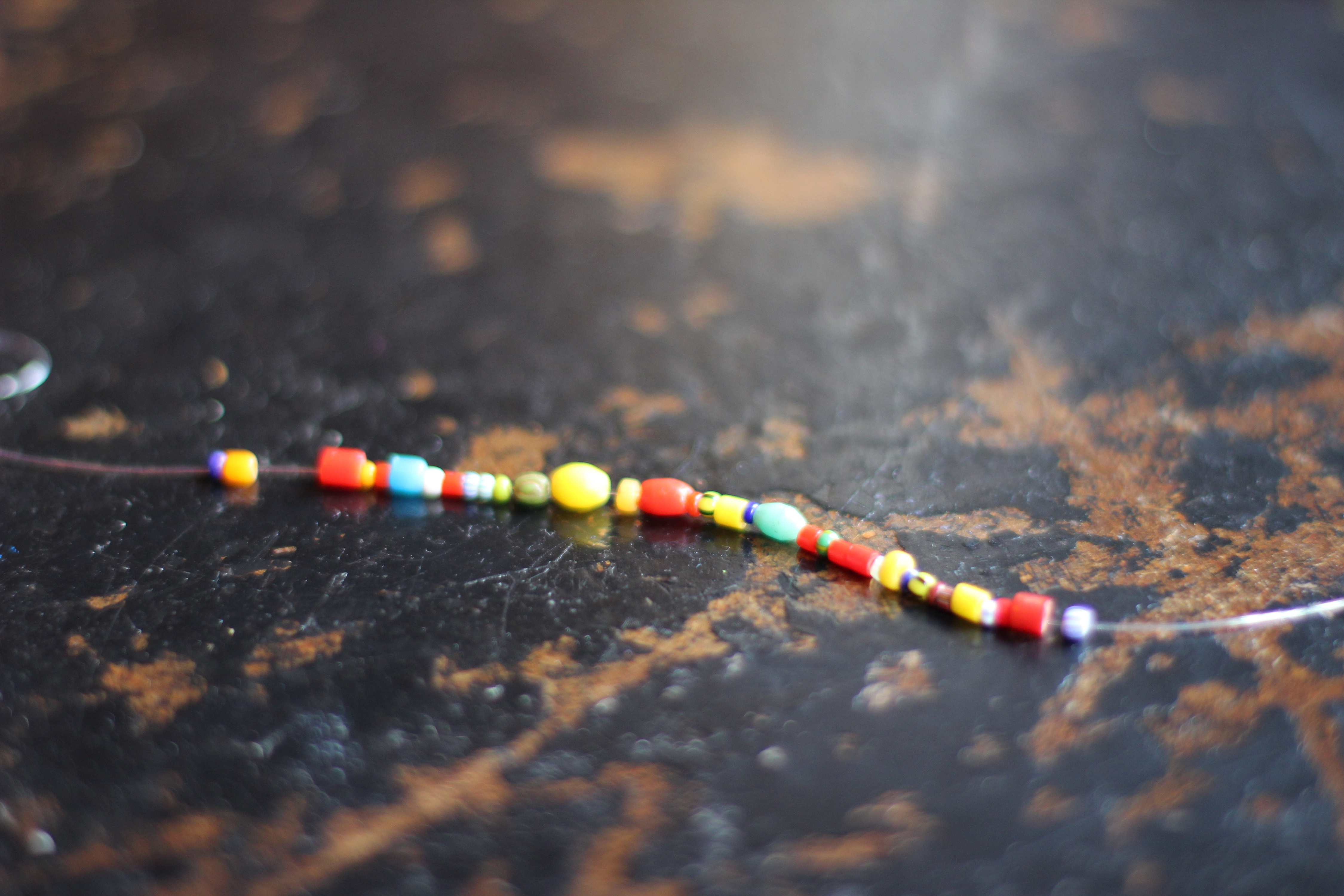
While the kids read their books, I pulled out some African Christmas beads and elastic thread I bought a few years ago in Seattle.

image

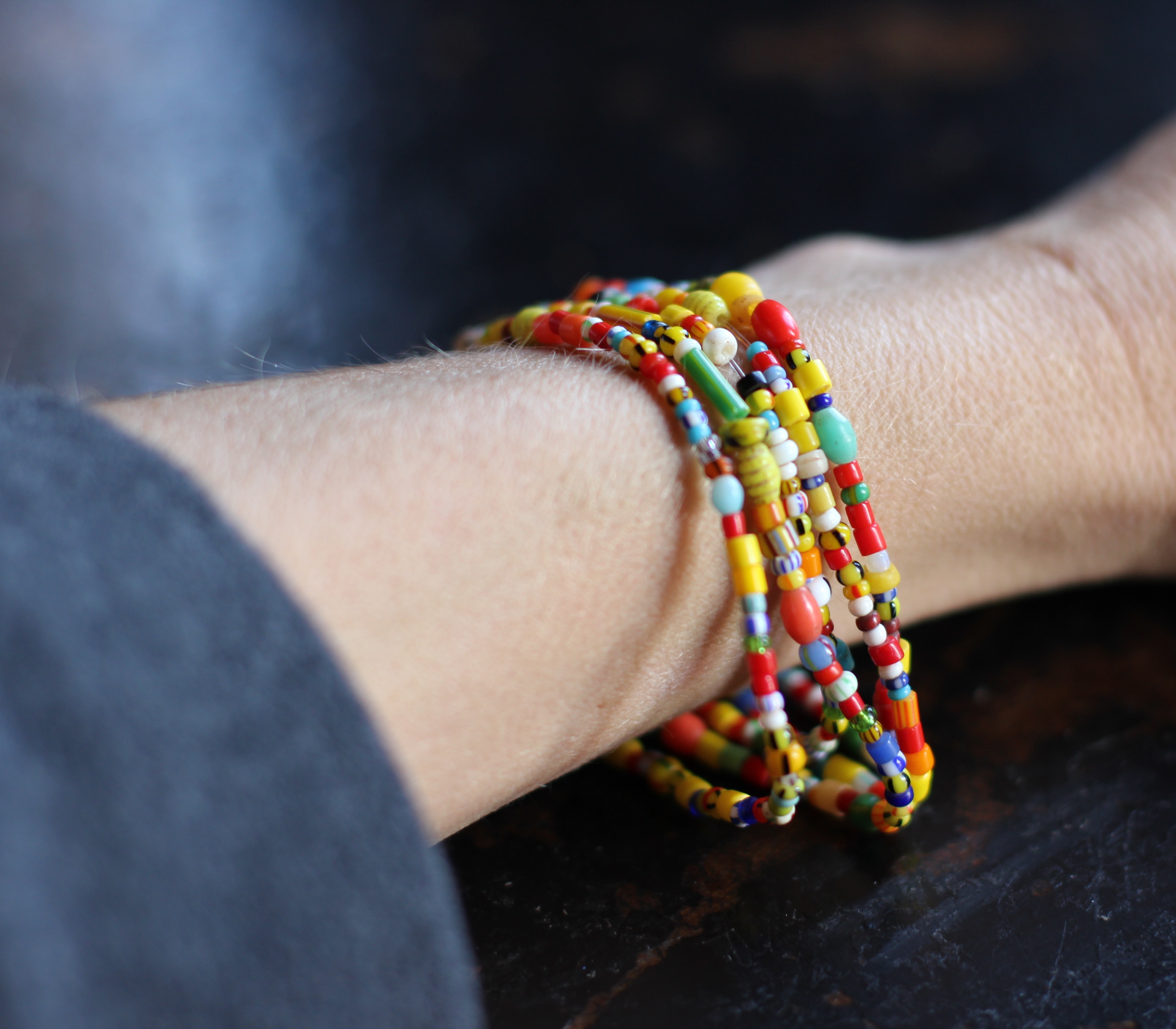
I have made several African Christmas Bead Necklace/bracelets as gifts in the past and they seem to be well received. (My sister in law was wearing hers from a few years ago when we left Spokane!)

image

They are really easy to make! All I do is cut a piece of Elastic Thread necklace length and tie a loose knot at the end to keep the beads from rolling off. I then thread as many beads as I want for my necklace/bracelet. When I have threaded all the beads, I untie the loose knot at one end and tie the two elastic threads together securing with several knots. This thread is slick and the knots like to come undone. To prevent this, I cut the threads close to the knots then dab a small amount of superglue on the knot and allow to dry.  Within 30 minutes, I have a colorful and fun necklace/bracelet!

image

image

Seedstitch Cowl/Wrap Pattern

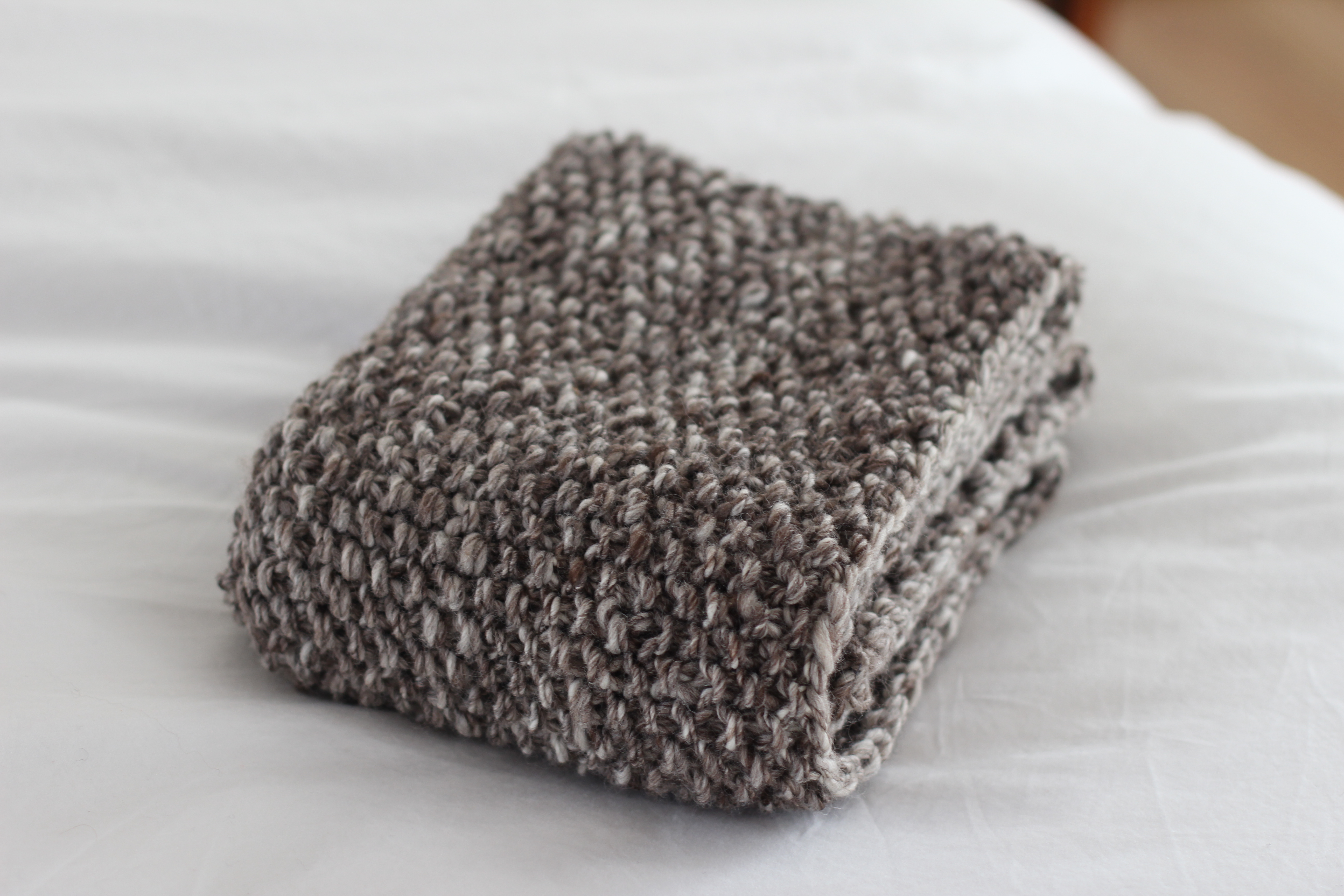
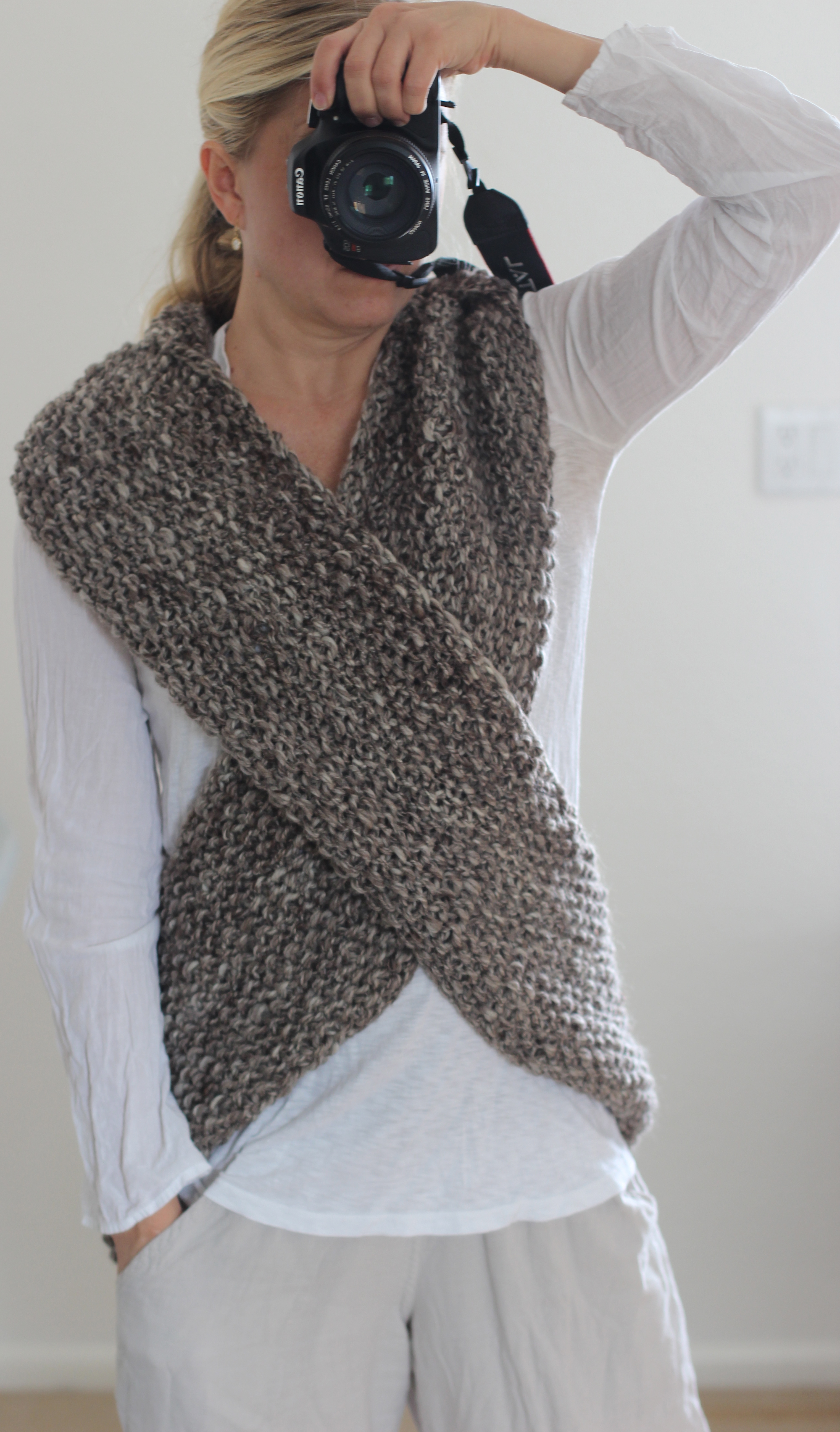
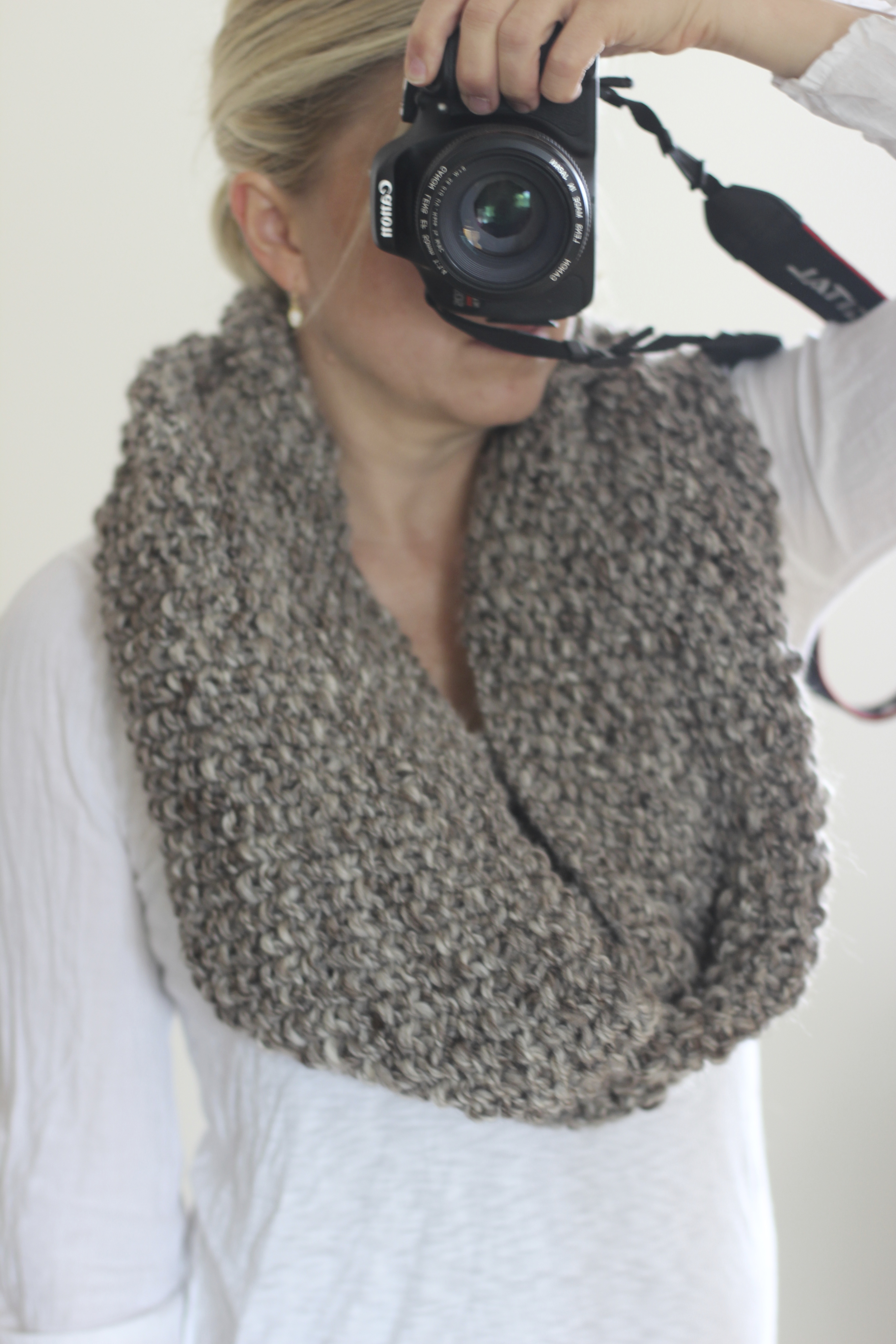
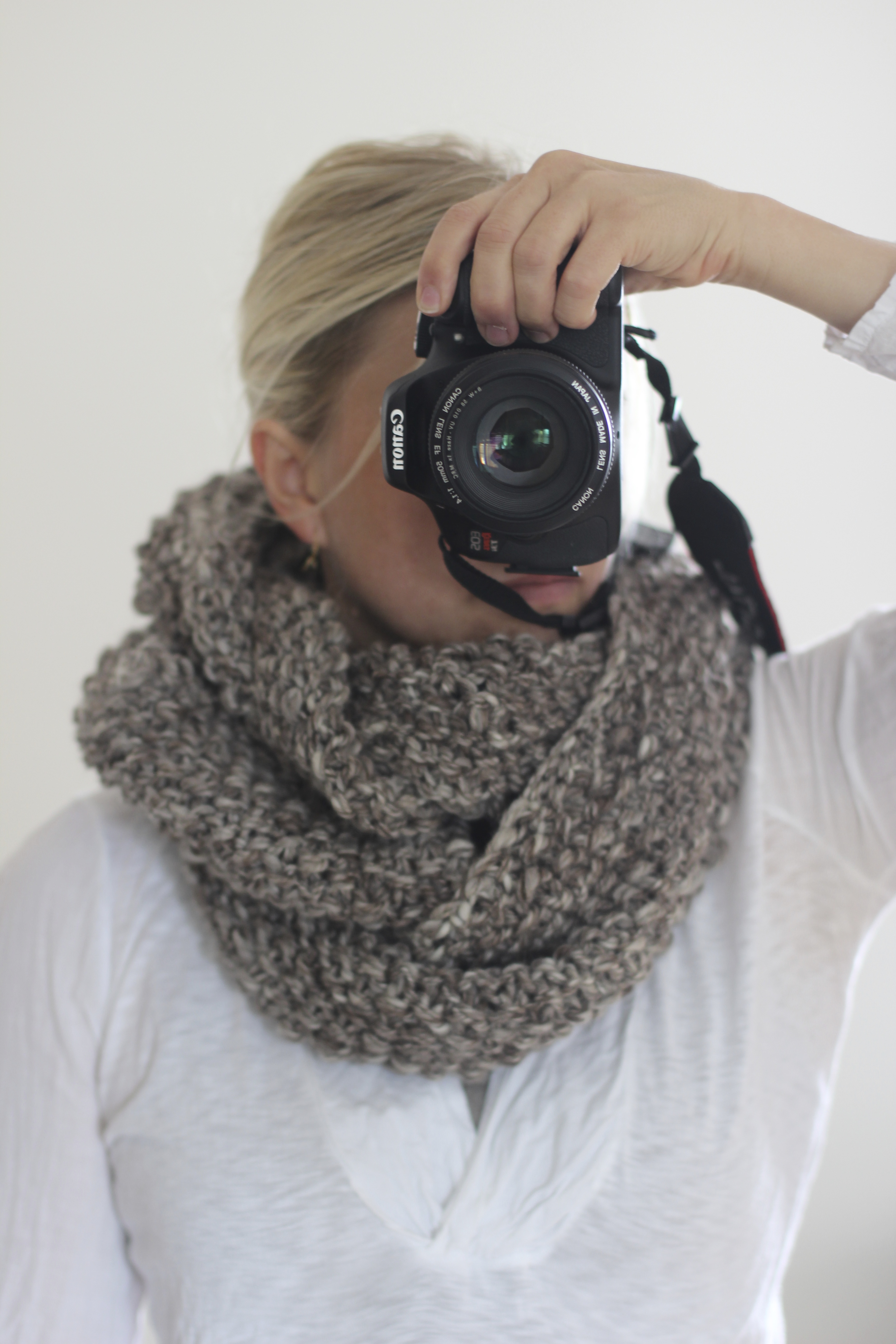
I’ve been a tad bit obsessed with seed stitch lately.  With some lovely natural wool in my yarn stash, I knit up an extra long cowl that I can wear several ways.  This is a super easy pattern that is quick to knit up.

IMG_3527

 
Supplies that I used:

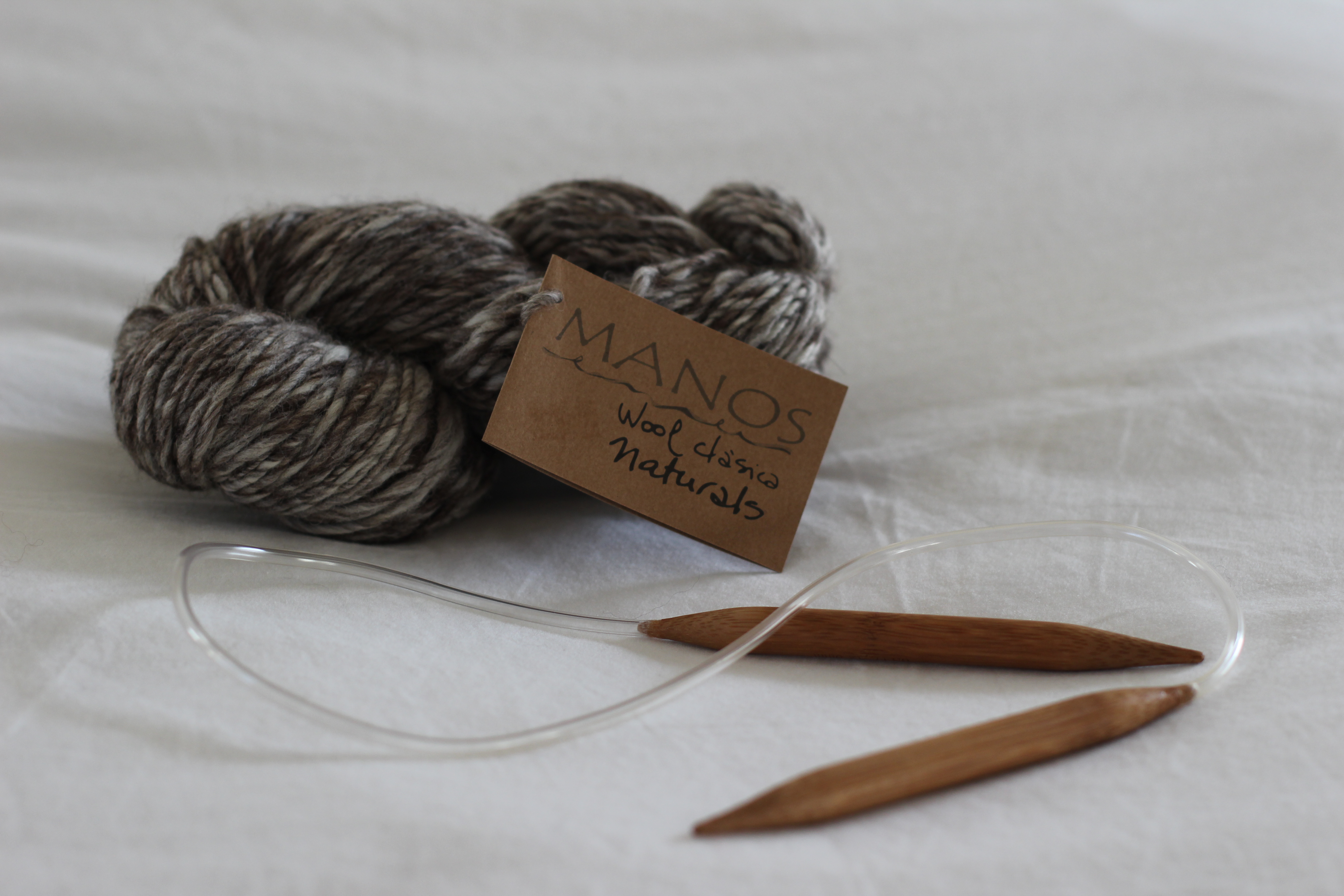
6 Skeins of Manos del Uruguay Wool Clasica naturals in color 702

32 inch US size 17 circular knitting needle

crochet hook

IMG_3530

 
Pattern: Double up on the yarn so that you knit with two strands of yarn from two skeins at all times to make this an extra thick knit.  Cast on 155 stitches then follow the pattern knit one, purl one across the needle.  Place a marker.  Begin knitting in the round for the next row continuing the alternating knit one, purl one pattern.  Continue until the cowl measures 10 inches, then bind off the last row in the continued knit one, purl one pattern. Use the crochet hook to weave in the loose ends.

DONE!

This extra long cowl gives you many styling possiblities.  A couple that I like are shown below.

IMG_3475


IMG_3478


IMG_3479

Making Malas – A Tutorial

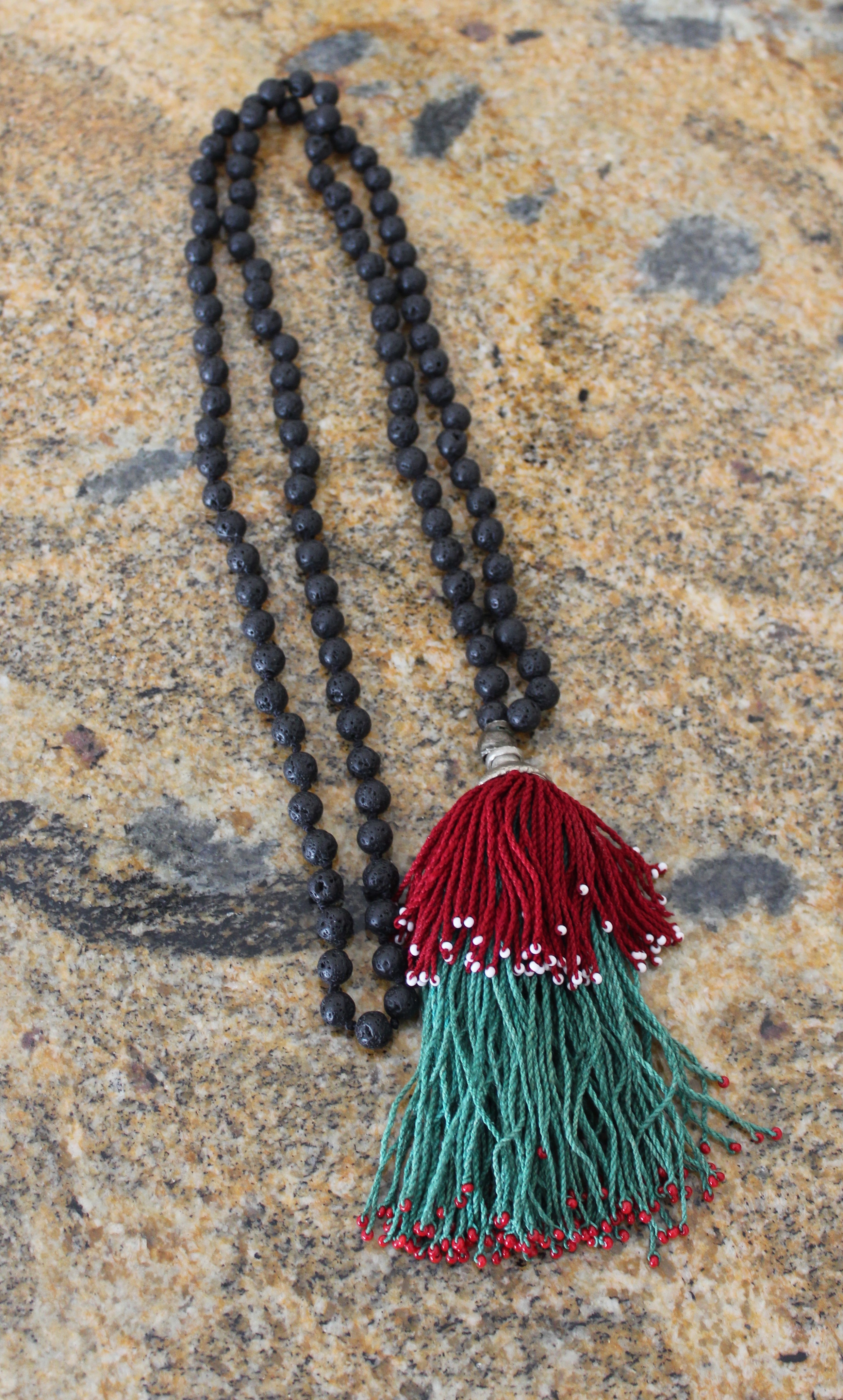
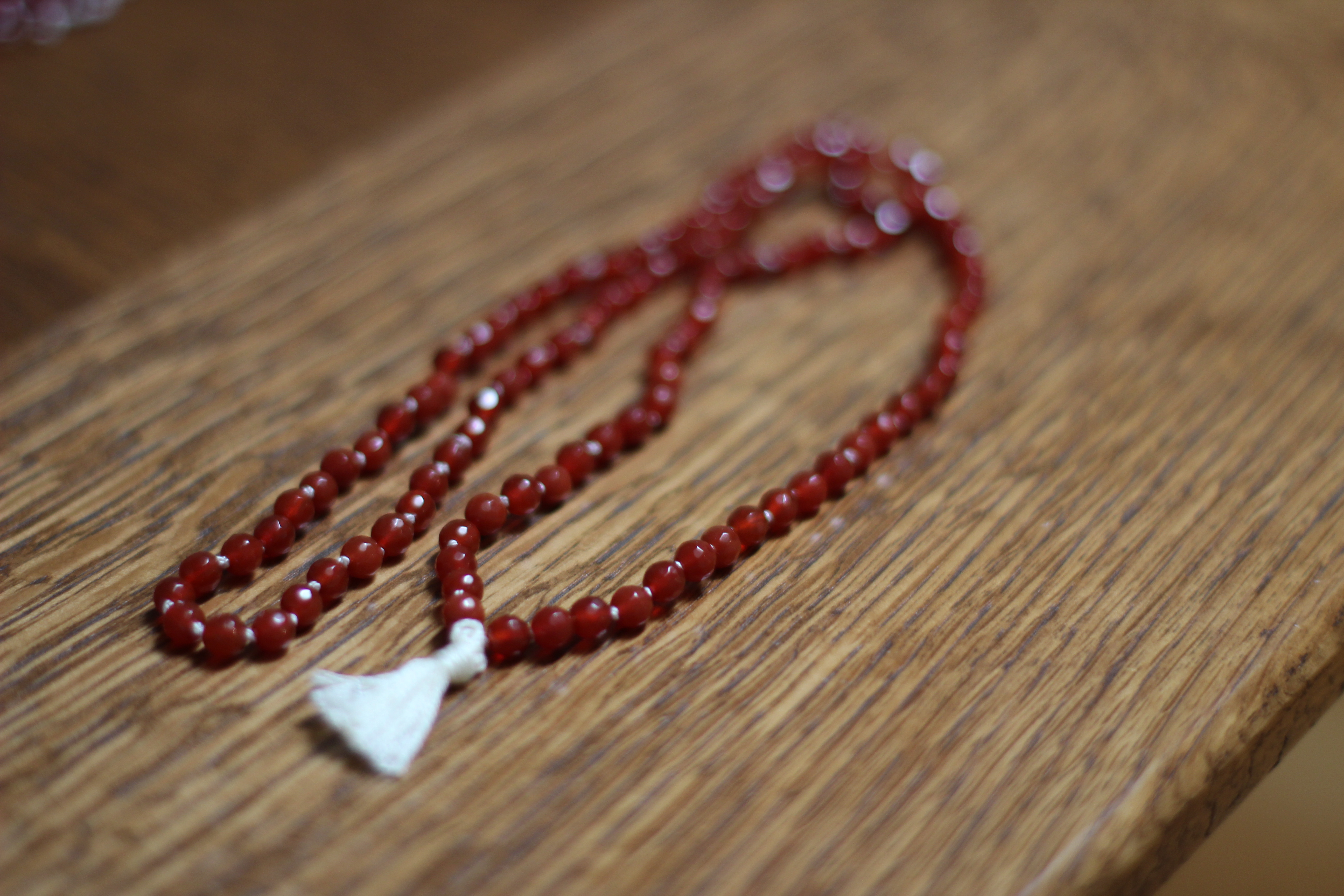
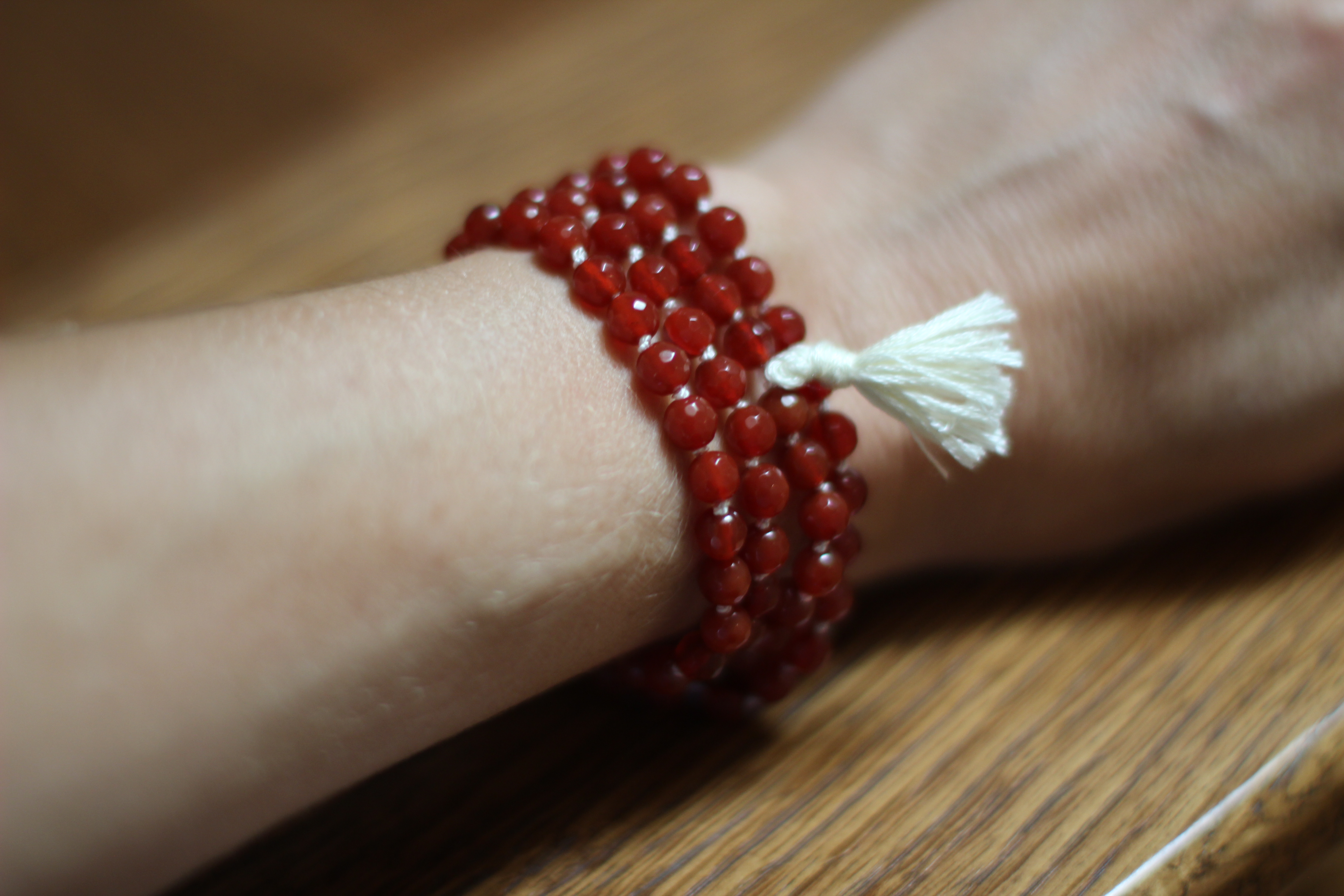
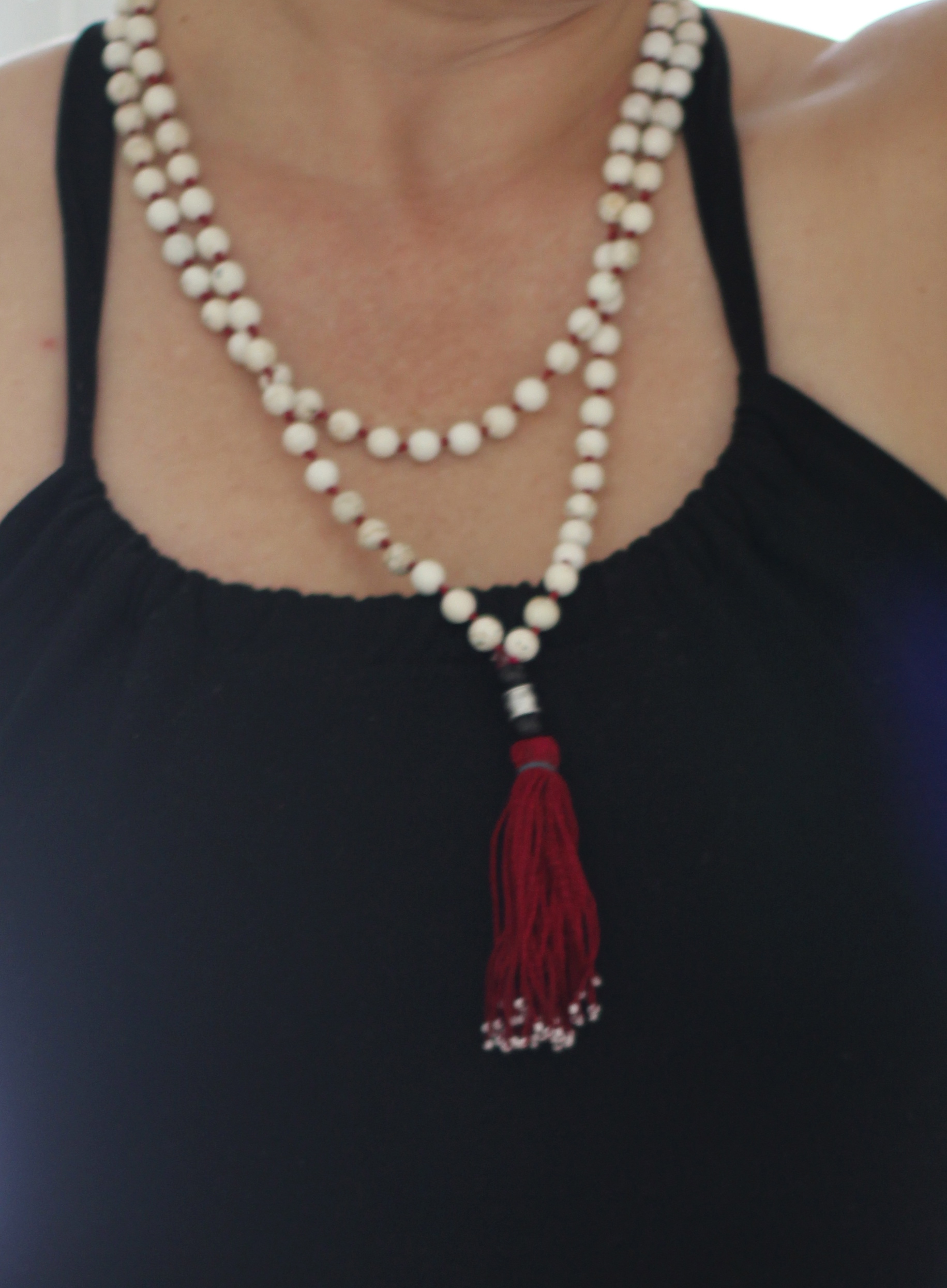
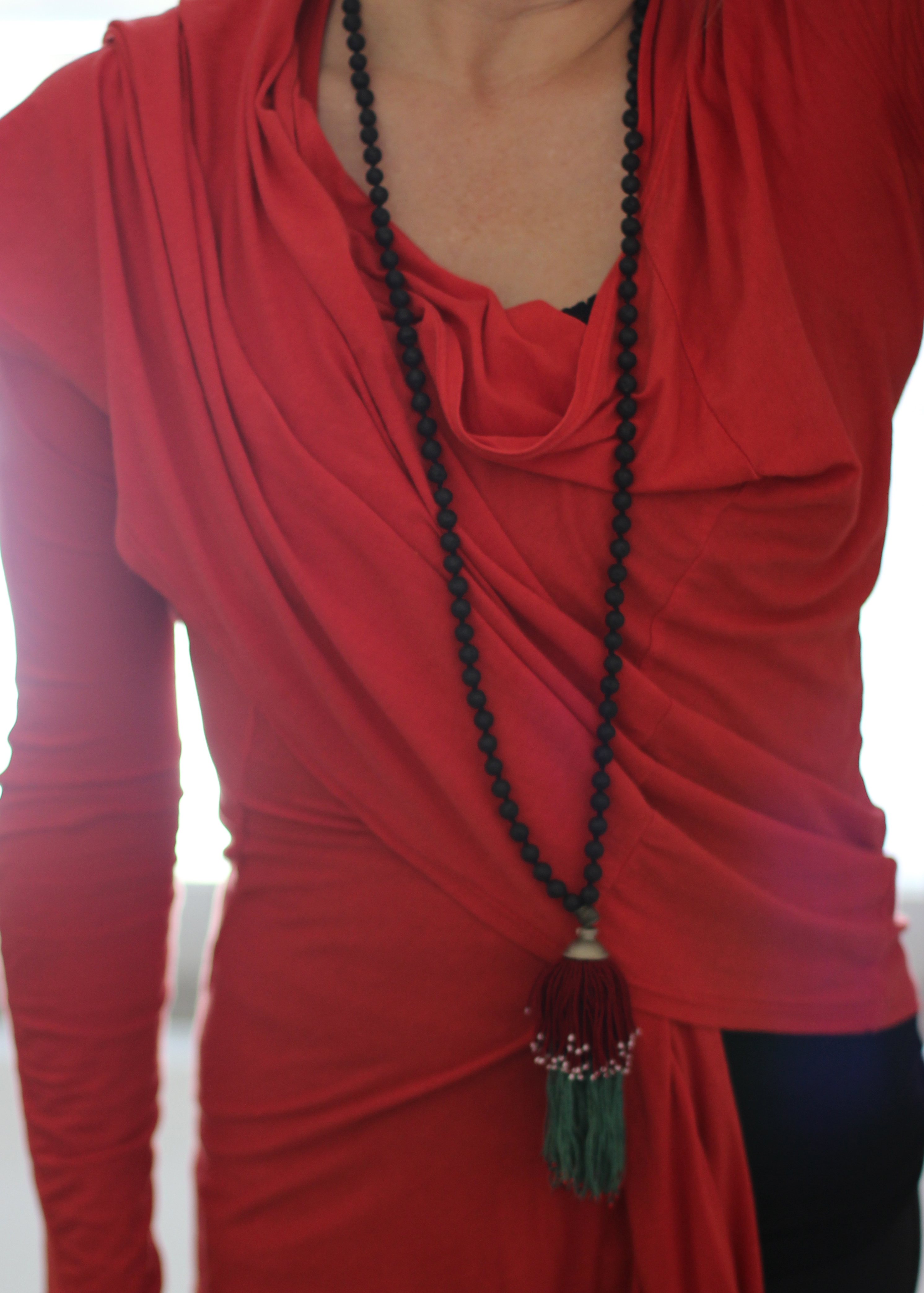
Malas are Tibetan Buddhist prayer beads strung with 108 beads.  The necklaces/bracelets are traditionally used to help keep count while reciting or repeating a mantra.  I am neither Buddhist nor Tibetan but I love the look of Malas and a few years ago started making them for myself and friends.

IMG_2820

As I start gearing up for the holidays and begin making presents for friends and family, I have pulled out all my beading supplies and thought I would share my Mala Making methods.

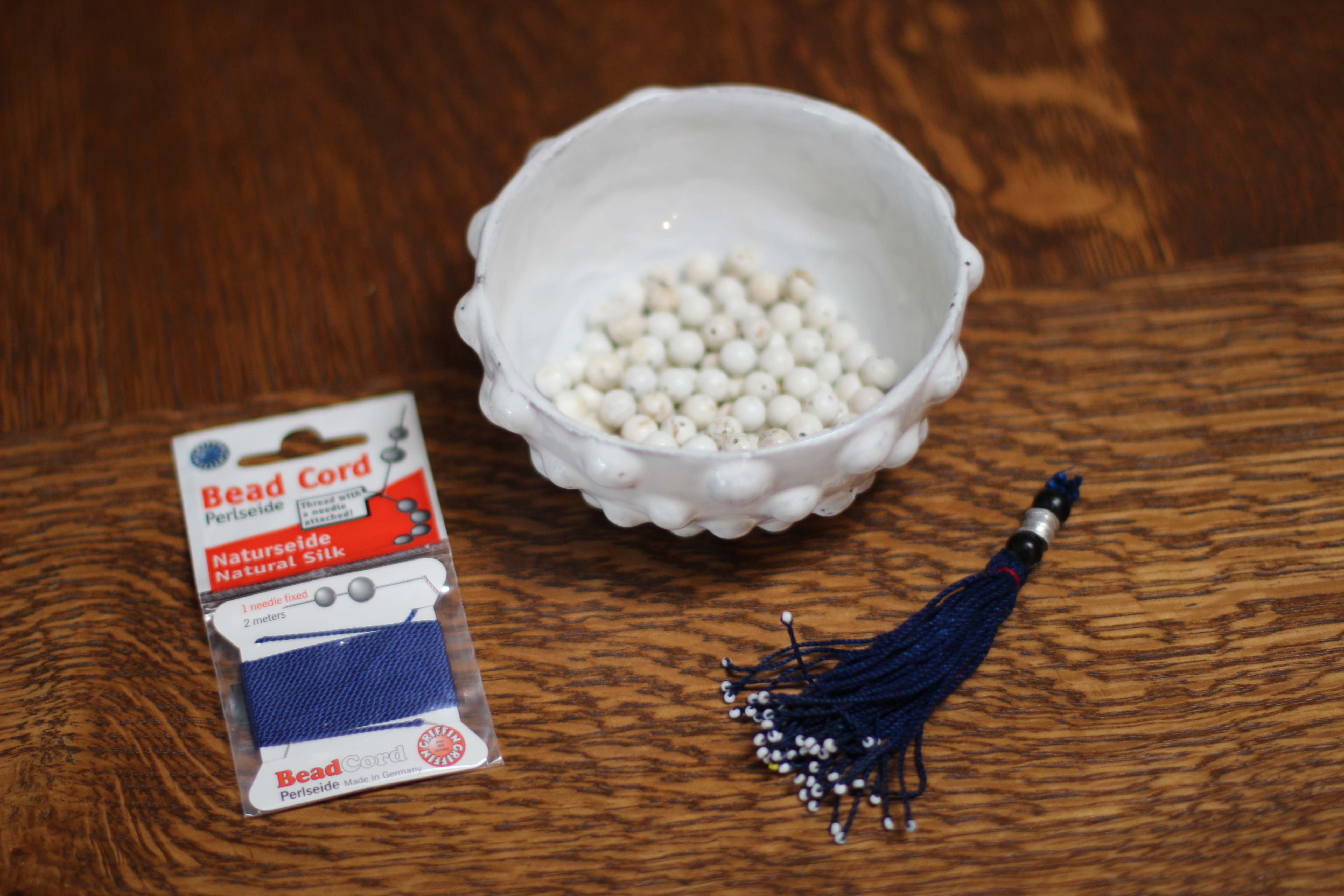
Recommended Materials:

108 beads (best if 5mm or less)

Bead Cord with a self threaded needle (I typically use No 10 in a color to match the tassel)

Needle nose tweezers

Embroidery thread to make a tassel or a premade purchased tassel
Needle

Scissors

IMG_3369

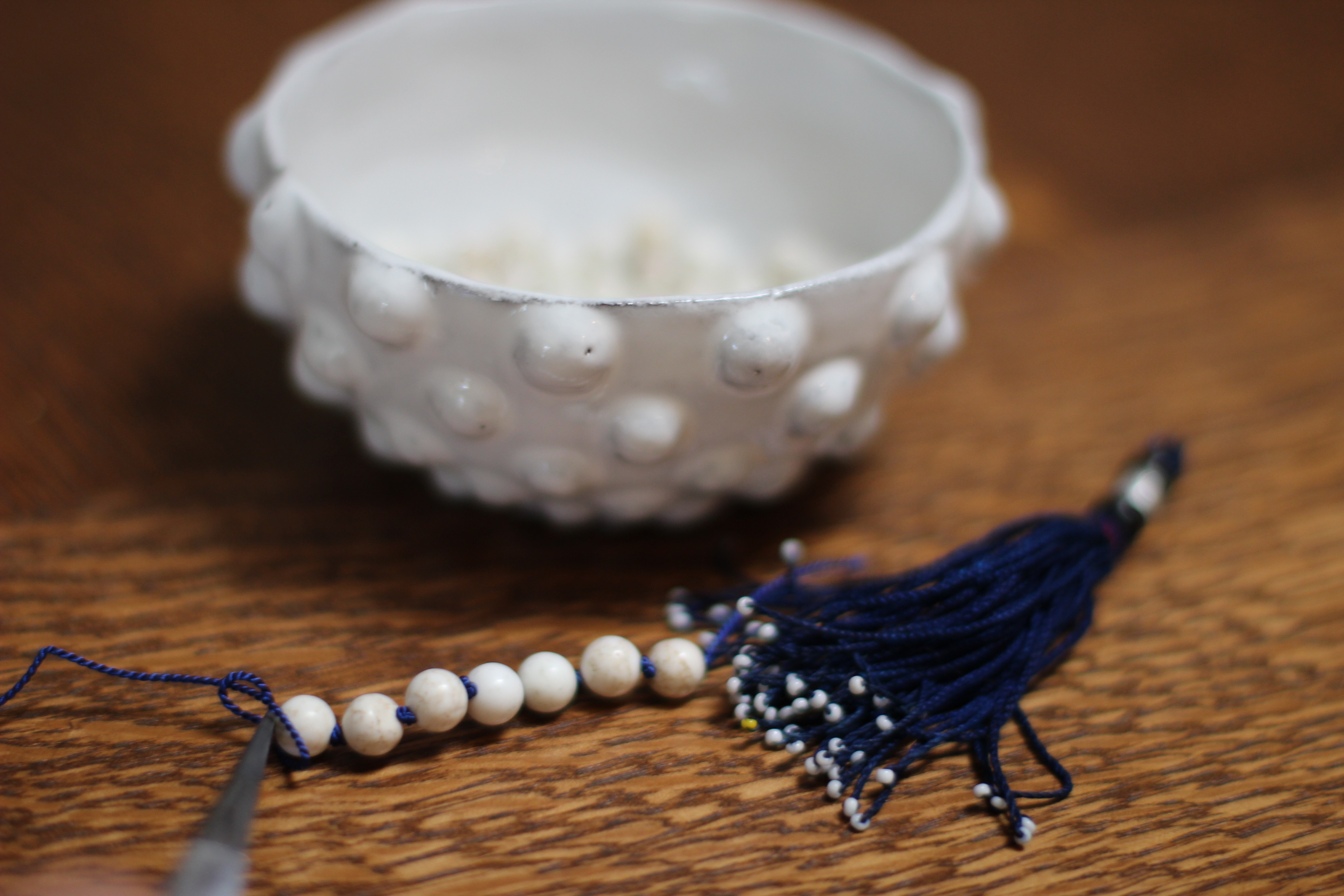
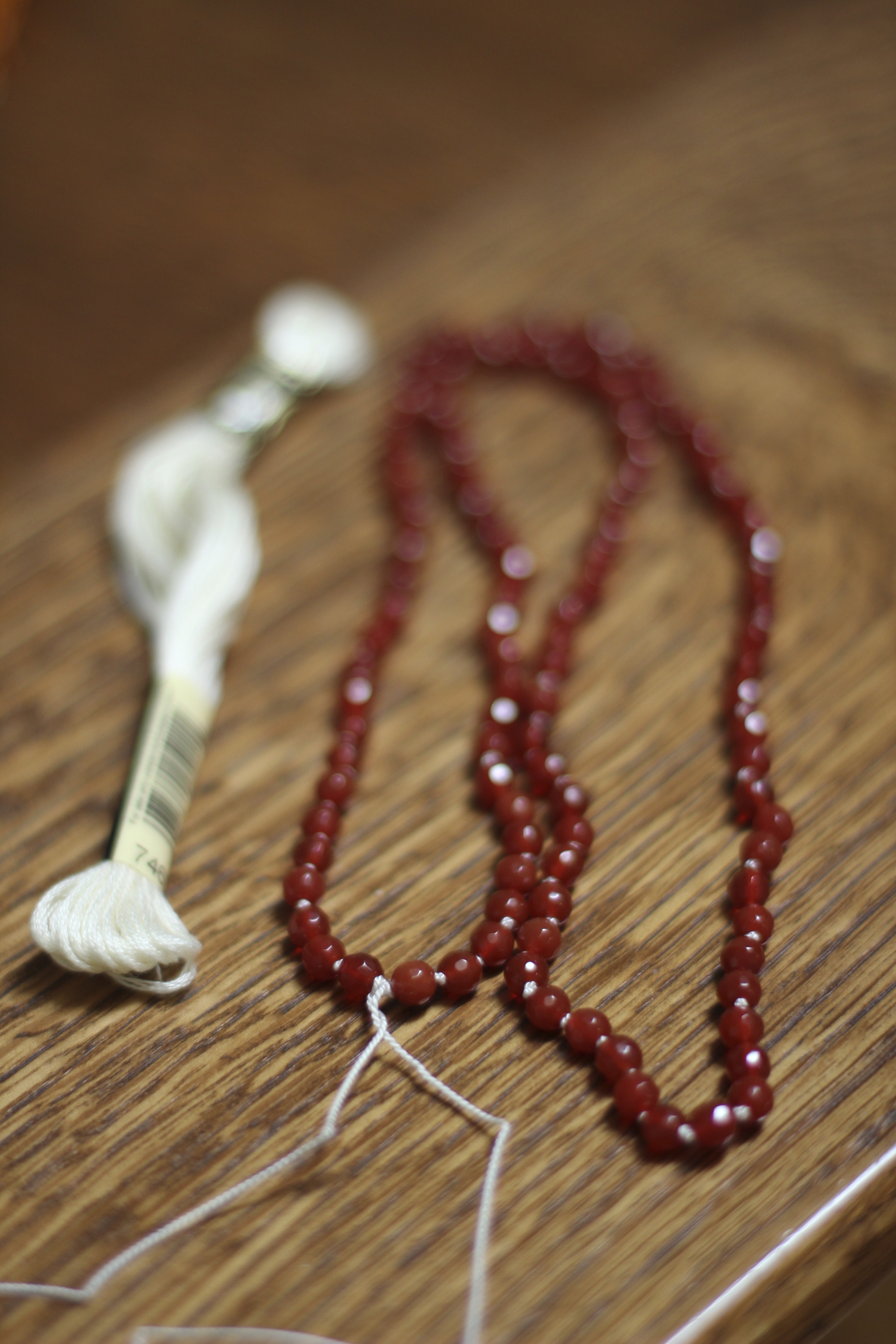
To begin your Mala, make a knot near the end of the Bead Cord and begin threading your beads.  In between each bead, tie a knot while using the tweezers to pinch at the top of the bead.  This will make the beads and knots fit tightly together
IMG_3370

When all 108 beads have been tied on the Bead Cord, tie the two ends together into a circle. You are almost done!

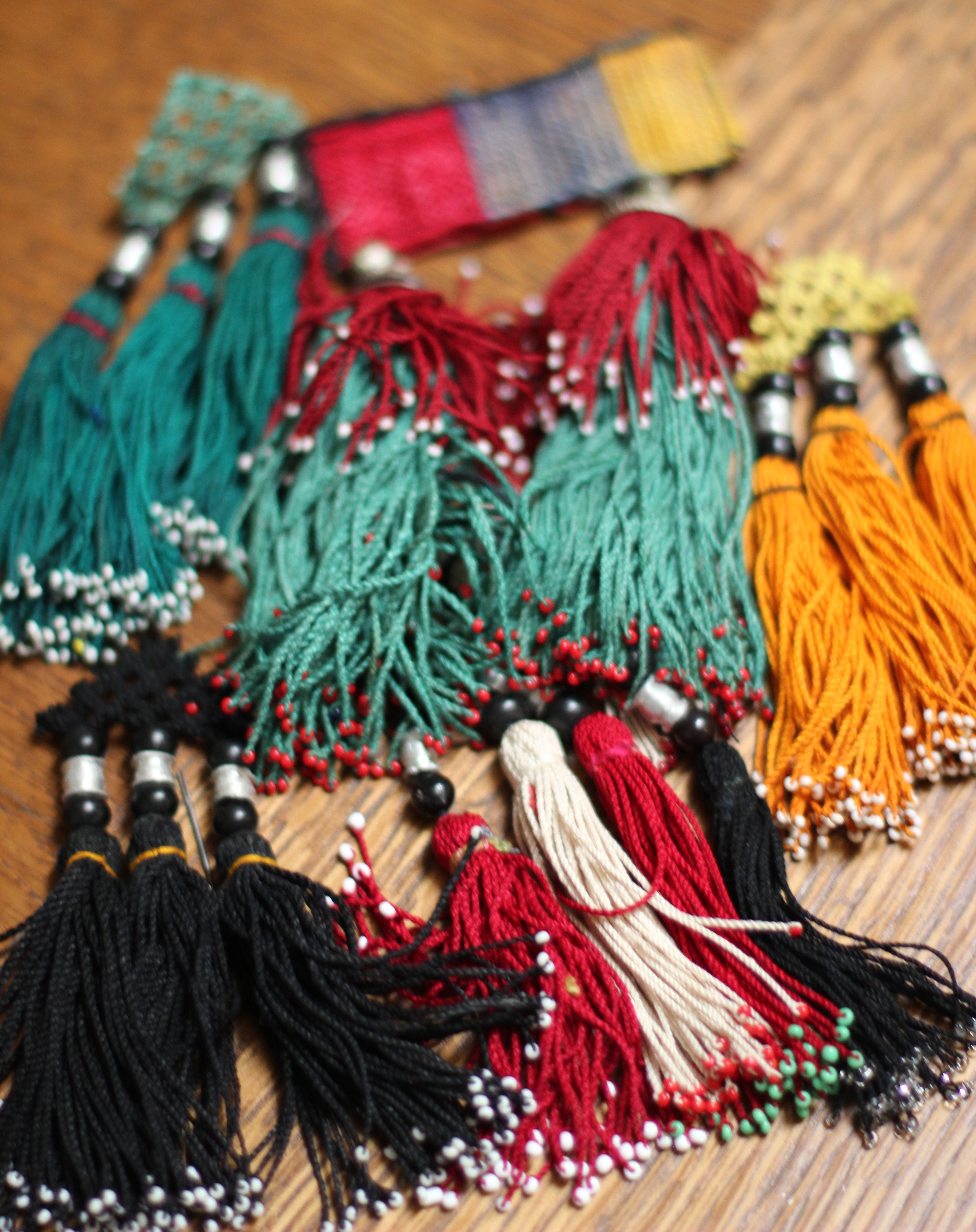
Next Decide if you want to make your own tassel or attach a premade tassel. I like to do it both ways. Over the year I have been collecting vintage Turkish Tassels and repurposing them on Malas.  I use a strong nylon thread to attach them to the beaded loop.

IMG_3384

If you choose to make a tassel, grab some embroidery thread and your beaded loop.

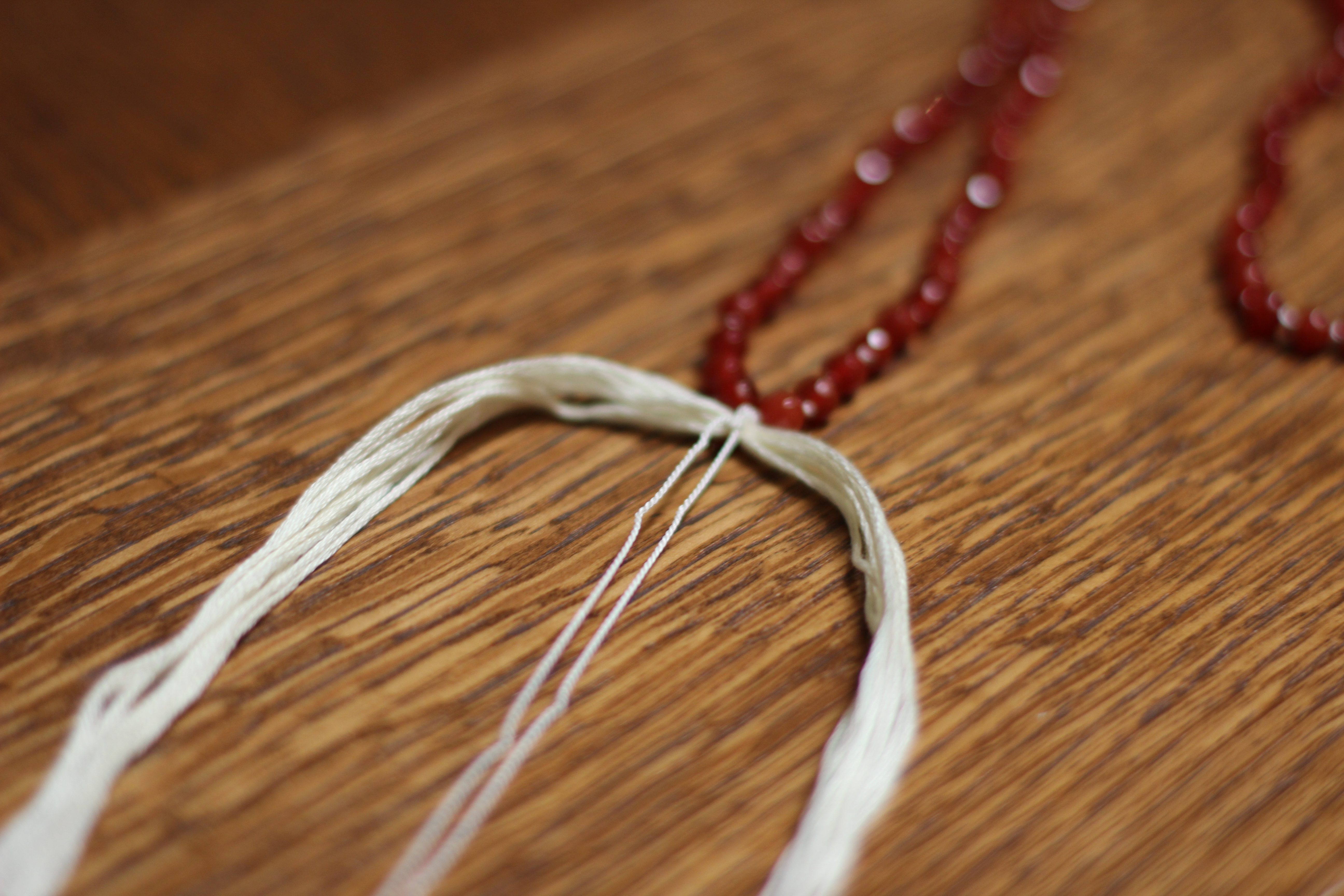
IMG_3371

Cut one looped end of the embroidery thread and tie it in the middle to the beaded loop using the left over Bead Cord.

IMG_3374

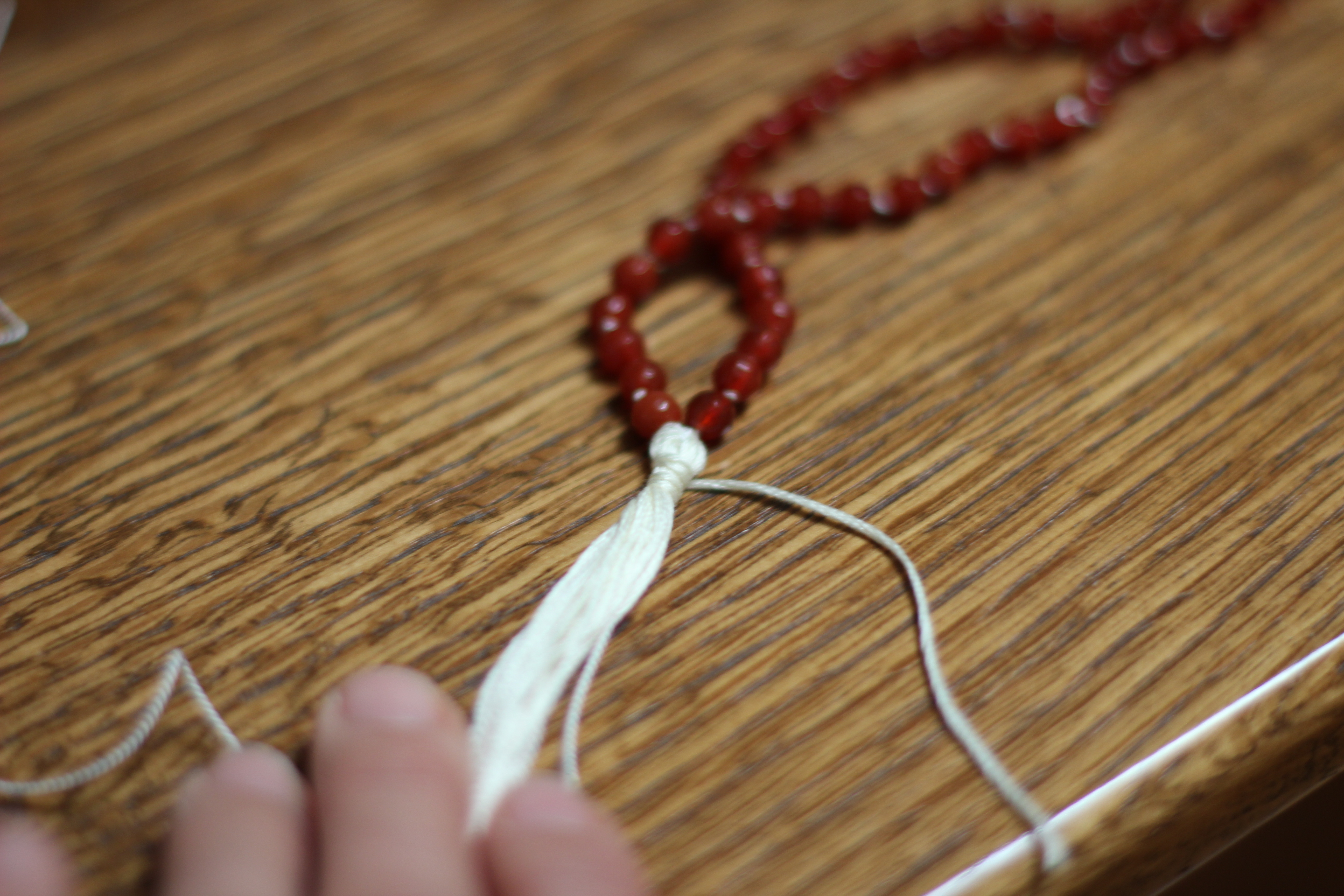
Grab one loose thread on the right side and wrap 5 times around all of the threads

IMG_3376


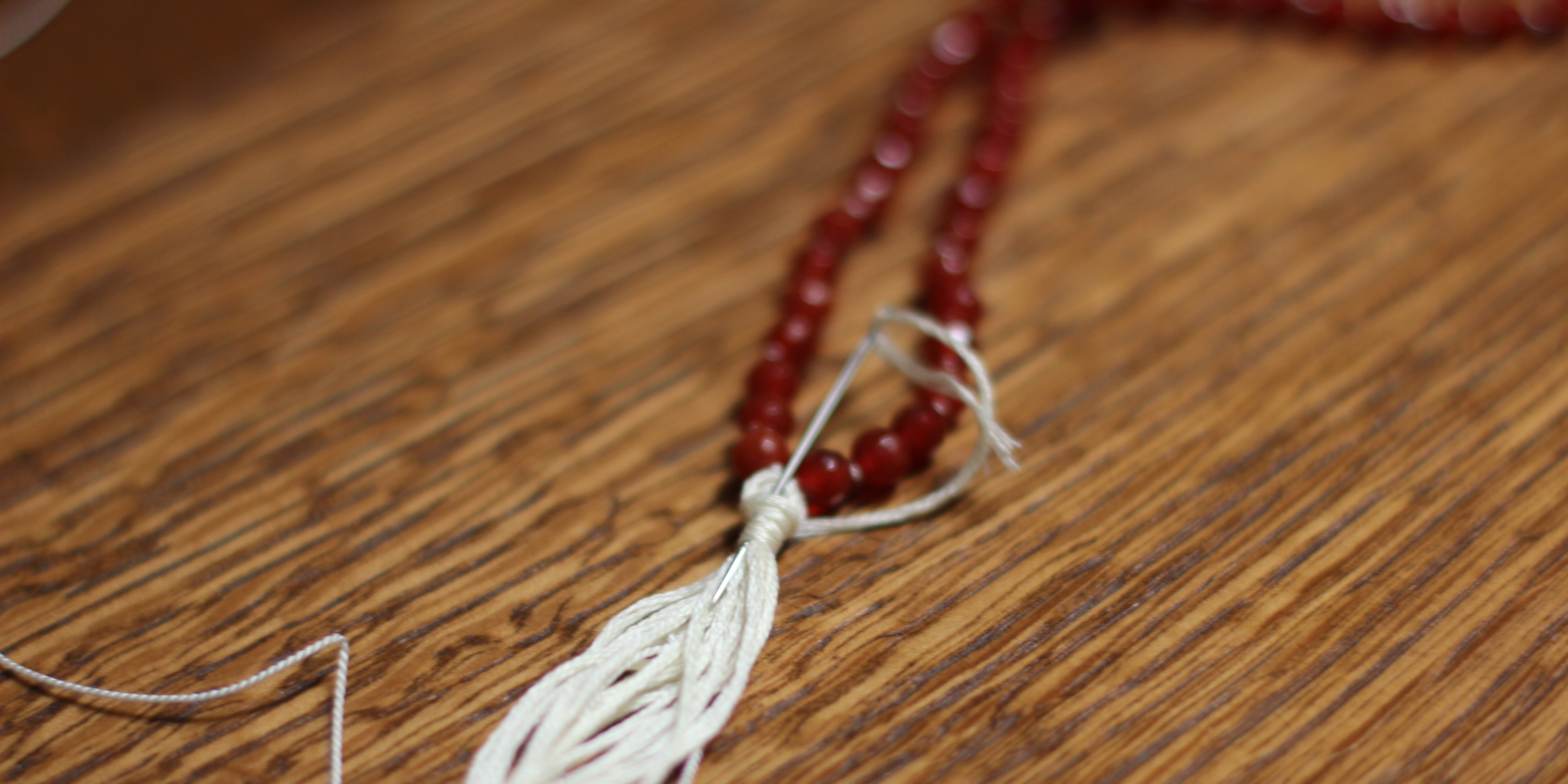
Using a needle pull the loose wrapped thread through the top of the tassel and pull down hard to tighten.

IMG_3377


Repeat the wrap and thread pull through with a loose thread from the left side of the tassel this time wrapping in the opposite direction.  Dampen the end of the embroidery thread and trim to desired length.

IMG_3380


Enjoy your Mala!

IMG_3381


IMG_3395 IMG_3390


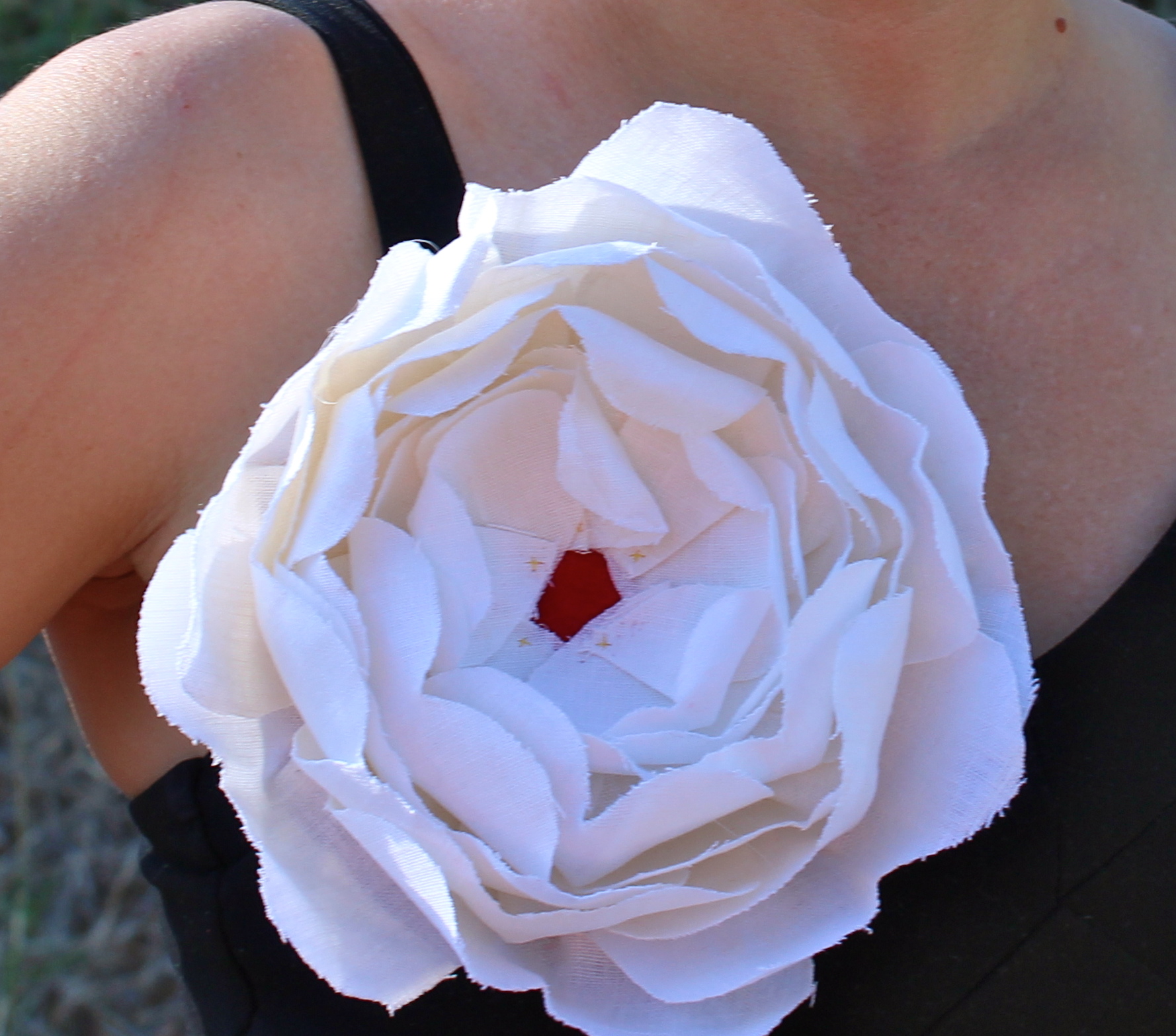
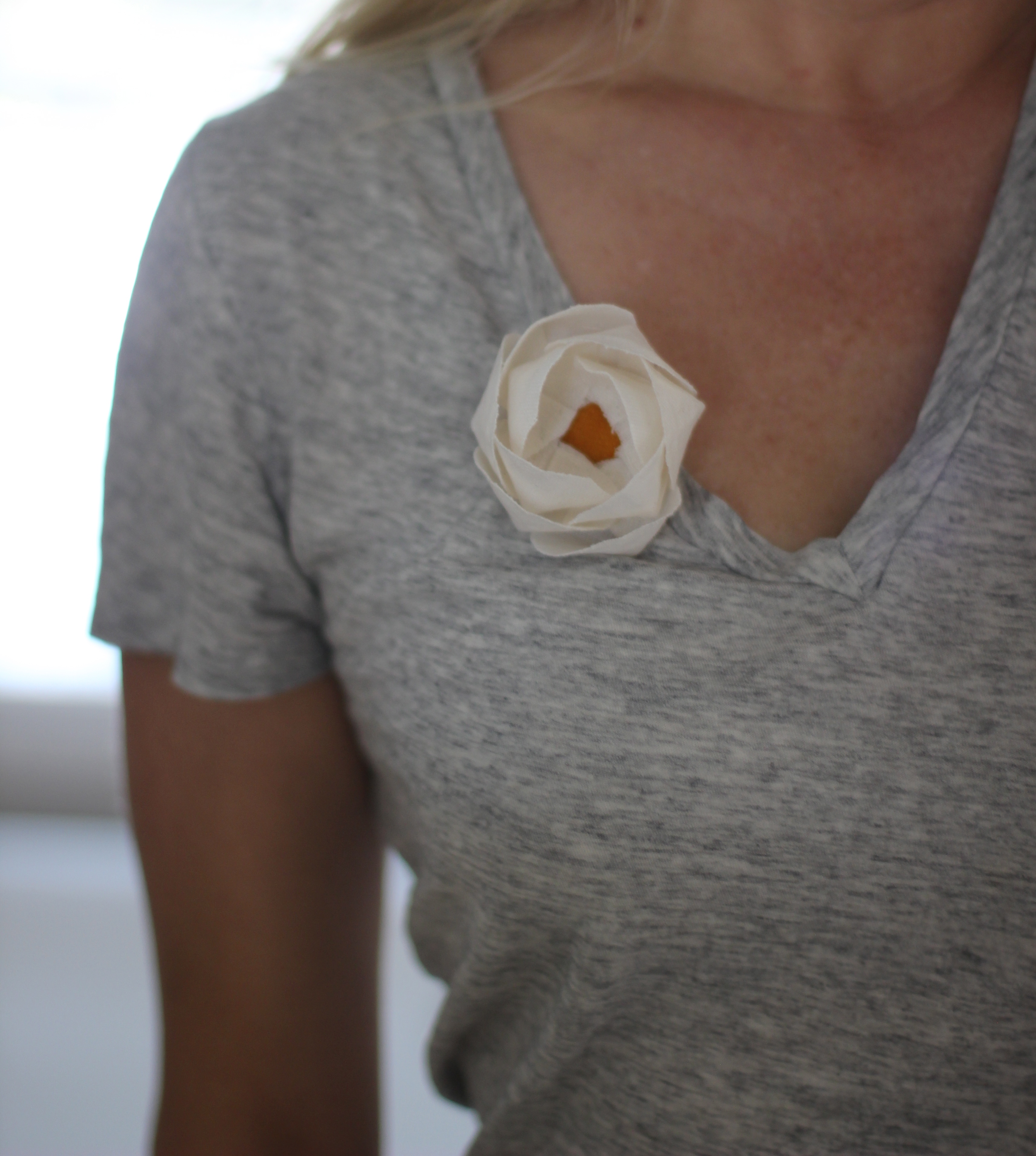
Linen Rosebud Flower Tutorial

Several years ago I bought a linen flower from Emersonmade. Ever since I’ve been hooked on the idea of making linen flowers myself.  Emerson no longer produces the flowers though her company does make drool-worthy clothing and accessories.

IMG_2717

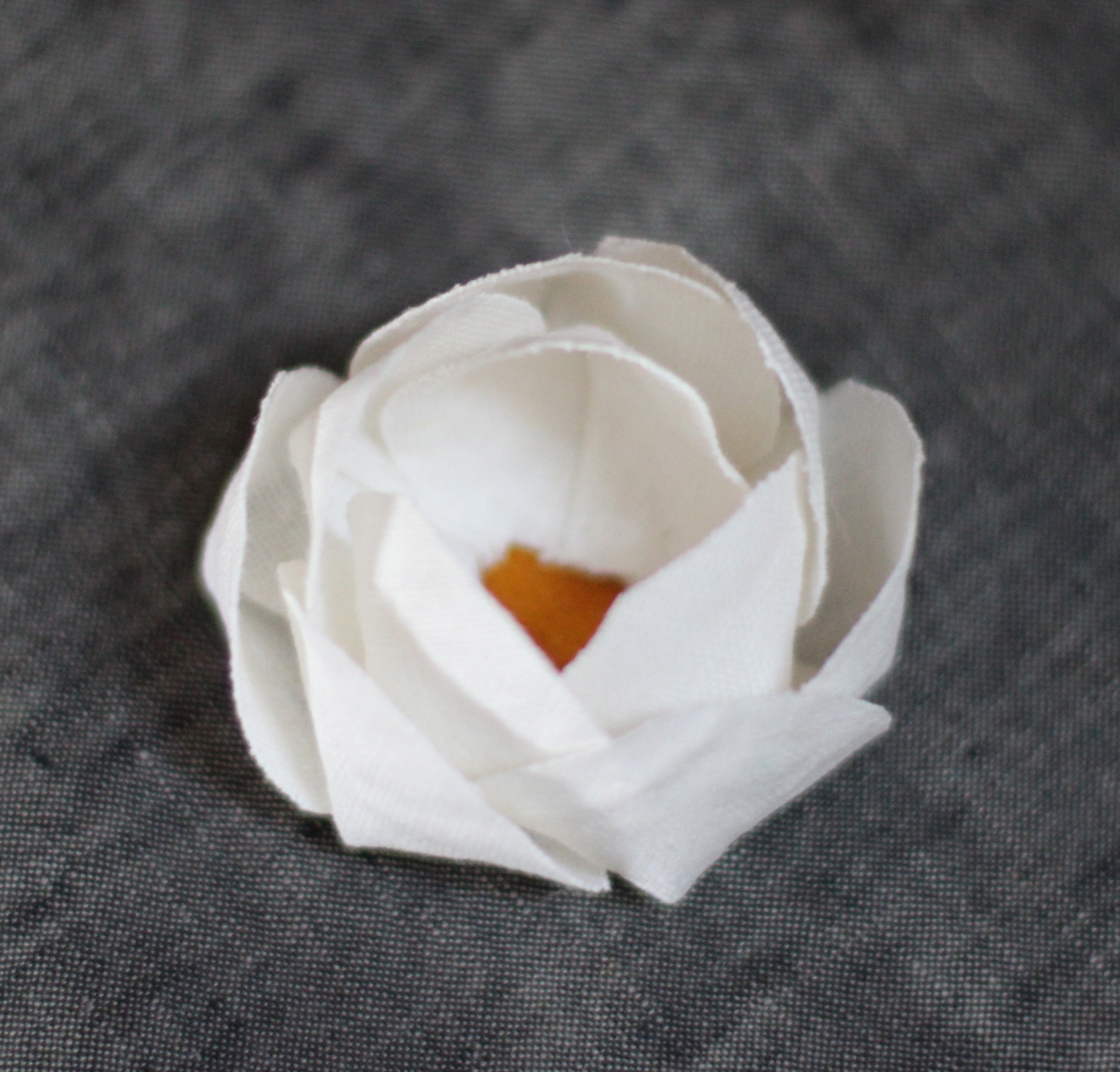
There have been a few tutorials on making these flowers on the internet. I used this tutorial, http://www.playingsublimely.com/2011/02/perfecting-emersons-flower-a-tutorial/ to guide me in making my first linen flower above. Since then I’ve been pondering other flower designs and wanted to share one I came up with that looks a little like a rosebud.

IMG_3212

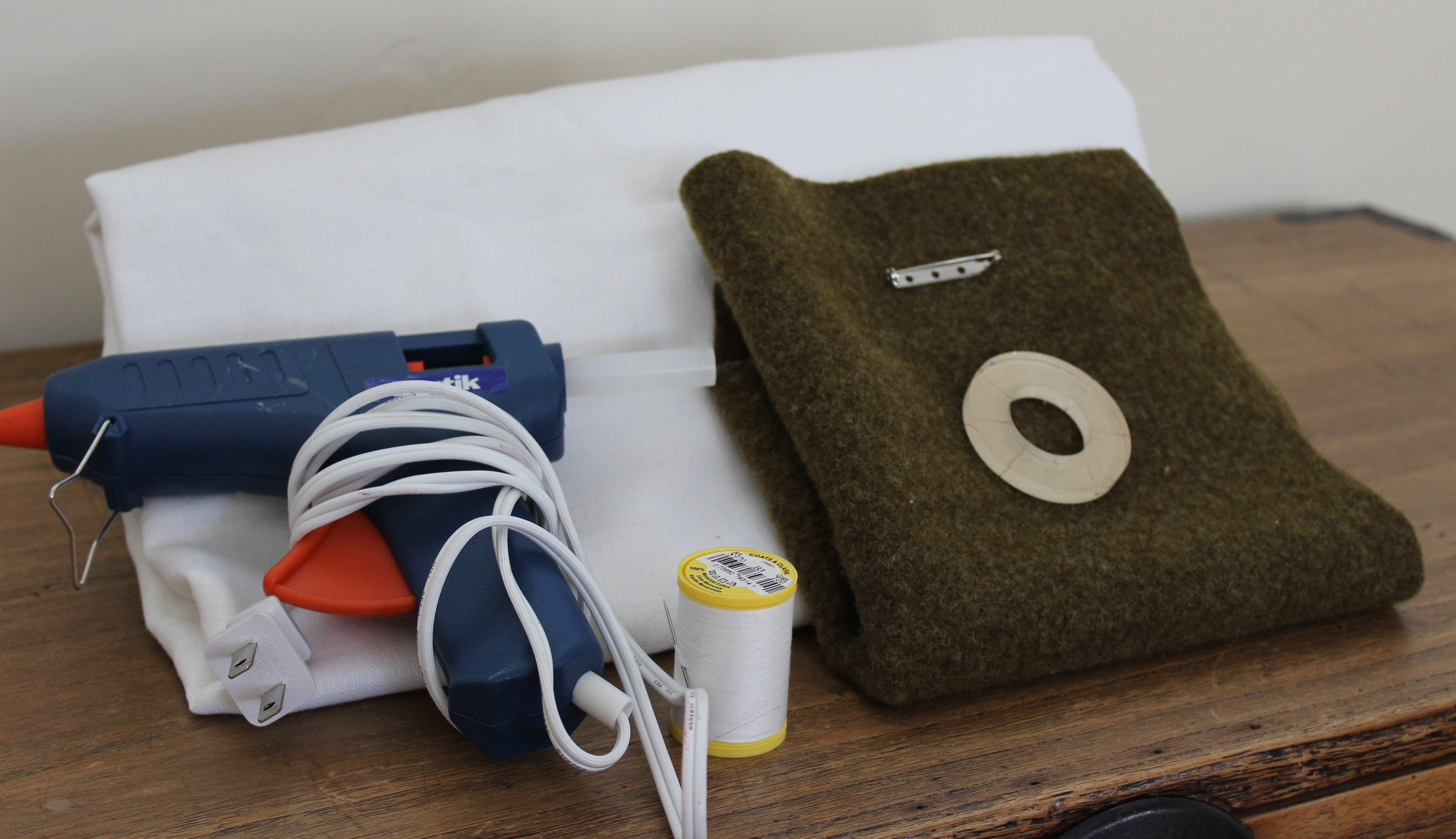
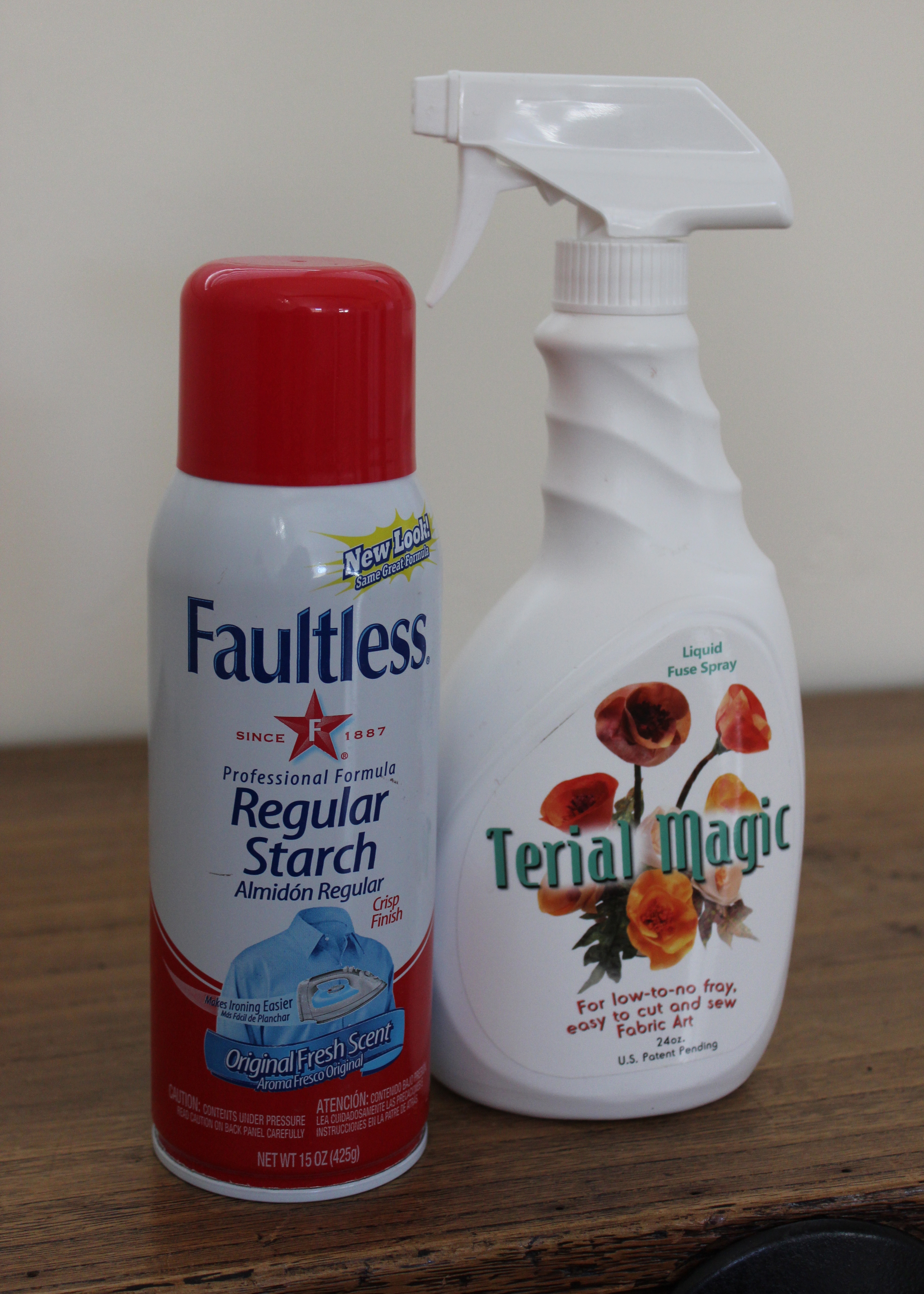
Materials needed: 100% linen fabric, heavy starch or a commercial product called Terial Magic, a big bowl, an iron, felted wool, scissors, a circle form, needle, thread to match the linen and an attachment pin.

IMG_3190

IMG_3188

For the first step, fully soak your linen in a big bowl. Make sure all the fabric is saturated. Next, air dry the fabric until completely dry and then steam iron it. (I have used both the spray starch and the Terial Magic and they work equally well.)

IMG_3203

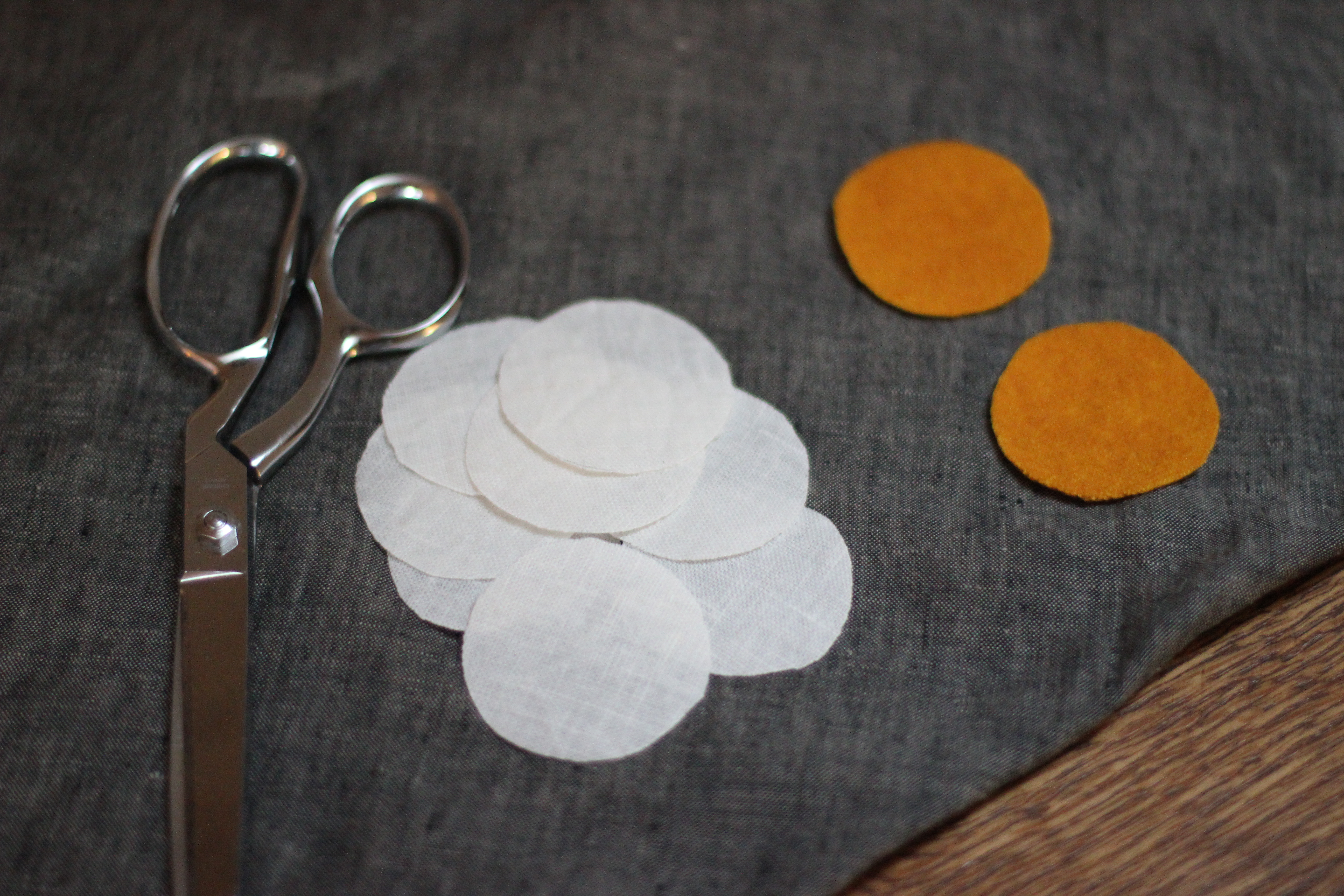
Next cut 10, 2 inch circular pieces of linen and 2, 2 inch circular pieces of the felted wool. (I tended with more attempts at this to trim the wool pieces a bit so they didn’t show through the side of the flower).

IMG_3206

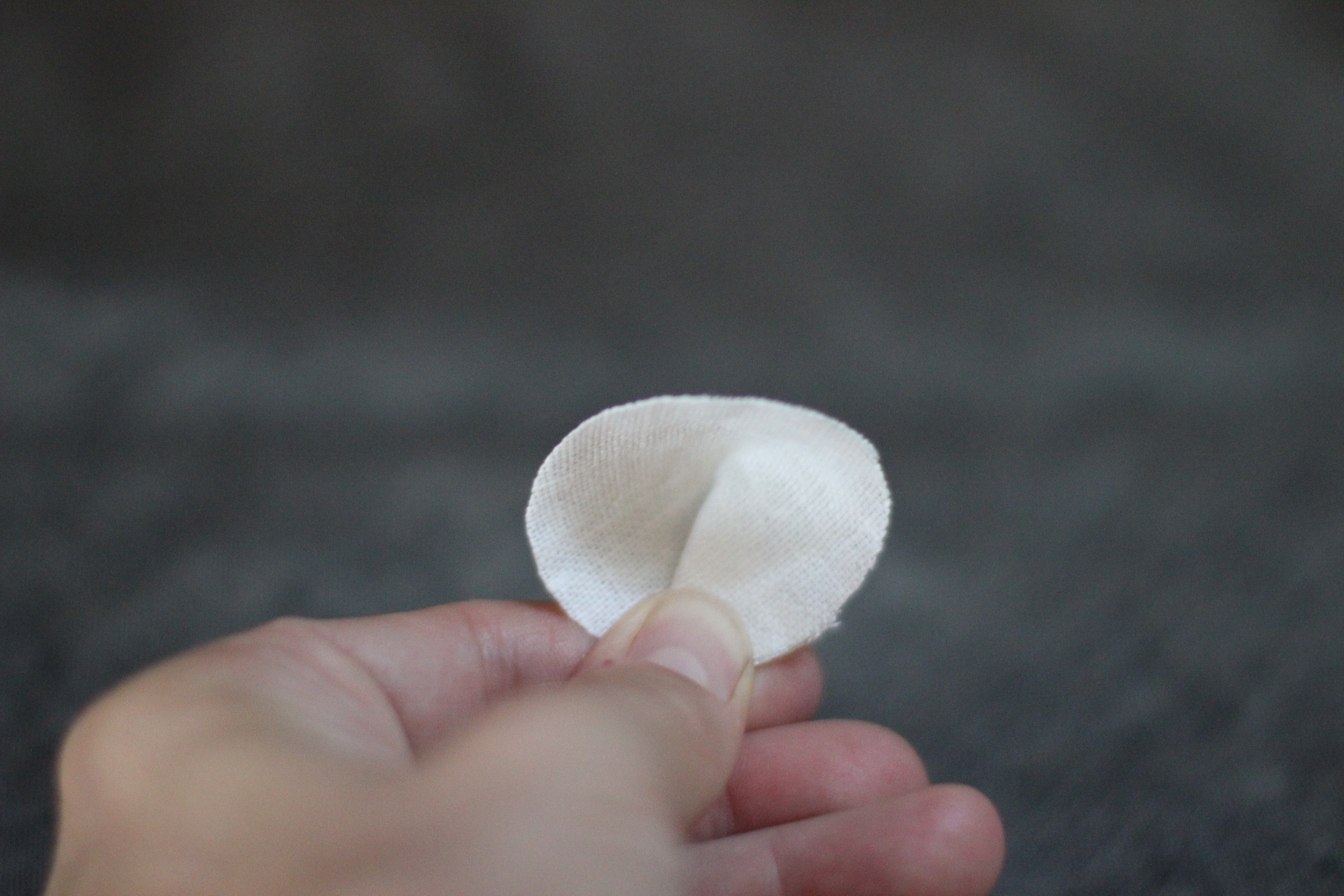
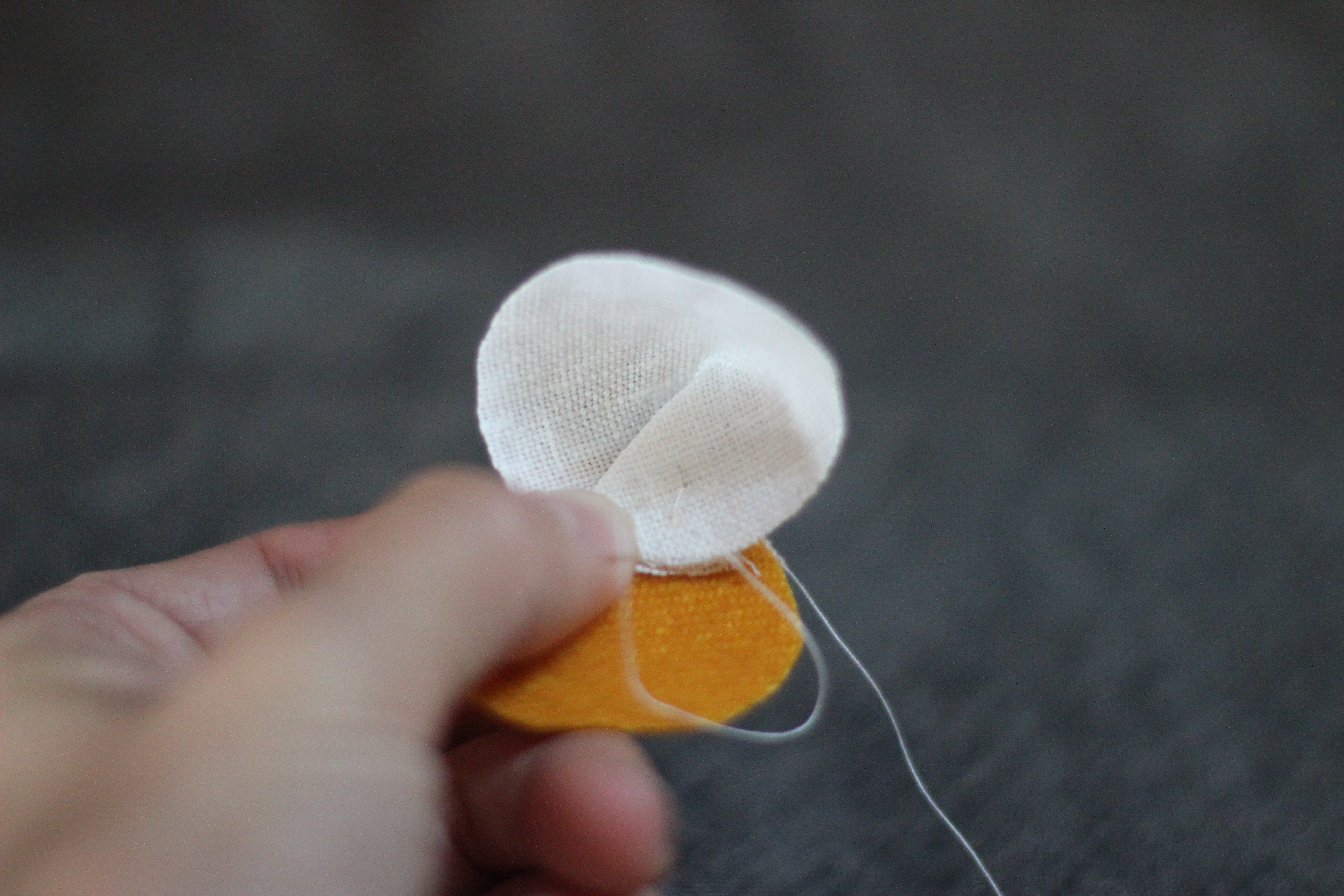
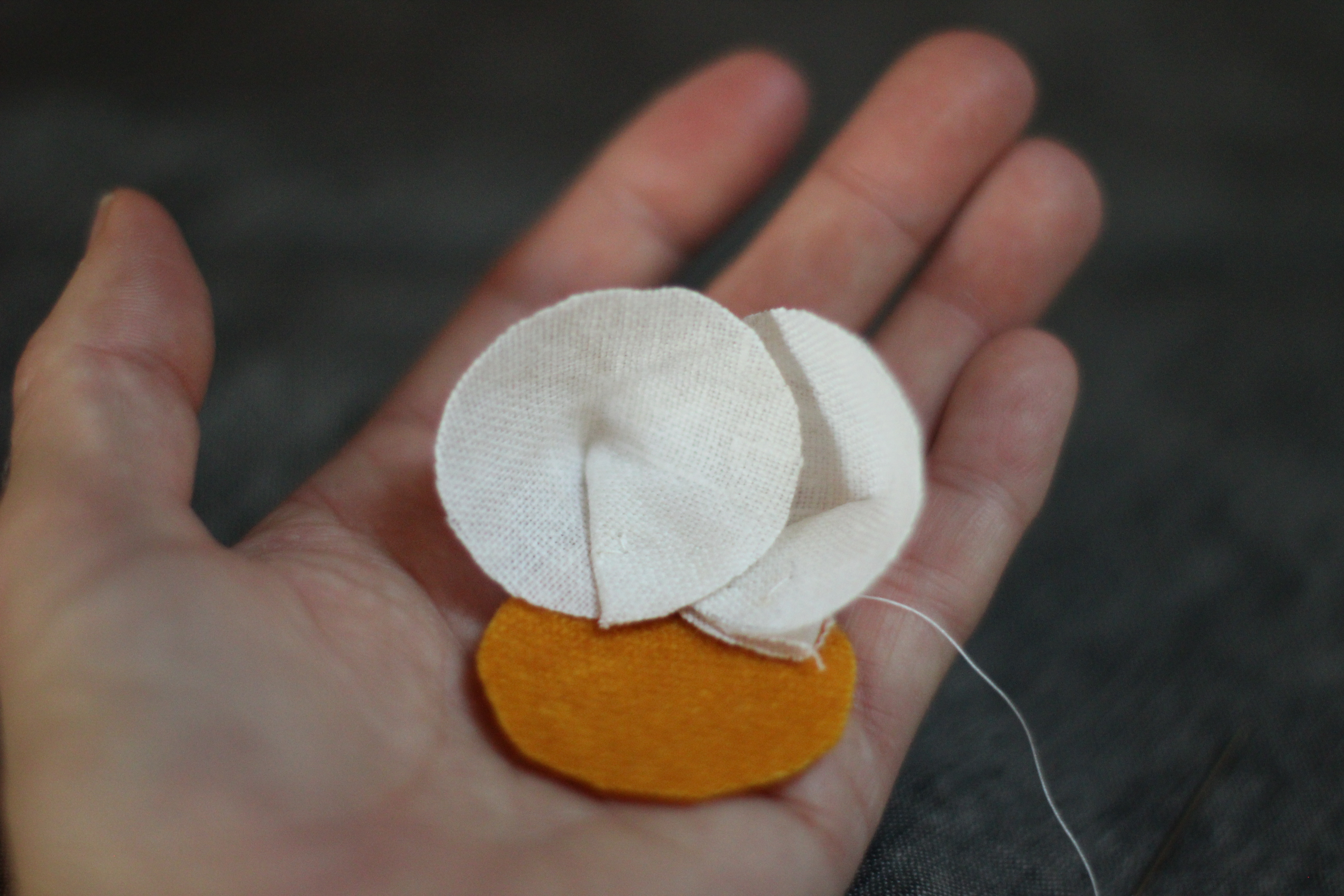
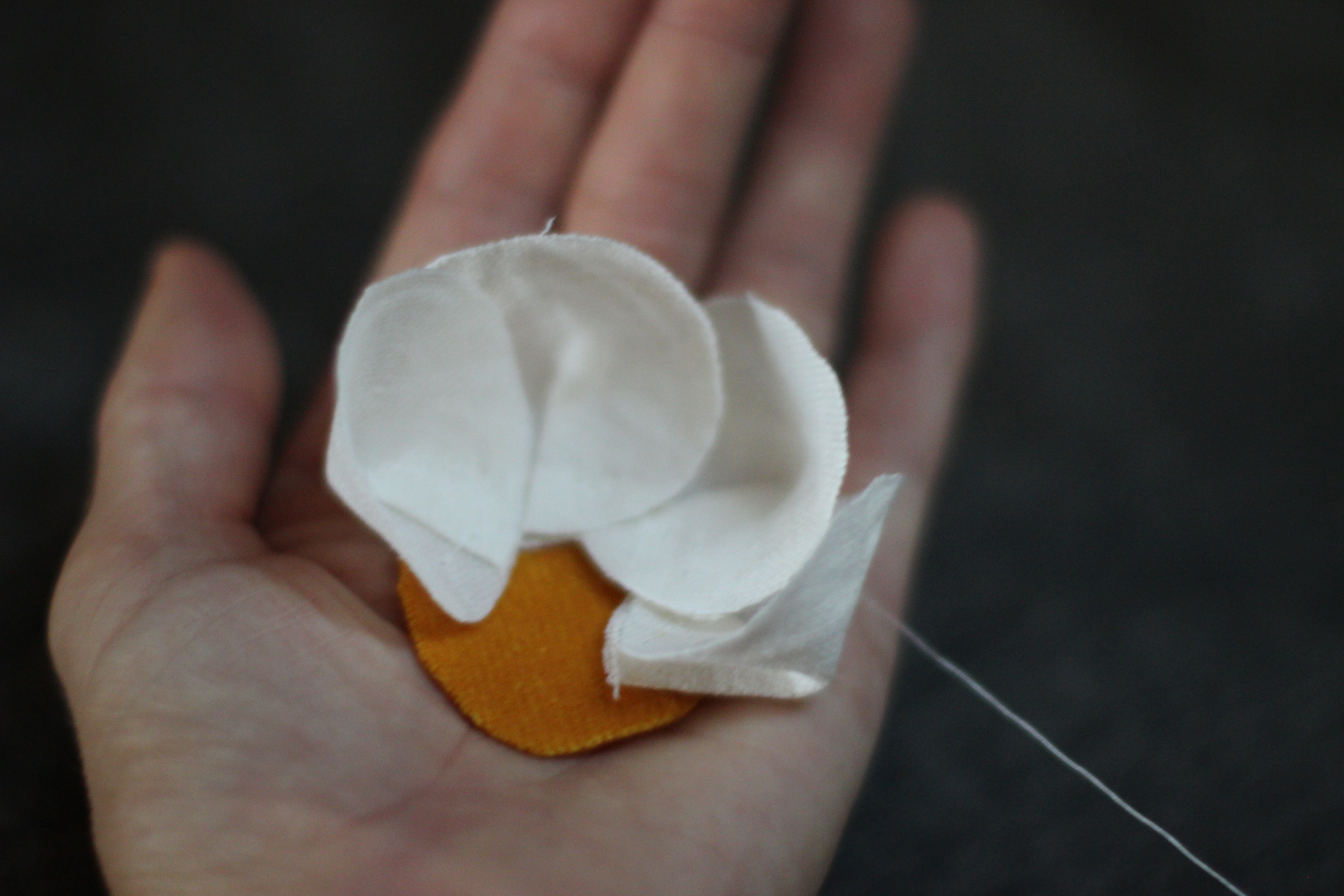
Next fold each linen piece as shown and begin hand sewing to one of the felted wool pieces. Add additional petals in the same manner overlapping each piece.

IMG_3207

IMG_3209

IMG_3210

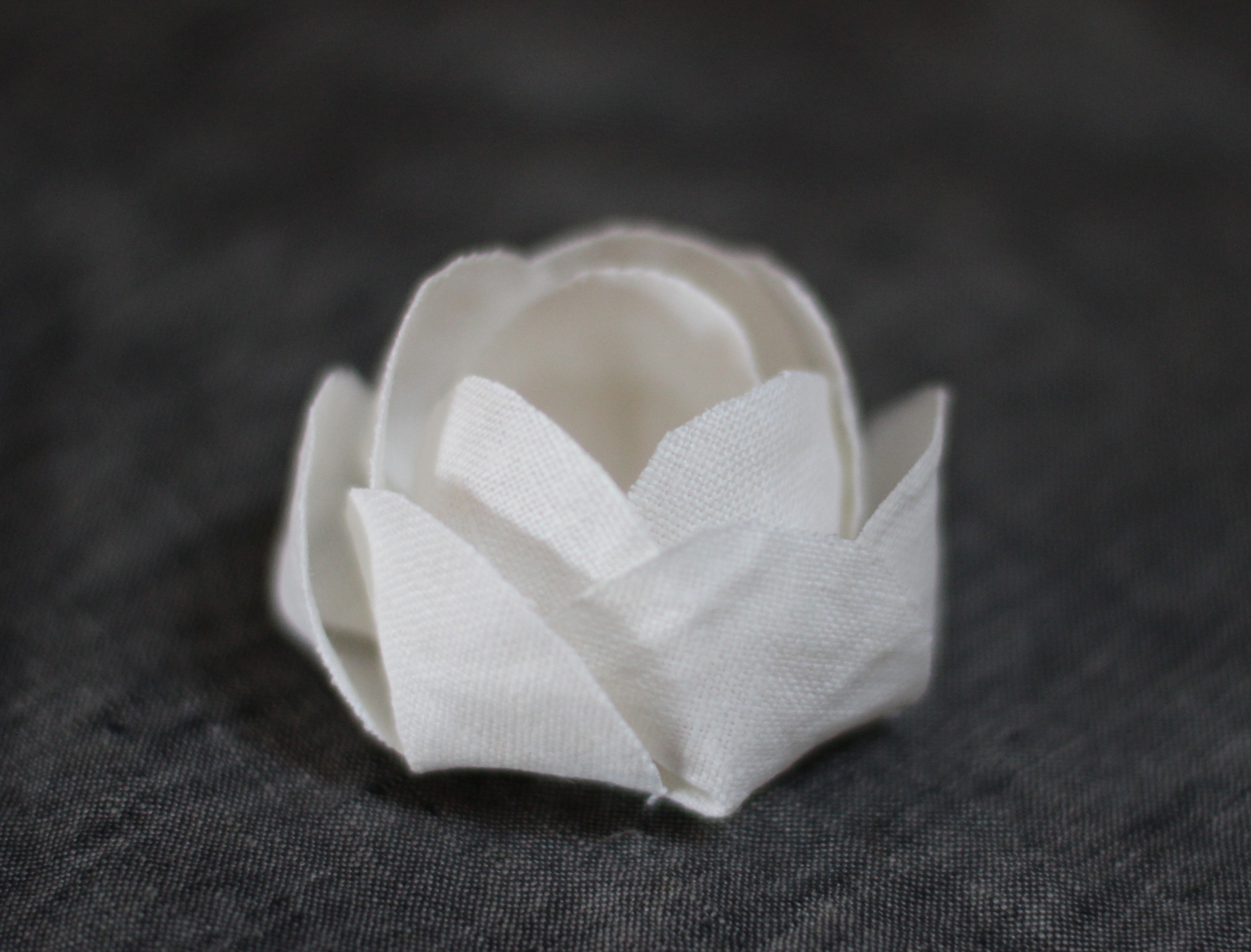
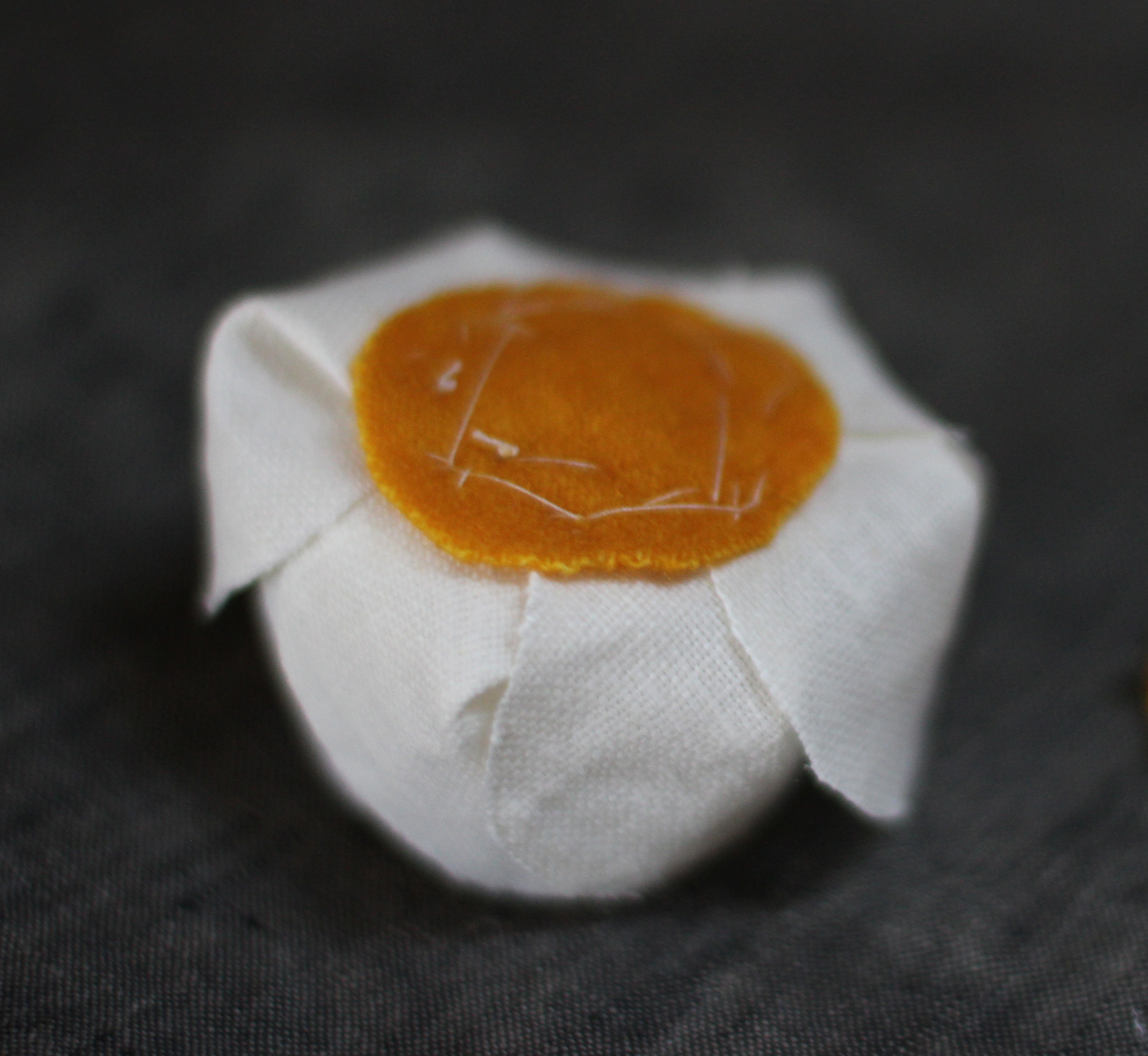
Continue to overlap the petals until there are two overlapping layers making sure to keep a center small circle of felt visible. In a short period of time you will end up with a linen rosebud.

IMG_3211

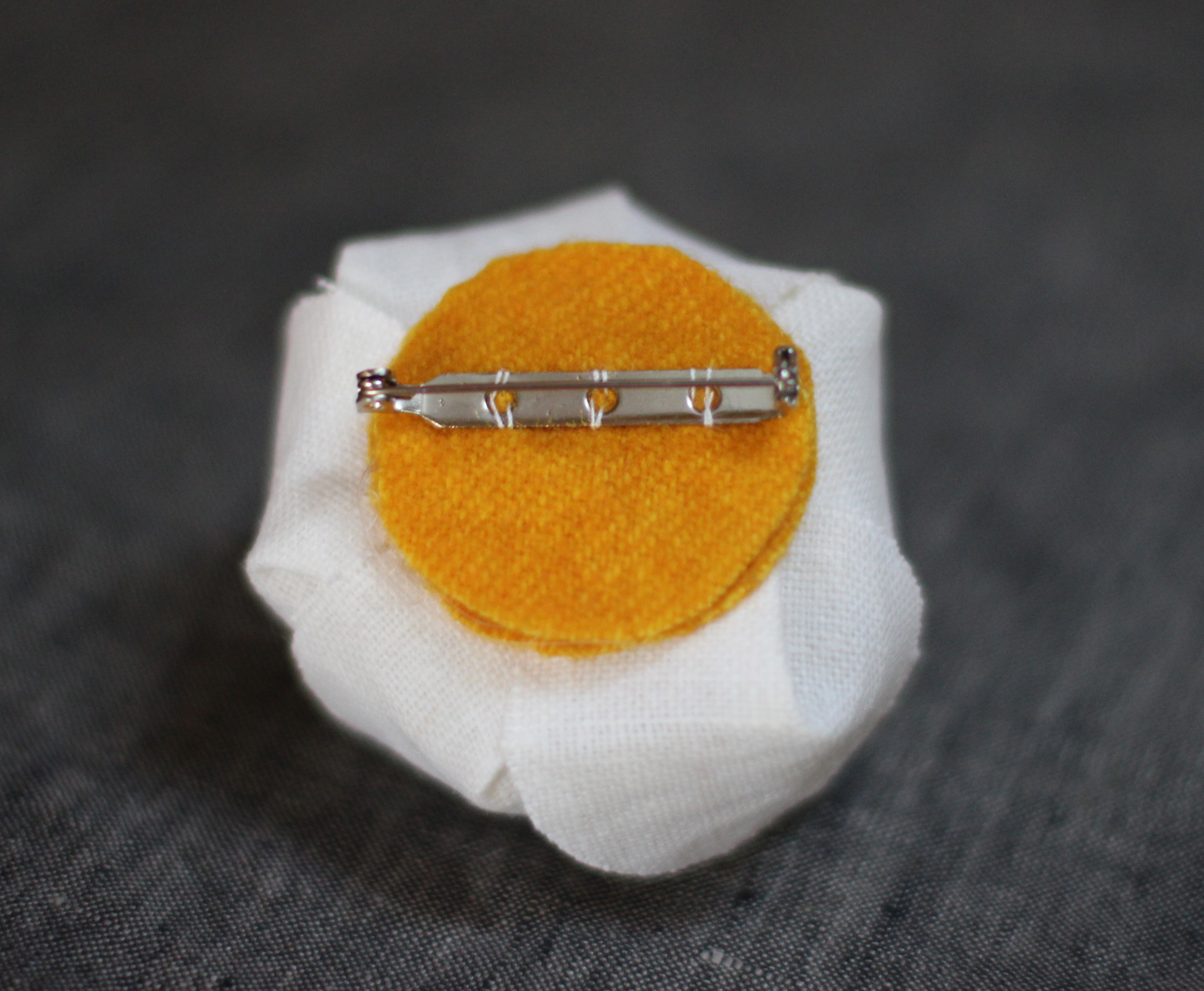
To complete the flower, attach a pin to the second piece of wool either by inserting it into the wool or by sewing it on and then use a glue gun to attach the second piece of felted wool to your flower.

IMG_3213

IMG_3221

I’m warning you, these flowers are pretty addictive partly because they are so darn easy to make. Enjoy!


IMG_3225