Flowers For Persephone

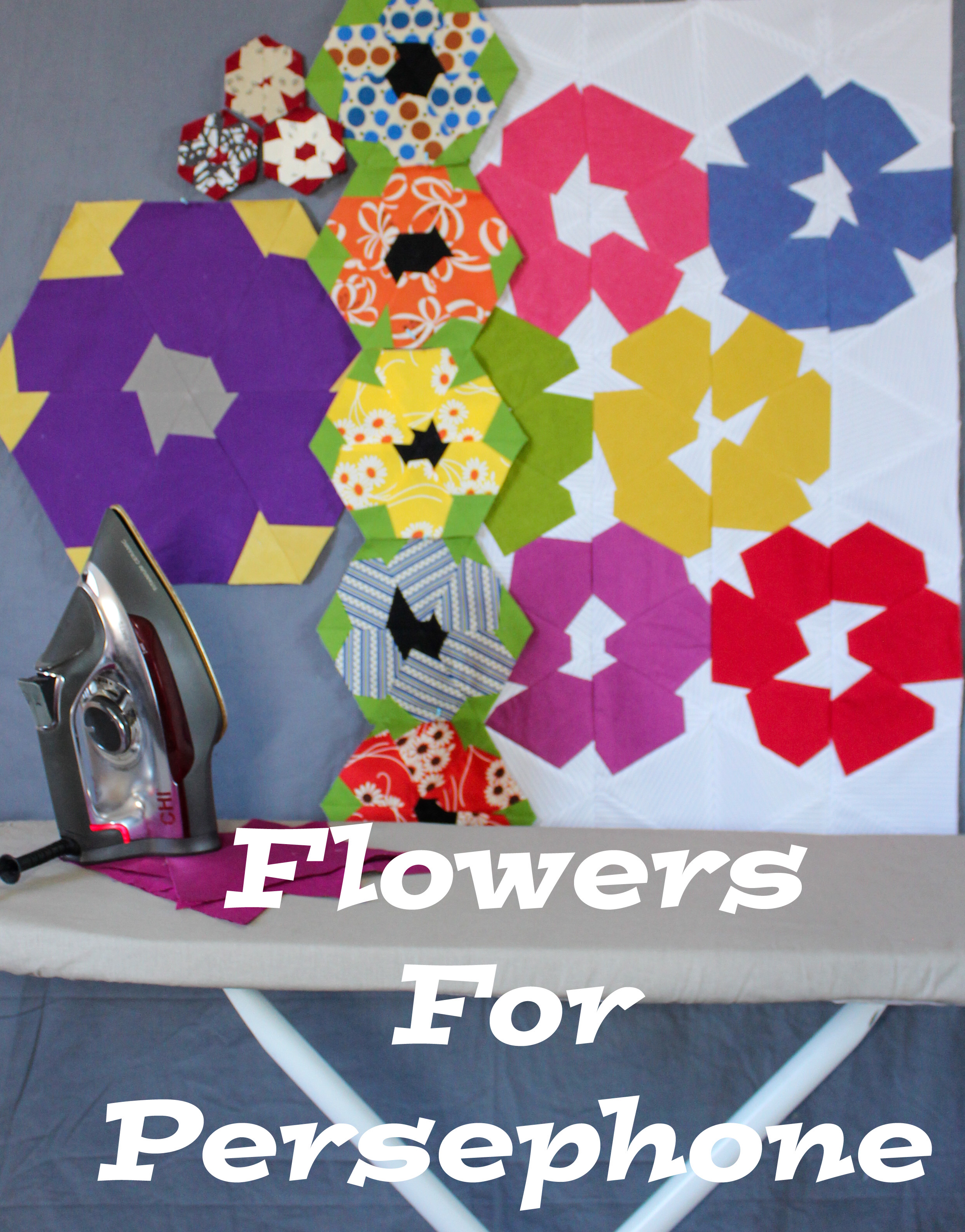
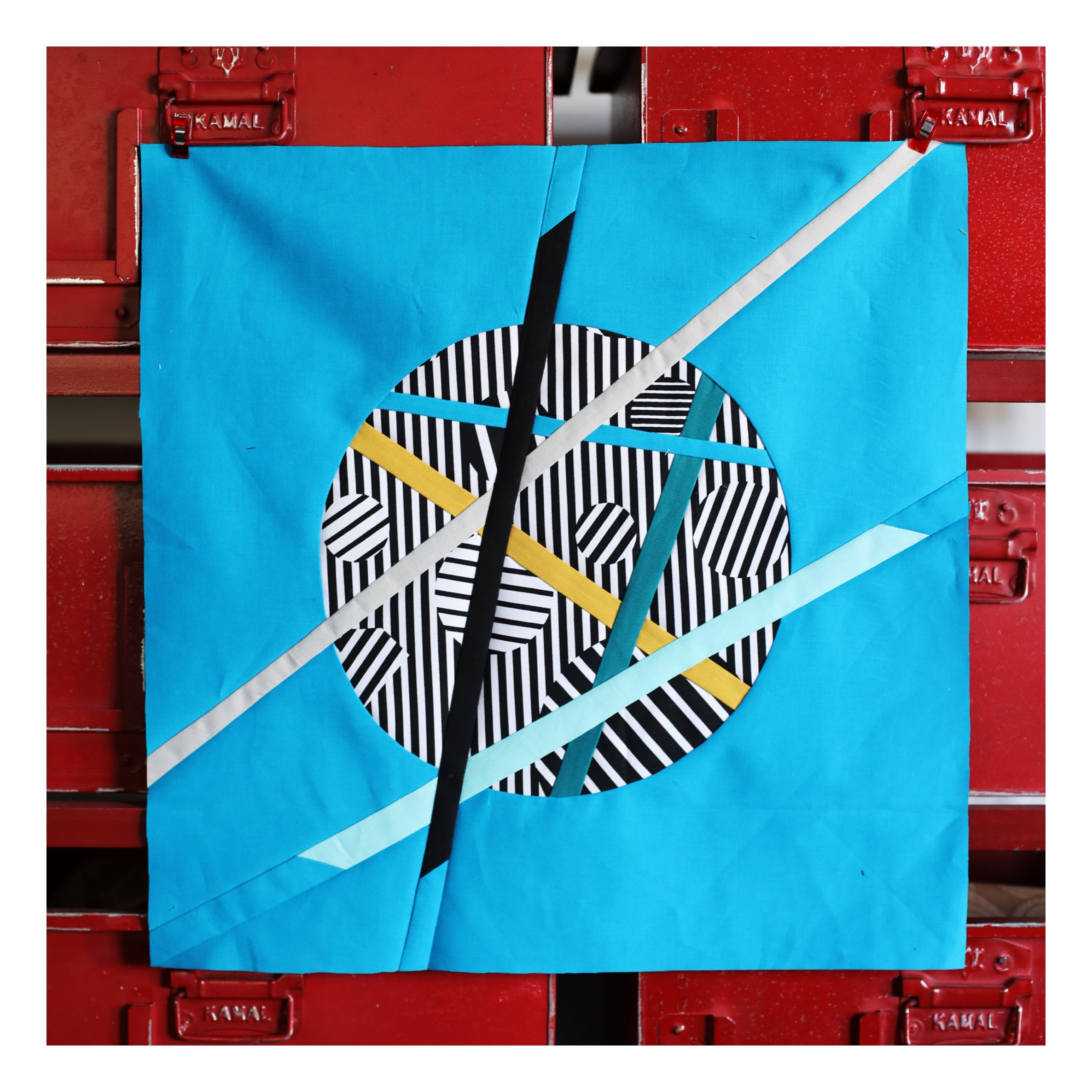
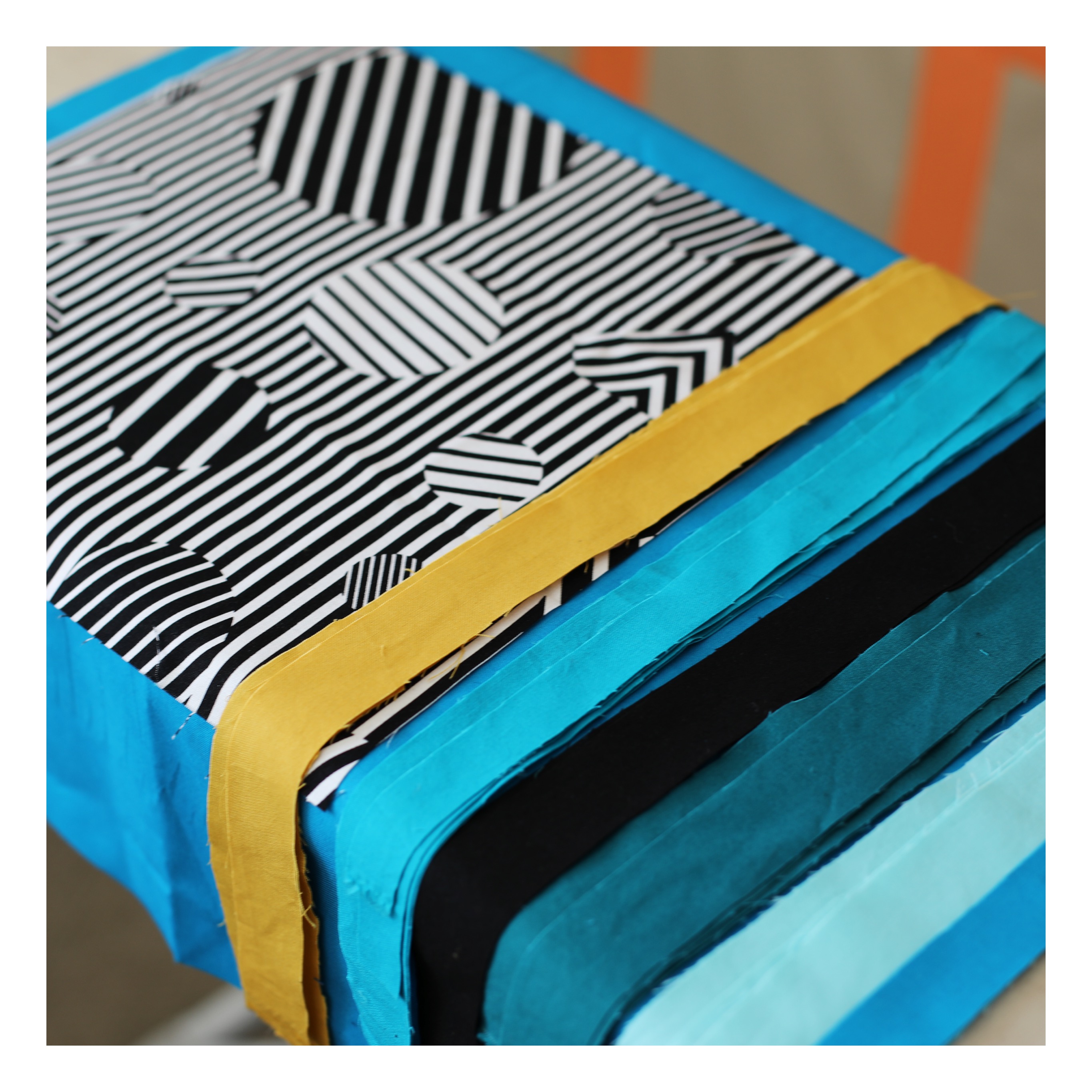
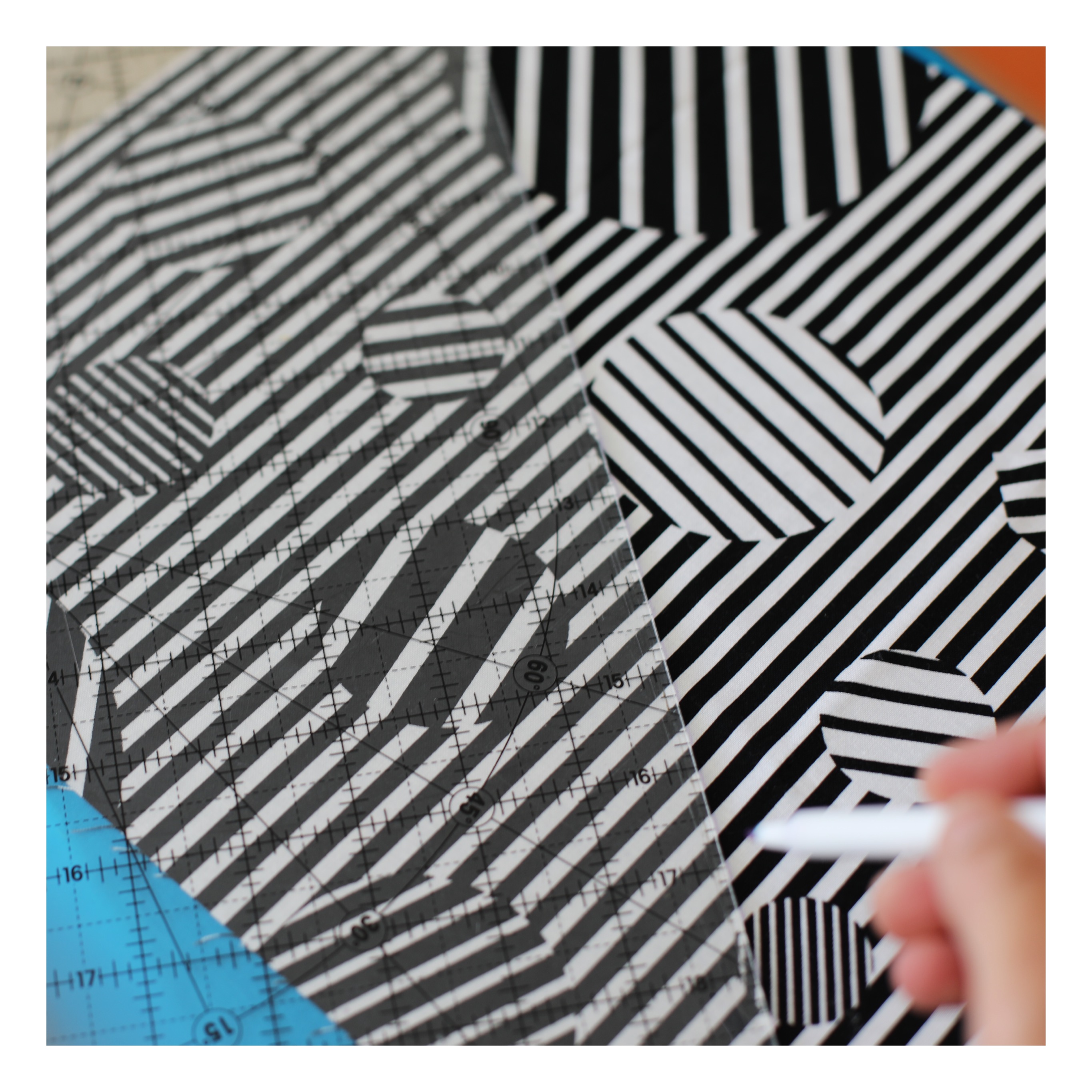
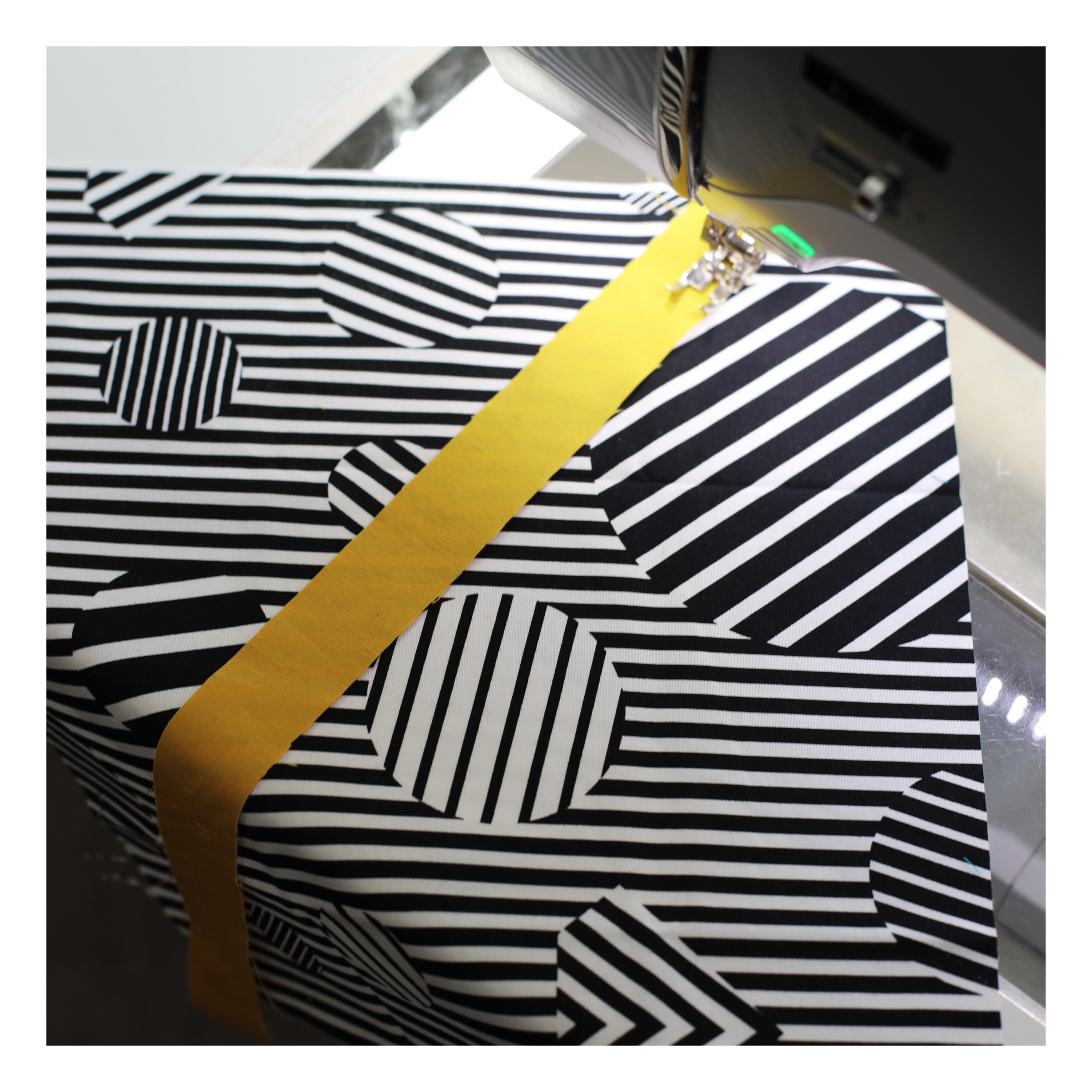
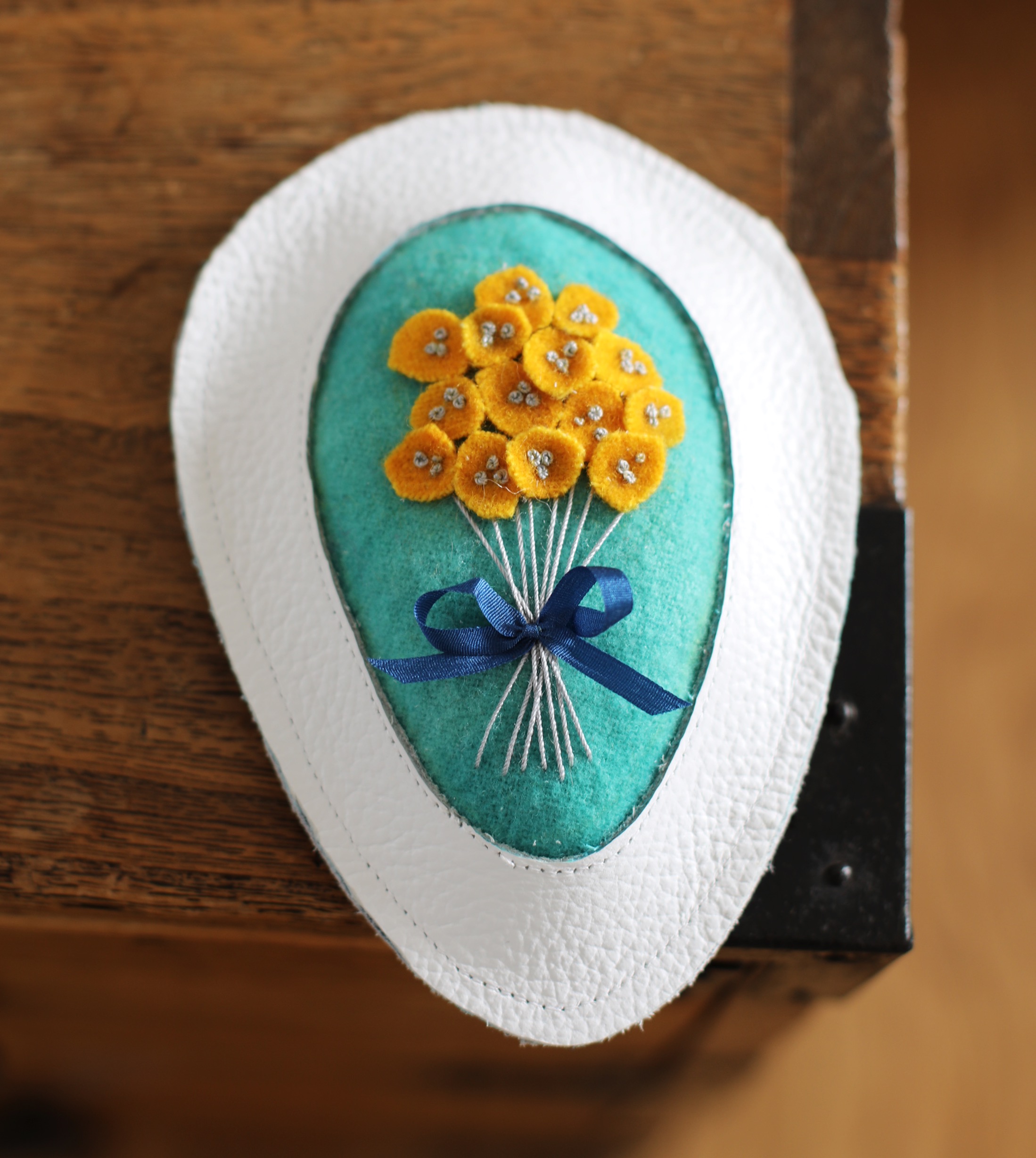
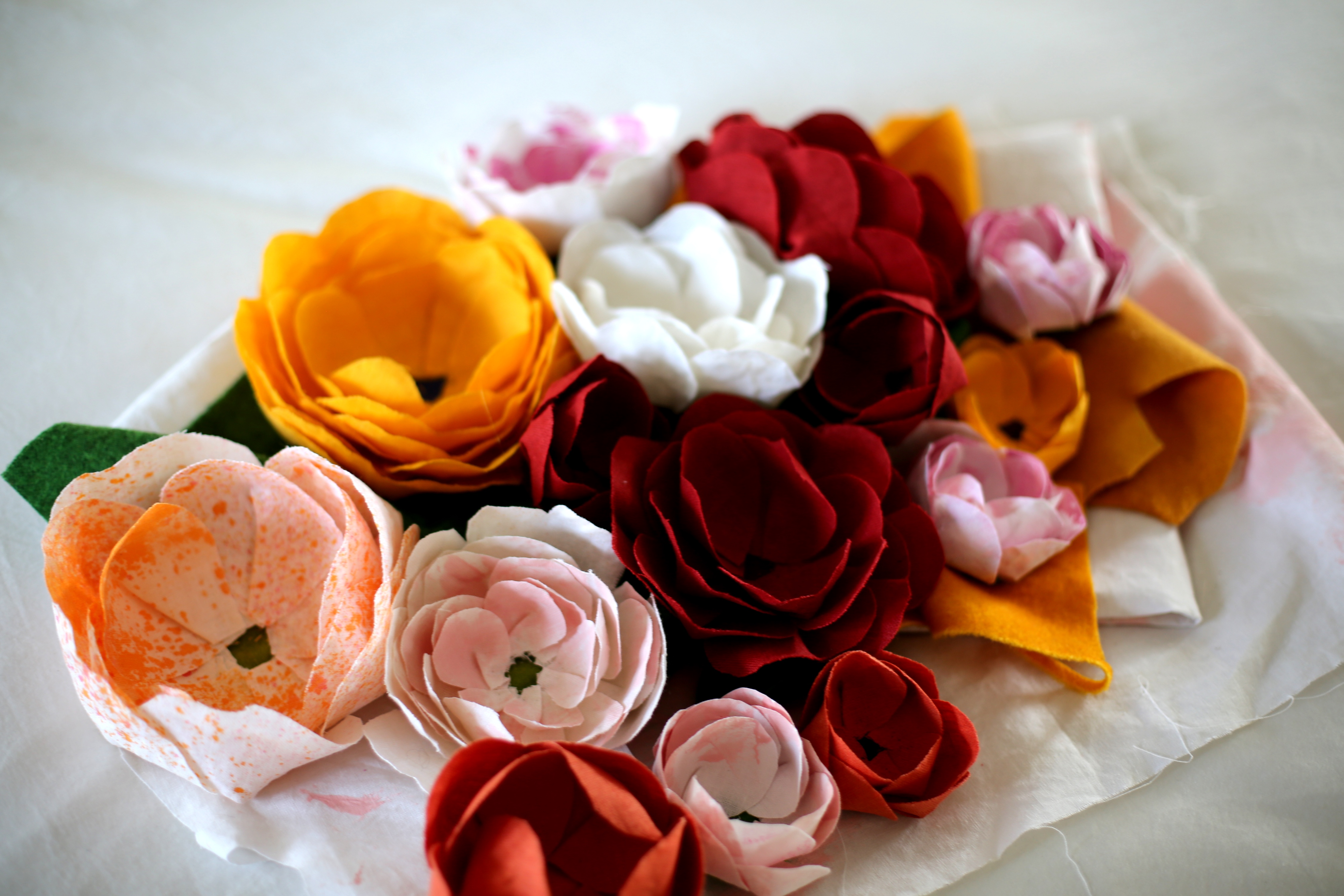
Life has been heavy lately and recently I was especially saddened to hear about the unexpected sudden passing of Persephone, the daughter of my friend and fellow quilter Laura Hartrich http://www.laurahartrich.com. My love language is making and soon after hearing the news I started making abstract hex flowers with Persephone on my mind. With Laura’s Permission, I wanted to share a tutorial for anyone who may want to make their own flowers in memory of Persephone or anyone who left us too soon.

I made flowers in many different sizes and I can imagine them coming together in a quilt, appliquéd on a jeans jacket or even sewn together to make a necklace, something Laura has done herself. If you do decide to make them, please use the hashtag on IG #flowersforpersephone so we can all see your work

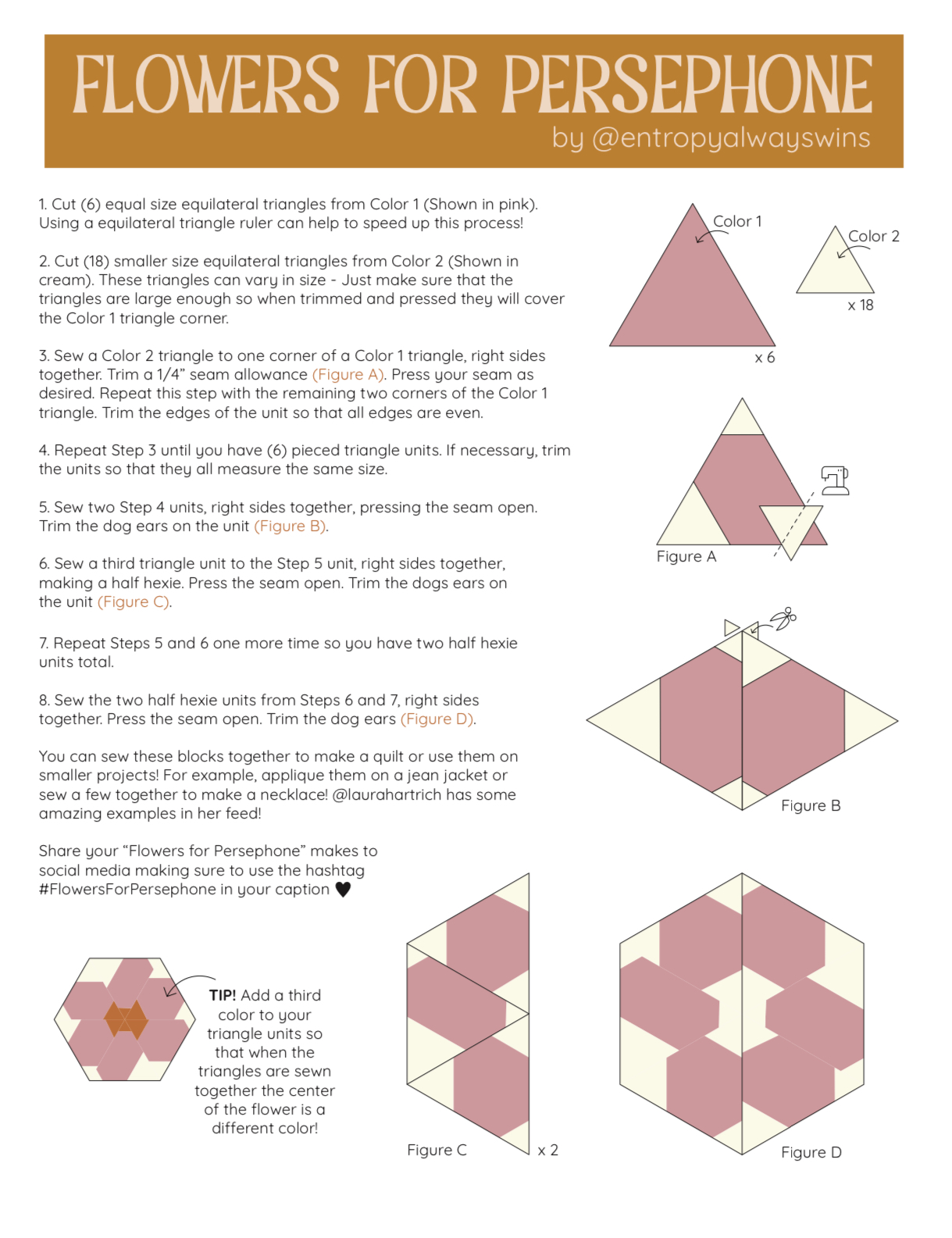
A huge thank you all who have already reached out pledging to make the blocks on their own or with their Quilt Guilds and to Lindsey of Pen and Paper Patterns who spontaneously offered and made a pdf with instructions and diagrams within an hour of me posting the tutorial on IG. If you aren’t already familiar with Lindsey’s quilt patterns, you are missing out. Check out her patterns here: https://penandpaperpatterns.com

You can see my IG tutorial here: https://www.instagram.com/entropyalwayswins/p/DF3qOt5ymON/?img_index=1

You can also print out your copy of the Tutorial shown below here: https://tinyurl.com/2escys9t

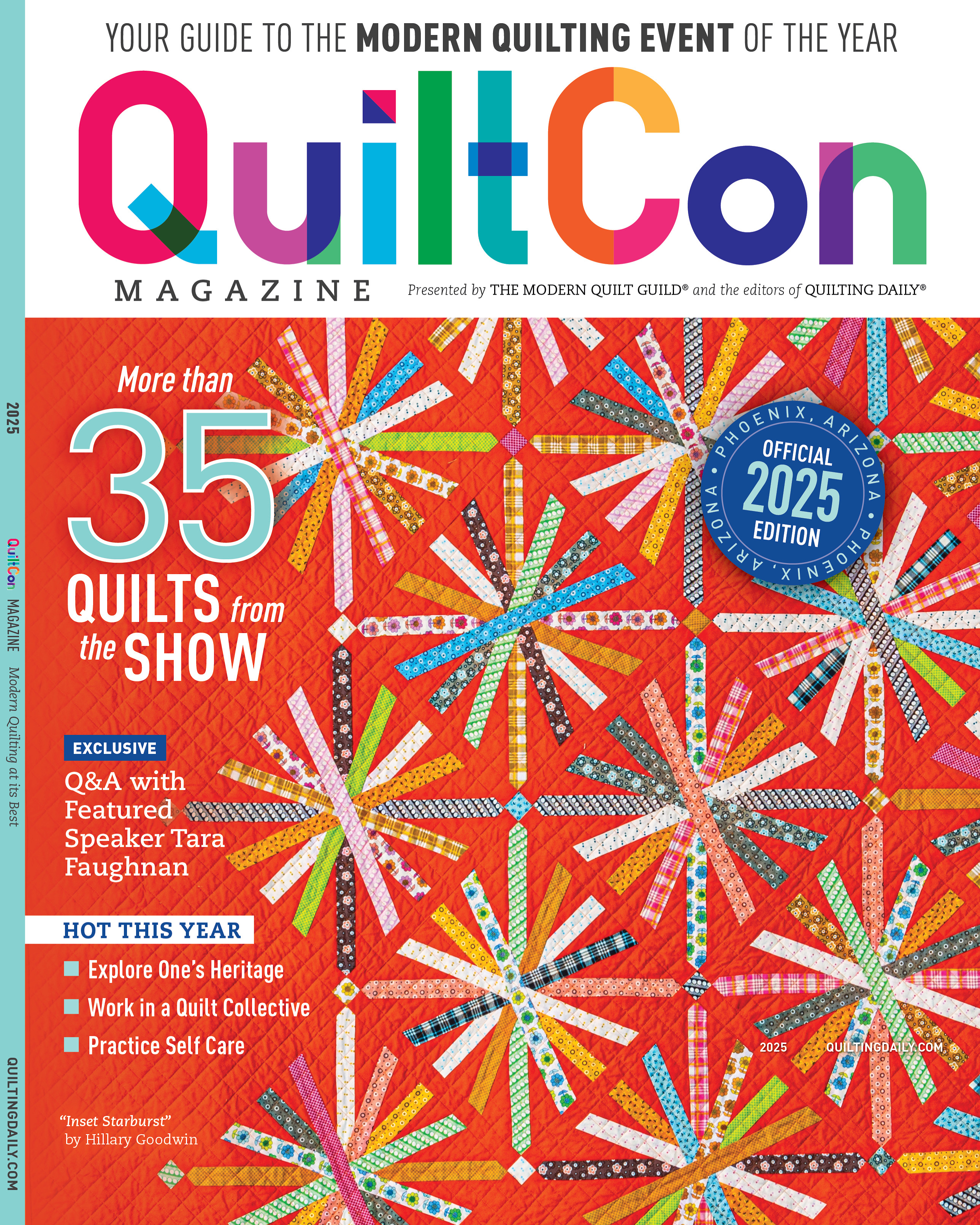
Quiltcon Magazine 2025

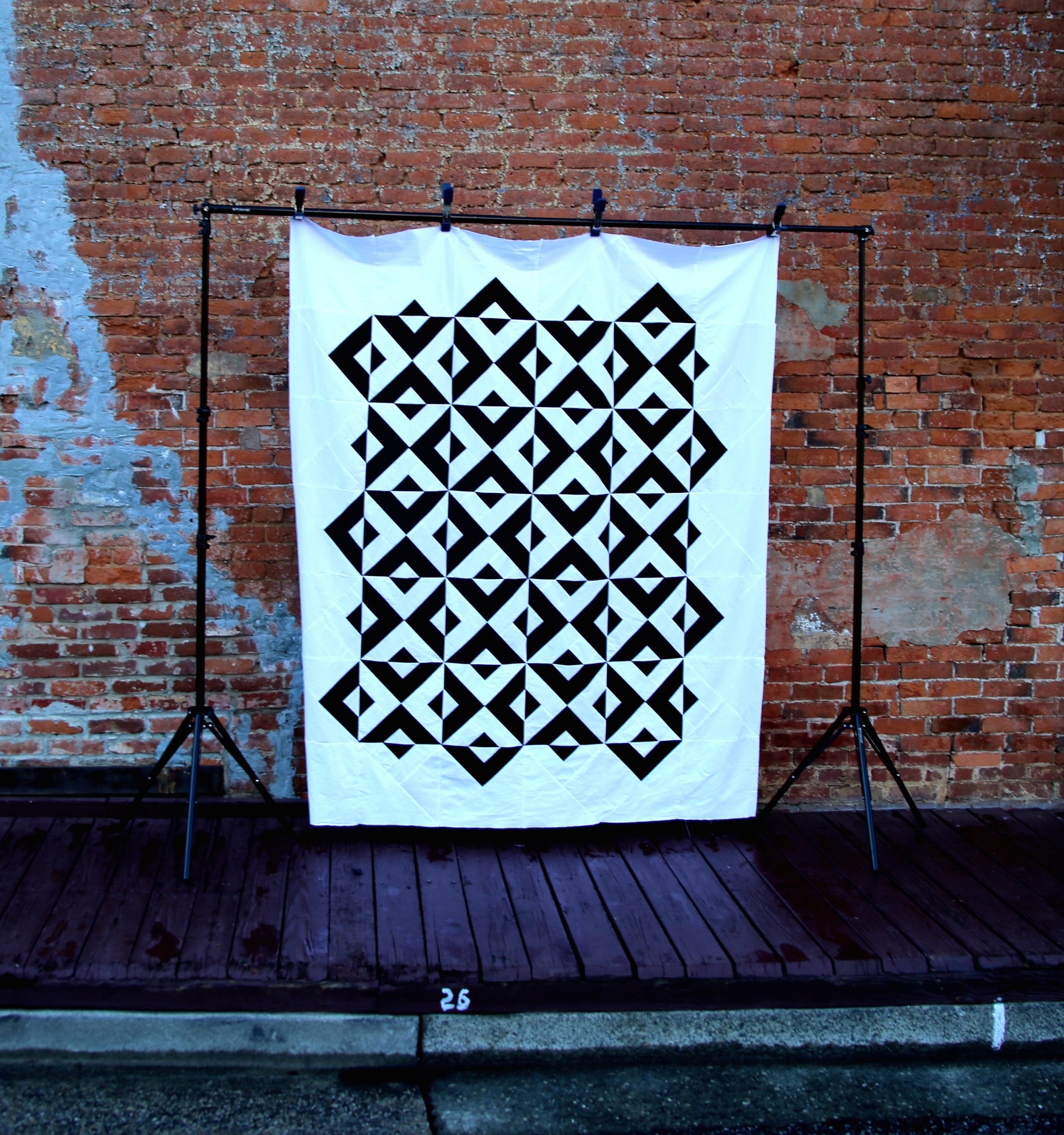
My quilt “Inset Starburst” is on the cover of Quiltcon 2025 Magazine and the pattern using my inset strip technique is included inside. I’m excited for others to get a chance to play with this technique in block form. You can find your own paper copy available in stores at at Quiltcon starting Feb 18, 2025 and the digital copy available now here: https://www.quiltingdaily.com/product/quiltcon-magazine-2025-digital-edition/

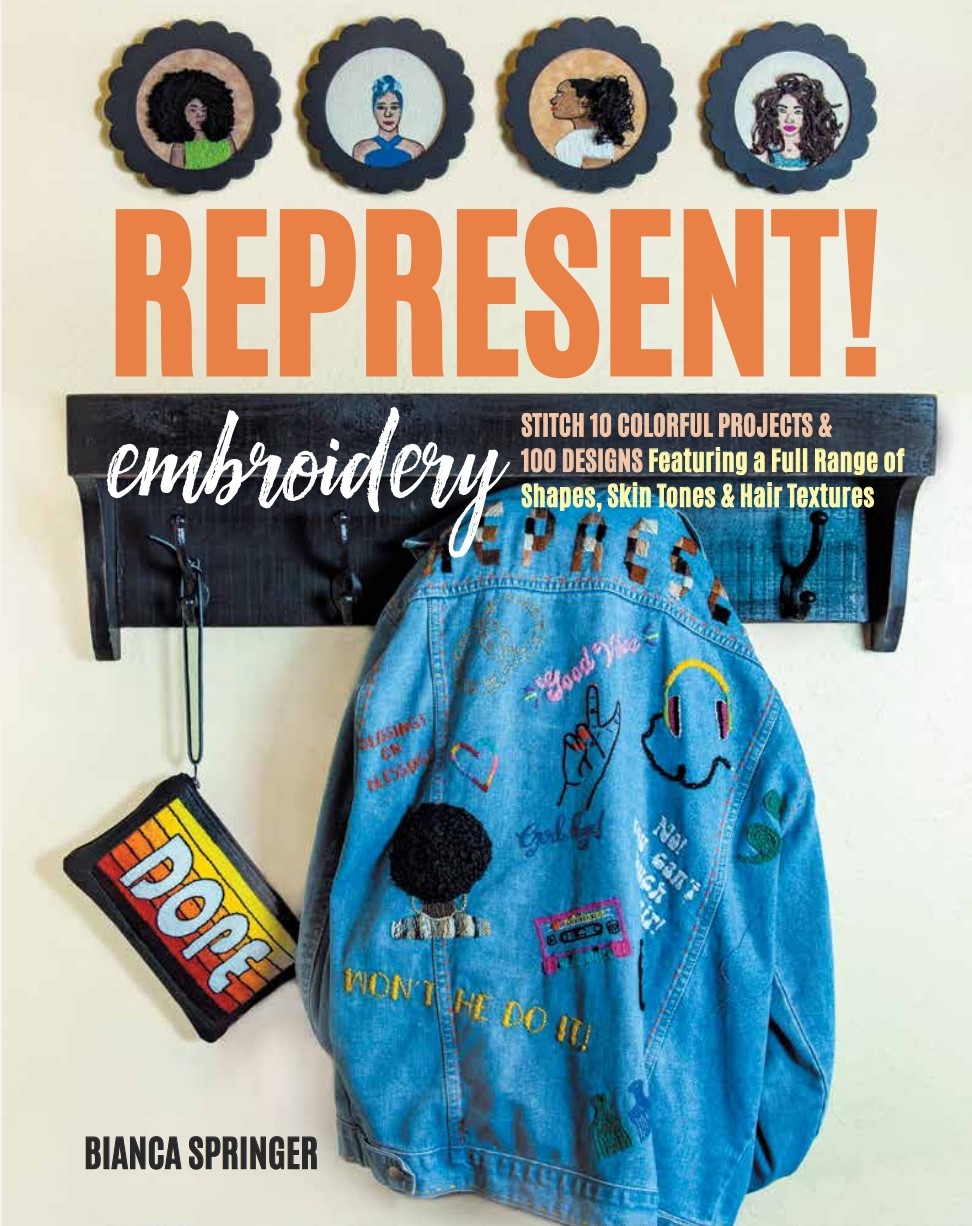
Represent! Embroidery

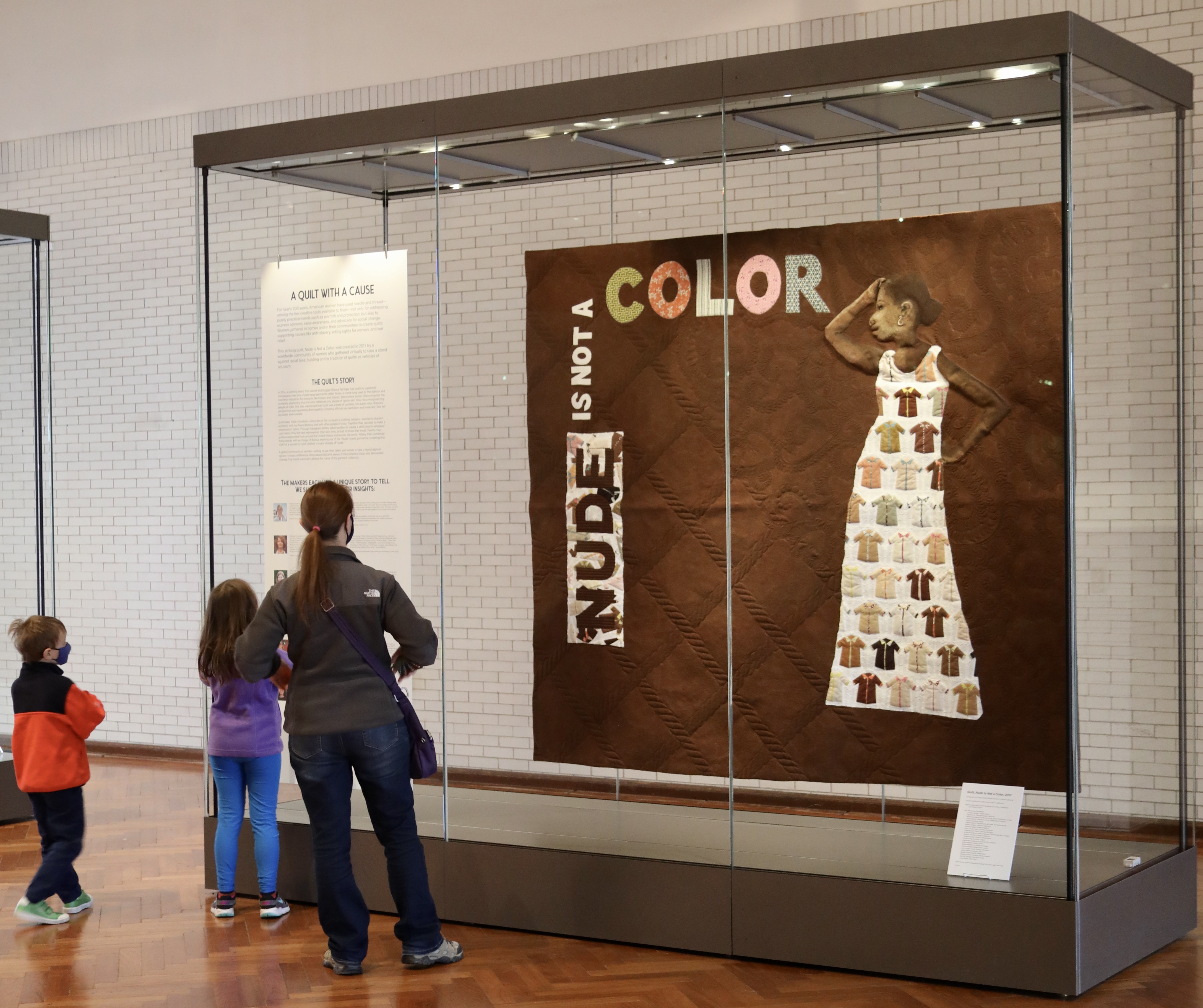
Bianca Springer http://biancaspringer.com and I first got to know each other as mutual admirers of a brand of handmade embroidered garments. Our friendship grew into a creative collaboration with the help of others born in protest sadly from the anti-inclusive posturing of the hand embroidery business owner we initially so admired. That collaboration was our “Nude is not a Color” quilt purchased in 2021 by the Henry Ford Museum and now in their permanent collection.

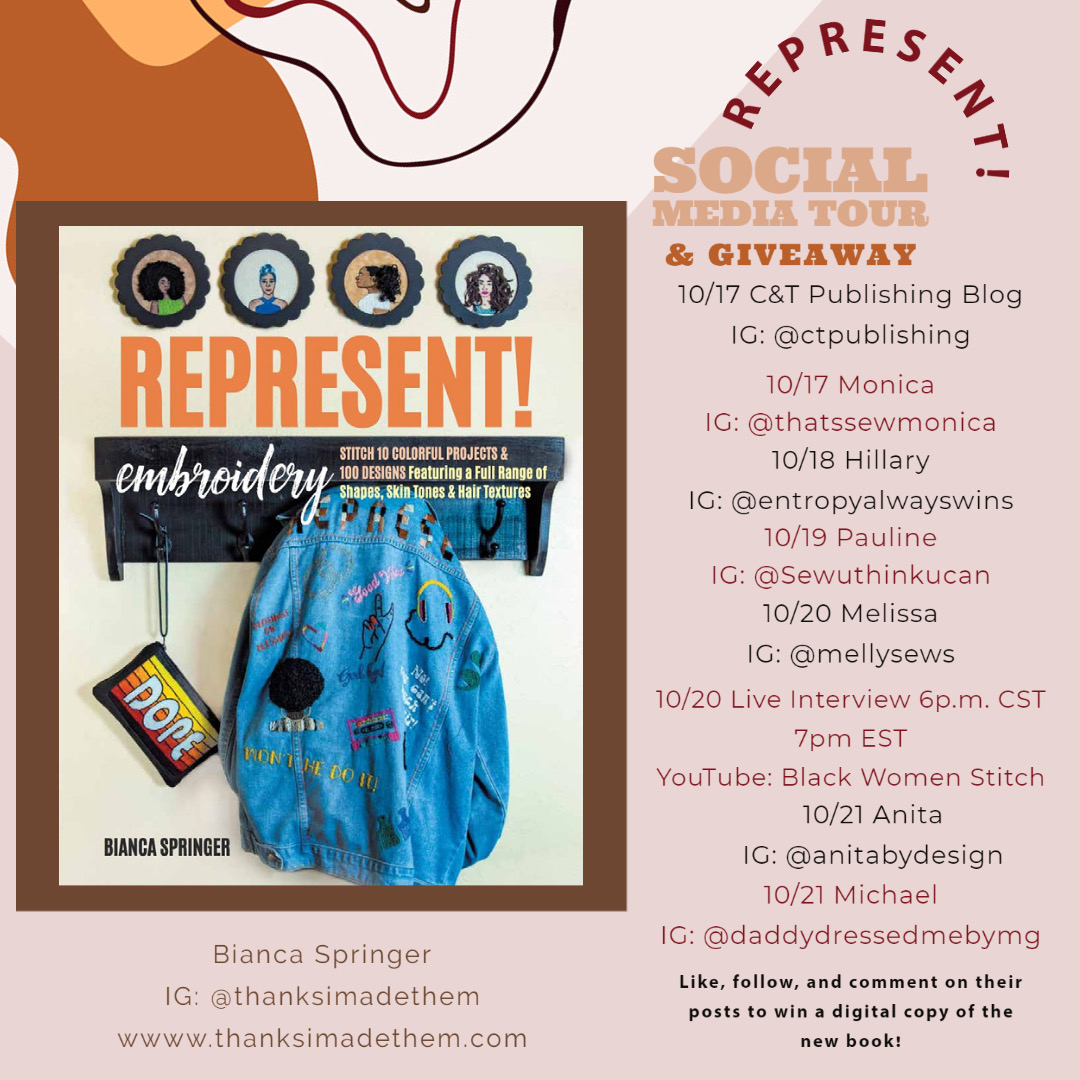
Coming full circle, is an embroidery book Bianca WROTE HERSELF and recently published by C&T publishing concentrating on the inclusion of people with different skin tones, body types, hair textures and shapes.

The realization of that full circle makes me want to cheer from the mountain tops! Finally, there is a book that represents and honors many of my friends, work colleagues and family members who have thus far been largely overlooked in embroidery books currently in print.

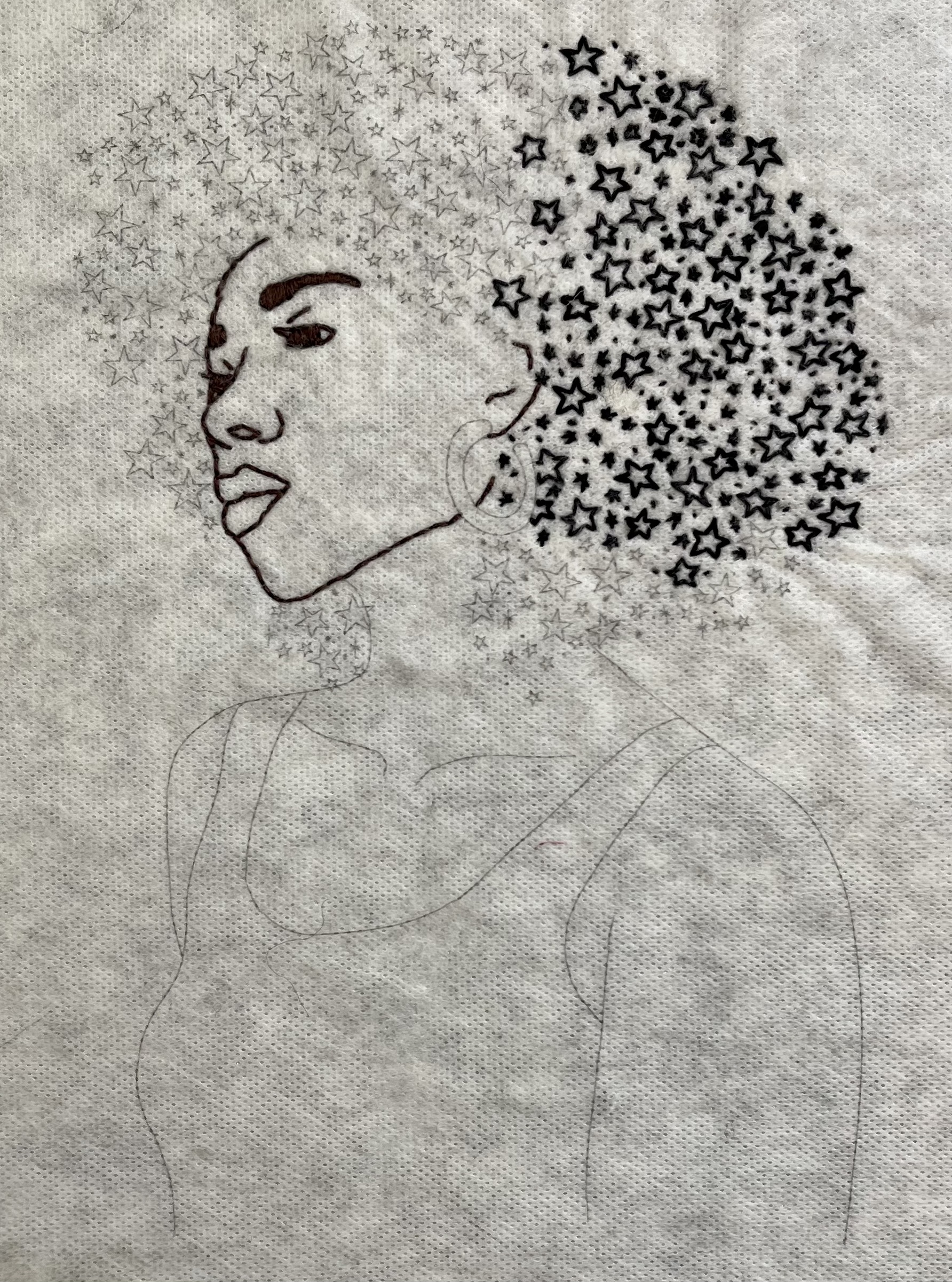
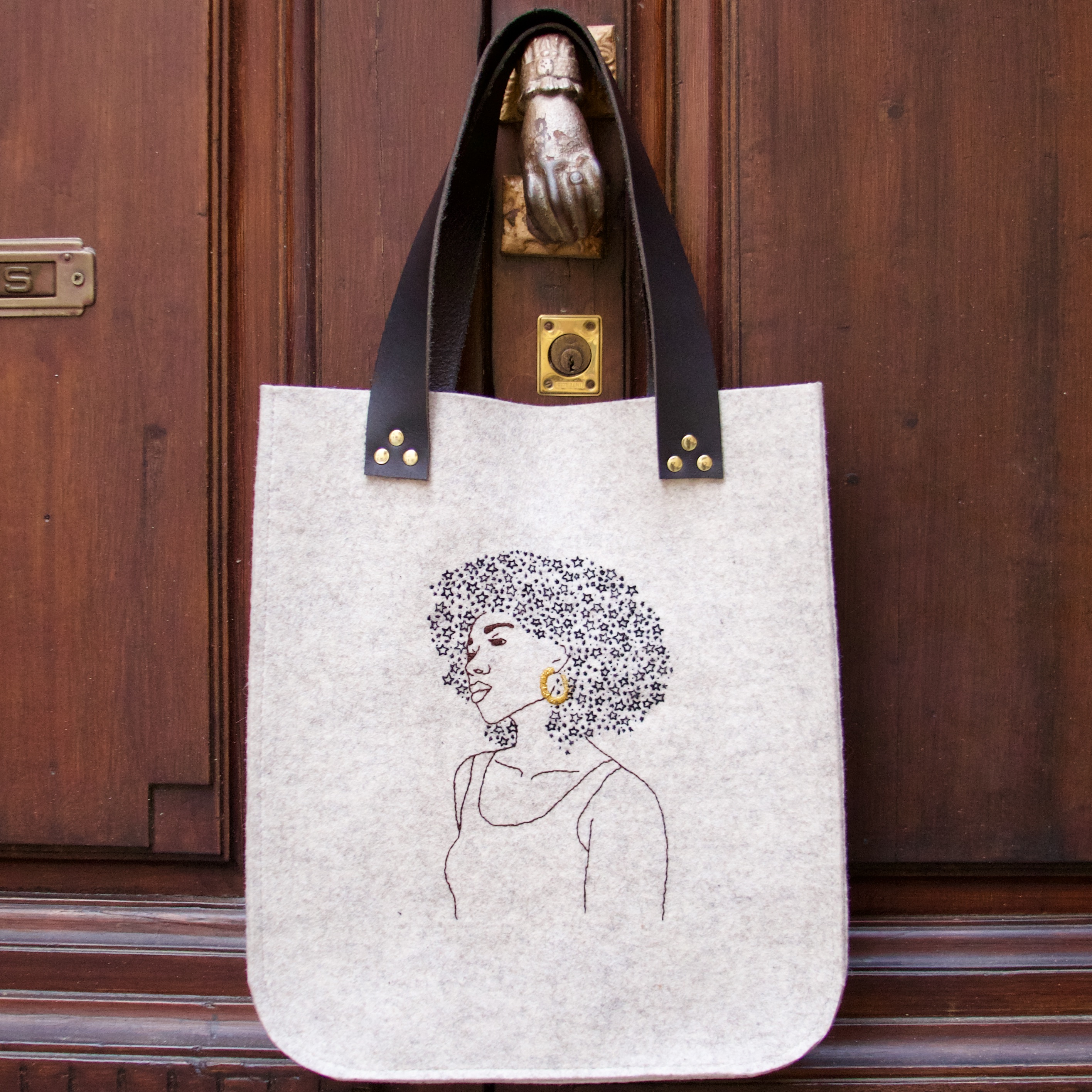
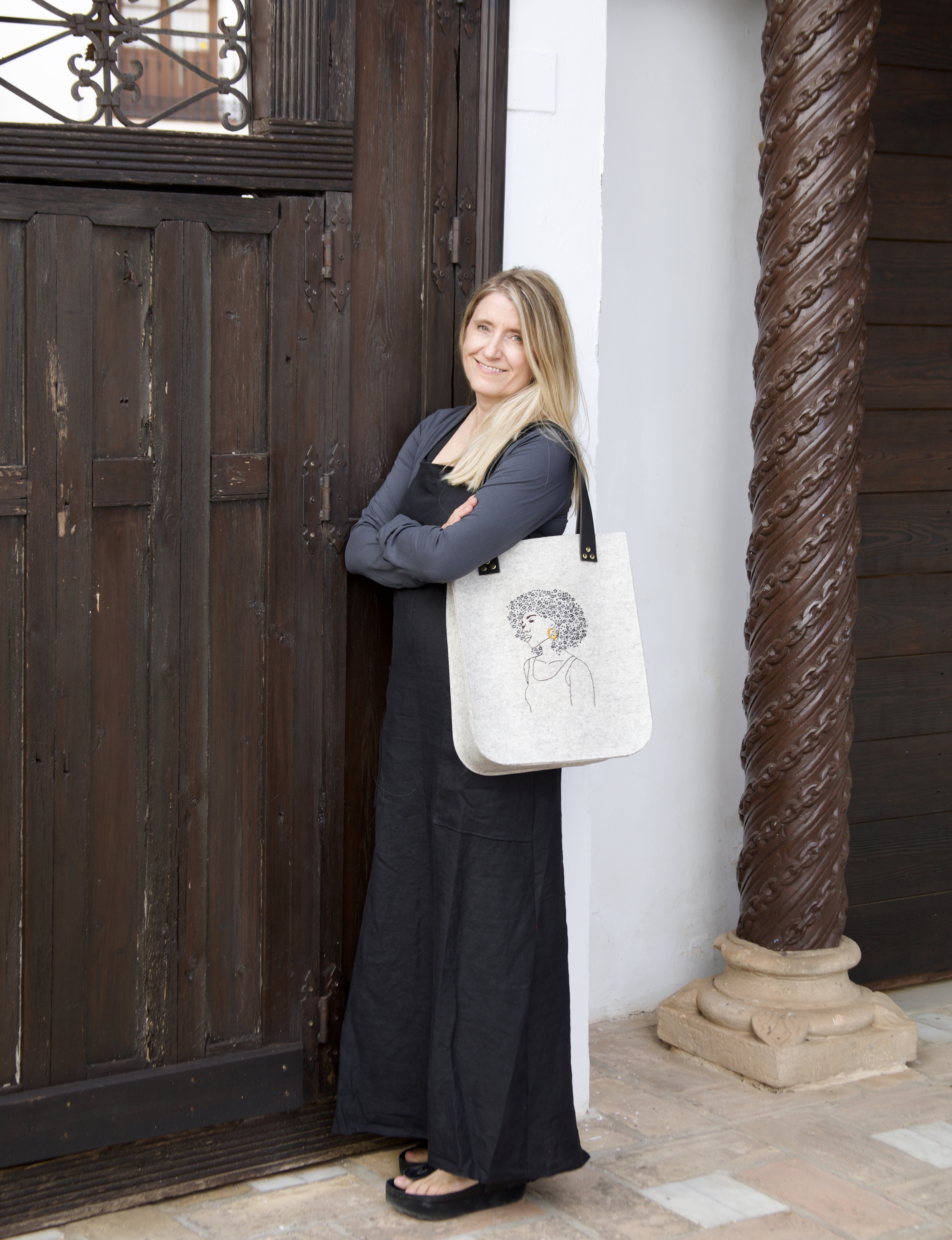
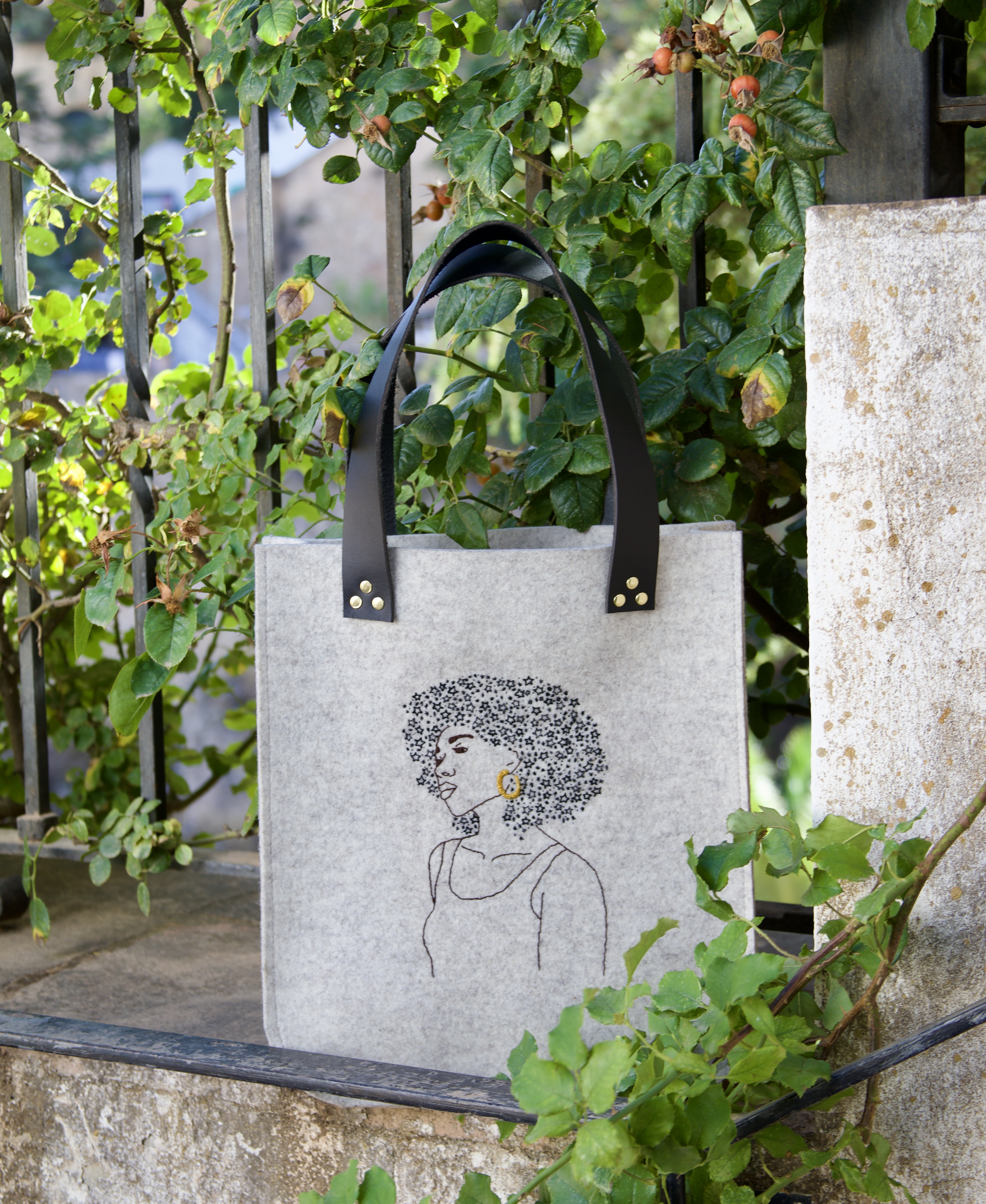
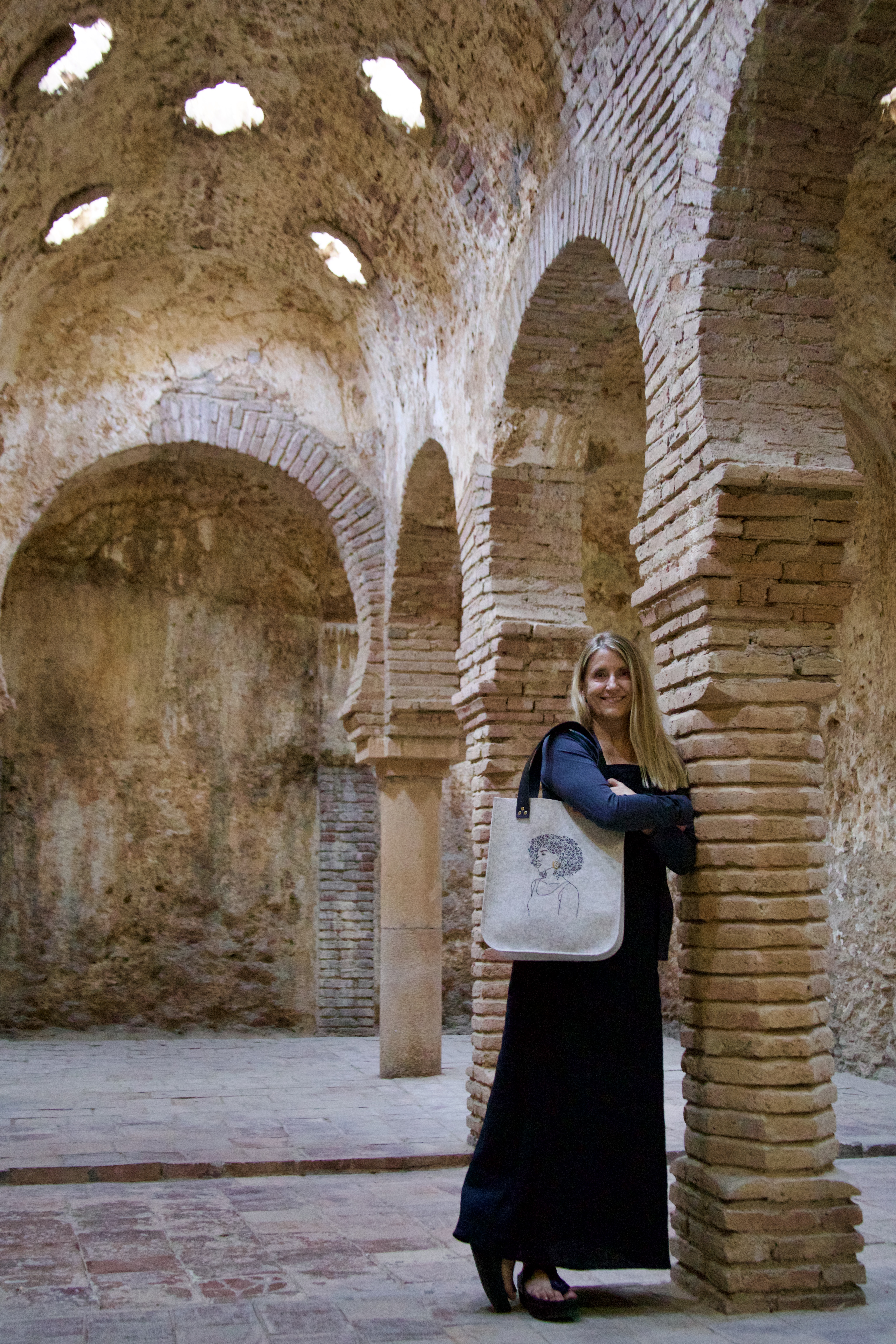
When picking a project from the book to make I decided to use some 5mm wool felt I had on hand in a minimalist style. Bianca’s book has 10 projects and over 100 images to use! I chose one of my favorite pictures, a beautiful dark skinned woman with her crown of stars which I printed onto Sulky Stick N Stitch stabilizer. I used both wool and cotton embroidery floss in her Afro then sewed up the felt into an easy tote with leather handles. It has been my constant companion as my husband and I travel throughout Spain garnering compliments everywhere.

There are several more projects I plan to make from the book. Thank you Bianca for including me in this journey and for applying one of your MANY creative talents toward something beautiful and important.

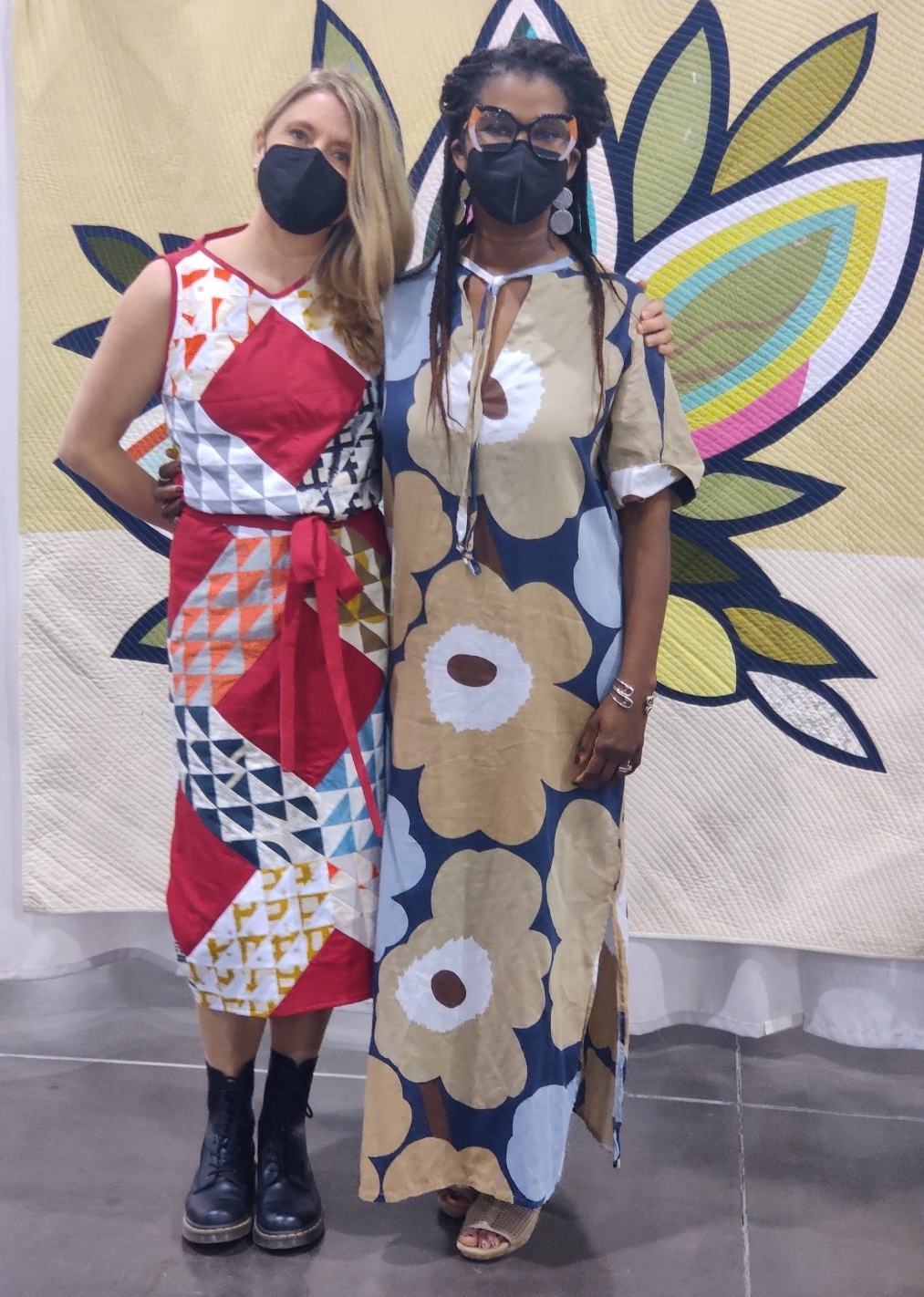
The above picture is from Quiltcon 2021. Look for us both teaching a Quilty Shift dress class at Quiltcon 2022 in Atlanta and also for Bianca’s embroidery classes using projects from her book.

If you would like a chance to win a digital copy of Bianca’s book, like, comment and follow me and all the other participants on Instagram.

Hillary

Felt Messenger Bag Tutorial

IMG_6119

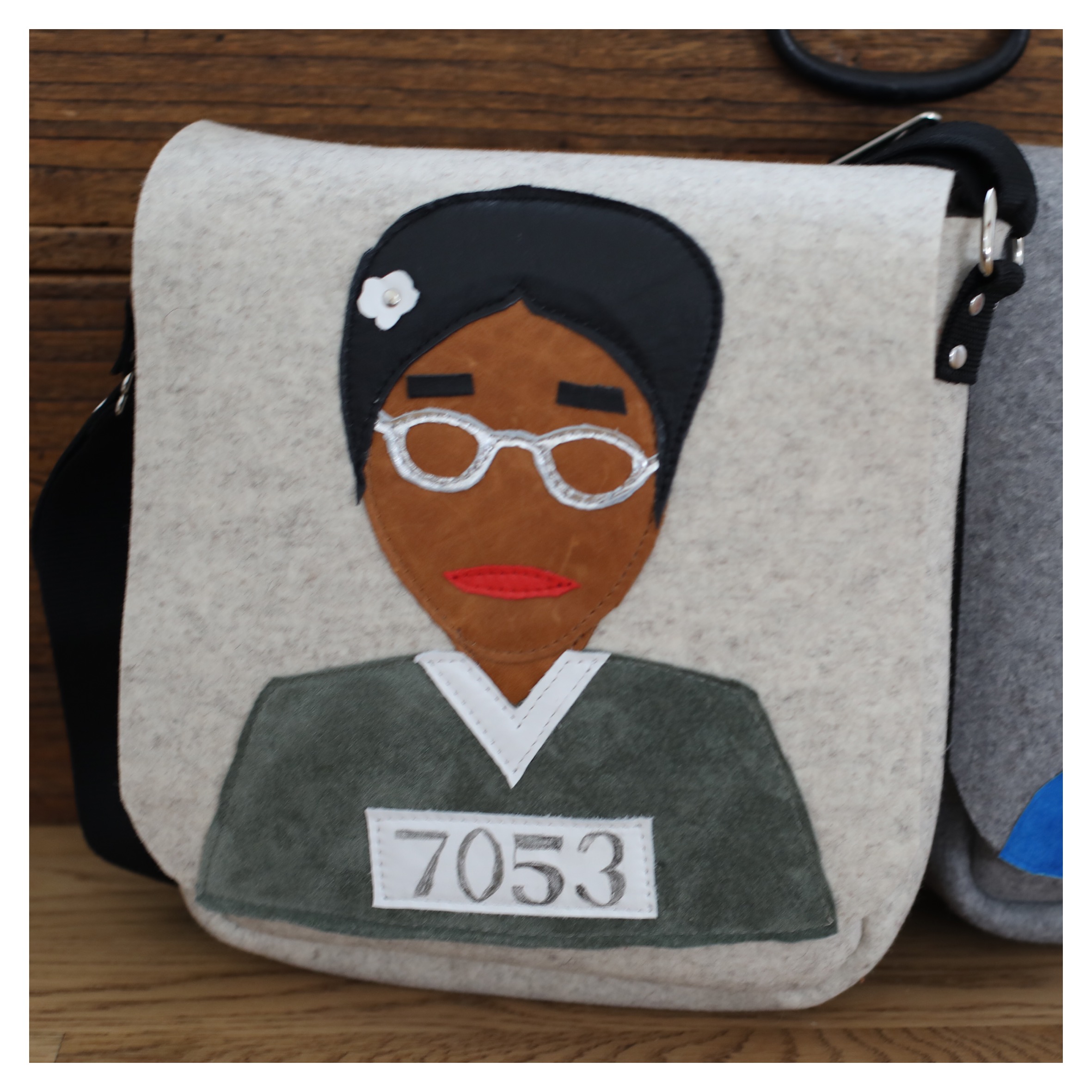
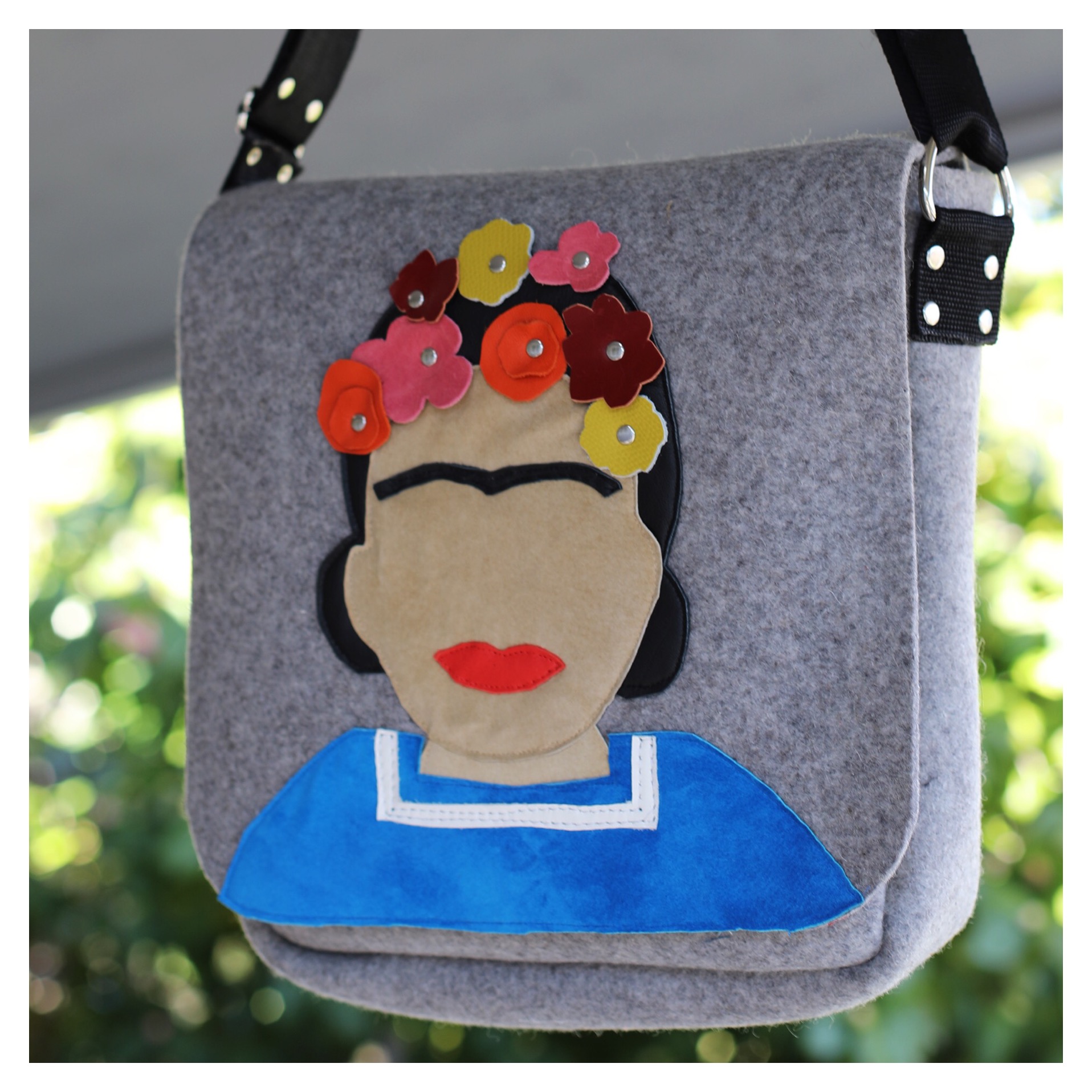
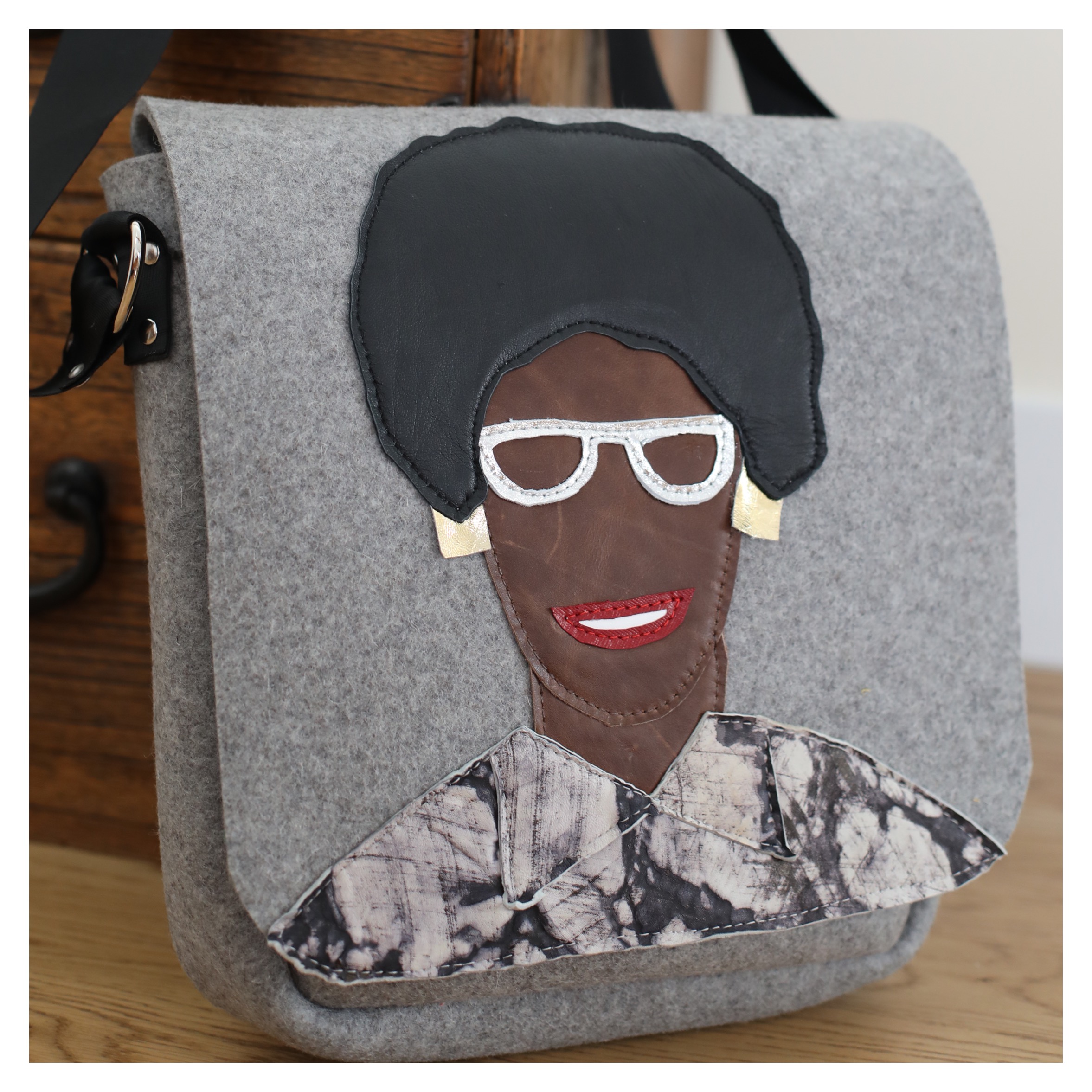
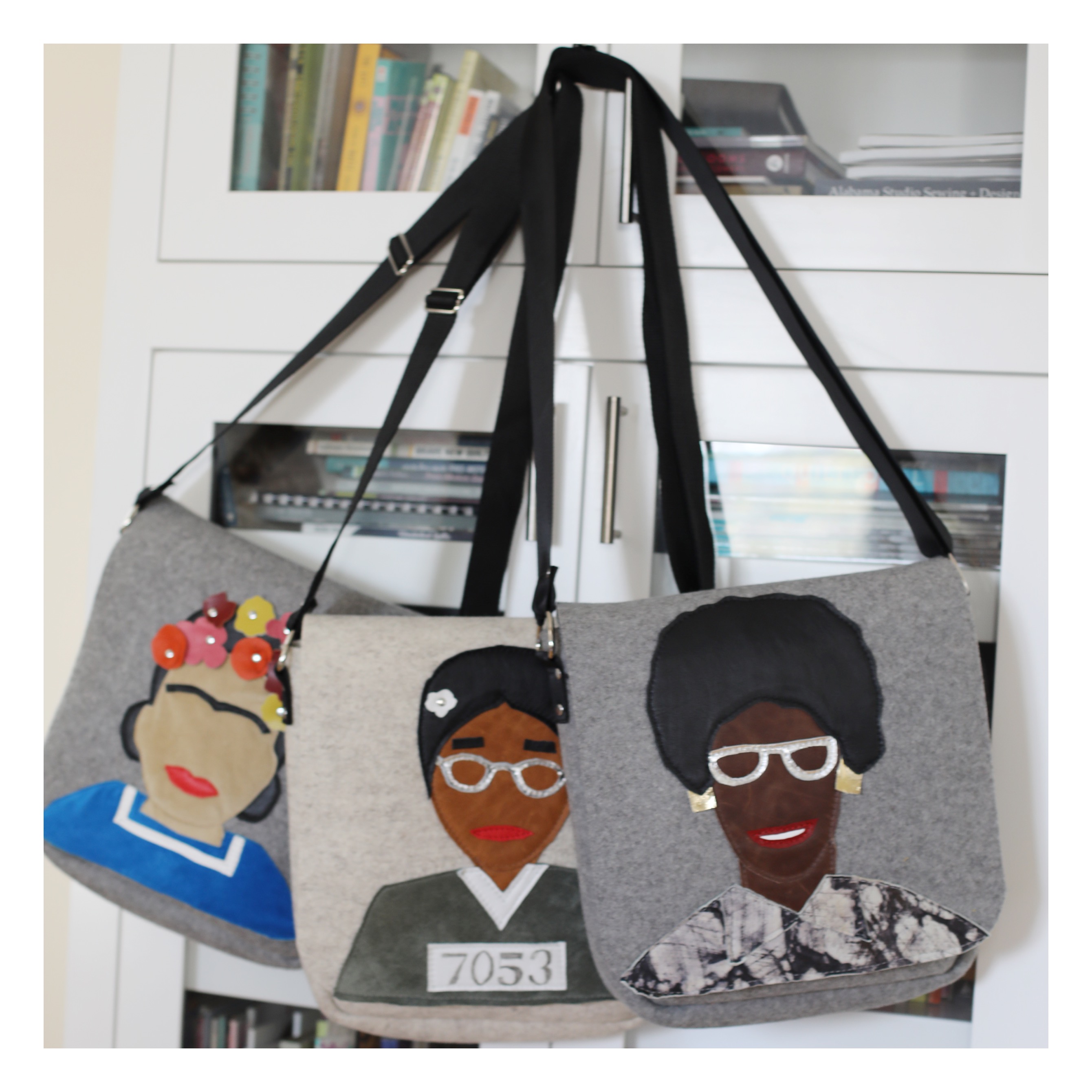
Over the last couple of years I have been playing with a messenger bag design of my own imagining.  I have come to love thick wool felt as bag medium and have been using the design to pay tribute to important women using leather appliqué.  In hopes of inspiring others to do the same I wanted to share my methods.  My demonstration bag is an abstract design.  There are a ton of possibilities.
IMG_6066


Supplies

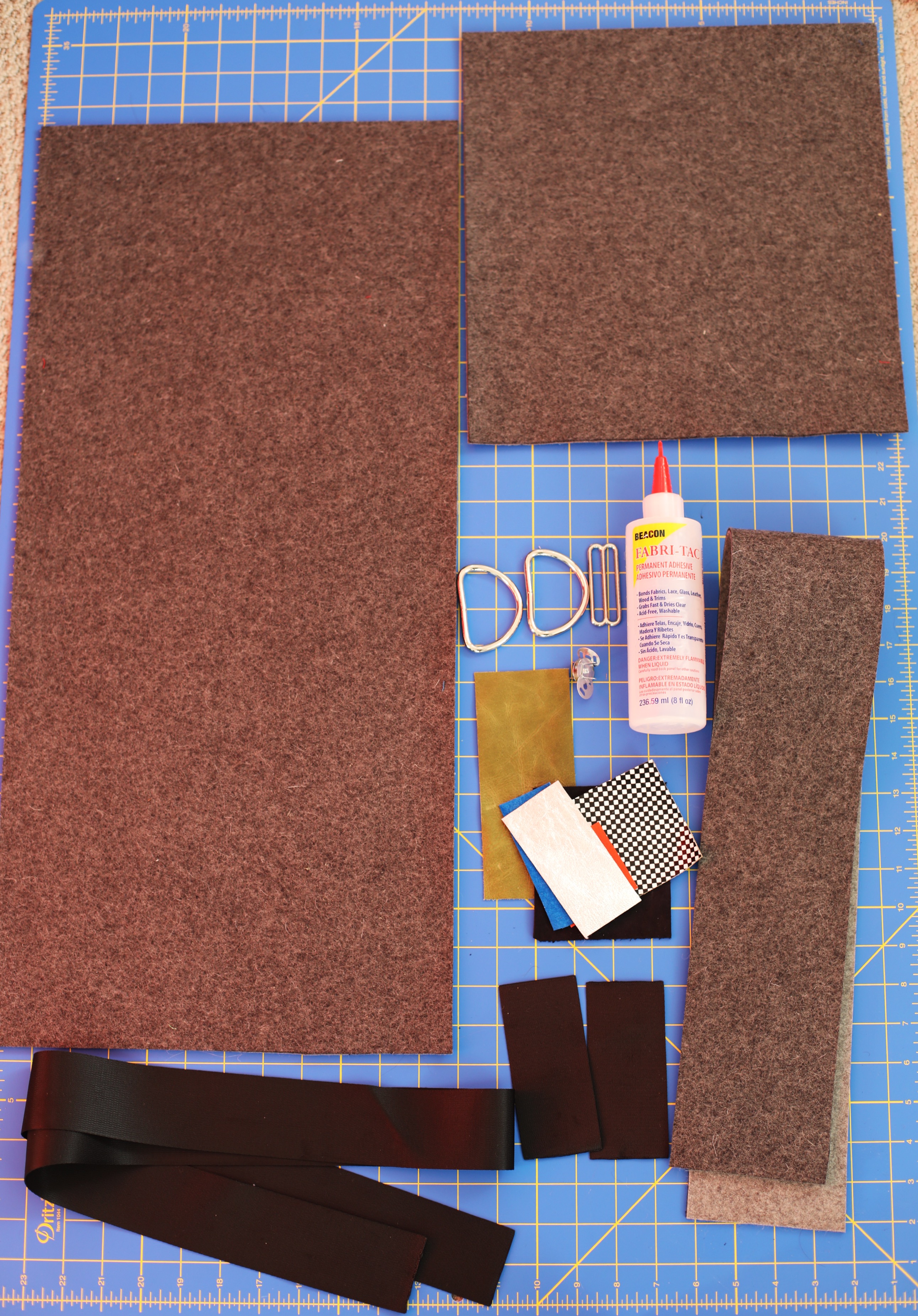
3 mm Felt ( I purchased mine from Aetna Felt  www.aetnafelt.com .  One 72” wide yard makes 2 1/2 bags.  You can also use 5 mm felt but it is much harder on a domestic machine)

Pieces of thin scrap leather to use as adornment (It is important to use very thin suede or leather to make sewing on a domestic machine easier)

Fabric Marker (I like Dritz Disappearing Ink pen or chalk pencils)

Quilter’s Ruler

Rotary Cutter

Leather Hole Punch

Small Sized Rivets and Rivet Setter(If you are uncomfortable with rivet setting, screw in rivets are a nice alternative and if you chose to use 5mm thick wool, I recommend medium sized rivets)

Thread (thick upholstery thread is ideal but I honestly use what I have around)

Fabric-Tac Glue

Two 2 inch metal D rings

One 2 inch metal Slide Adjuster

2 yards of 2 inch Black Nylon Webbing

One magnetic bag closure set

Leather Needle and Walking Foot or Teflon Foot for your Machine


Step One: Prepare your leather design and cut out your Felt Pieces
IMG_6094

IMG_6093

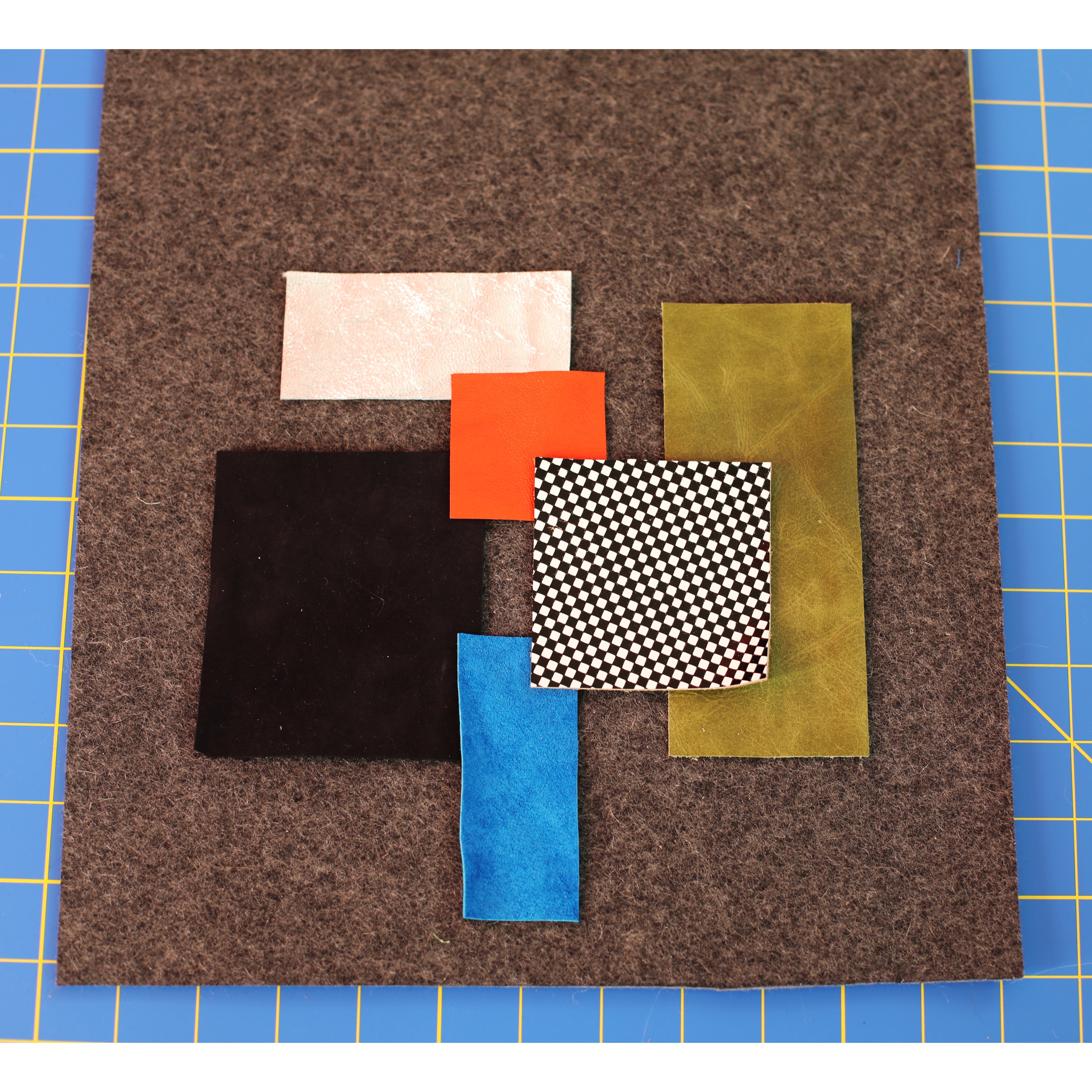
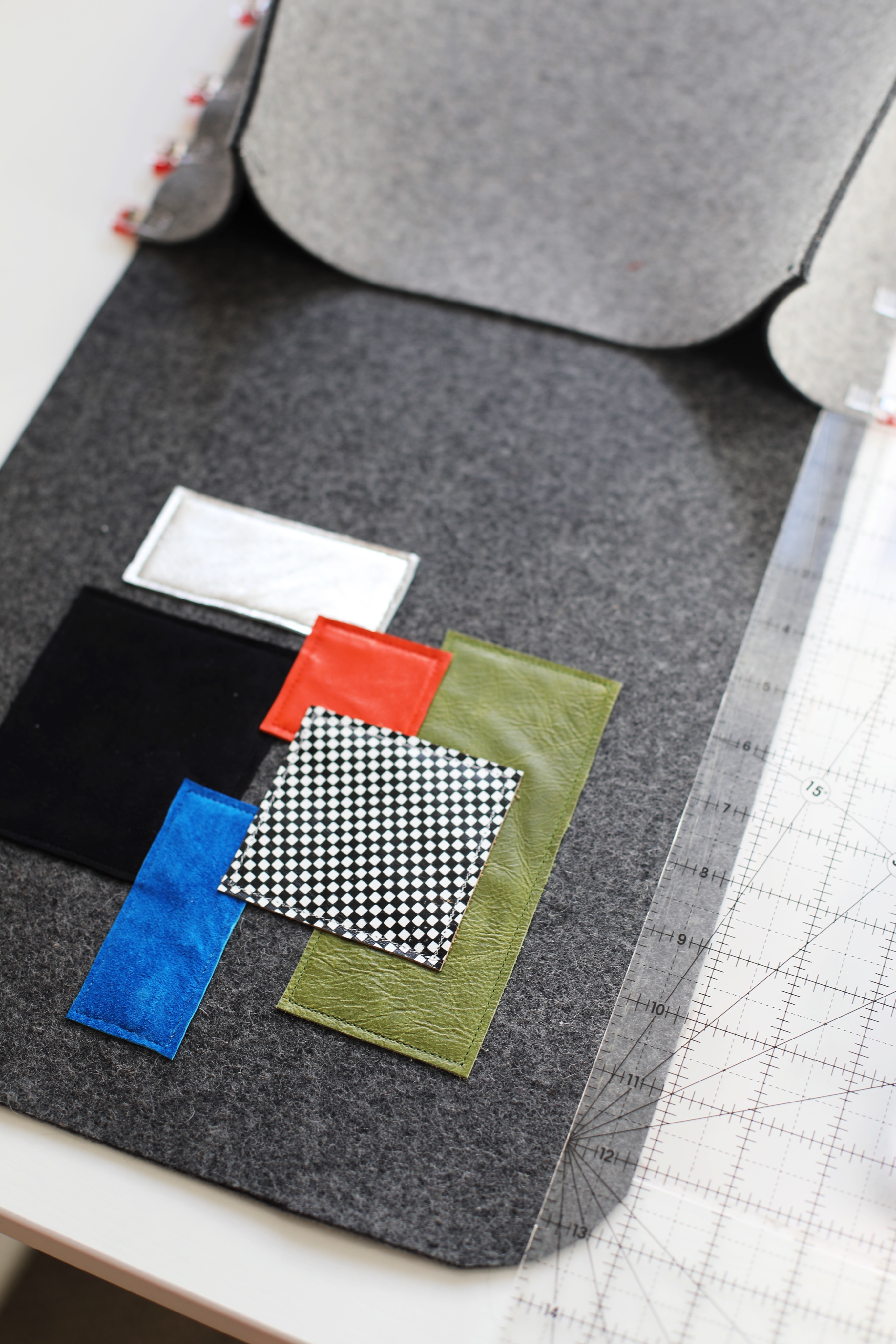
-Draw out a design and then cut pieces of leather or suede to match that design

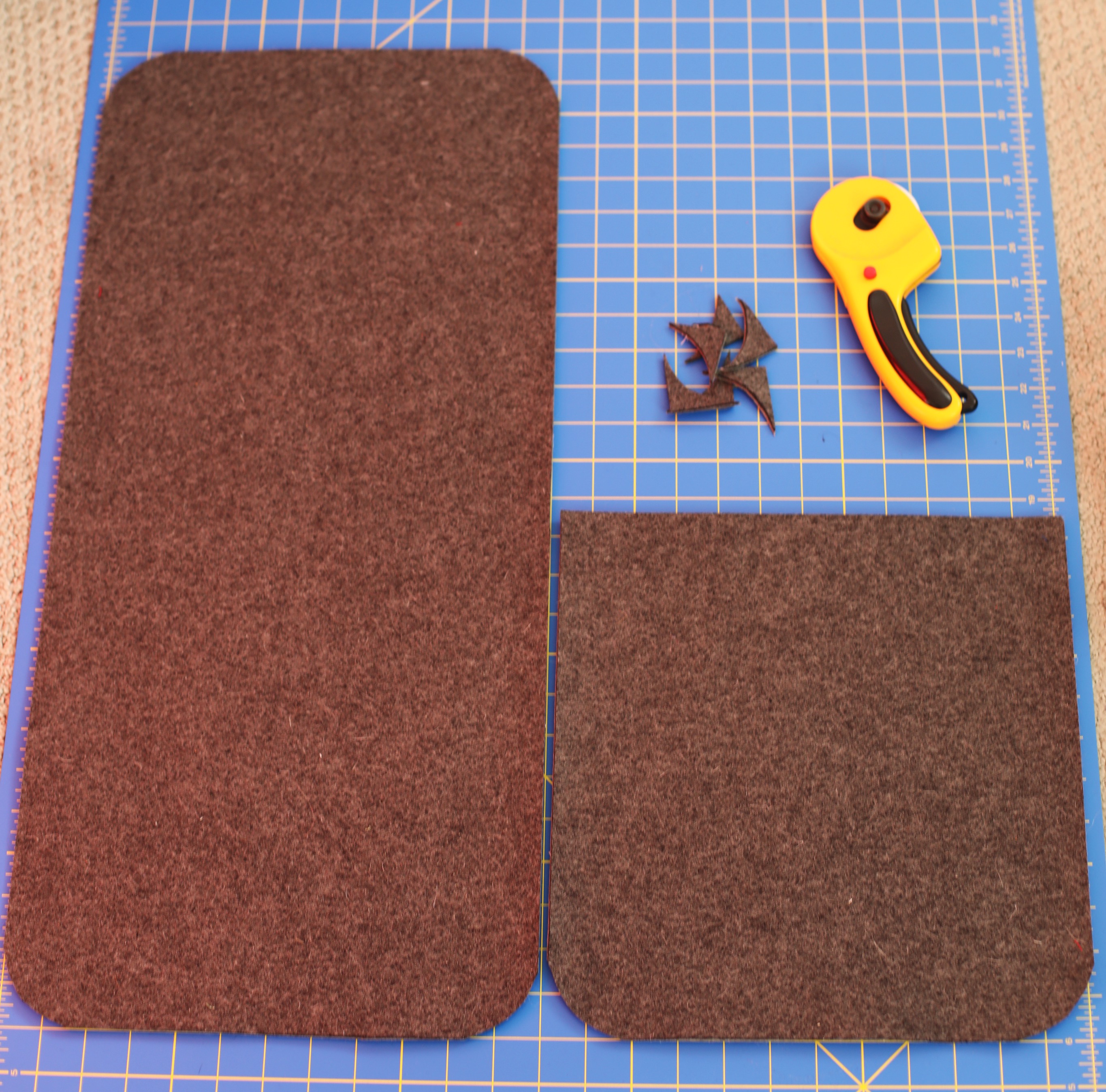
-Cut one Front/bottom piece 12 x 12.5 inches

-Cut one Back/top piece 12 x 26 inches

-Cut one Side piece 4 x 36 inches

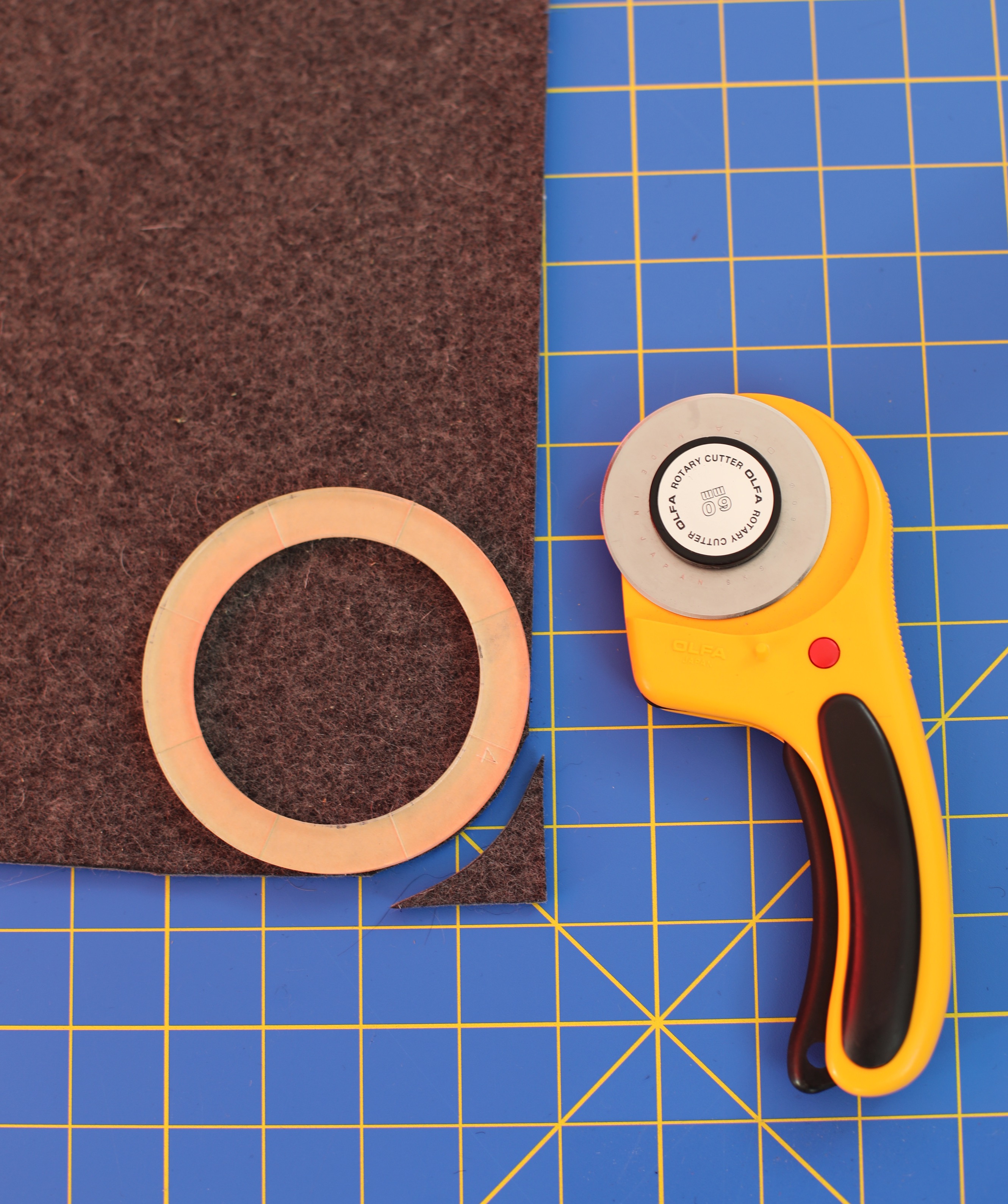
-Round the bottom edges of your Front/bottom piece (remember that it is slightly narrower side to side then top to bottom to assure you are rounding the correct edges) and round all sides of the Back/top piece.  I used a 4 inch circle template but you can use a small plate or can as your guide instead.
IMG_6096

IMG_6097


Step Two: Appliqué your leather Design

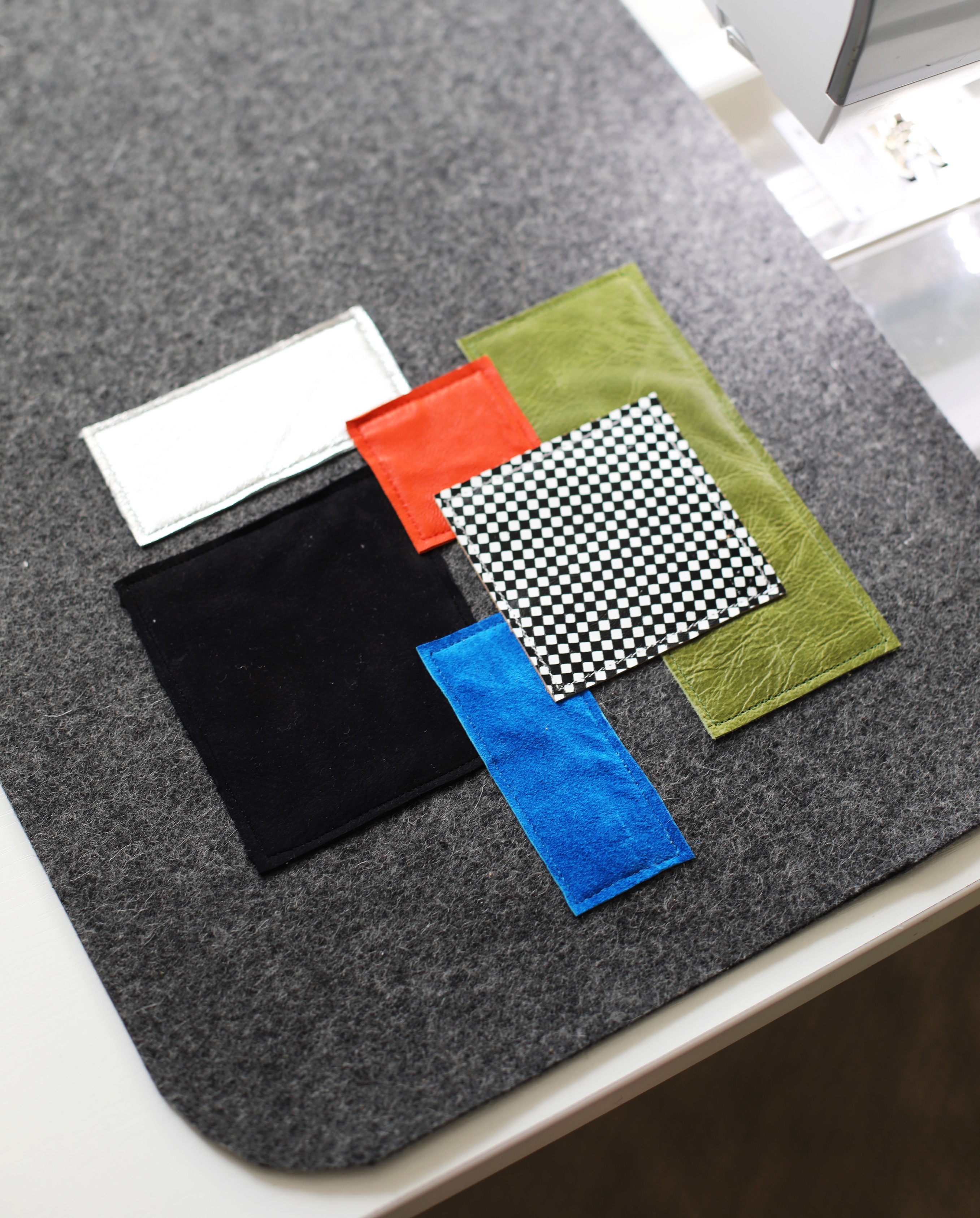
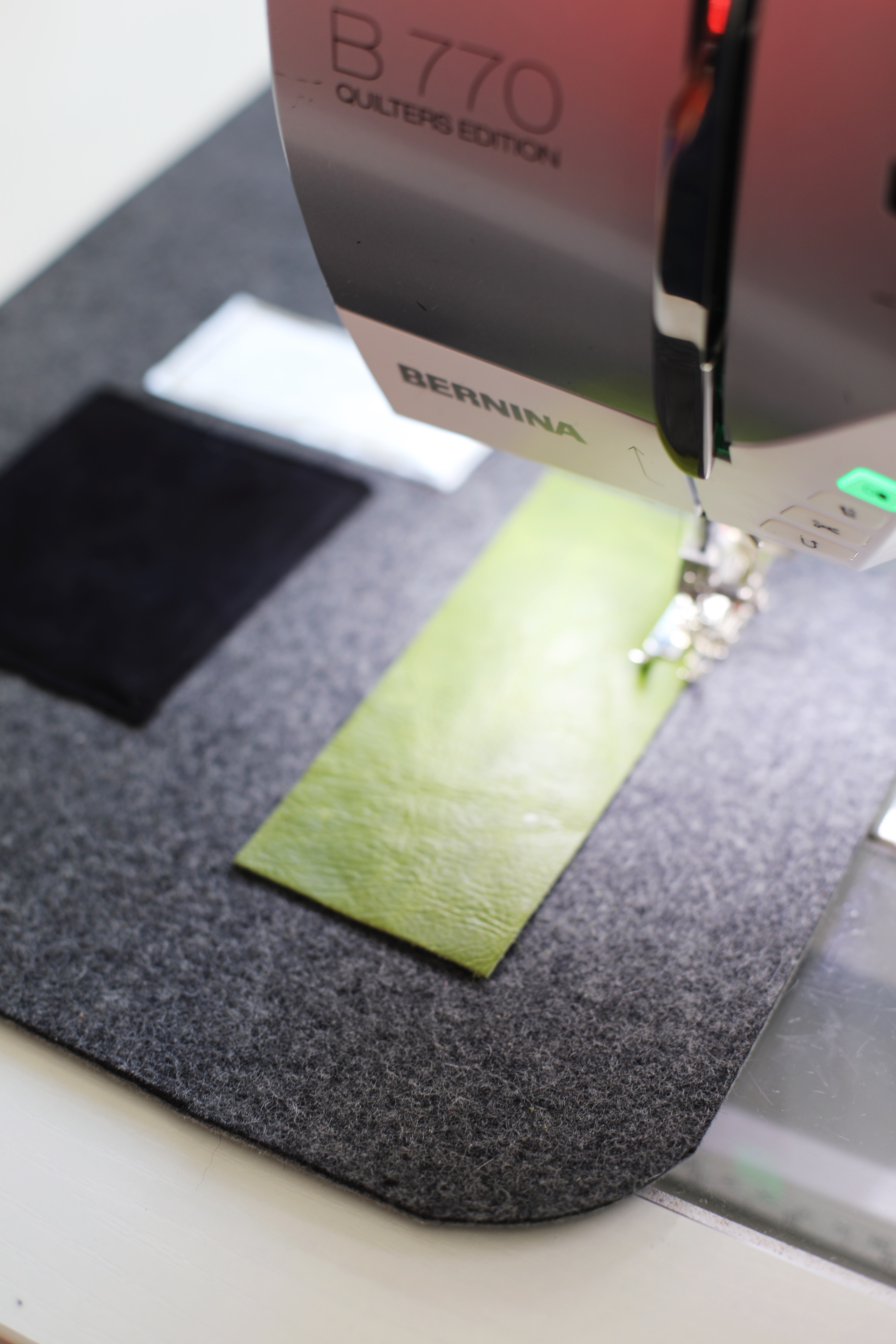
-Using your long Front/top felt piece, right side toward you, arrange your leather appliqué as you would like it to appear on the bag.  Piece by piece, then glue down and sew 1/8 inch from edge each leather piece.  Make sure to use a leather needle and a walking foot or teflon foot on your machine.
IMG_6098

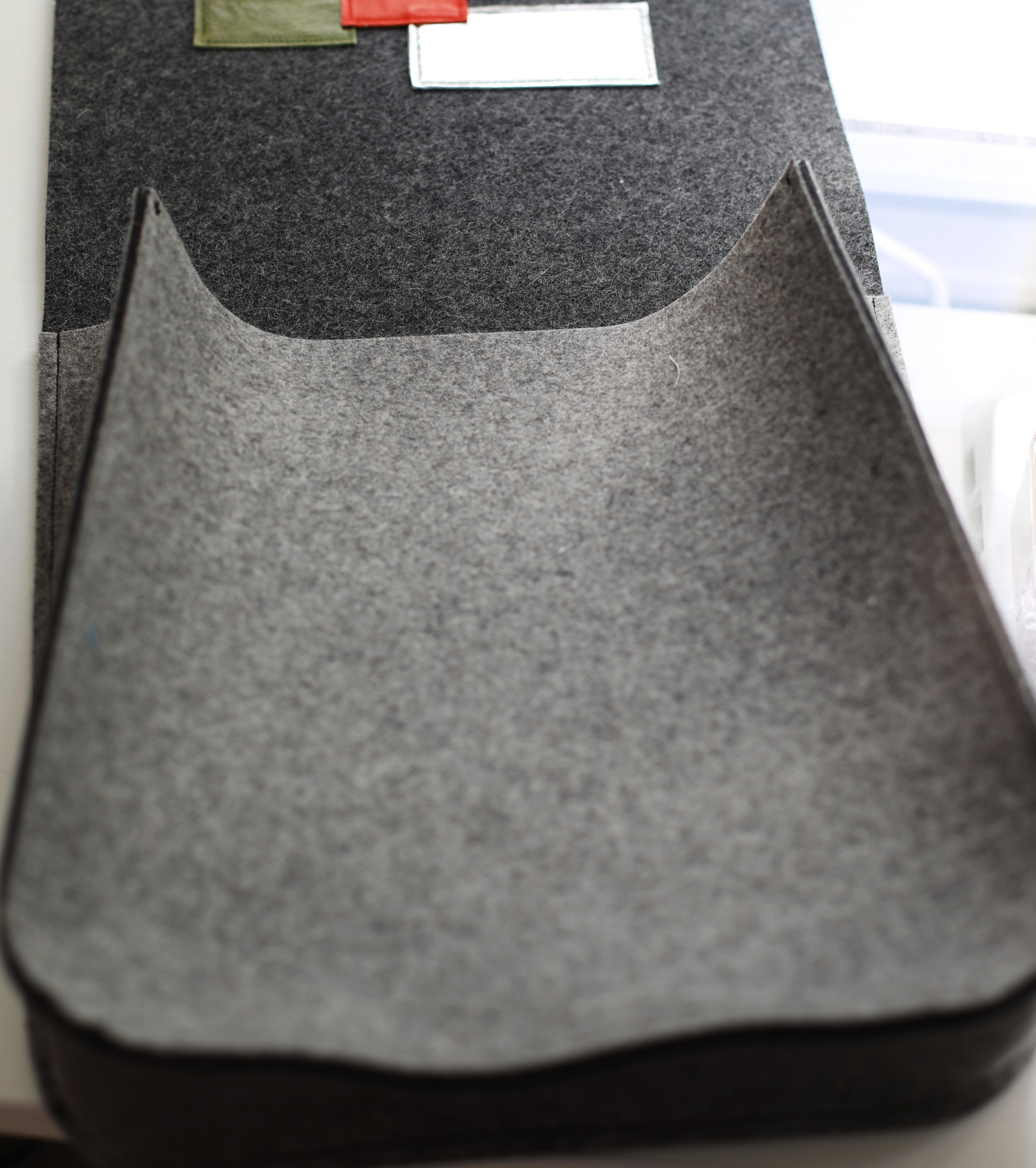
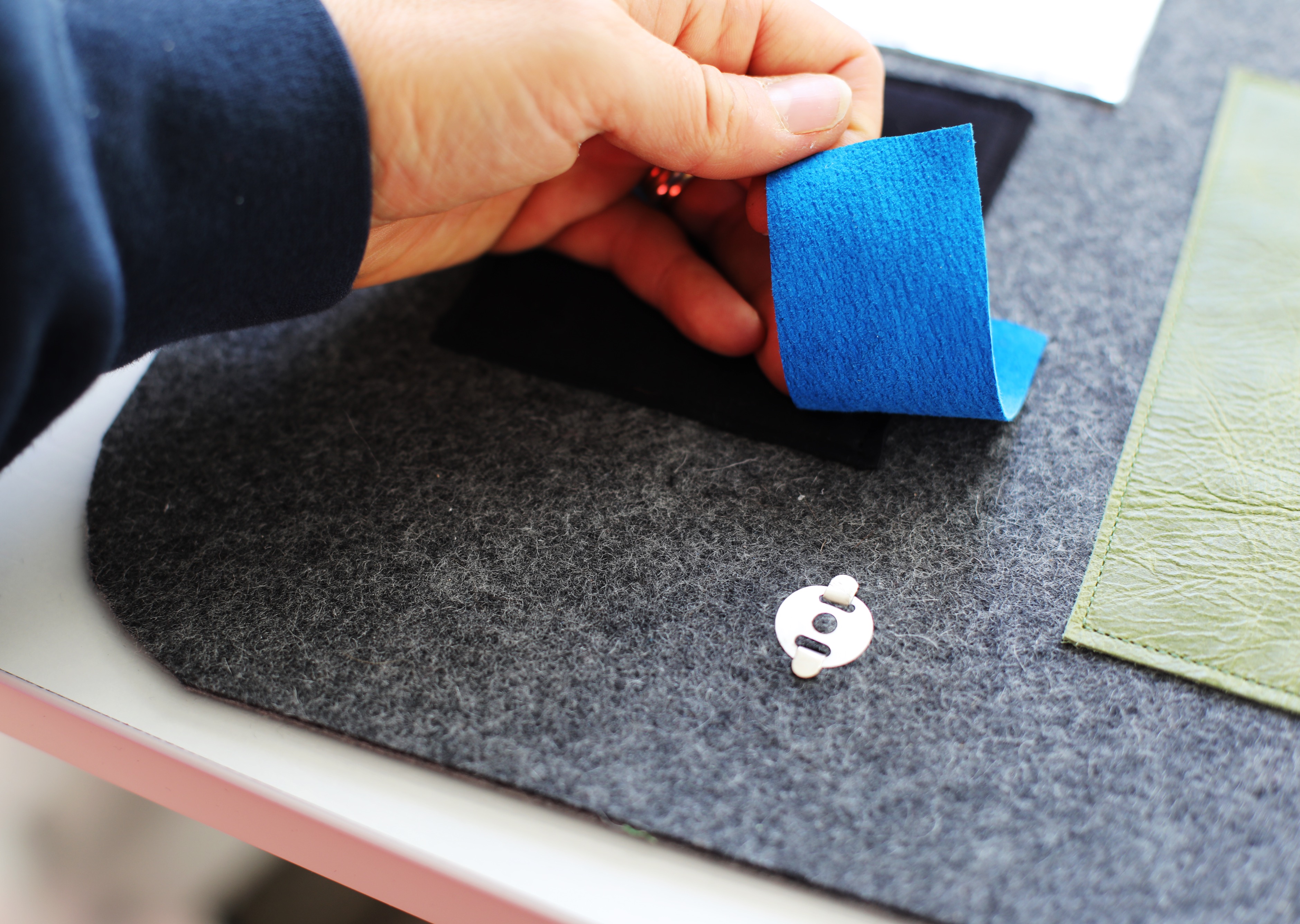
-At the bottom of the front piece before glueing and sewing all portions down, insert one part of your magnetic bag closure if you like facing to the back and hide by glueing and sewing a piece of appliquéd leather over it.  (see picture)
IMG_6099

IMG_6100


Step Three: Sew your side and Front/Bottom Piece Together


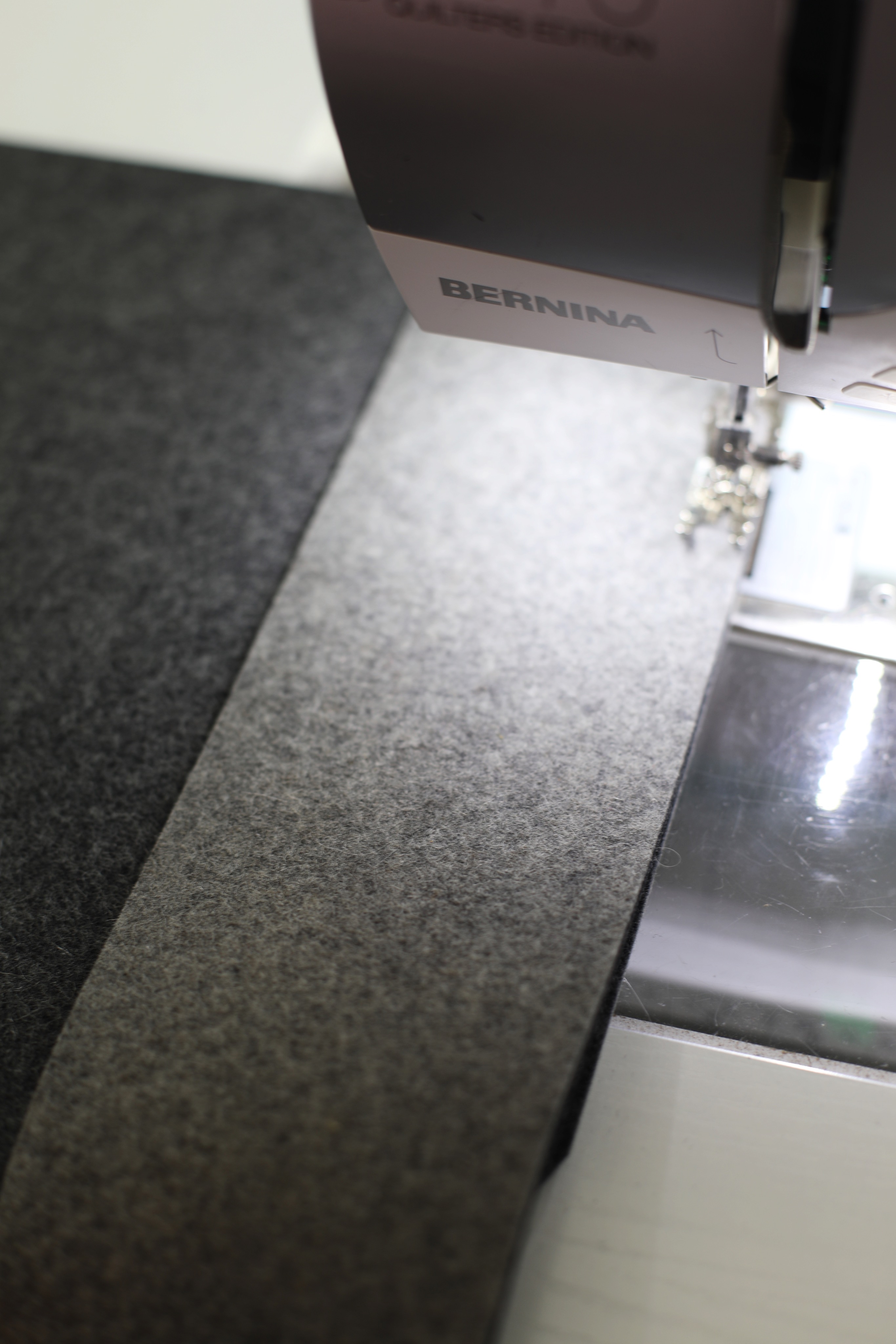
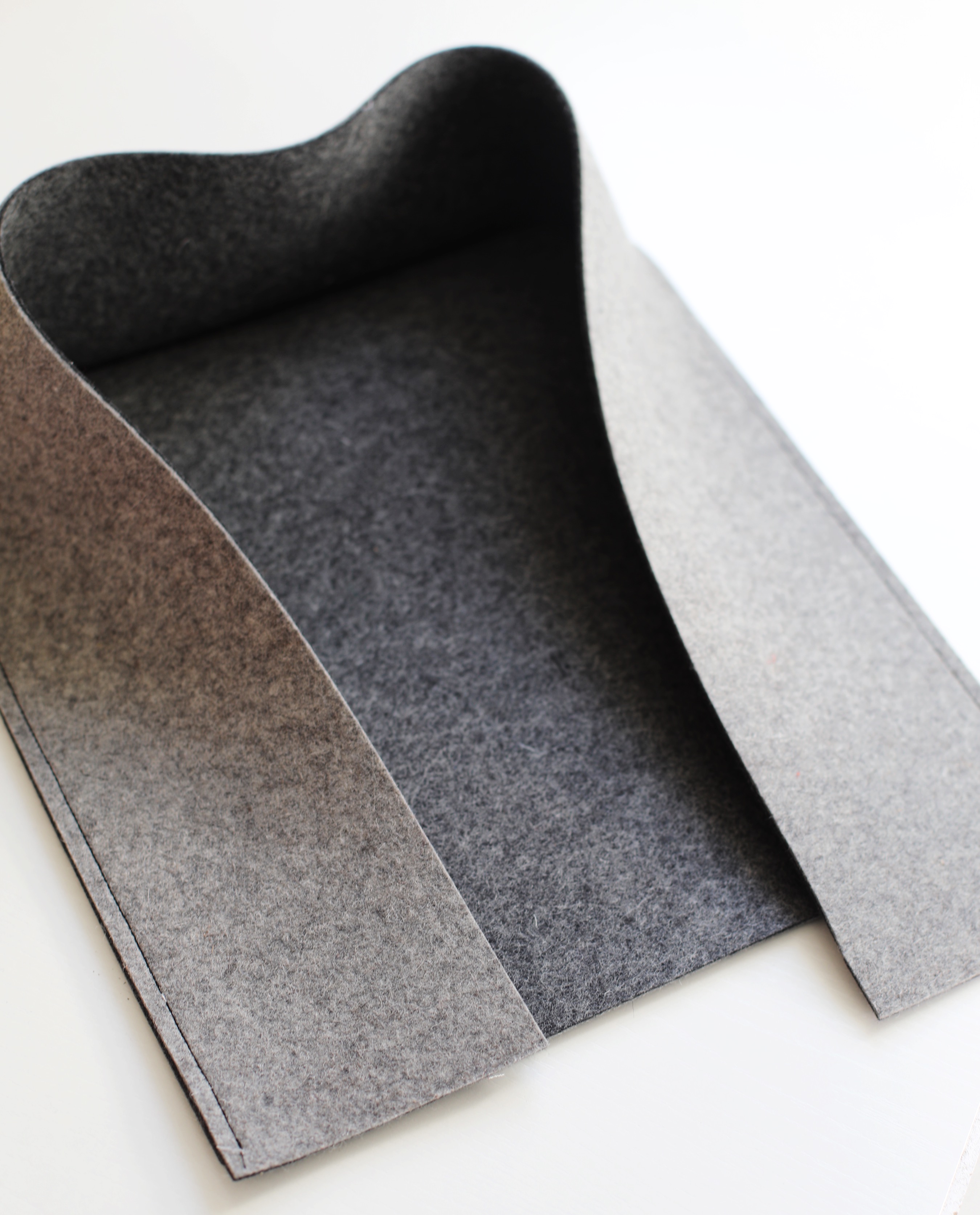
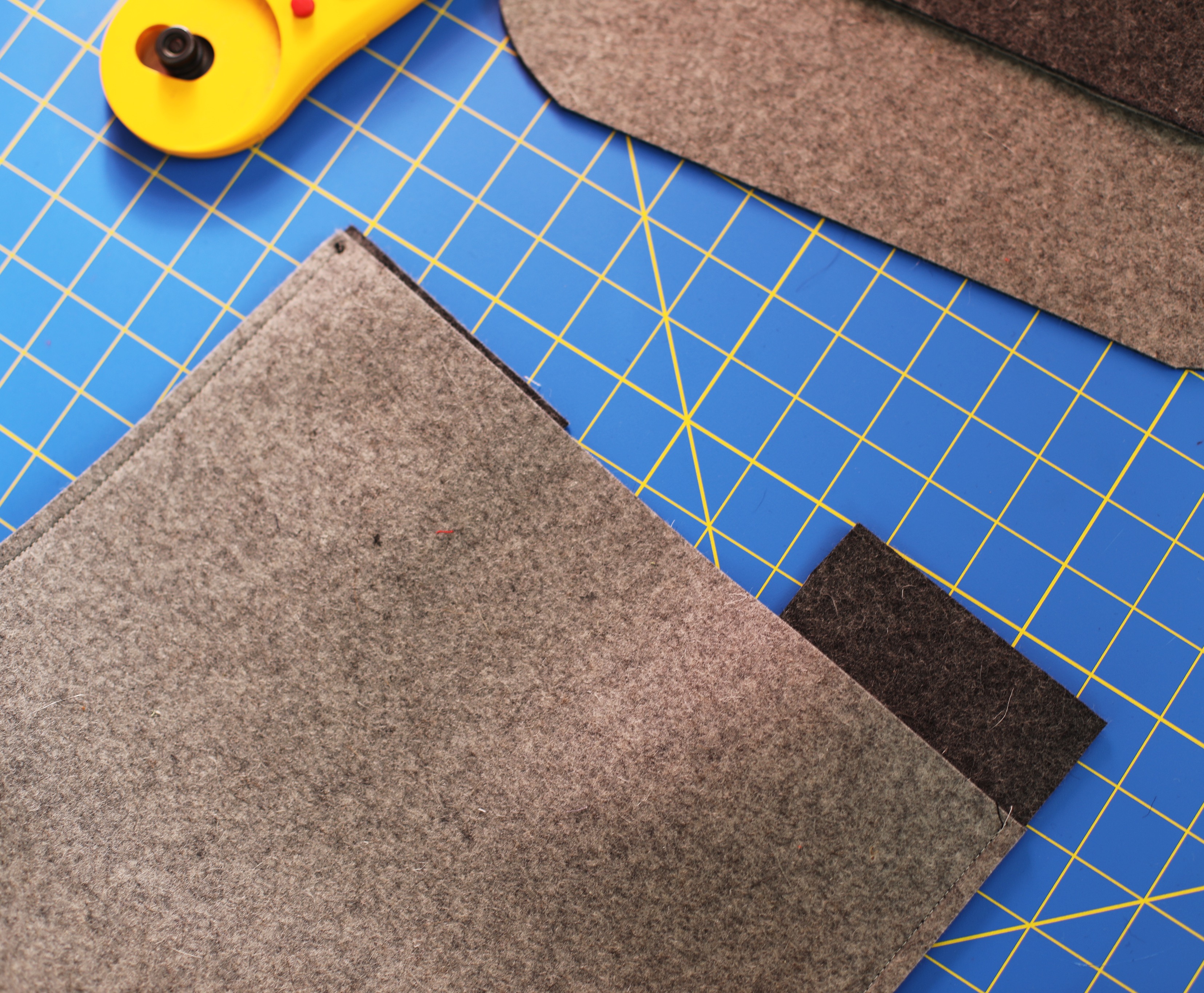
-Using a 3/8 inch seam allowance sew, right sides together sew the long wool Side piece and the smaller Front/bottom piece.
IMG_6101

IMG_6102

-Cut any extra of the side piece projecting from the top
IMG_6103

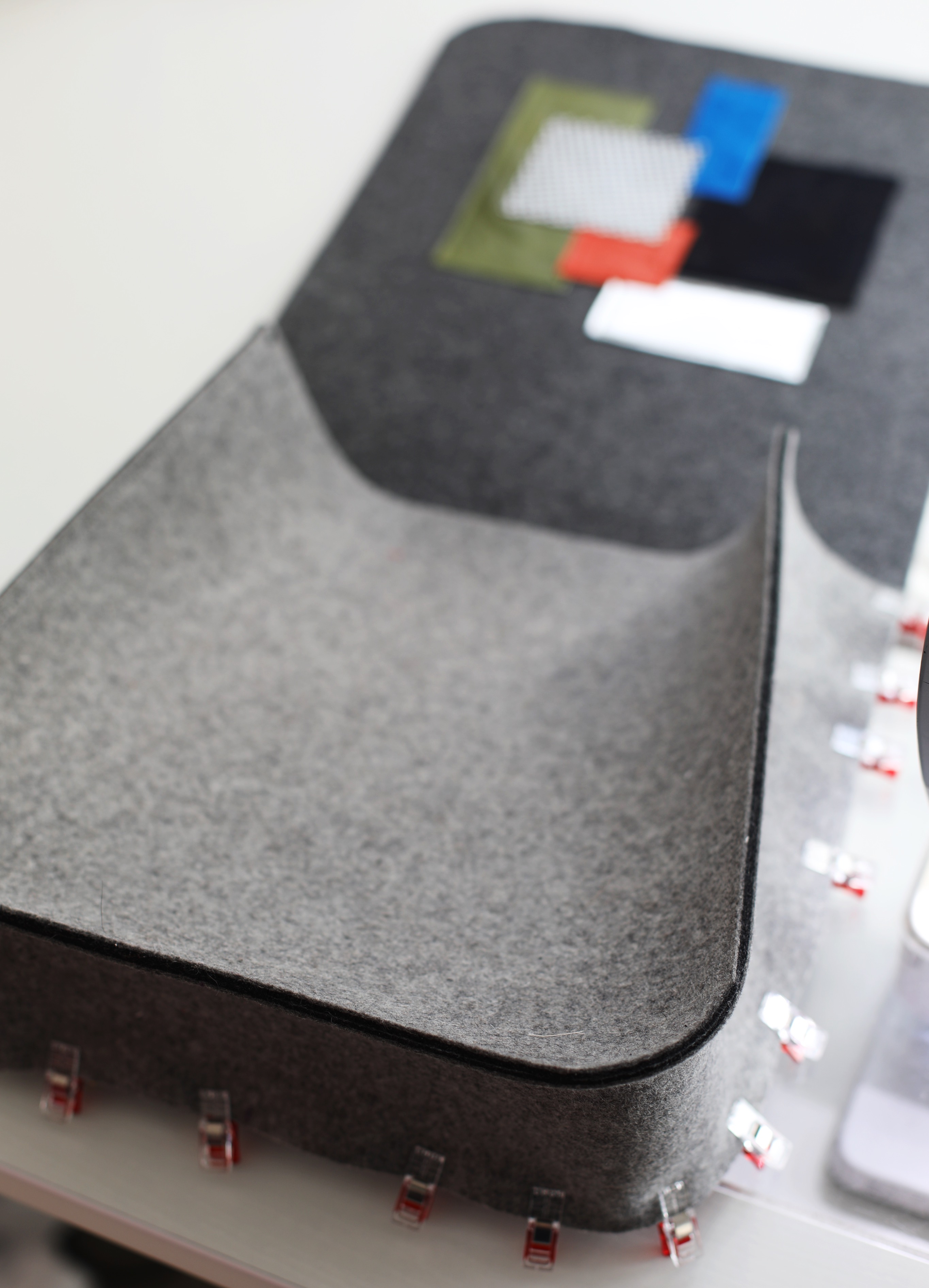
-Right sides together, using pins or wonder clips secure the unadorned half of your long Top/front piece to the side piece.  Before you begin sewing, the seam should be 14 inches from the end of the long Top/front piece on both sides.  Using a 3/8 inch seam allowance, sew along the edge.
IMG_6106

IMG_6107

IMG_6108


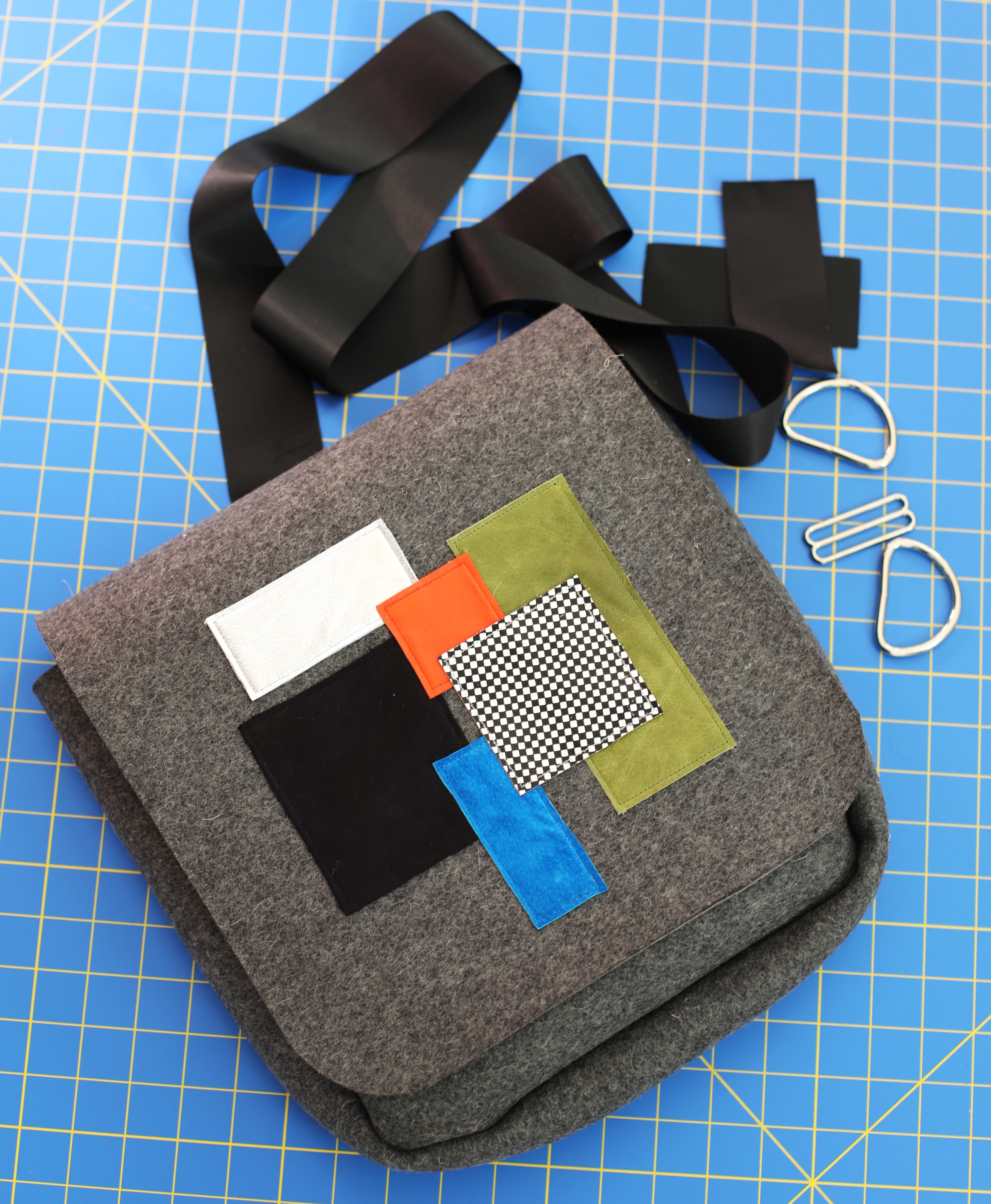
-Invert the bag and prepare for strap placement
IMG_6109

Step Three: Attach your Straps

-Cut two pieces of the 2 inch webbing 4 1/2 inches long and cut another piece 50 inches long (a lighter or match used at the cut edges helps melt and finish the end of the webbing)

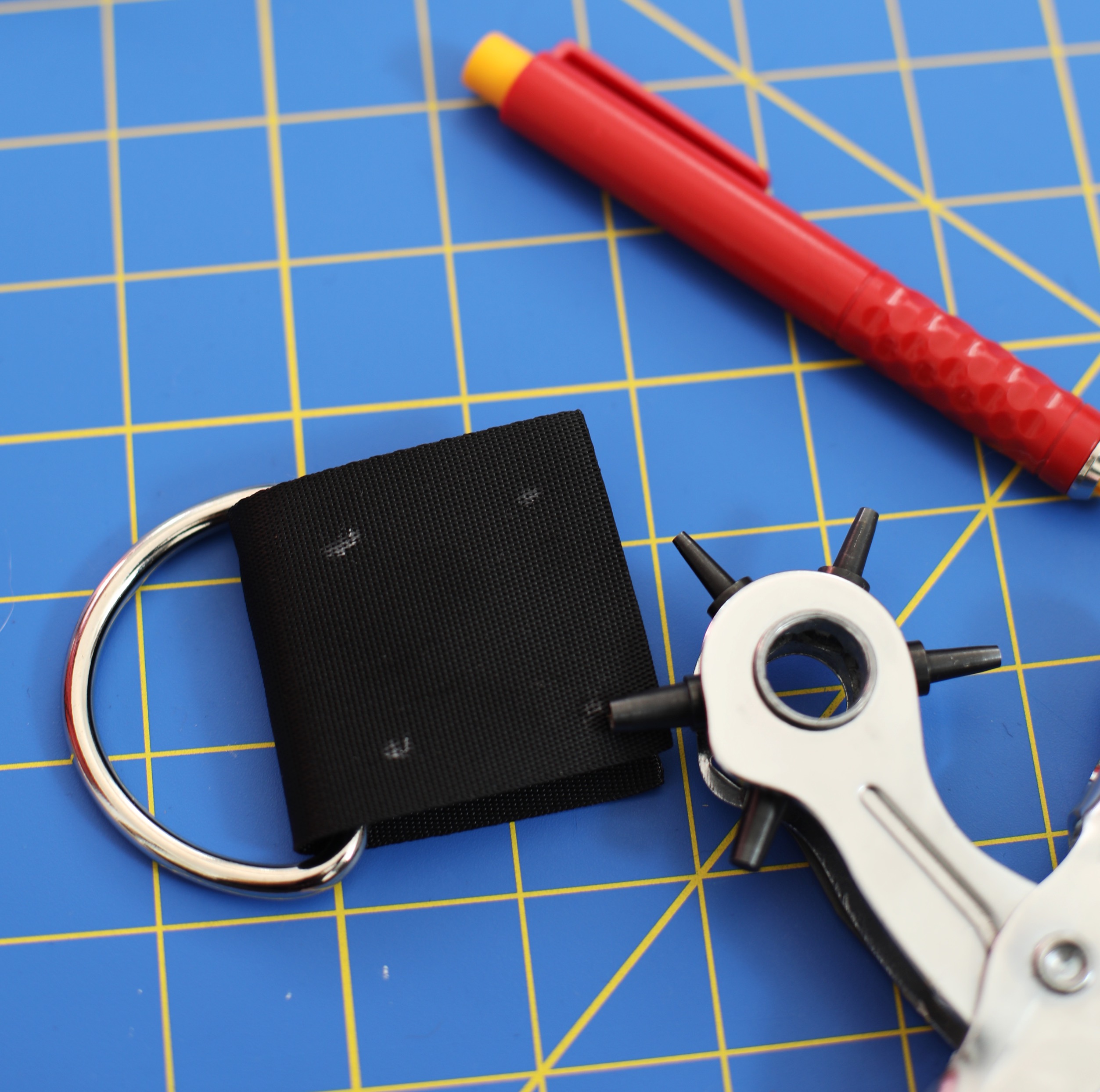
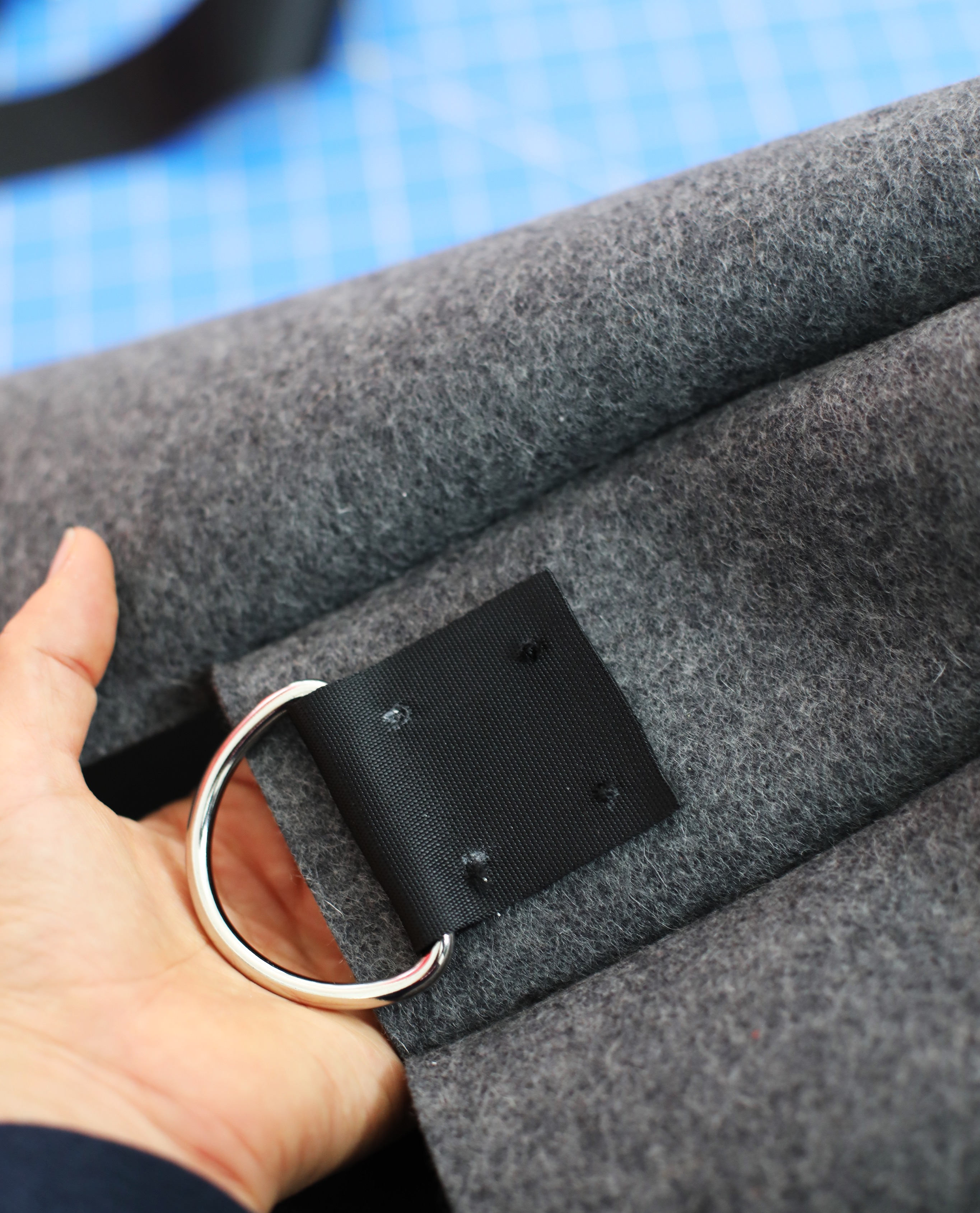
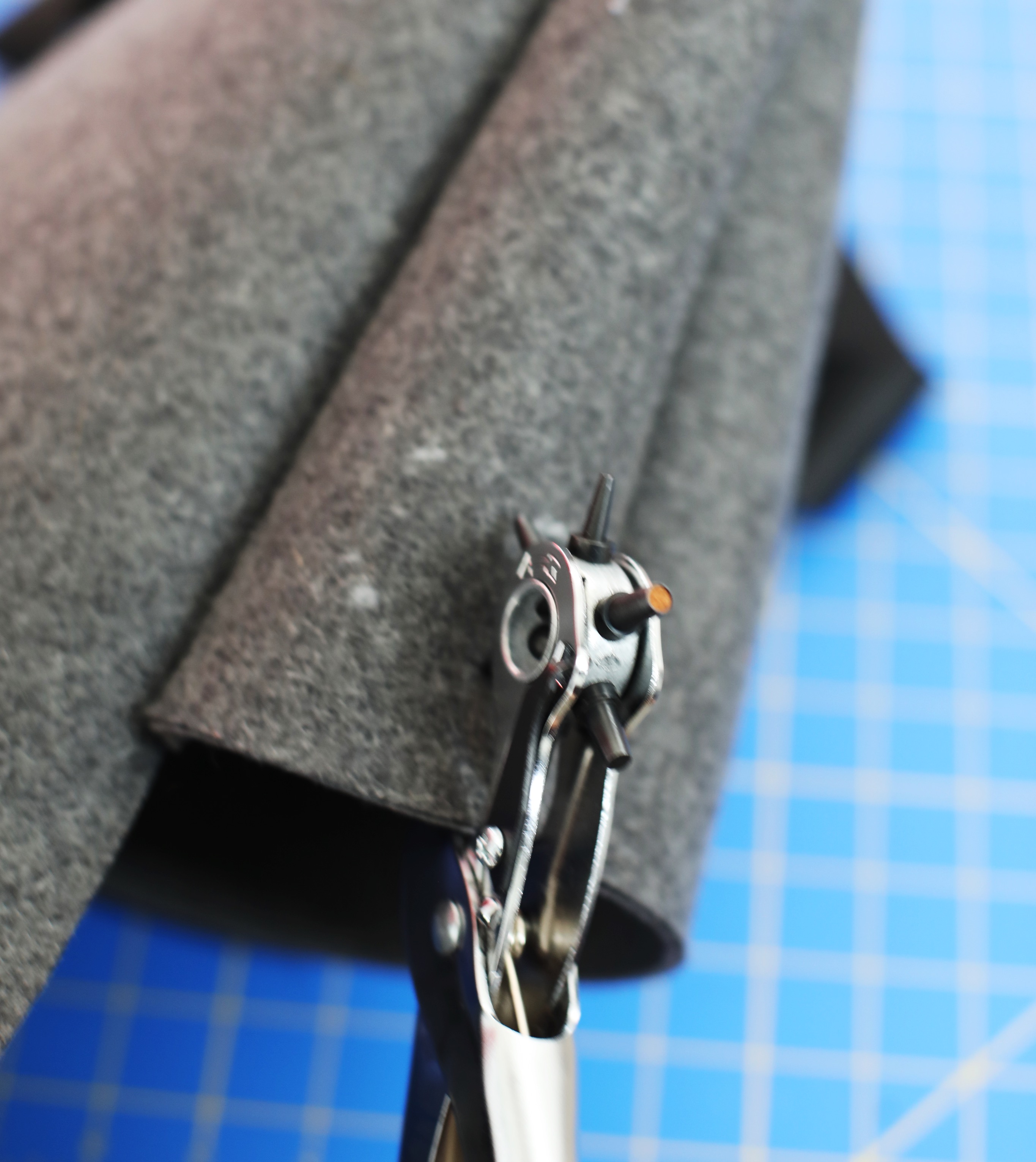
-Fold one short webbing piece over a metal  D Ring.  Mark 4 positions in each corner at least 1/4 from the edge and punch holes in the webbing at the marked spots using your leather hole punch.  Repeat for the second D Ring and short webbing piece.
IMG_6111

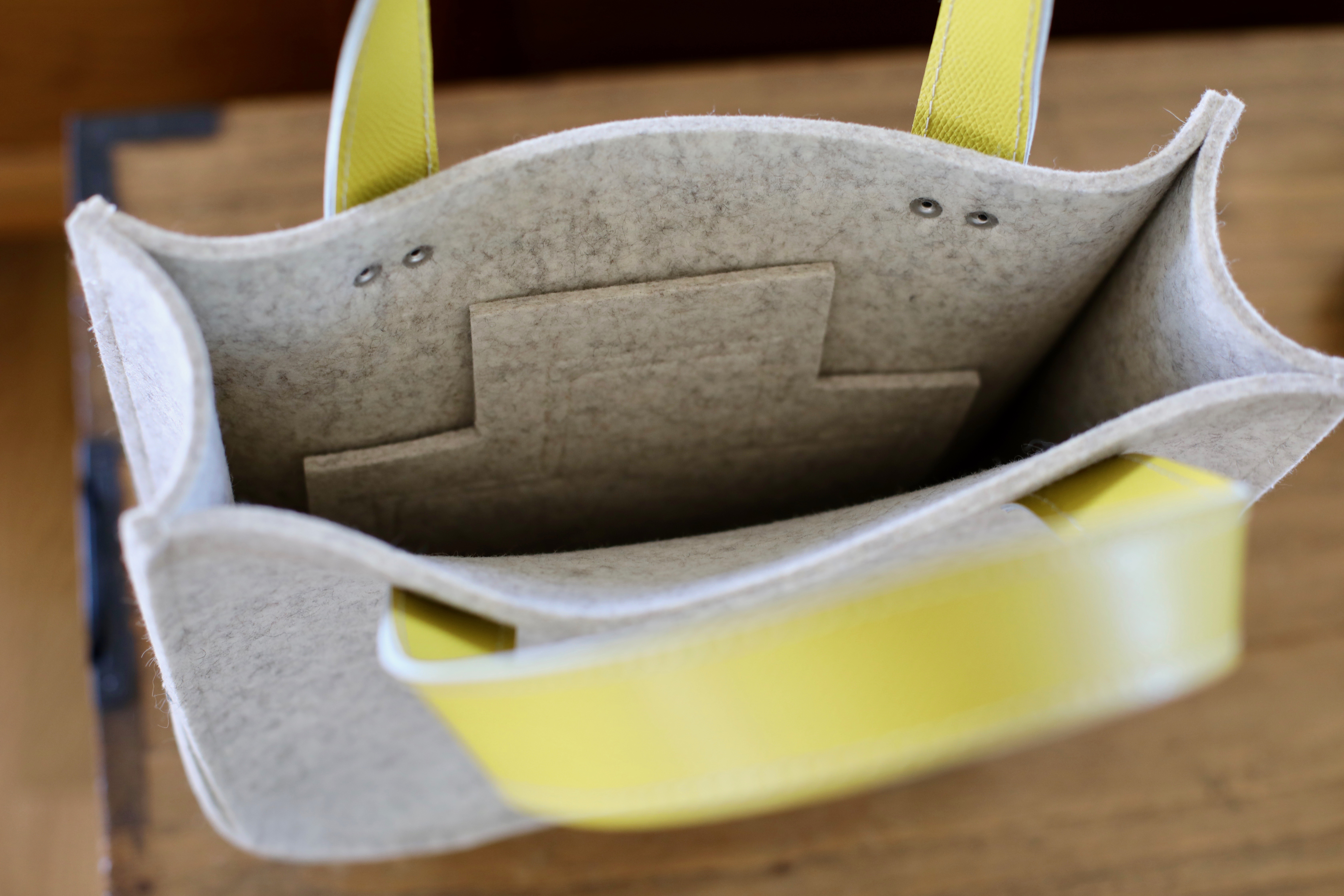
-Center each D ring/webbing piece on the side 1/2 inch down from the top.  Using your marker, mark each hole you have made in the webbing onto the wool.  Punch holes through the wool in each of these spots and connect the wool and webbing/D ring piece on each side with your rivets and rivet setter(4 rivets per side).
IMG_6112

IMG_6113

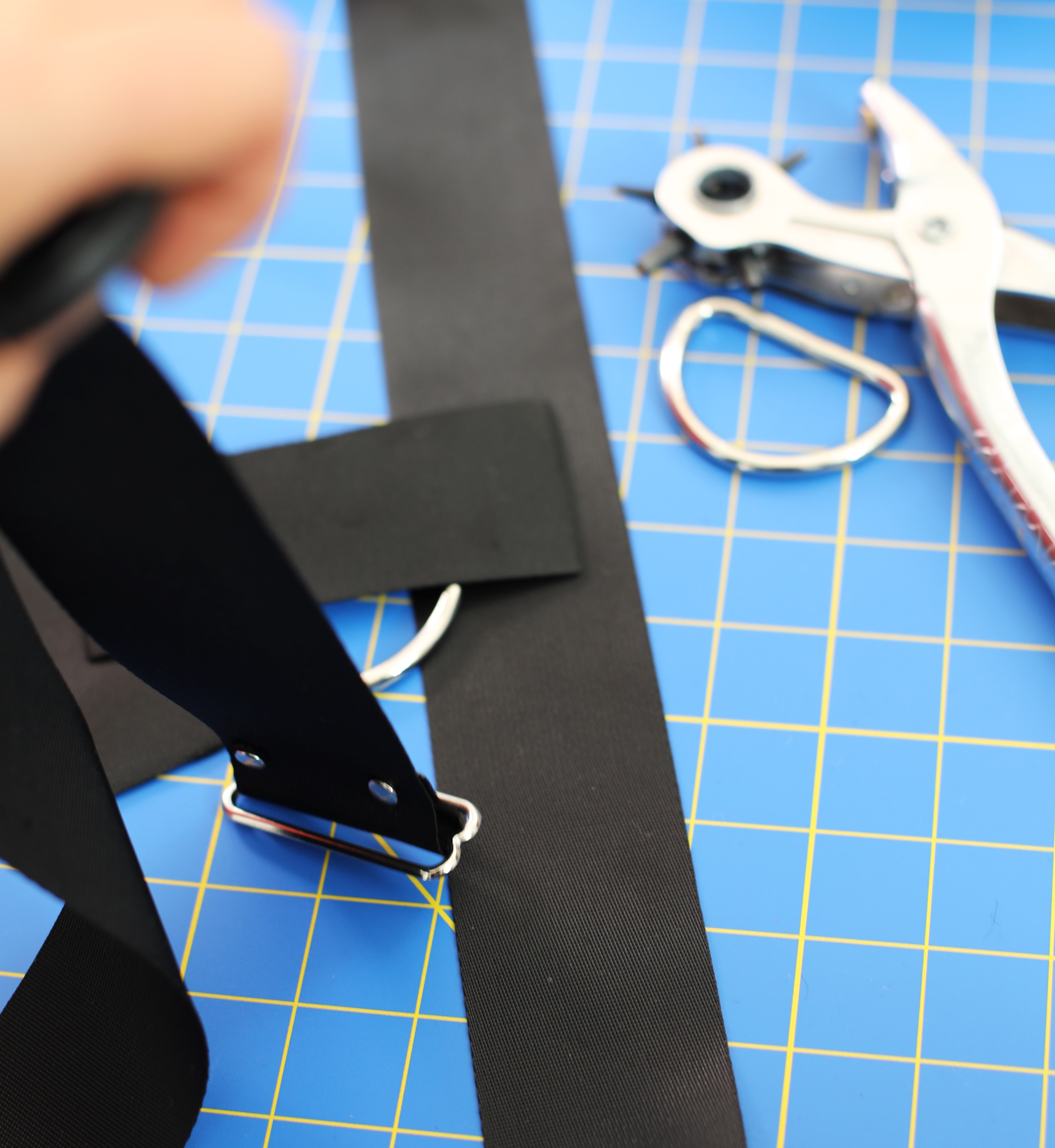
-Next, wrap the long webbing piece through the center of your Slide Buckle and fold over at least an inch and a half.  Mark two places 1/4 inch from the side, mark, hole punch and secure using two rivets.
IMG_6110

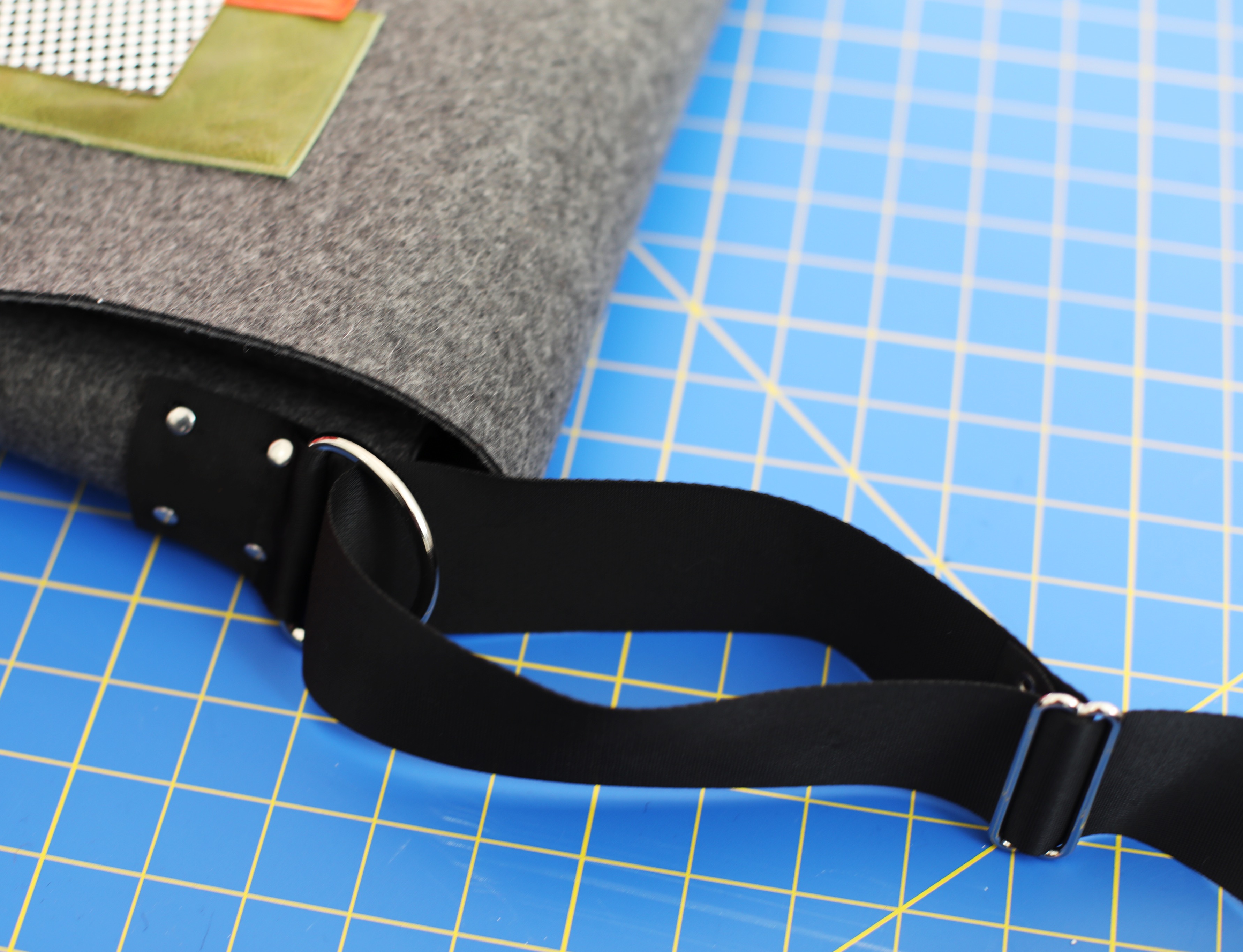
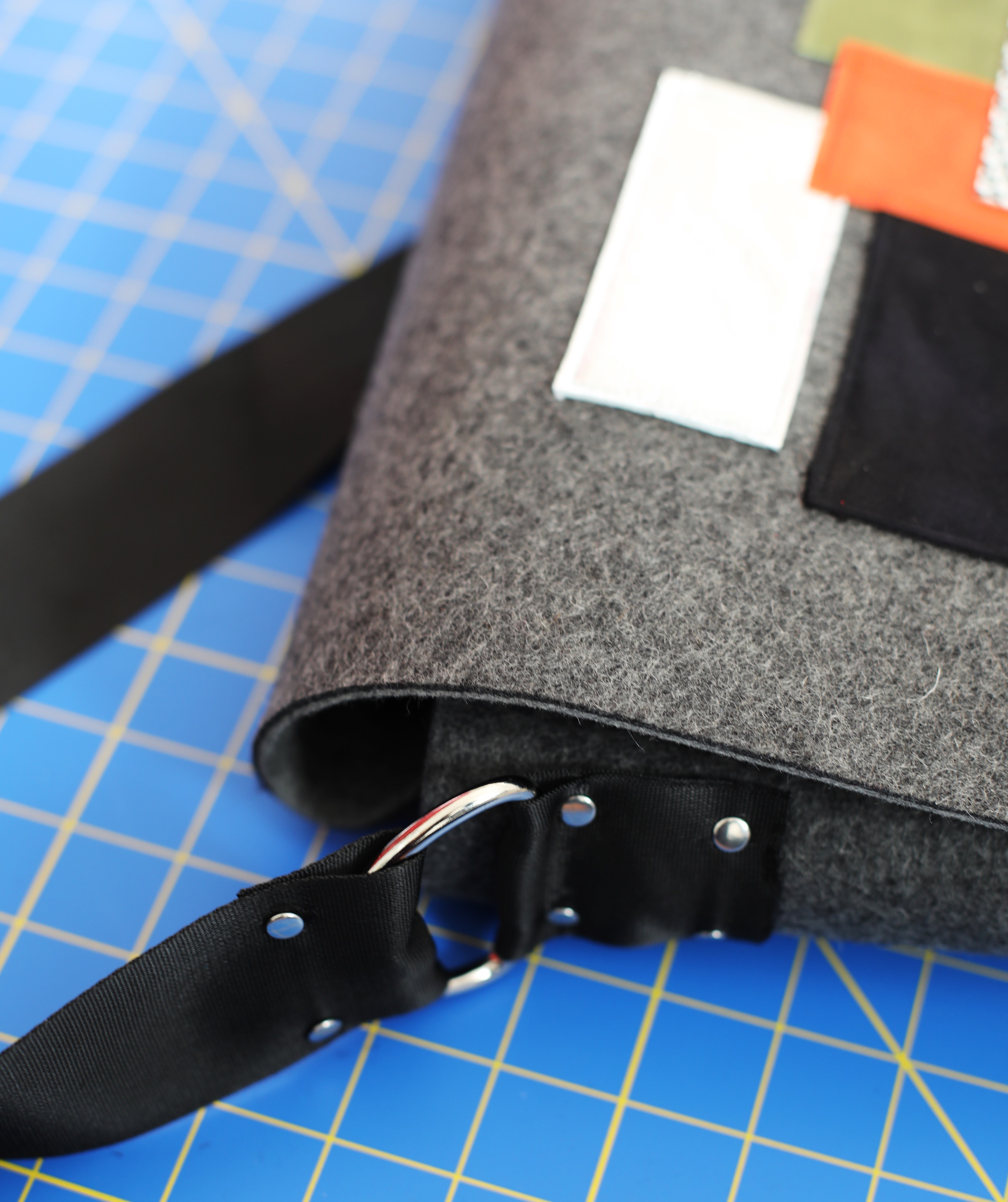
-Slip the free end of the webbing through one side D ring with the wrong side of the rivets facing up and lace the webbing under and then over through the Slide Adjuster (see picture).
IMG_6114

-Fold the open end of the webbing through the other side D ring and secure with two rivets as previously described making sure the webbing hasn’t twisted and keeping the wrong side of the rivets to the inside.
IMG_6115

Step 4: Attach the Other Piece of the Magnetic Closure

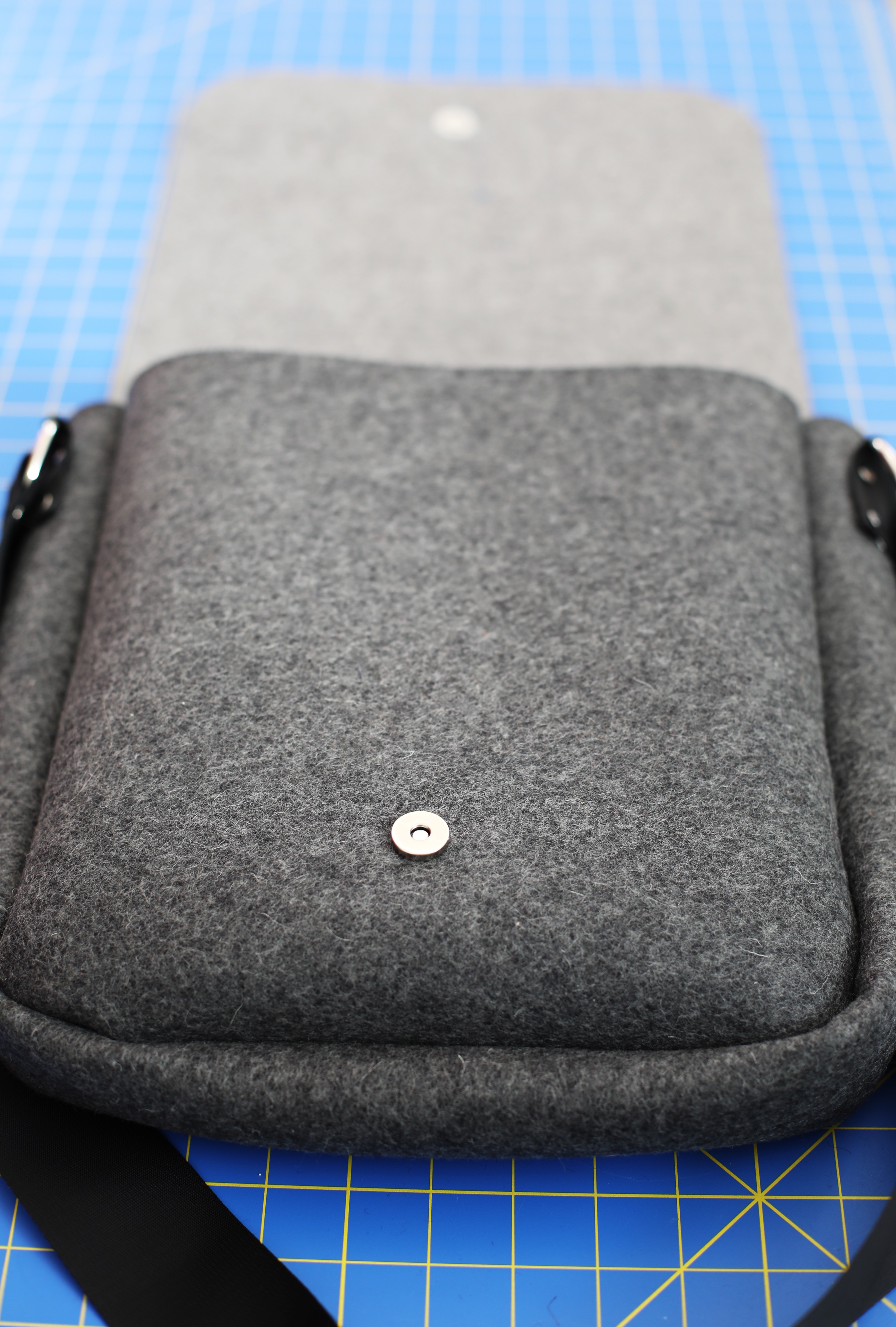
-Using the already inserted Magnetic Piece as a guide, mark and insert the other part of the magnetic closure facing toward you on the bottom/front felt piece.
IMG_6116


IMG_6120

IMG_6067

IMG_6069

IMG_6068

You’re Done!  Enjoy!  Tag me @entropyalwayswins and the project (#feltmessengerbag) on Instagram if you make one.  I would love to see.


Hillary



Inset Pieced Strips on the Fly :: A Tutorial

IMG_5153

One of my favorite aspects of sewing is discovering new techniques while experimenting.  There are many weirdo sewing tricks I now rely upon but a latest discovery with piecing is so simple and helpful that I thought I should share more broadly.

Of note, there are several sewists especially in my Bee Sewcial quilting bee that have been dancing to the same proverbial melody in making.  I think of us often creating in parallel and most certainly learning from each other.  Indeed after I posted this tutorial on Instagram, my marvelous friend Marci (http://www.marcigirldesigns.com) said that she had used exactly this technique earlier this year without describing it.  For these reasons, the following technique is best attributed to our Bee Sewcial group as a whole.

Although I shared this on Instagram (where you can still find it under #insetstripsonthefly) I figured for posterity’s sake and easier reference I would make a more formal post about it.

I absolutely love some wonk in my makes.  Indeed I often seek it out as I appreciate the interest asymmetry adds to a piece.  There are times however when I really want things to line up perfectly, have a background seen uninterrupted through layers etc.  The classic “slice and insert” method for adding pieced lines in sewing is awesome but is frustrating when using sizes other then 1/2 inch finished strips (assuming a 1/4 inch seam allowance).  Unless you spend extra time with math, the background can look distorted.  I am actually a math lover, but the more time I have to calculate and think about sewing, the less fun it is for me.  This new technique works with any sized inset strips, doesn’t distort the background AND requires very little thinking.  All you need is fabric, scissors and washable glue.

Step 1: Gather you background fabric, some fabric strips and perhaps a plan (or not.  This technique is very fun to make up a design as you go.)

IMG_5171

Step 2: Line up your strip Right Sides Together(RST) with the background fabric along the line you plan to place your strip.  You may find it helpful to mark the line on your fabric with an erasable marker.  Realize that the marked line is 1/4 inch in from where the strip will be sewn to the background fabric.  Next, sew the strip using a quarter inch seam allowance (and keeping RST) along one side to your strip to your background fabric.

IMG_5174

IMG_5154

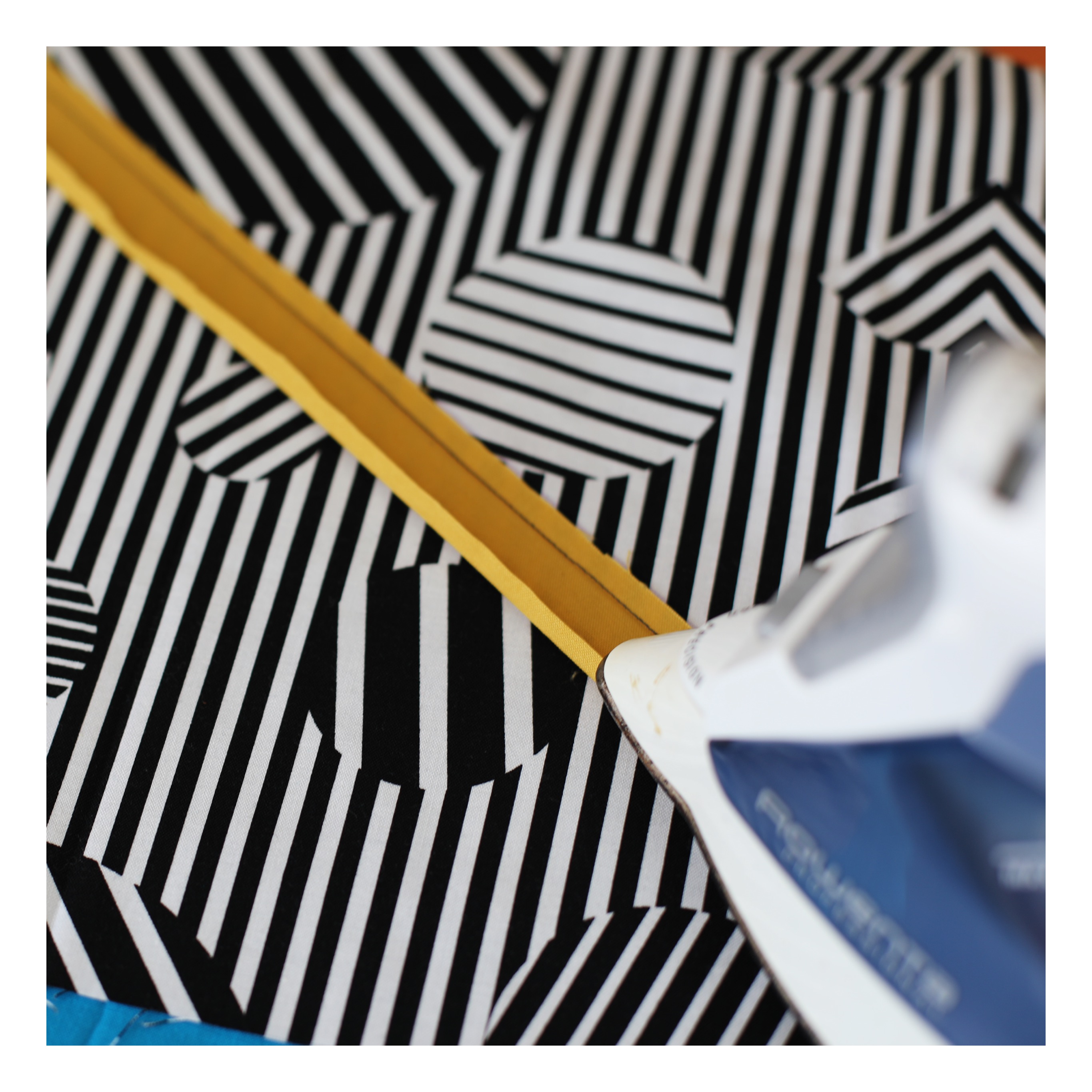
Step 3: Fold the strip over along the sewn edge and press.  Unfold the strip back and iron a 1/4 inch fold all along the raw edge of the strip TOWARD the sewn edge.

IMG_5155

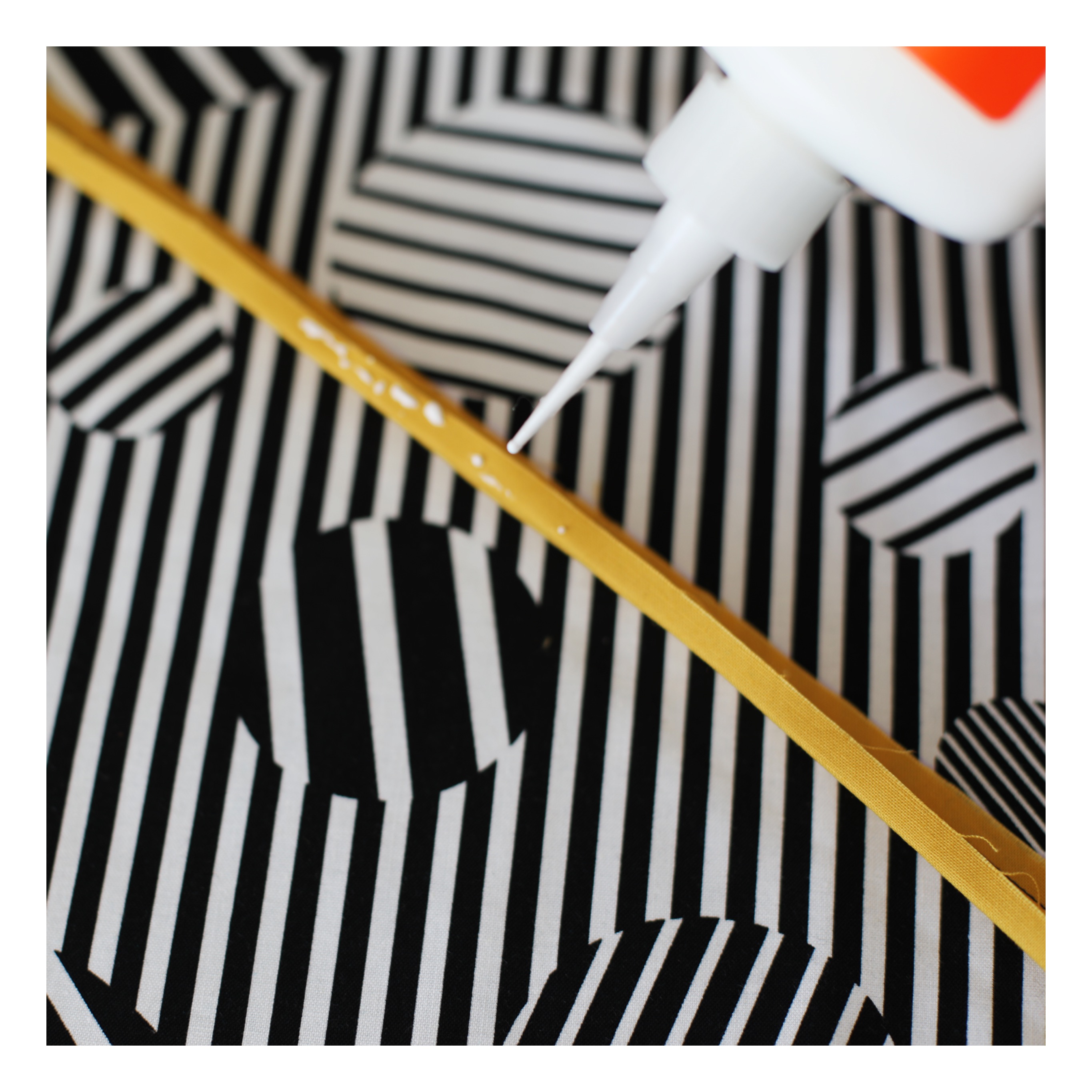
Step 4: With a light touch, apply your washable glue to the folded edge.

IMG_5156

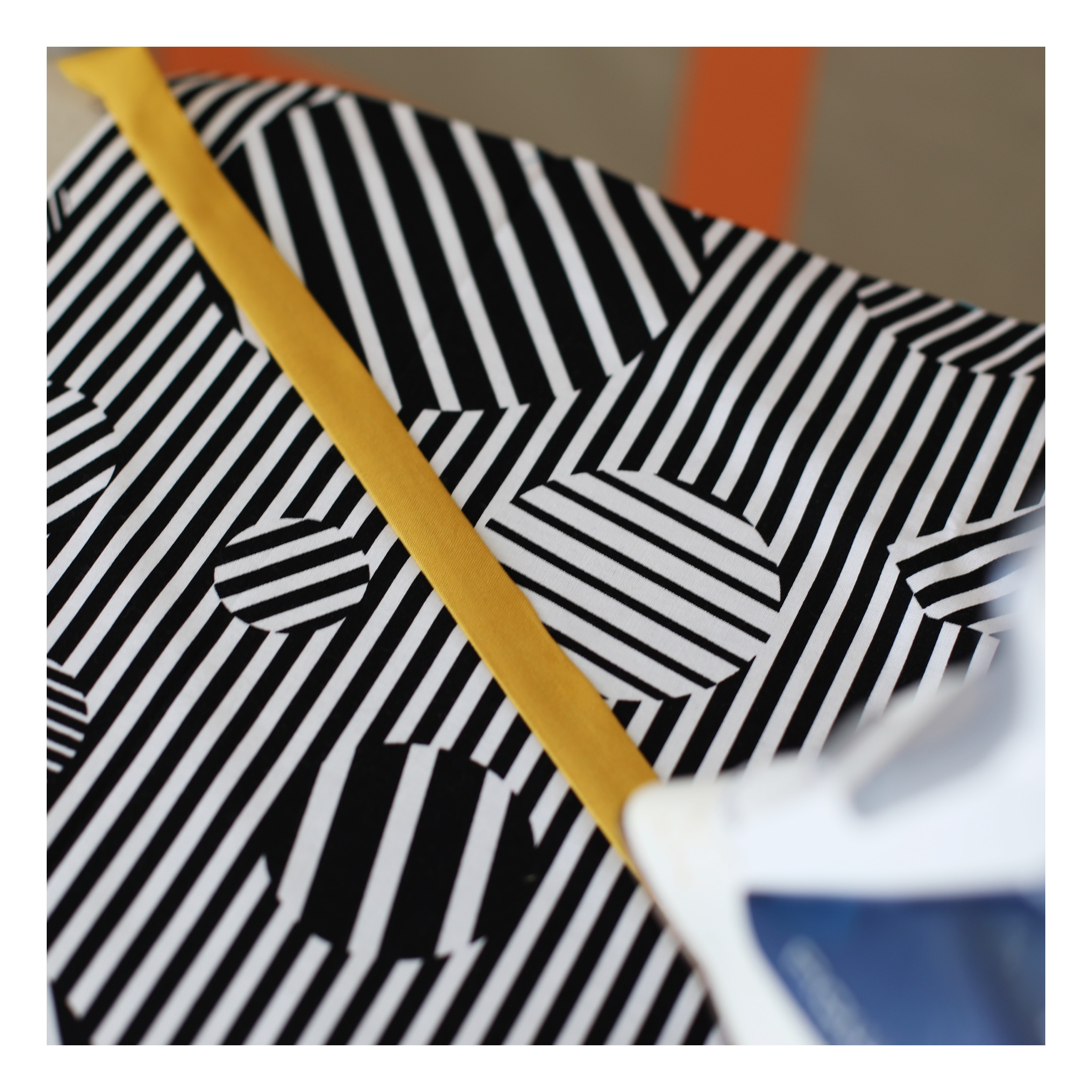
Step 5: Fold the strip over and press in place.

IMG_5157

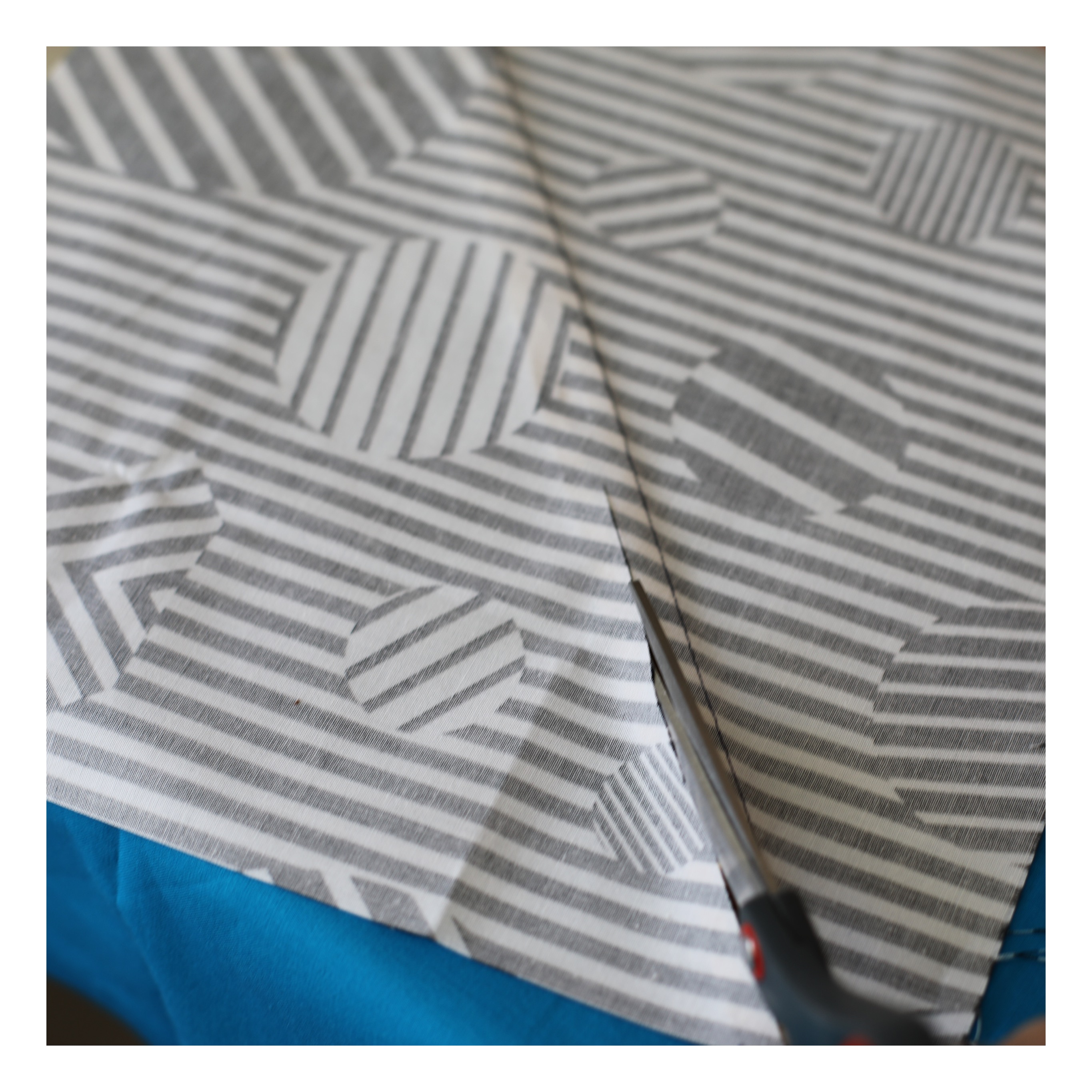
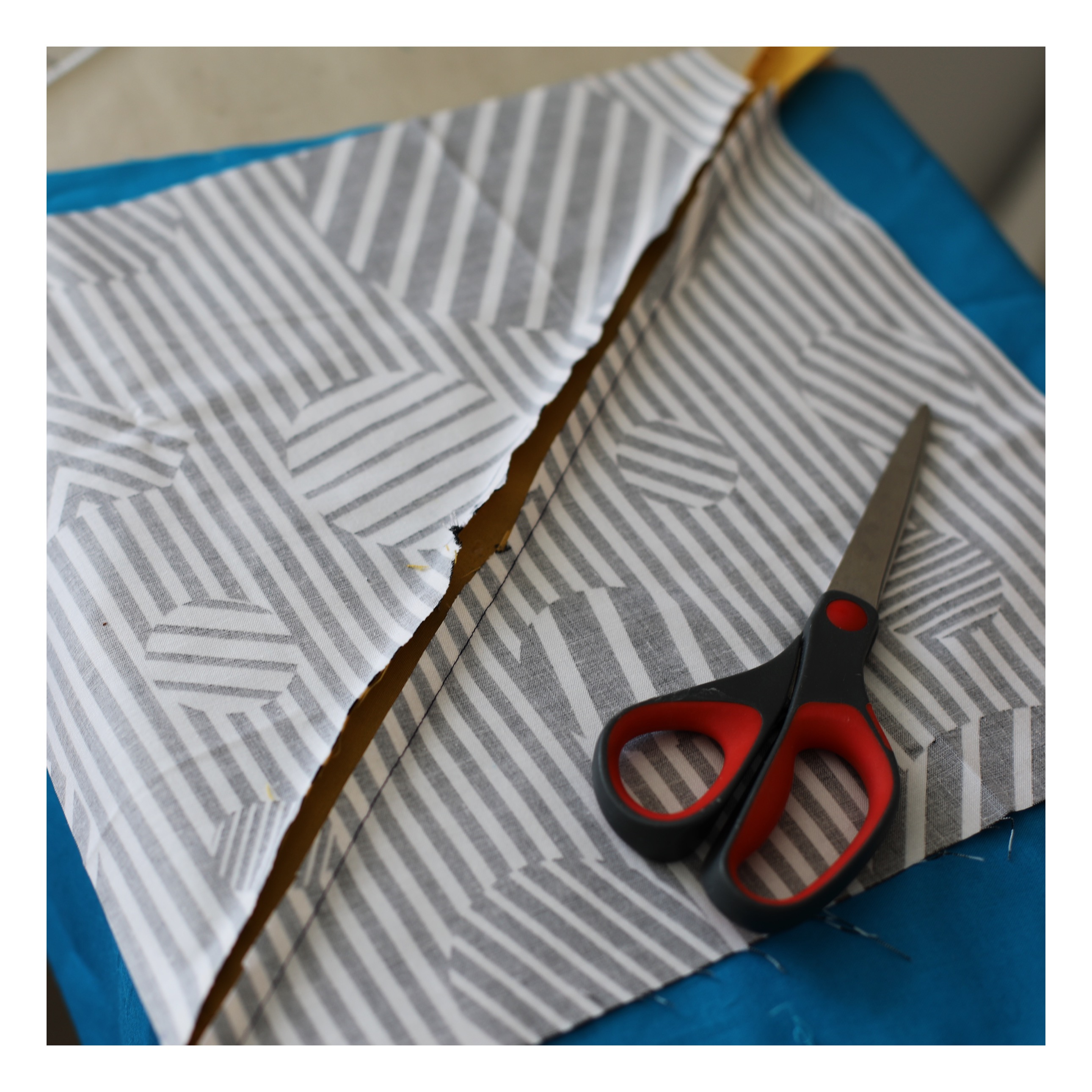
Step 6: Flip the whole thing over and cut with your scissors IN BETWEEN the strip the the bottom fabric 1/4 inch away from your sewn edge.

IMG_5175

IMG_5158

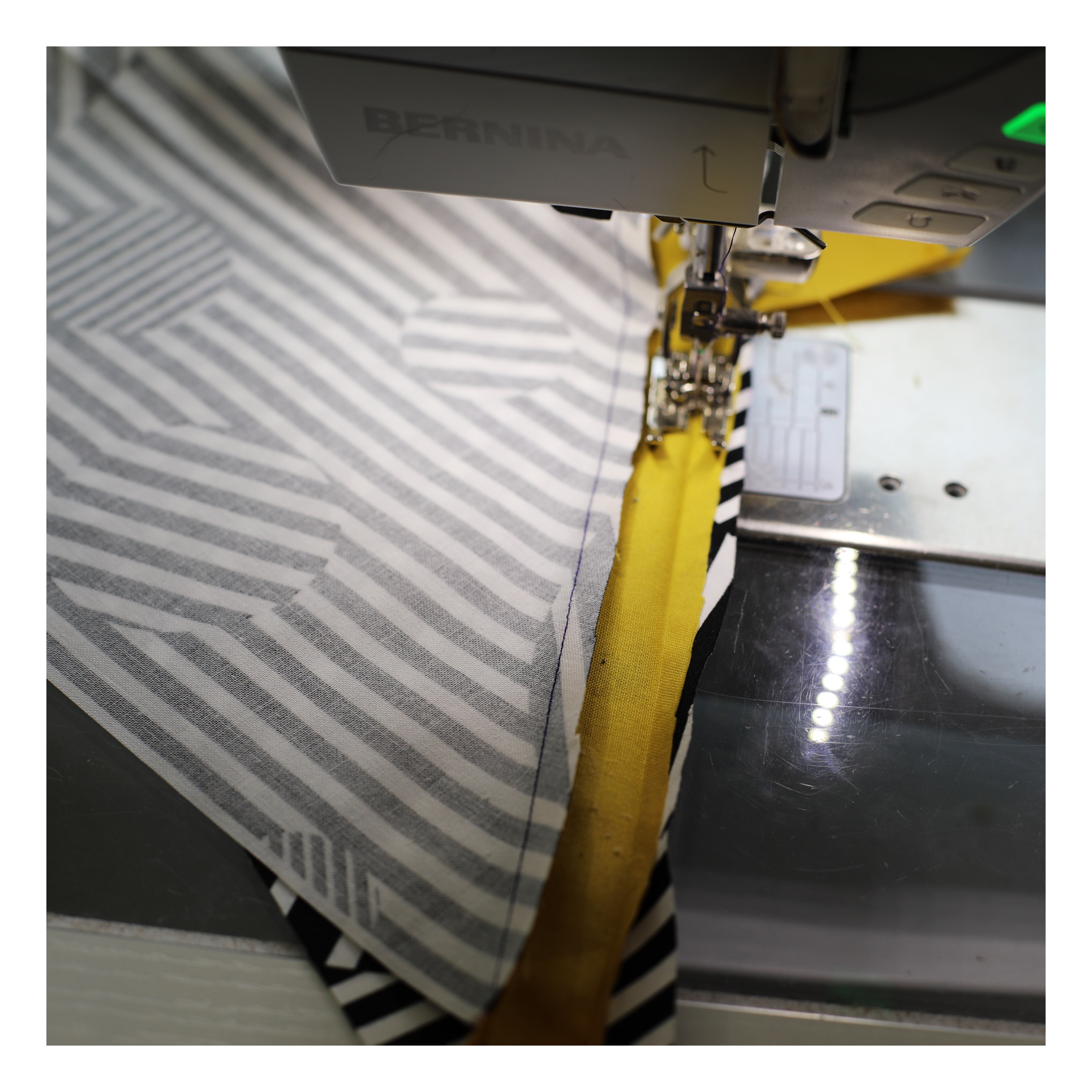
Step 7: With the back still facing you, fold open and sew along the unsewn folded line.

IMG_5163

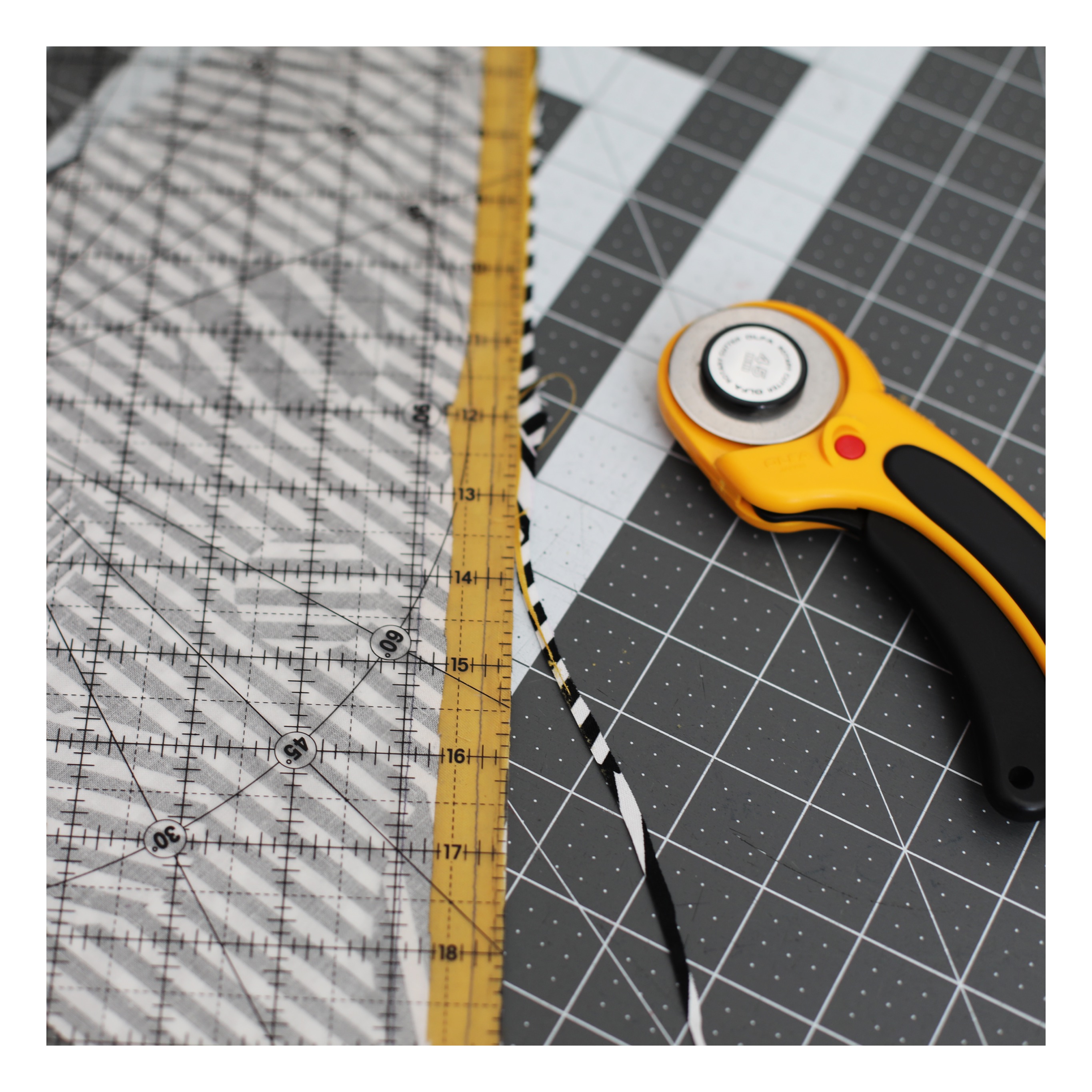
Step 8: Trim both sewn edges to give a clean 1/4 inch seam allowance.

IMG_5159

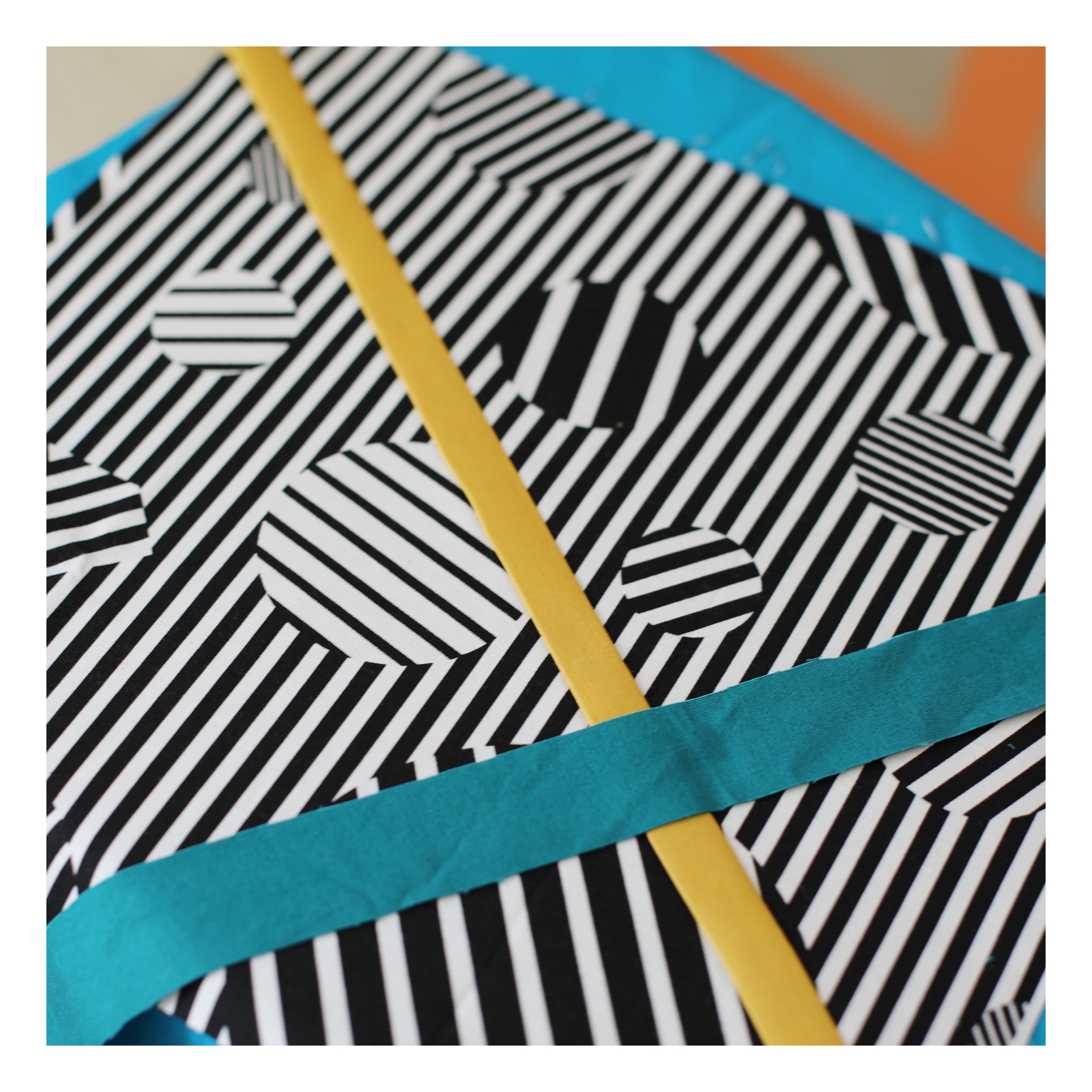
Step 9: Turn the whole piece to the front, press and add more inset strips as you like.

IMG_5160

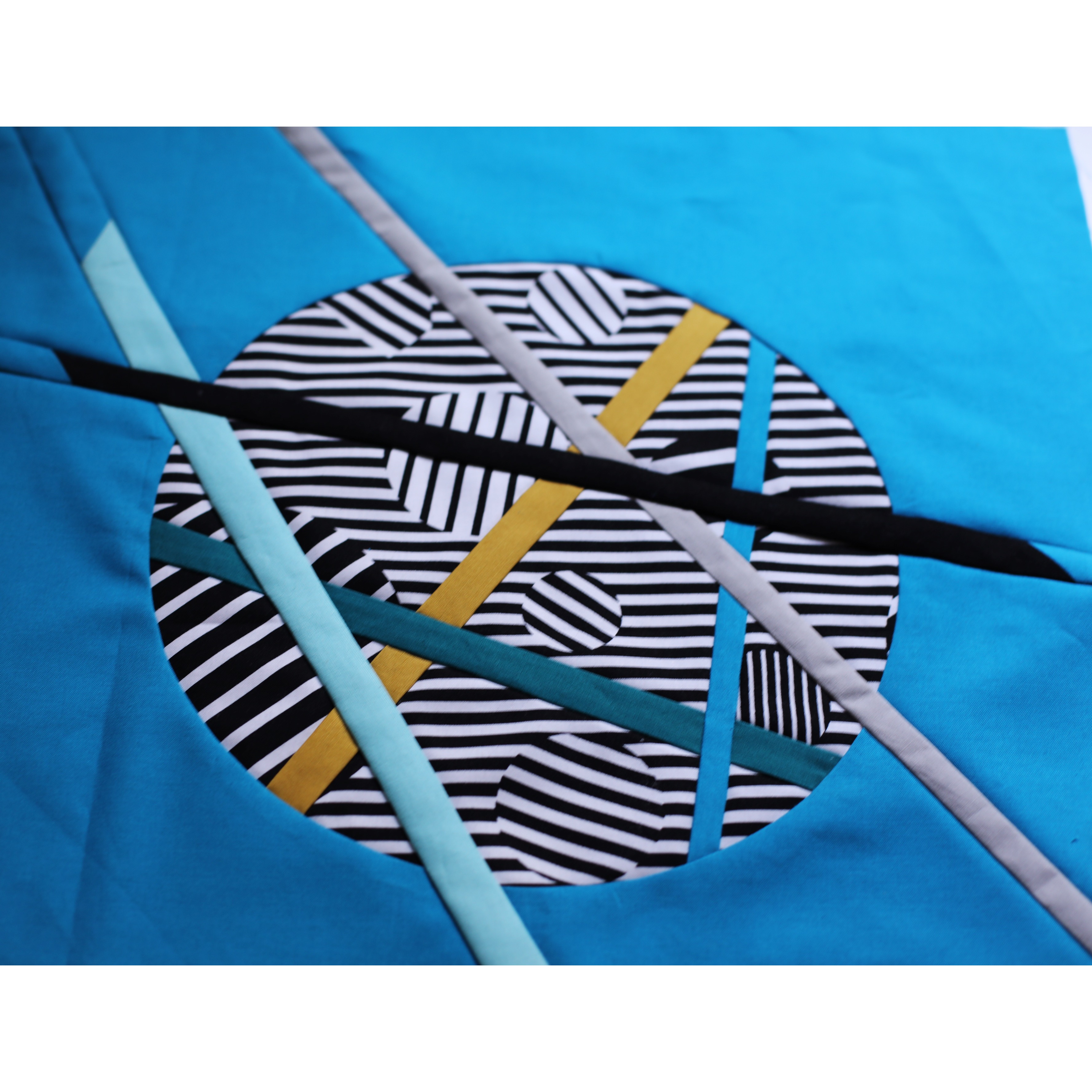
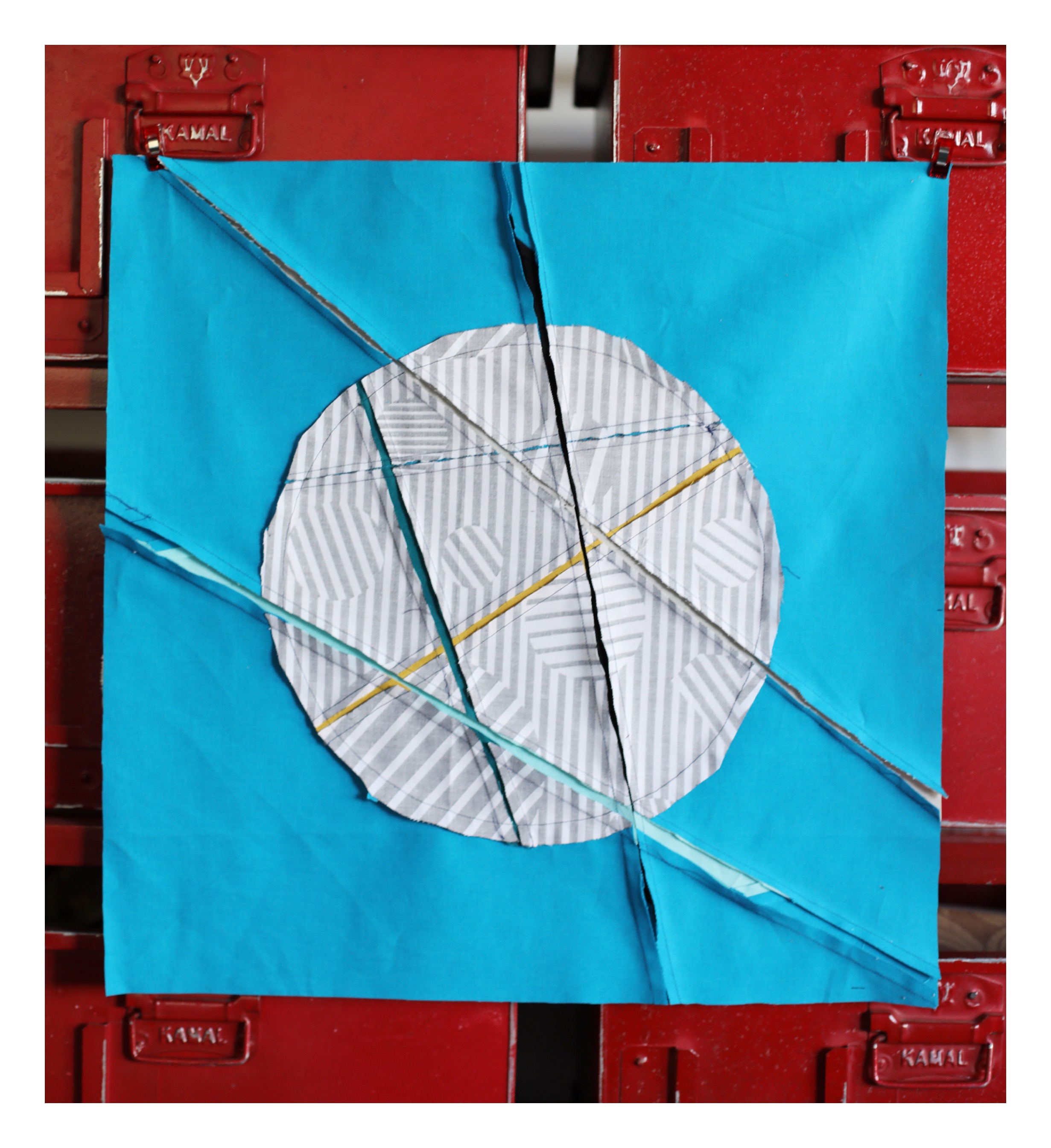
I combined some inset strips, added an inset circle and then added more inset strips on top to exaggerate the sense of layers in this piece.  You can see how clean the technique is  by a view from the back (something I am often hesitant to do frankly when showing my makes!)

IMG_5161

IMG_5162

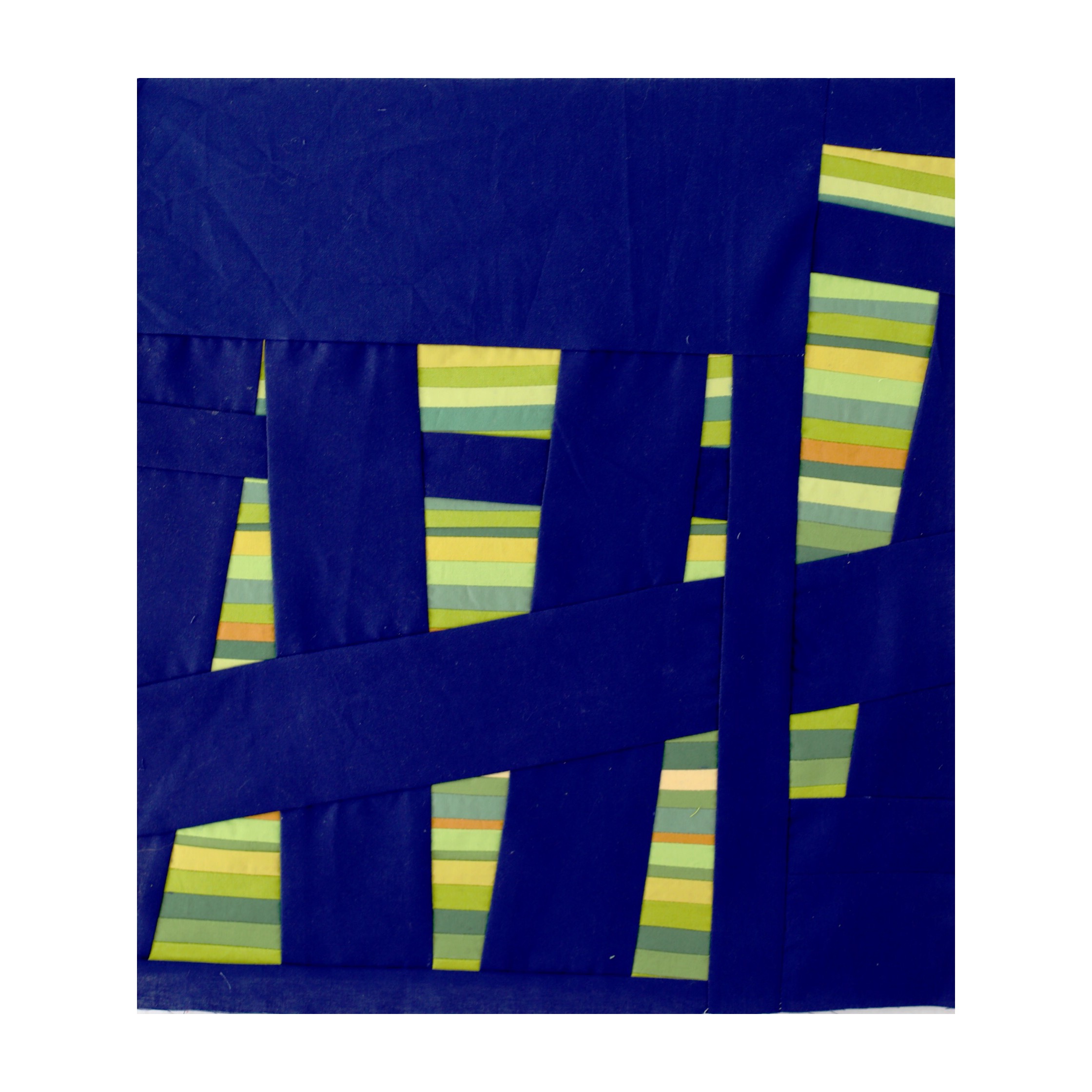
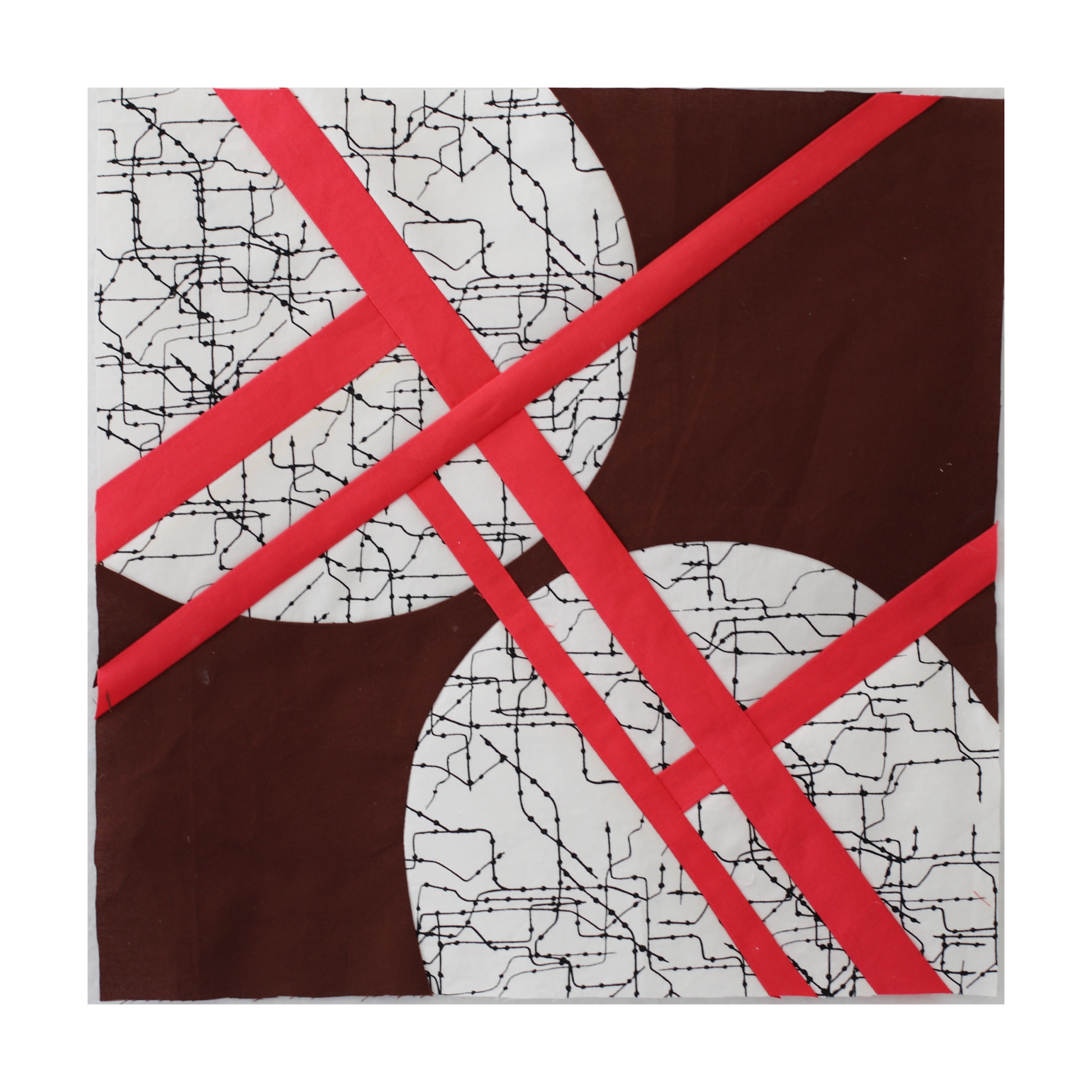
There are so many ways to go with the technique.  (hint, hint: You can insert more then straight parallel strips this way). Below are a couple other blocks I made while playing around.

IMG_5098

IMG_5138

I hope others find this tutorial helpful.  I would love to see what folks make with it.  If you are on Instagram tag me @entropyalwayswins and your make #insetstripsonthefly.

Hillary


The Metro Tote Tutorial

IMG_4328

1S3A0259

1S3A0004

FullSizeRender

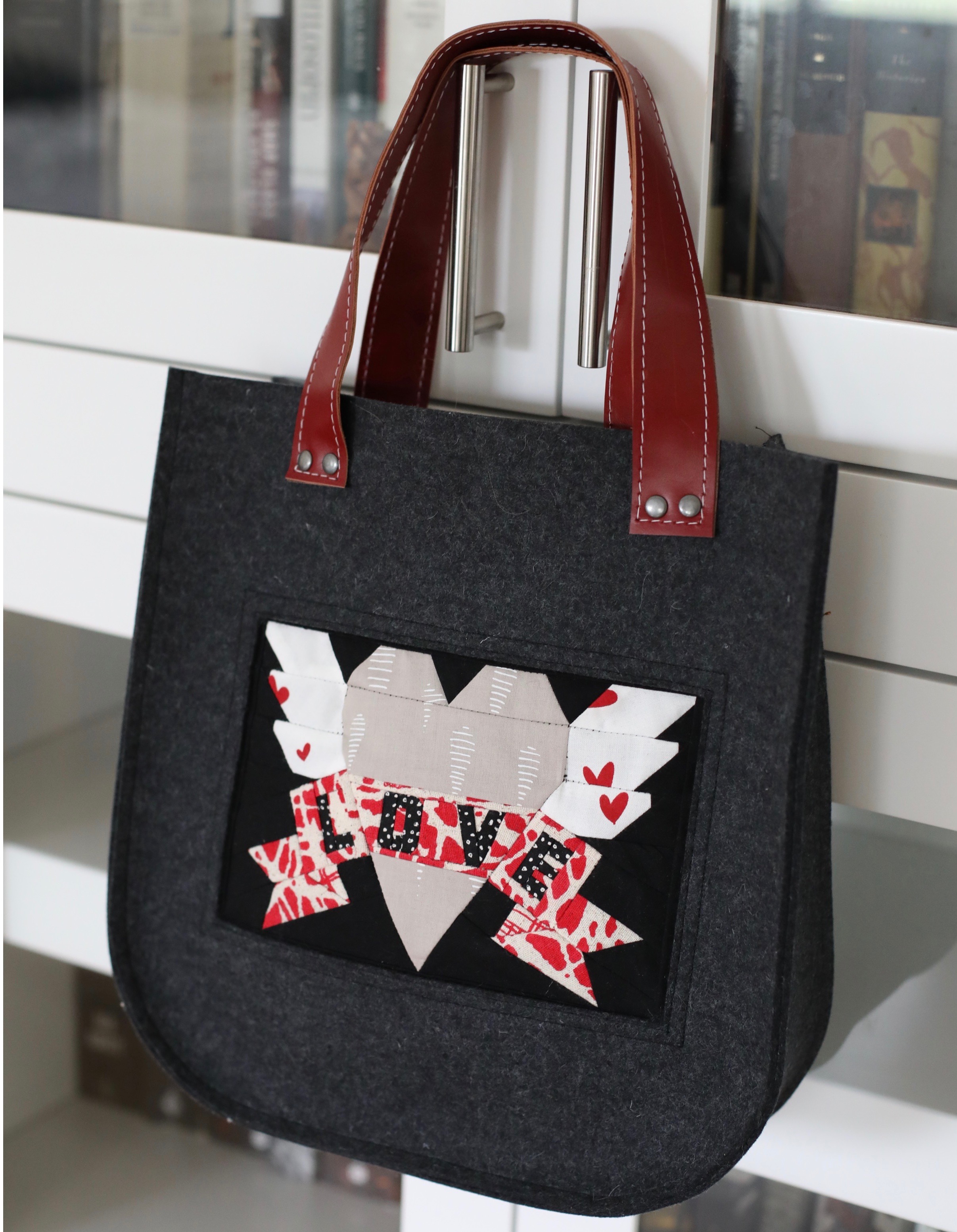
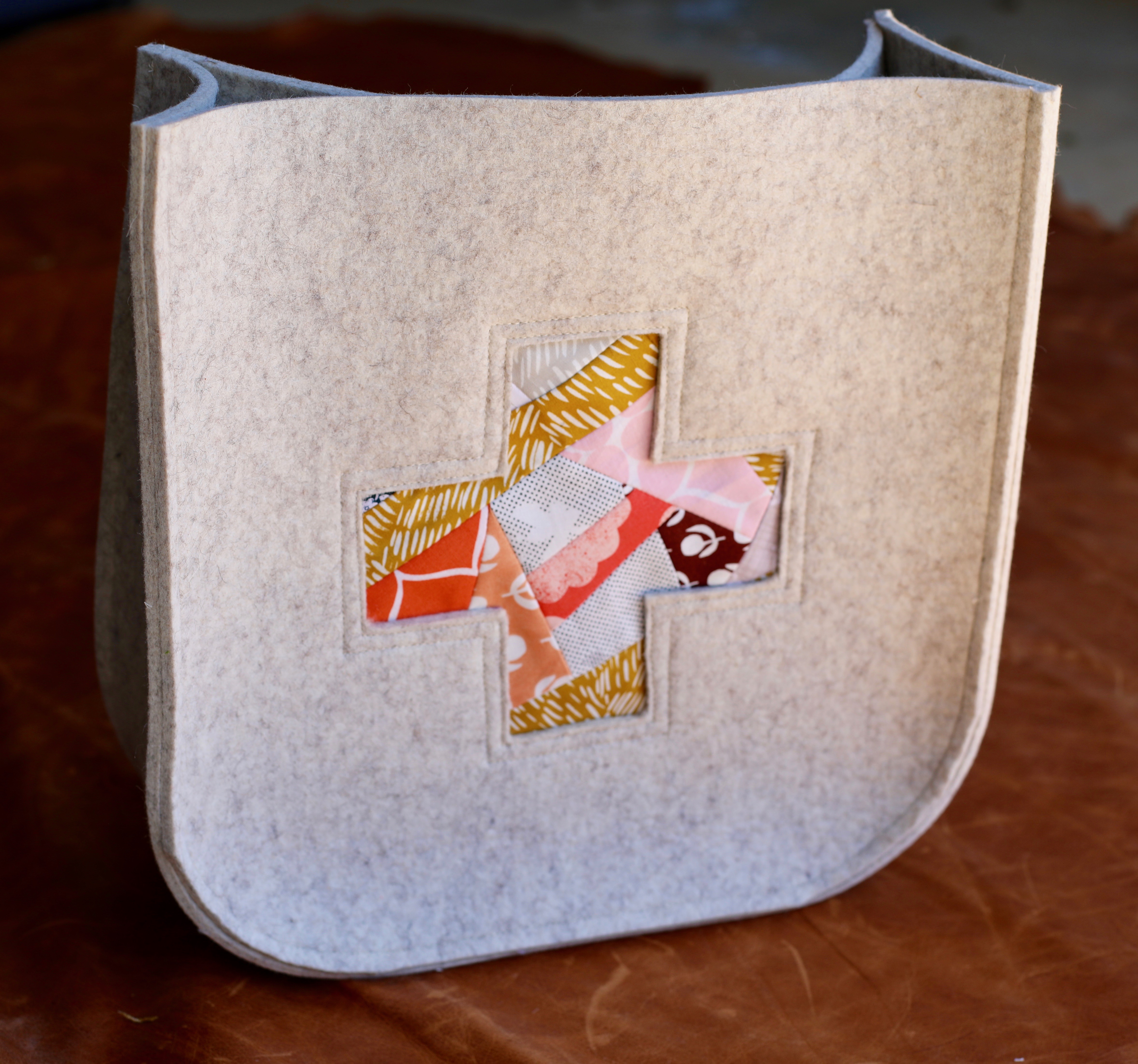
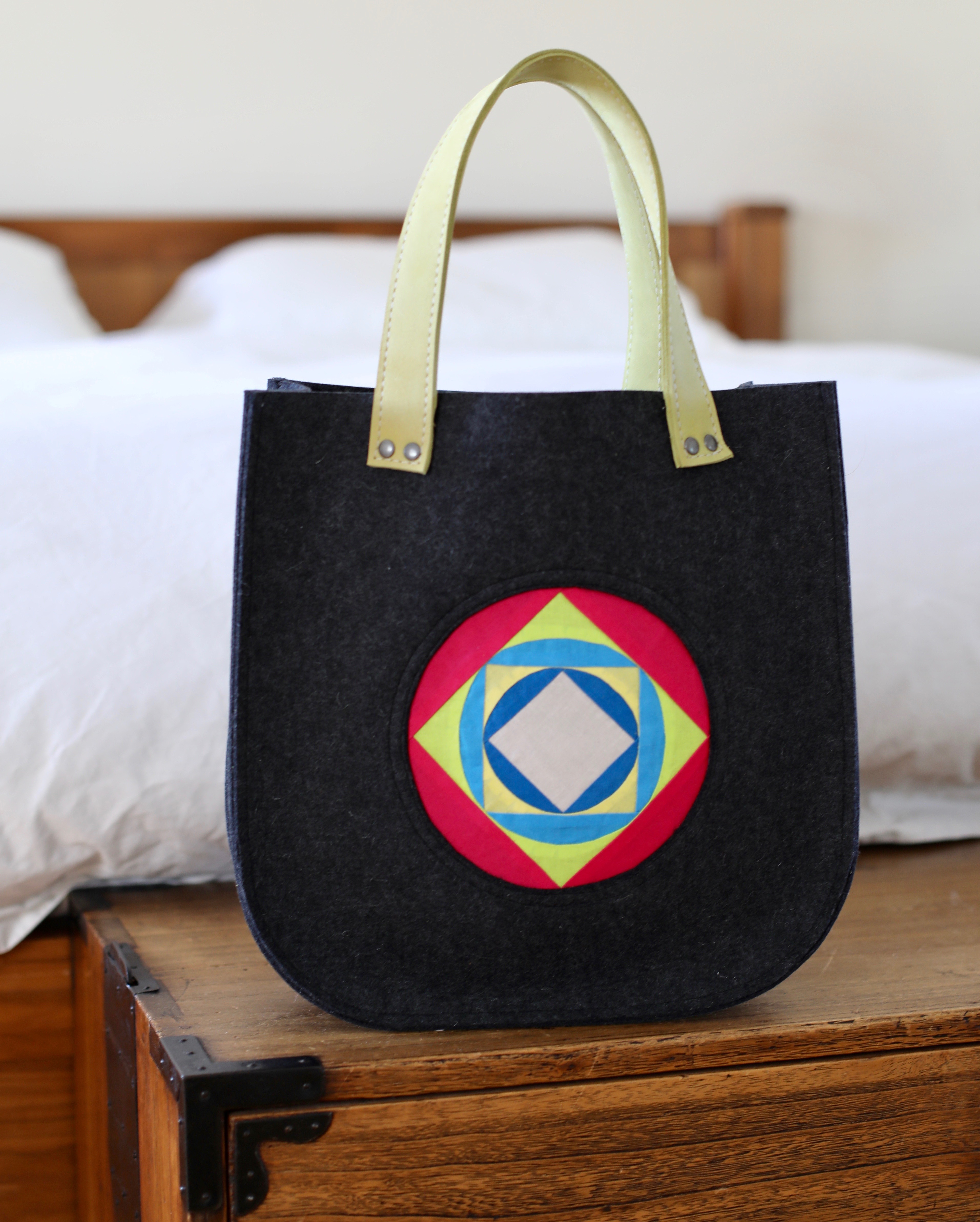
I love simple designs made with top notch materials.  I also love combining nontraditional materials together.  In this case I share a very simple tote design using thick felted wool along with leather handles and quilting cotton scraps.  There are so many other ways to experiment with this bag design and I hope those who try it take my instructions as a jumping off point to explore their own creativity.

One finished tote including handles, measures approximately 19 inches high, 12.5 inches wide and 4 inches deep.

Supplies

3 mm Felt ( I purchased mine from Aetna Felt  www.aetnafelt.com .  One 72” wide yard made 4 bags.  You can also use leather or 5 mm felt but both are much harder on a domestic machine)

2 thick leather pieces 18 x 1 ¼ inch for handles or two 18 inch premade handles (I demonstrate with some stitched 18 inch leather bag handles I made but plain leather will work perfectly well.  If you are intimidated by leather and rivets you can also use webbing as handles and sew them directly to the felt)

Exacto knife

Fabric Marker (I like Dritz Disappearing Ink pen)

Quilter’s Ruler

Rotary Cutter

Pieced block or textile that you want to feature on the bag in a reverse applique technique less then 9 1/2  x 9 1/2 inches (I have used paper piecing patterns, leftover quilt blocks, improv panels made from scraps.  The sky is the limit.)

Double sided fabric tape (optional)

Leather Hole Punch

Small Sized Rivets (If you are uncomfortable with rivet setting, screw in rivets are a nice alternative and if you chose to use 5mm thick wool, I recommend medium sized rivets)

Thread

Sewing Machine

1S3A0165.jpg

Step 1: Cut Out Your Pieces

Cut two pieces of Felt 12 ½ x 12 ½ inches (front and back pieces)

Cut one piece of Felt 36 x 4 inch (side piece)

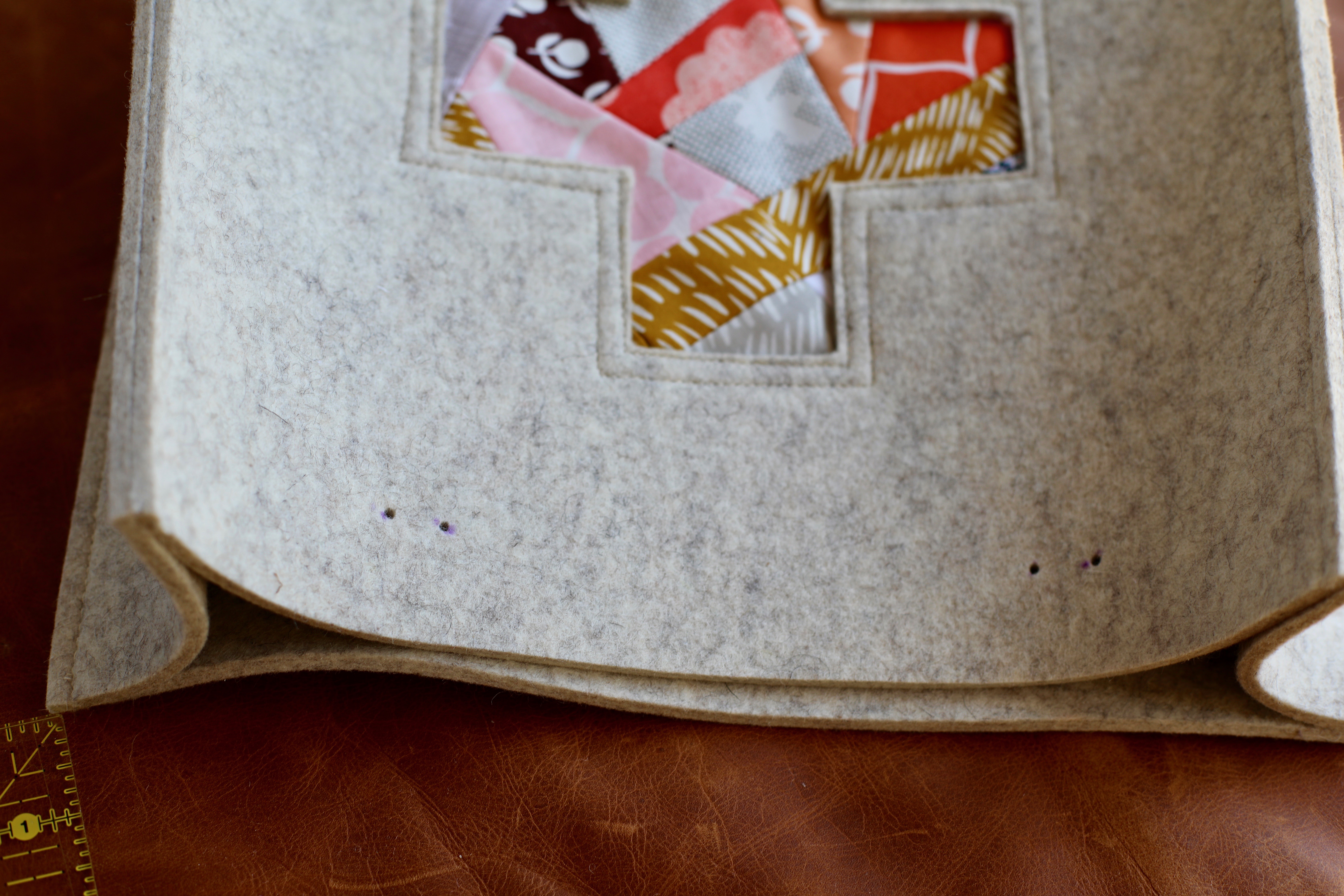
Cut a piece of felt that is 1 inch larger on all sides then the cut out motif you plan for your front. (For example, if you choose to cut out a 6 inch circle in the front felt to show off a special paperpieced block then cut out a 7 inch felt circle. The front felt bag piece with the cut out motif, your chosen feature textile/block and this third felt piece will form  a sandwich that once finished will make the inside of the bag look more professional.)

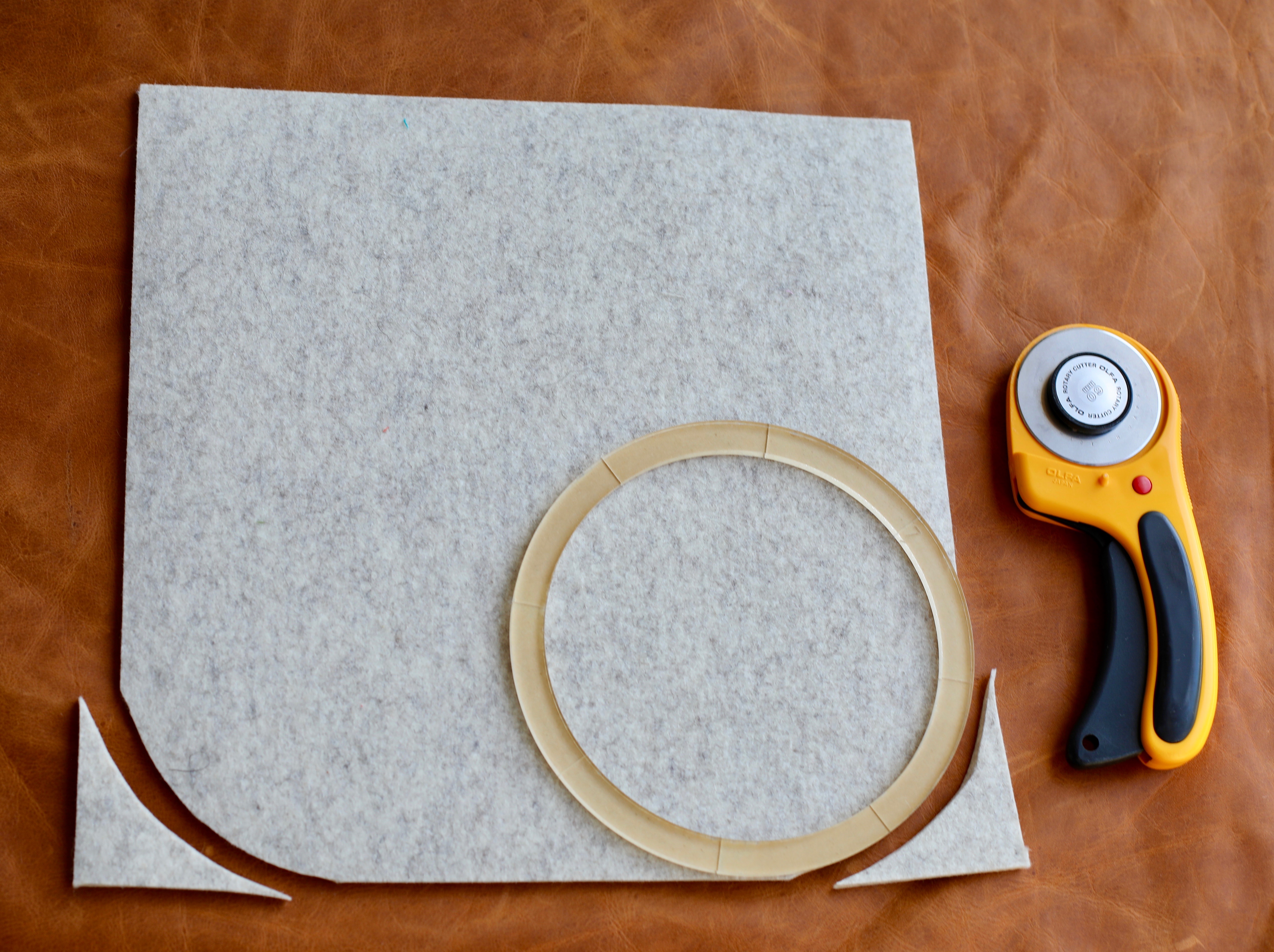
Round the bottom corners of the front and back felt pieces.  (I used a 7 inch diameter circle but a round plate would work well too.)

1S3A0168.jpg


Step 2: Prepare your Front Felt Piece for Reverse Applique

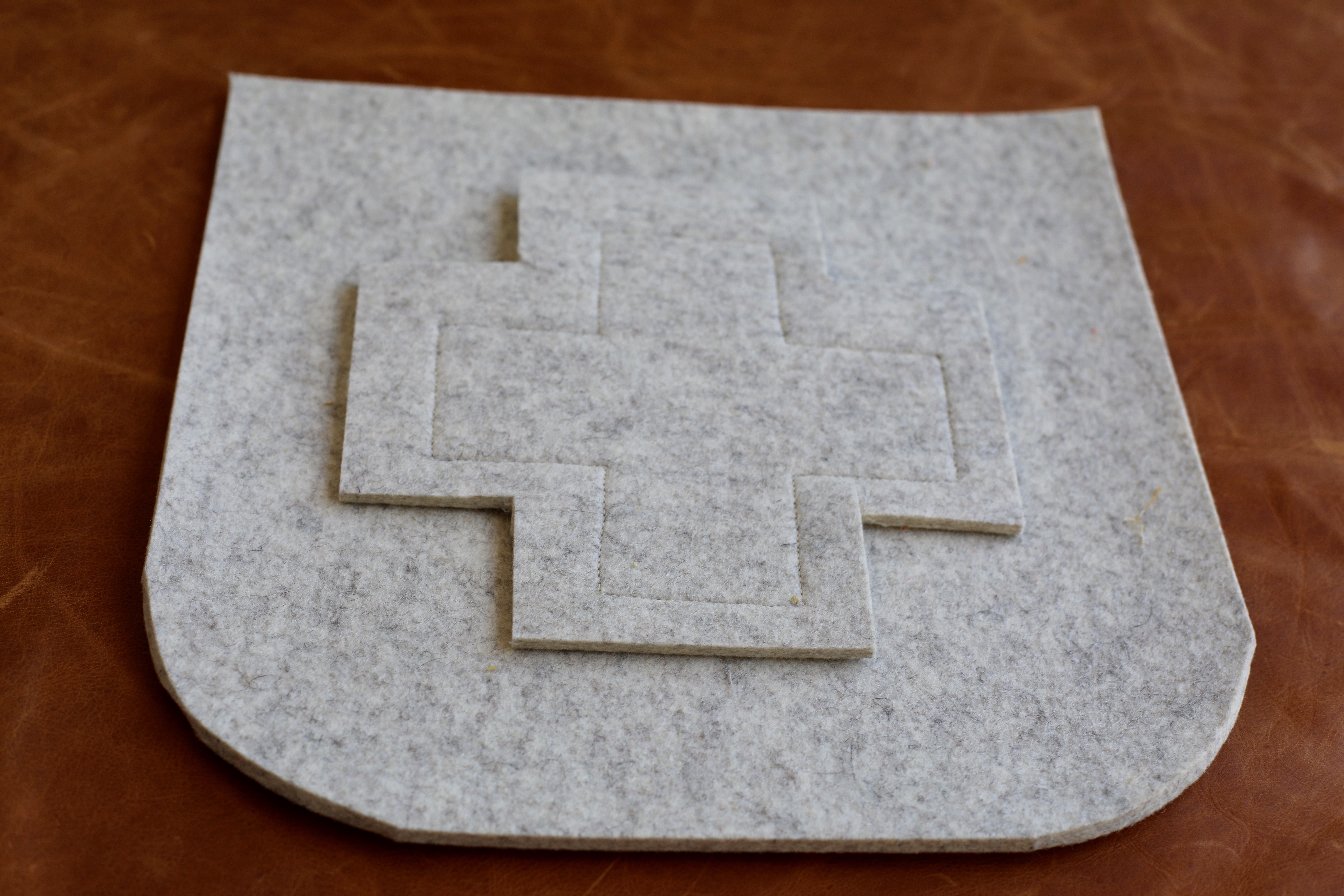
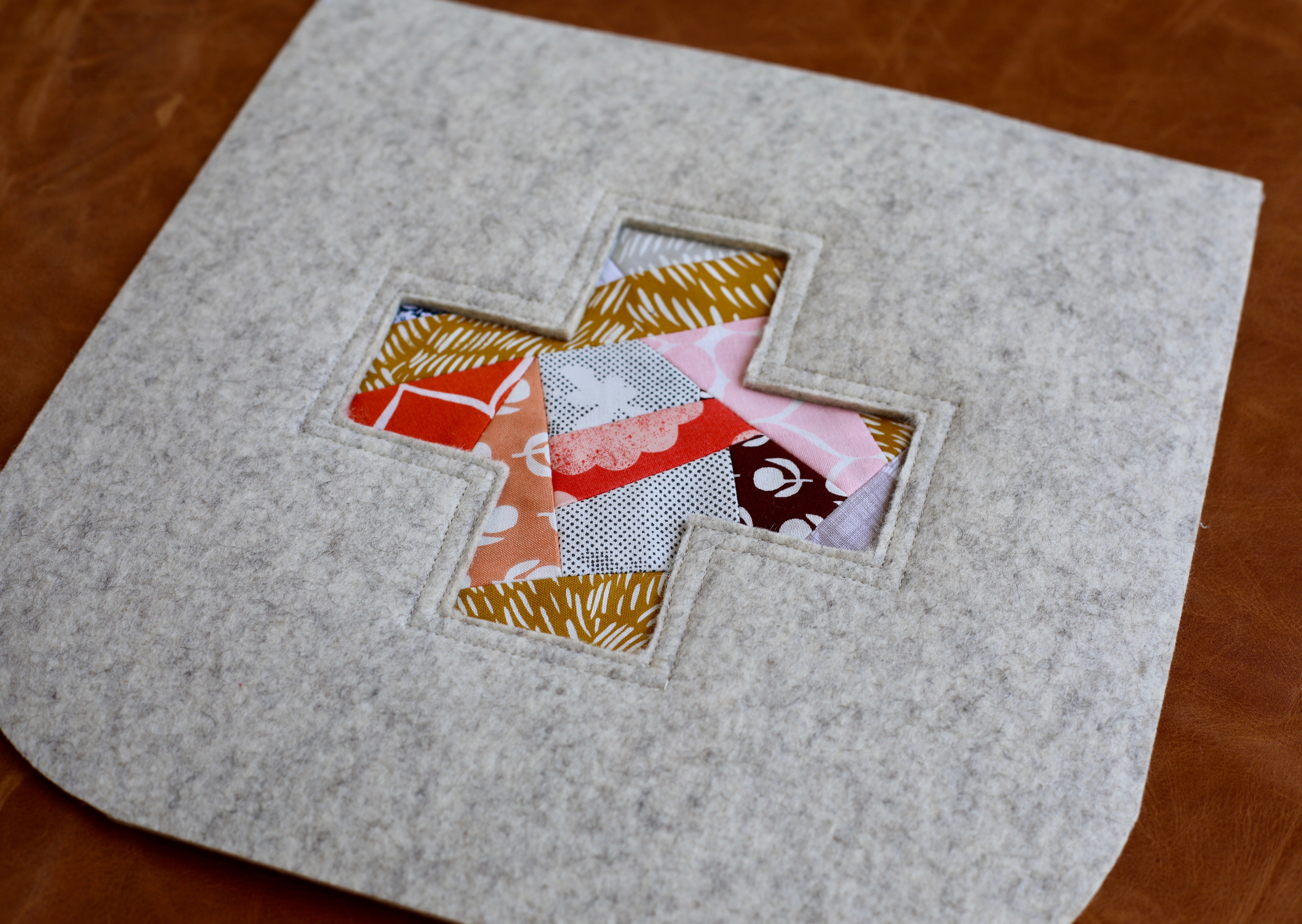
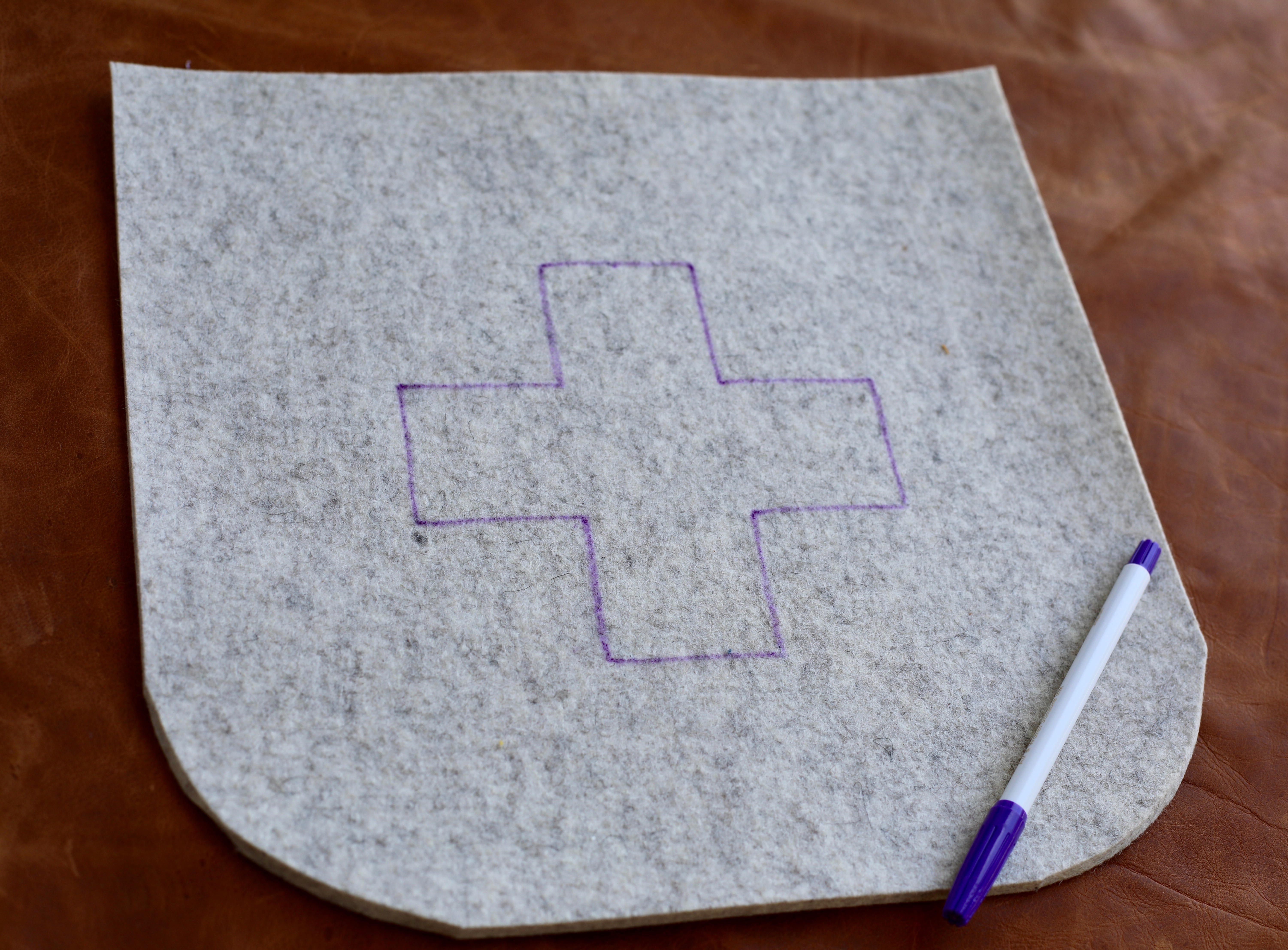
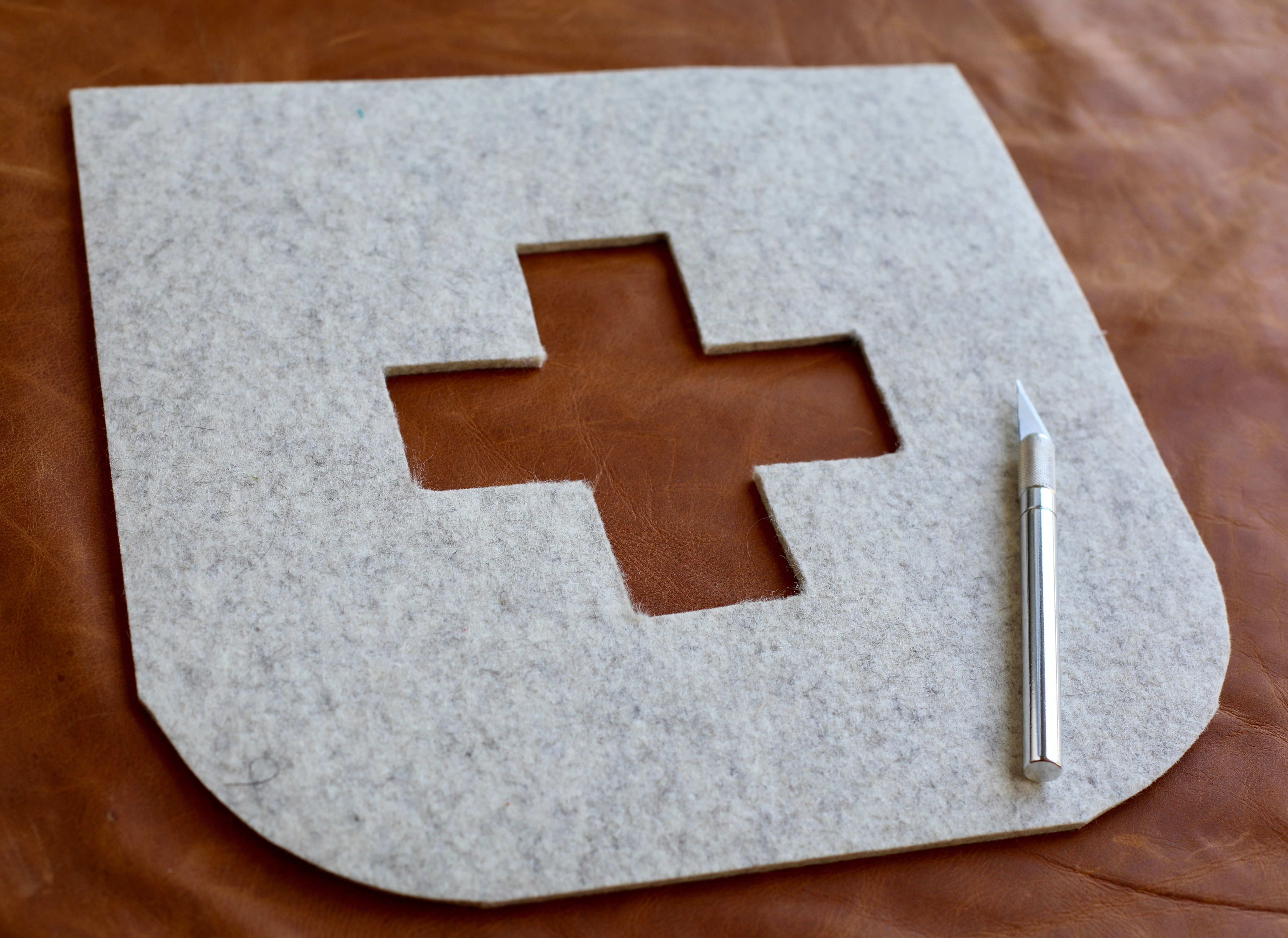
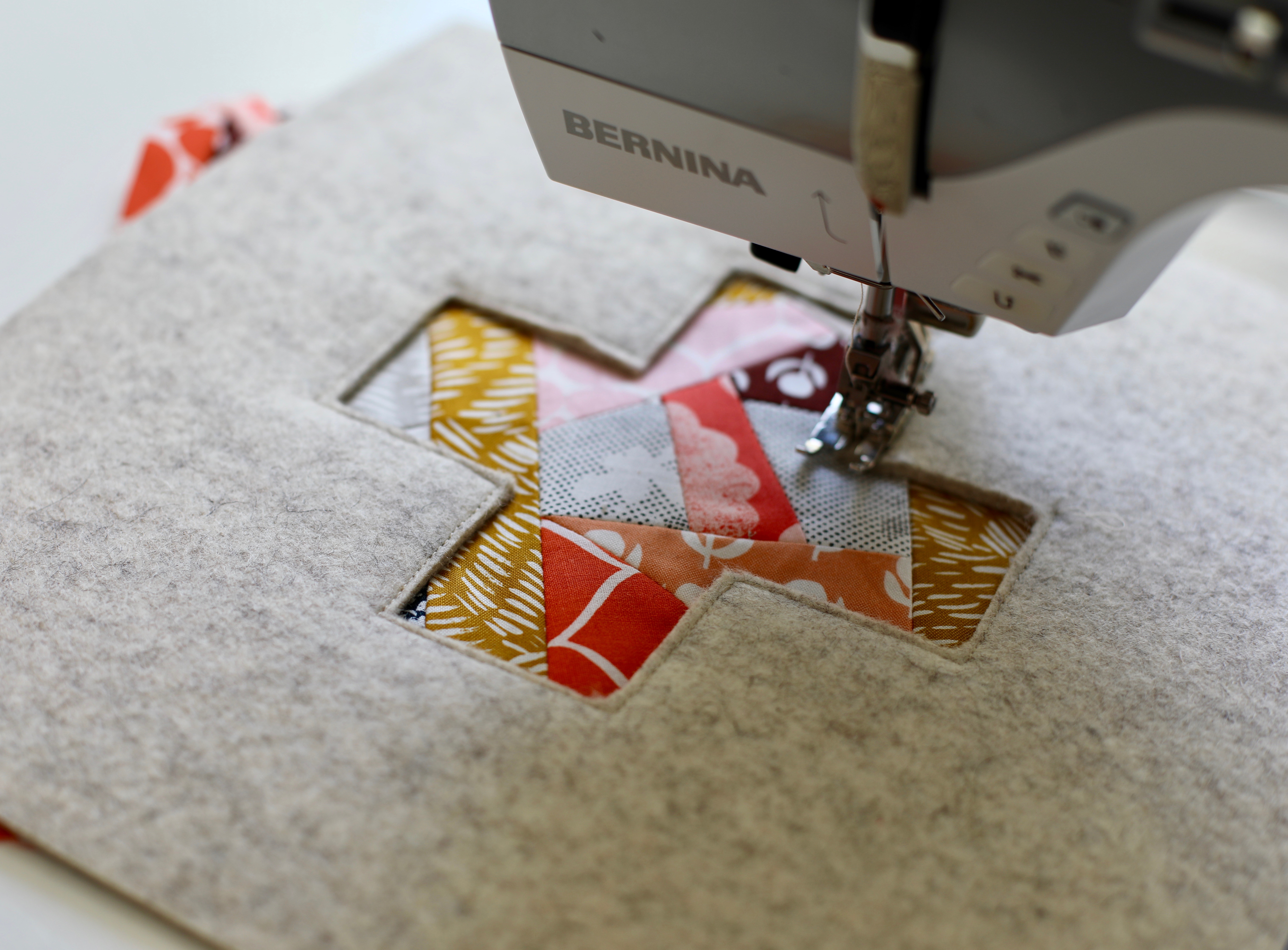
Choose a cut out motif that you will use on you front felt piece (in this example, I used a 6×6 inch red cross sign) , mark with your marker and cut out with an Exacto knife. In previous iterations of this design, I have used a circle, rectangle, lightning bolt and a combination of shapes that will show off the piece I plan to show off in the reverse appliqué.  Let your imagination guide you.

1S3A0178

1S3A0180

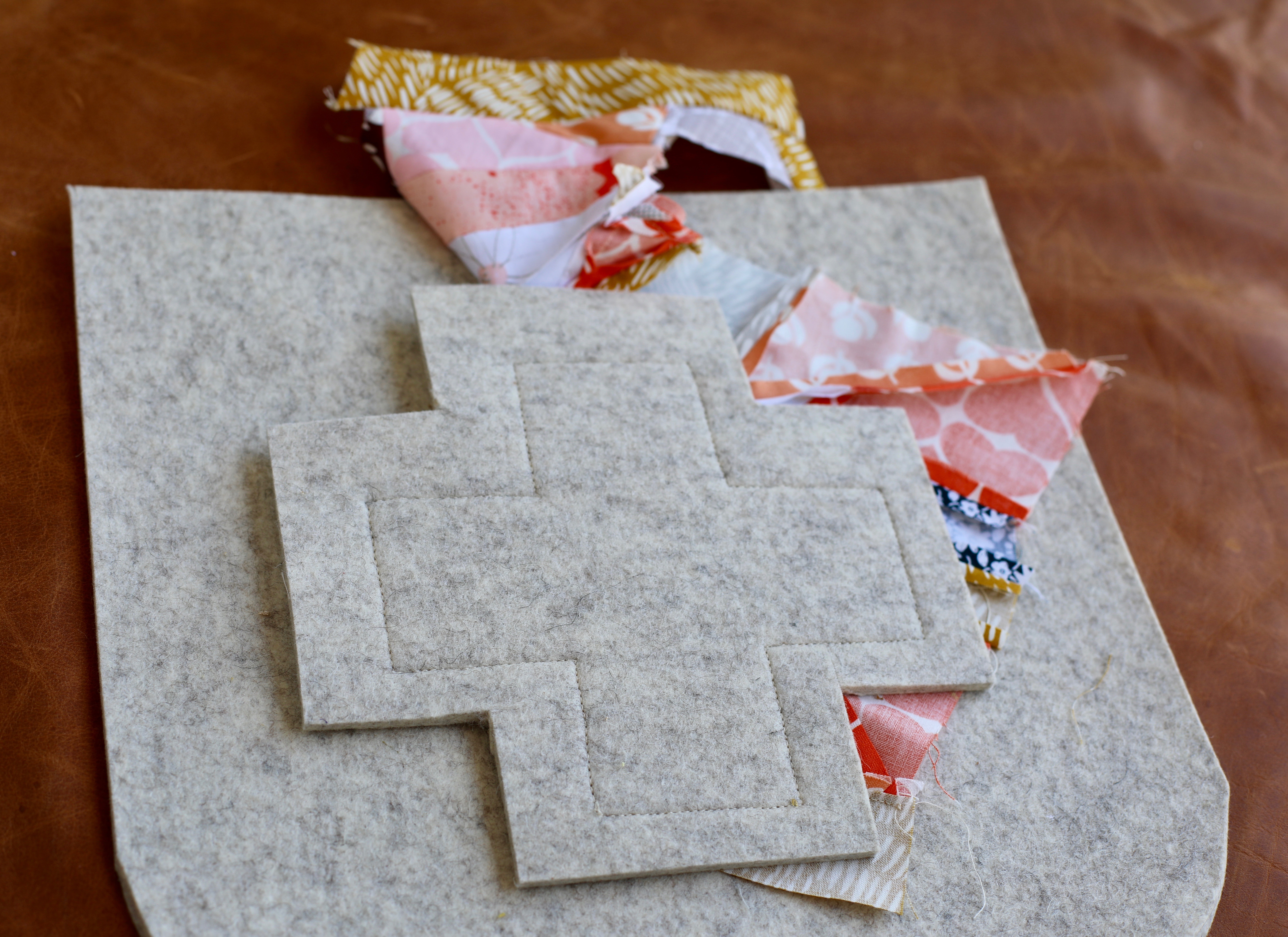
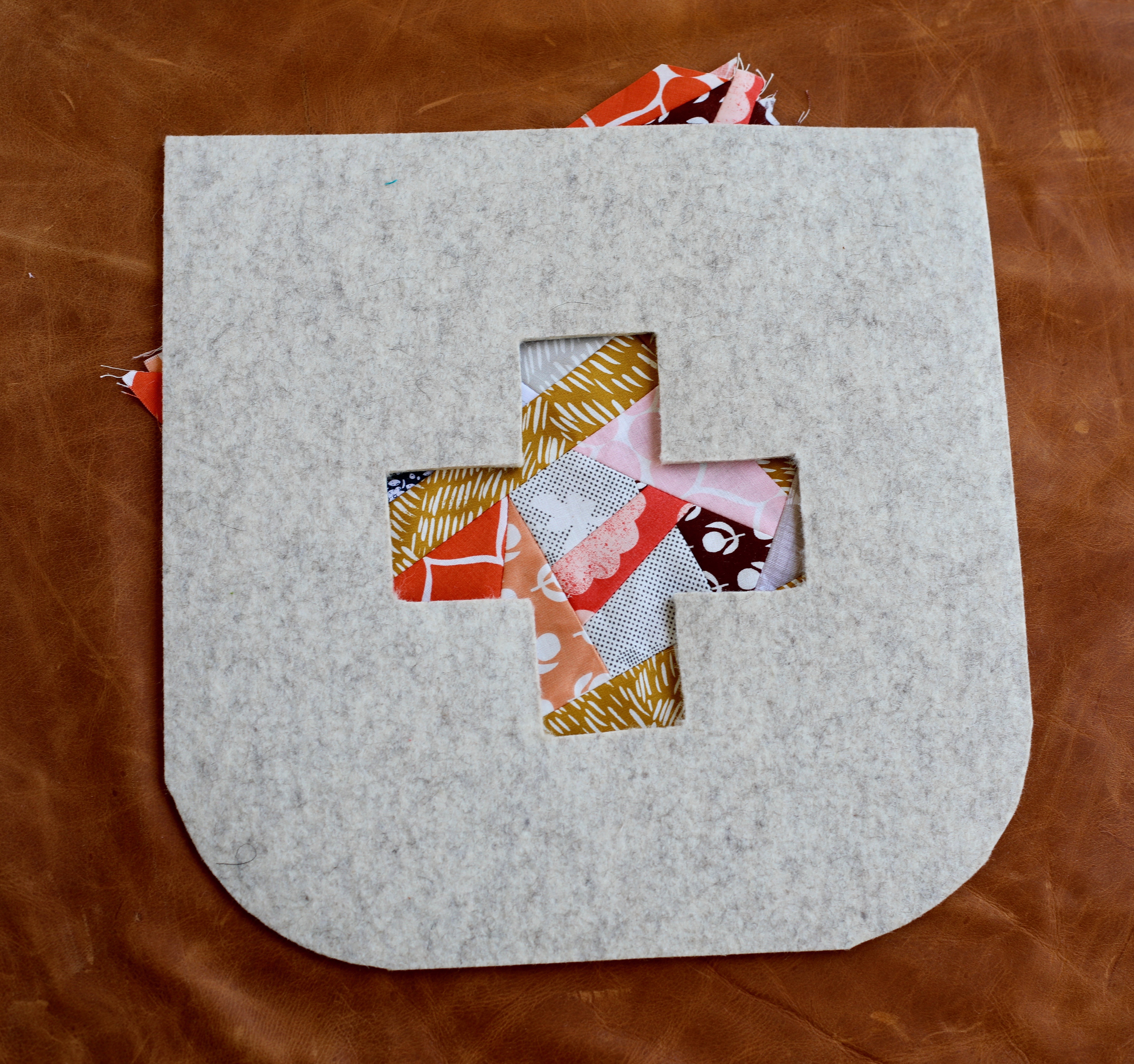
Once your motif is cut out in the felt, sandwich your block or textile between the front felt and the back extra felt piece centering them all as best you can.  You may use reversible tape to secure everything in place if needed.

1S3A0189

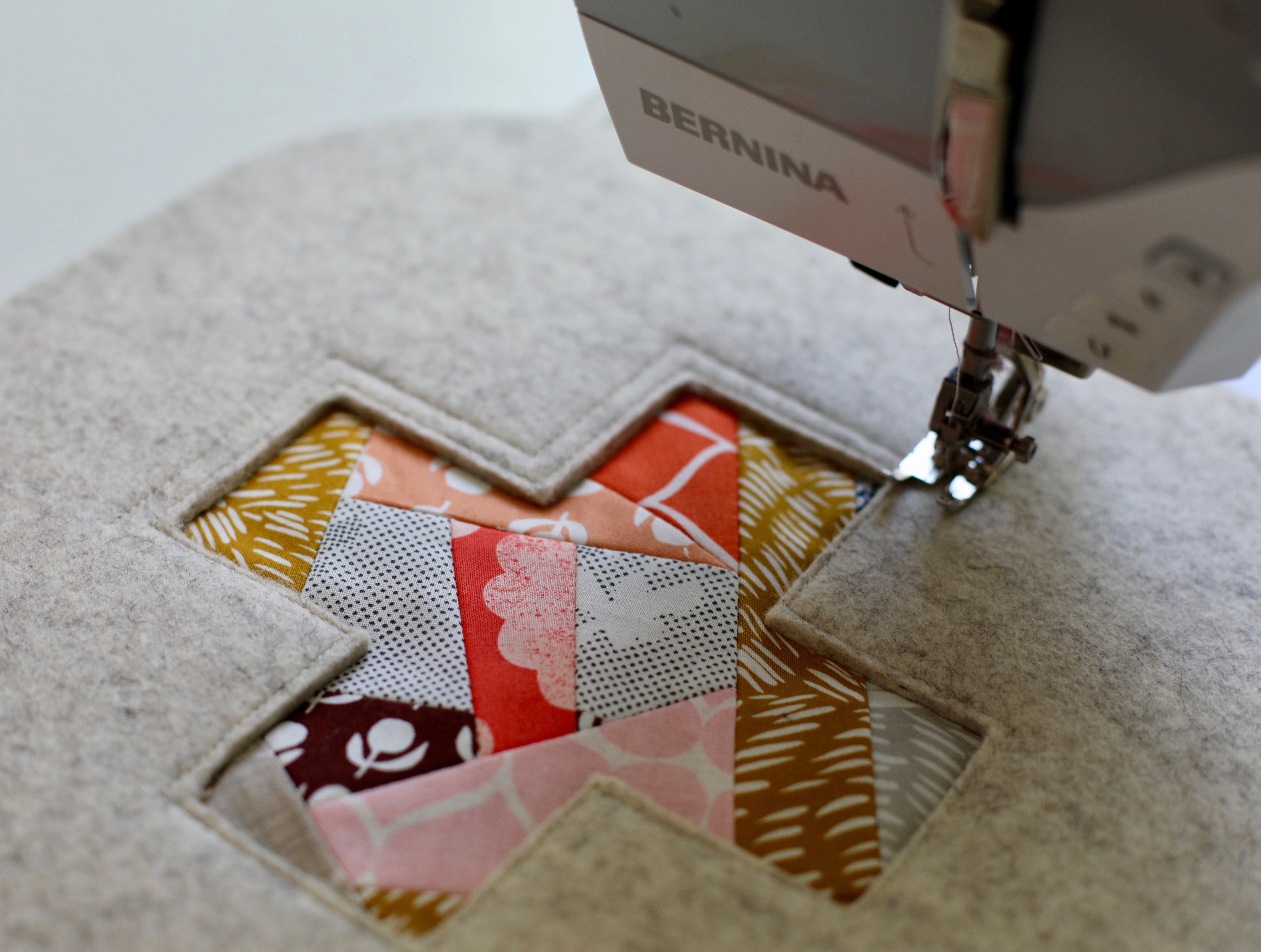
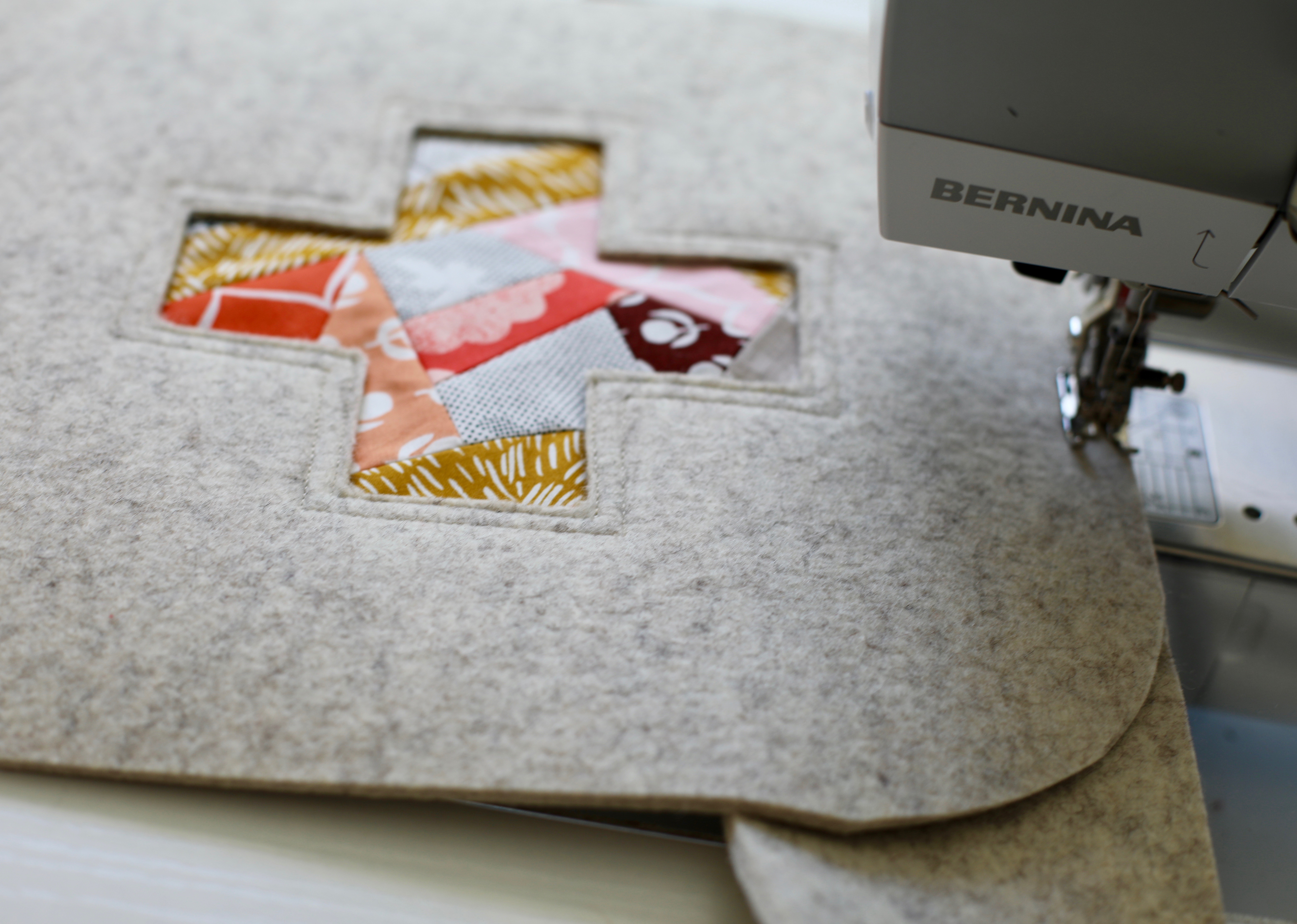
Stitch 1/8 inch around the reverse appliqué motif through all layers.

1S3A0193

Turn the whole piece to the back and trim away the extra fabric.

1S3A0196

1S3A0198

Further secure them all together by stitching 1/4 inch again around the block                 through all three layers.

1S3A0201

1S3A0205


Step 3: Sew the Bag Pieces Together

The seams on this bag are all to the outside and there are only two of them.  SO SIMPLE!

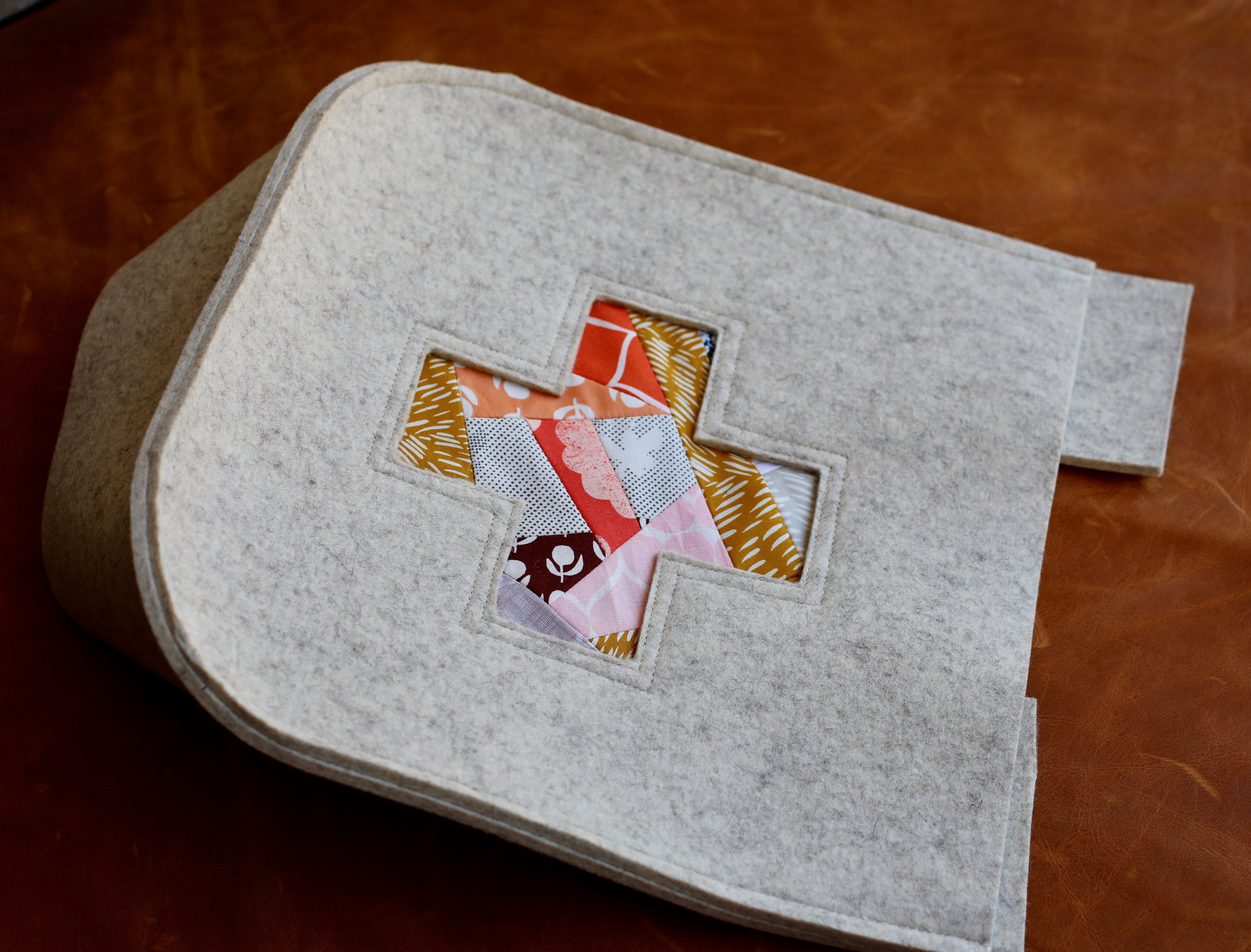
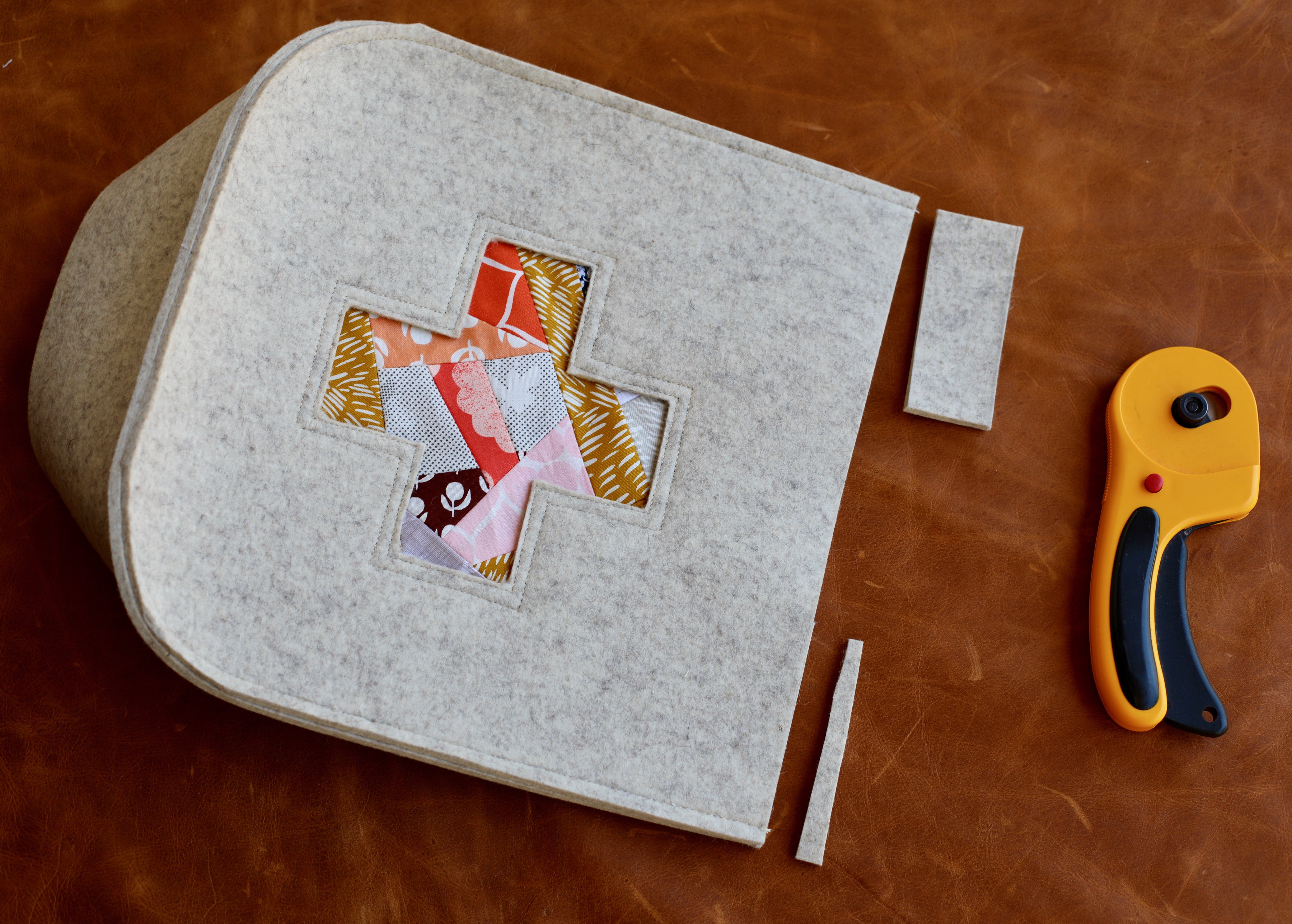
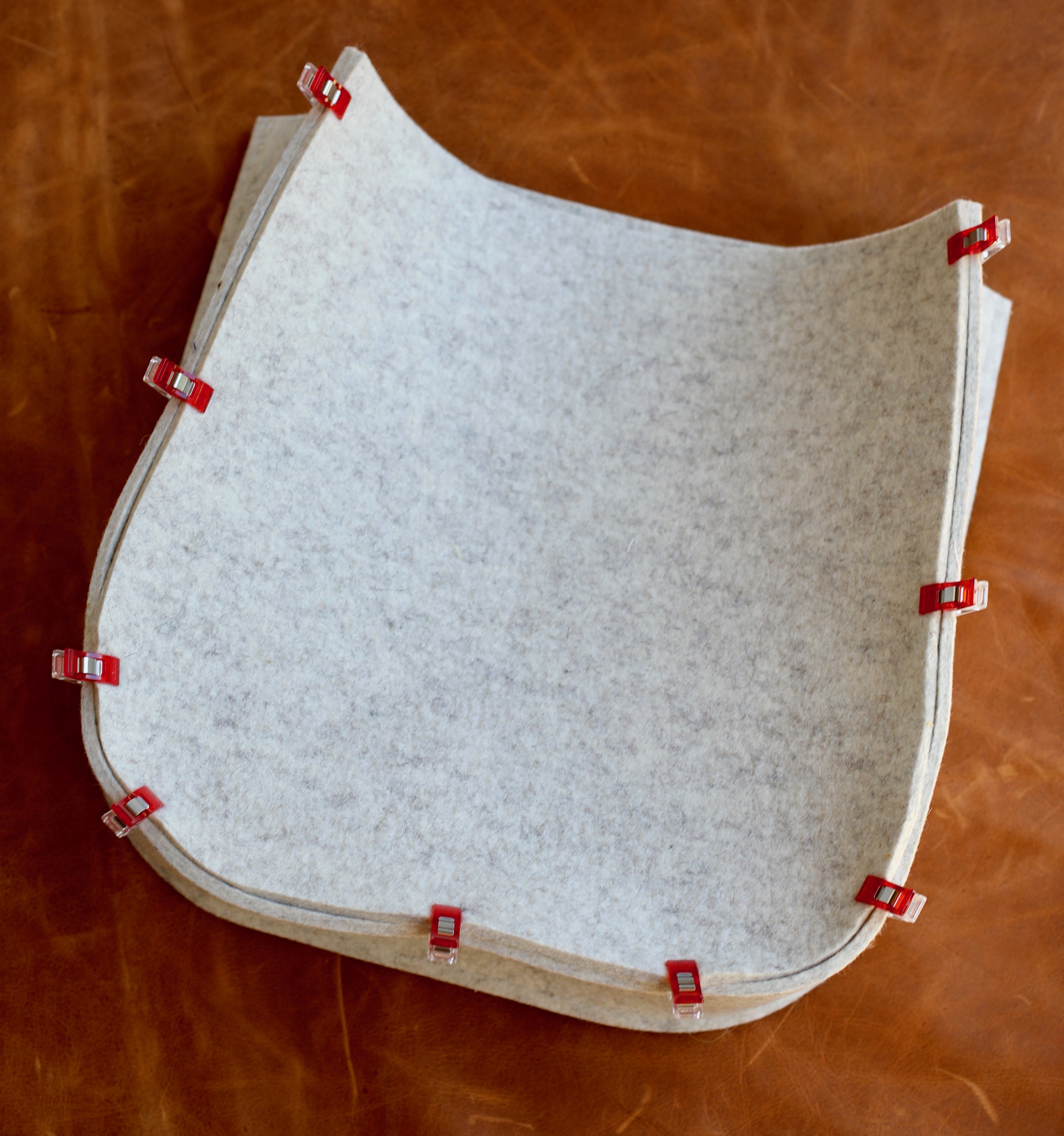
Wrong sides together, using a 1/4 inch seam allowance, sew the front felt piece to the long side piece.  Trim any extra felt that is hanging off the top.  (Of note, I do not use clips or needles when sewing this first seam but just guide it as I go around the corners.  For the second upcoming seam I use a lot of clips)

1S3A0211

1S3A0213

1S3A0217

Wrong sides together and using a 1/4 seam allowance, sew the back felt piece to the side piece.

1S3A0221

1S3A0230


Step 4: Attach the Handles

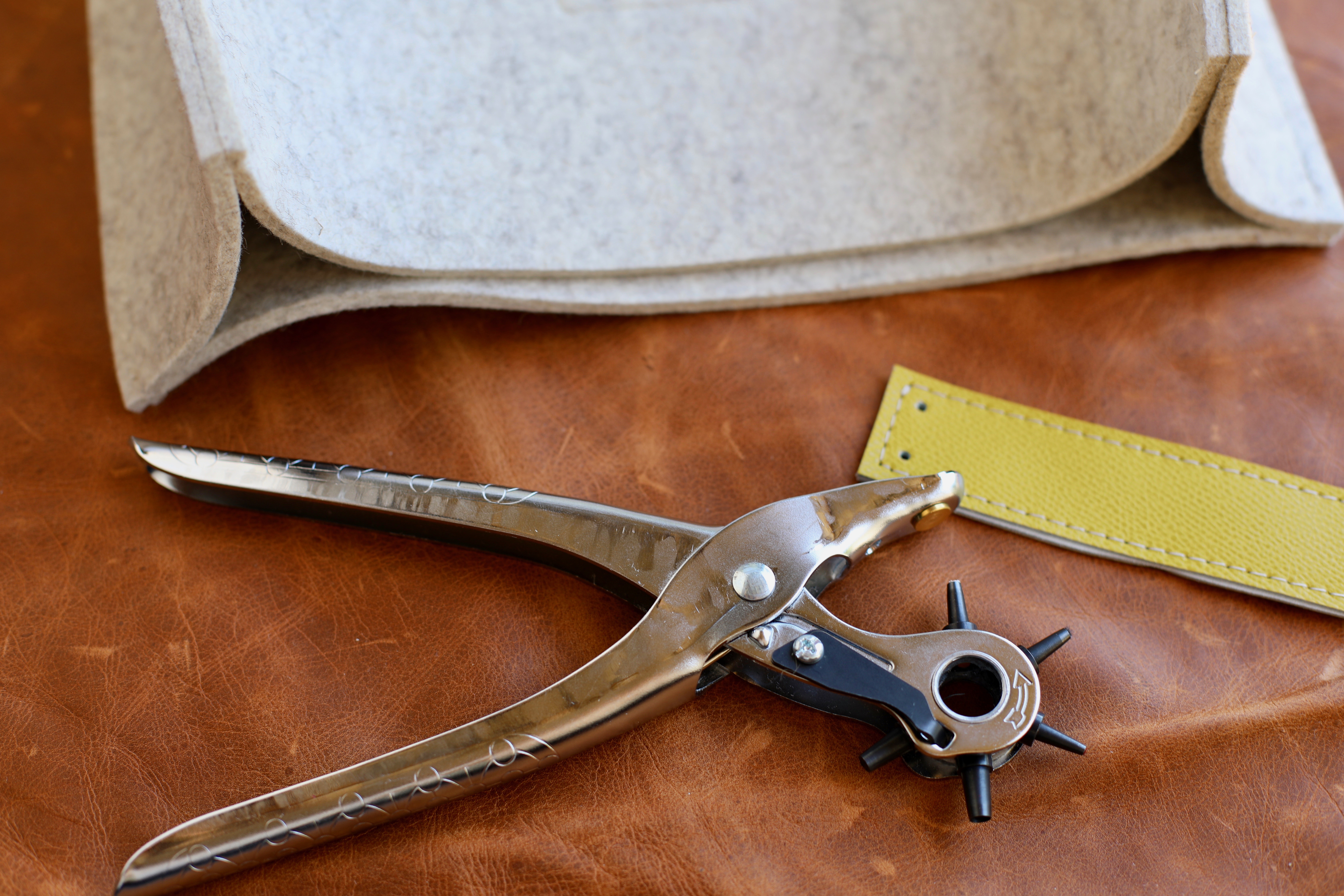
Using your hole punch, punch two holes along the horizontal bottom of each end of the handles about 1/4 inch in from sides and bottom.

1S3A0232

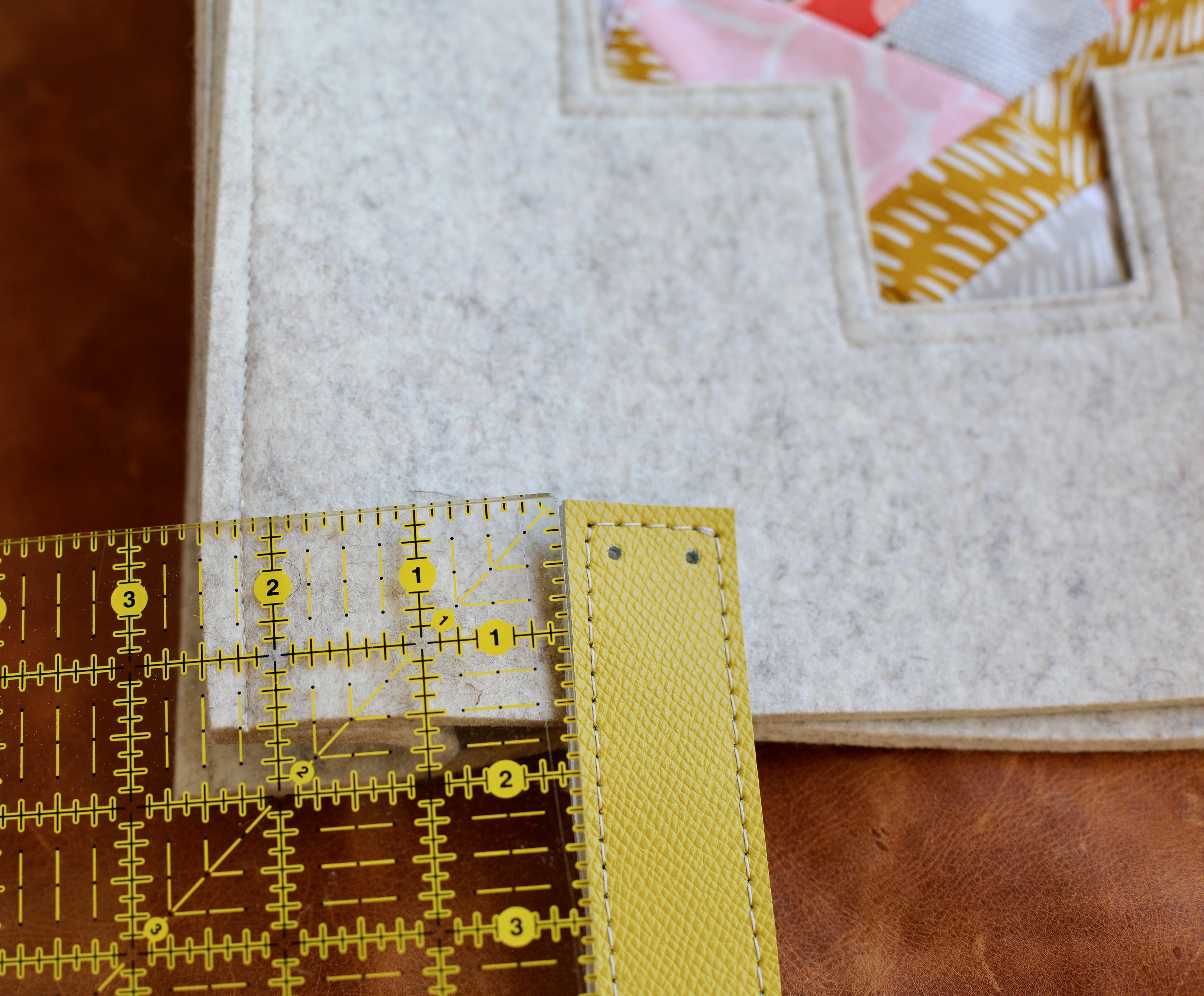
Set your ruler 2 ½ inches from the side and 1 ½ inch from the top.  Align your bag handle at the edge and mark the handle holes on the felt with your marker.

1S3A0234

Using you hole punch, punch holes at these marked sites and attach your handles to the bag with rivets.

1S3A0235

1S3A0259.jpg

1S3A0267

Congratulations On Your New Bag!

Tag me @entropyalwayswins on IG and use the hashtag #themetrotote so I can see your beauties.

Best!

Hillary
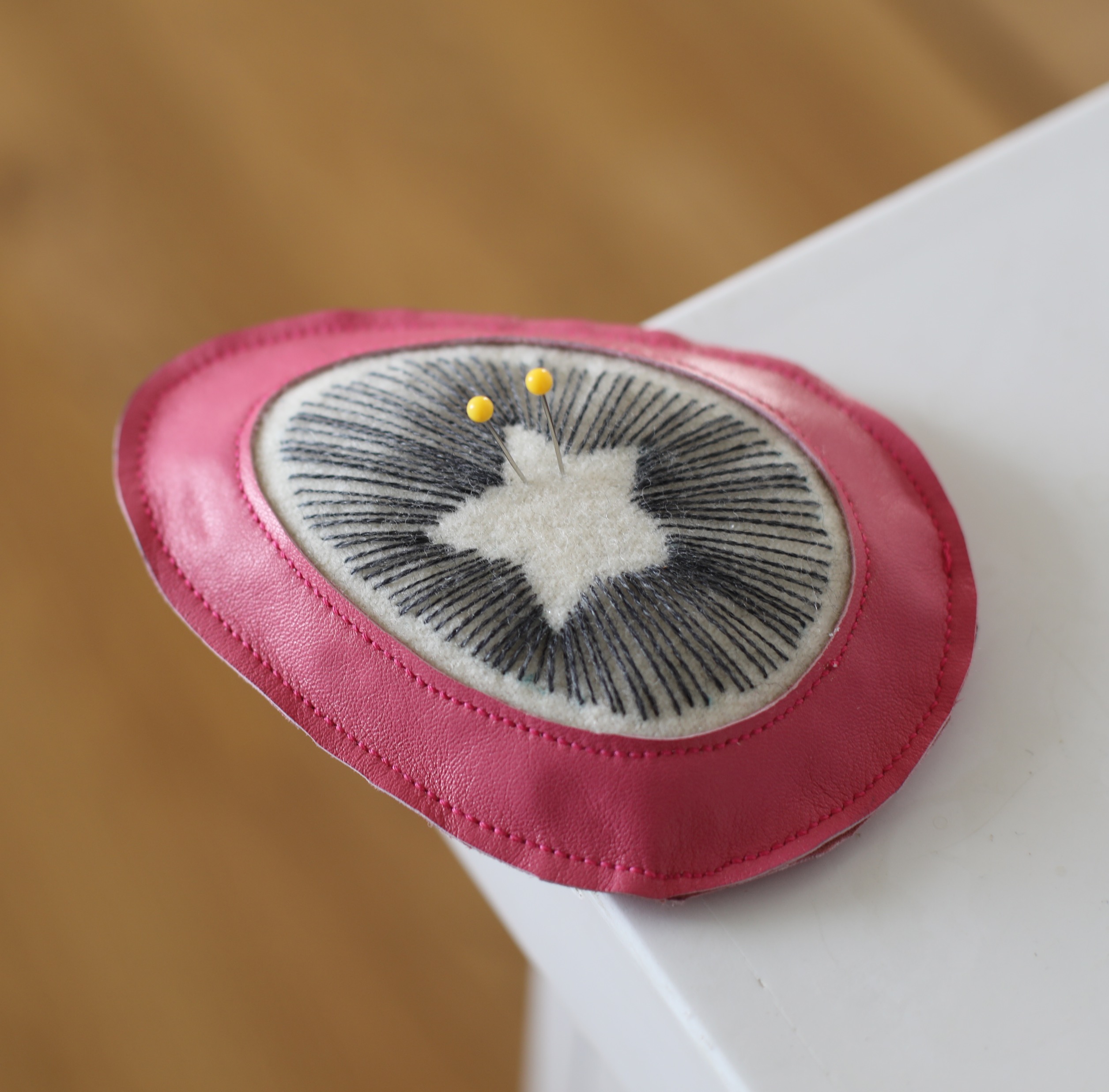
Easter Egg Pincushion Tutorial by Hillary Goodwin and Kitty Wilkin

IMG_4714

IMG_6666-3

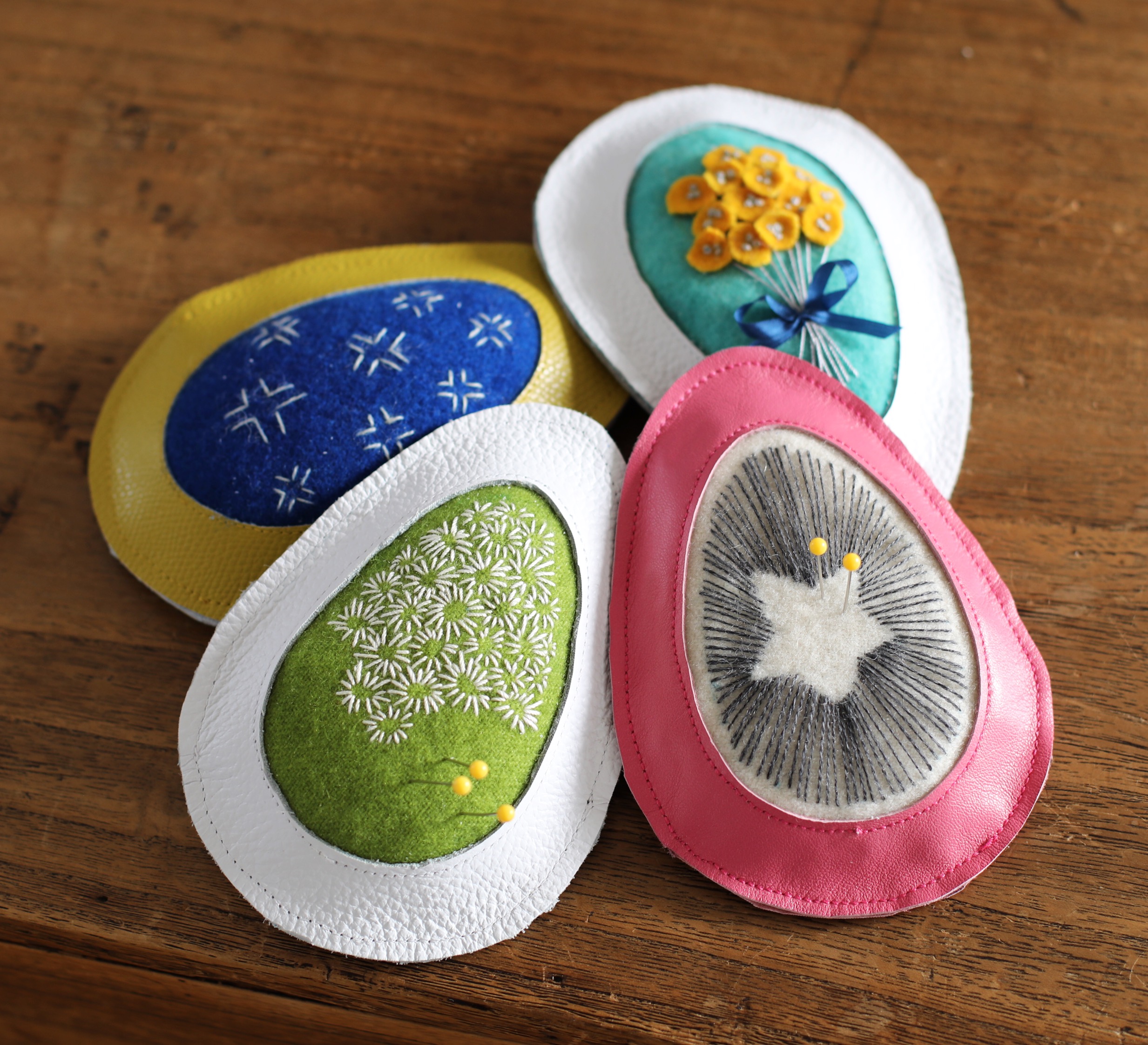
Recently Kitty (Night Quilter) and I had the opportunity to meet in person after following each other’s work online for years.  Both loving embroidery, repurposing textiles, creativity and the sewing community in general we plotted a tutorial that would allow us to play off each other’s creative personality and engage the greater sewing community as a whole.

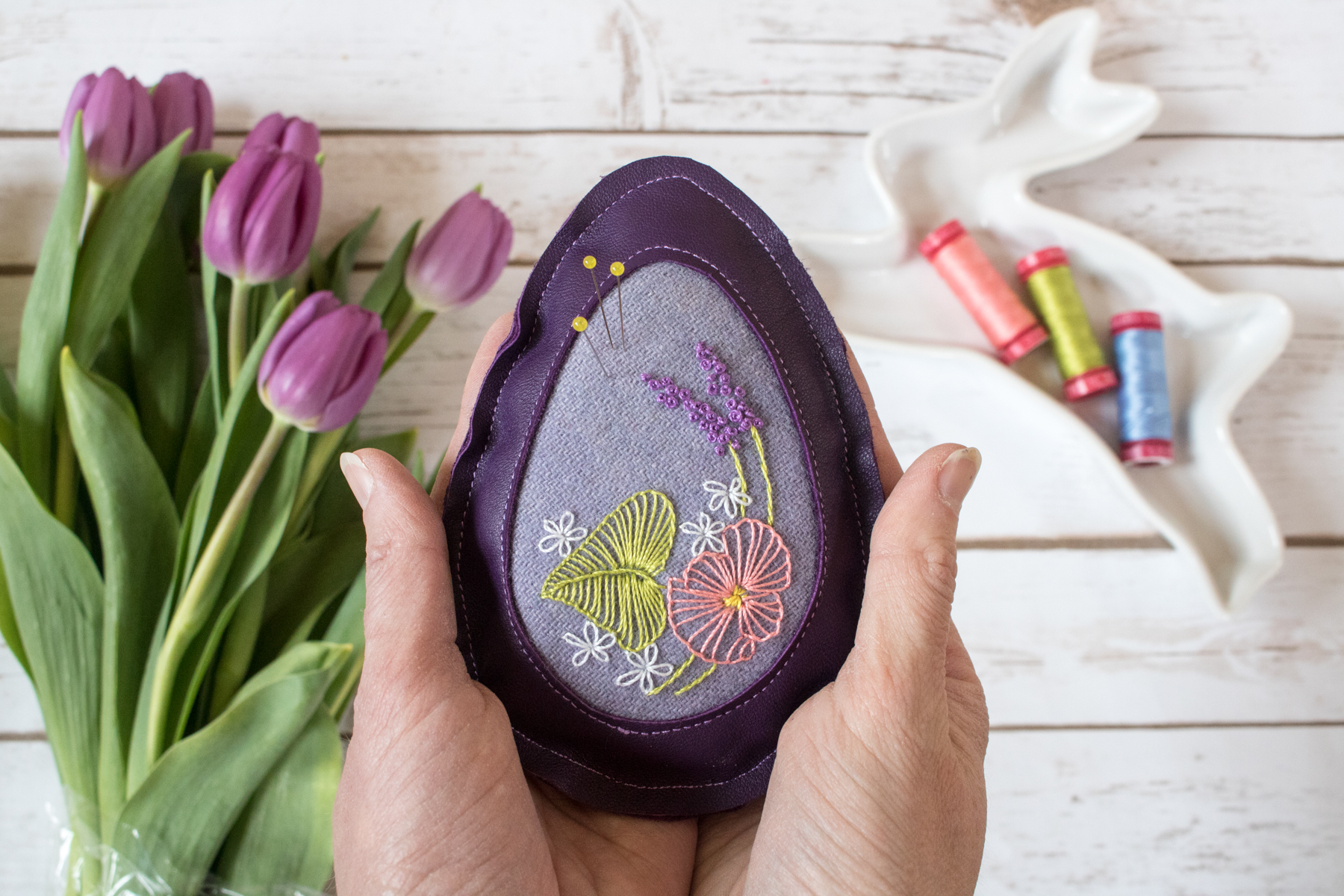
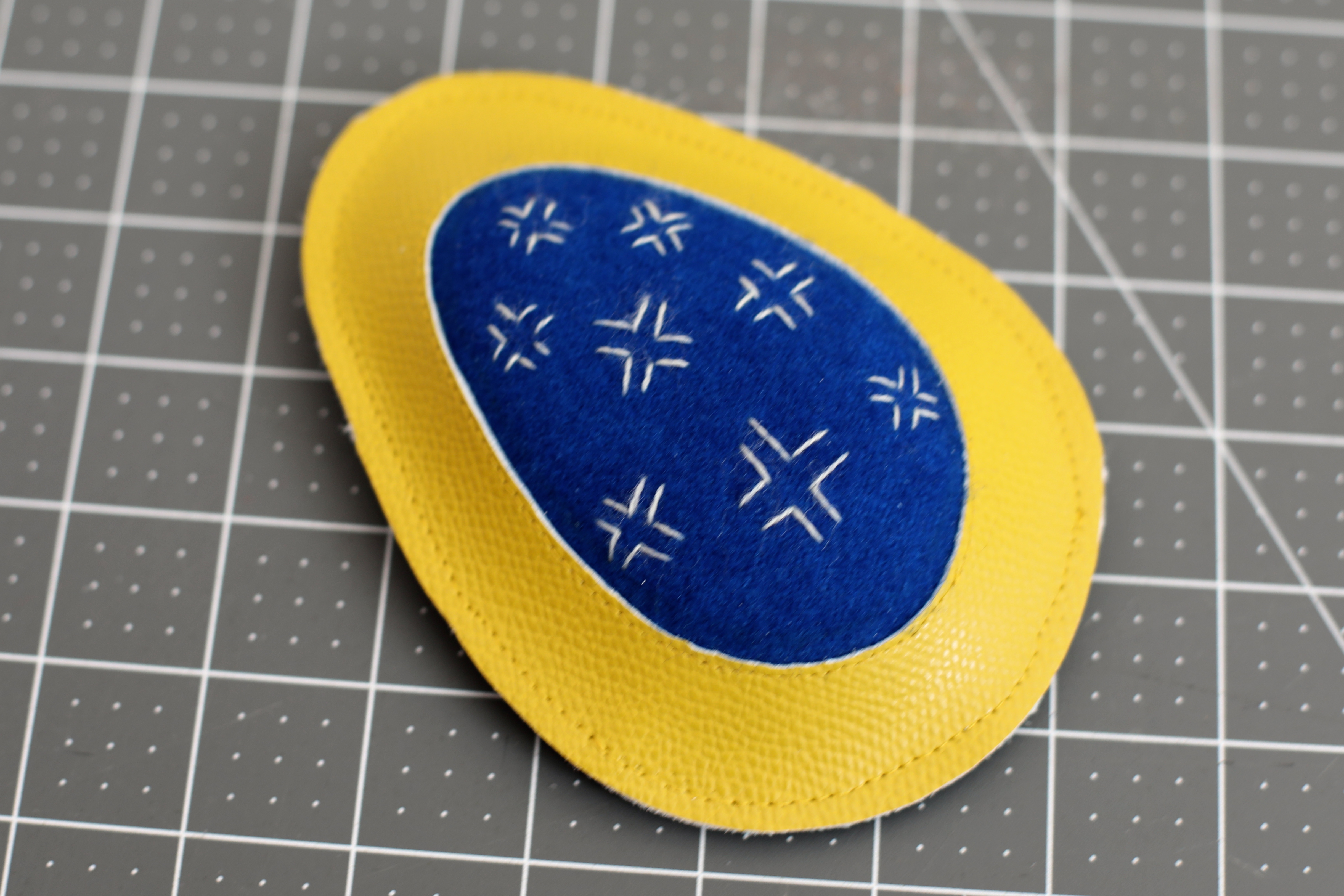
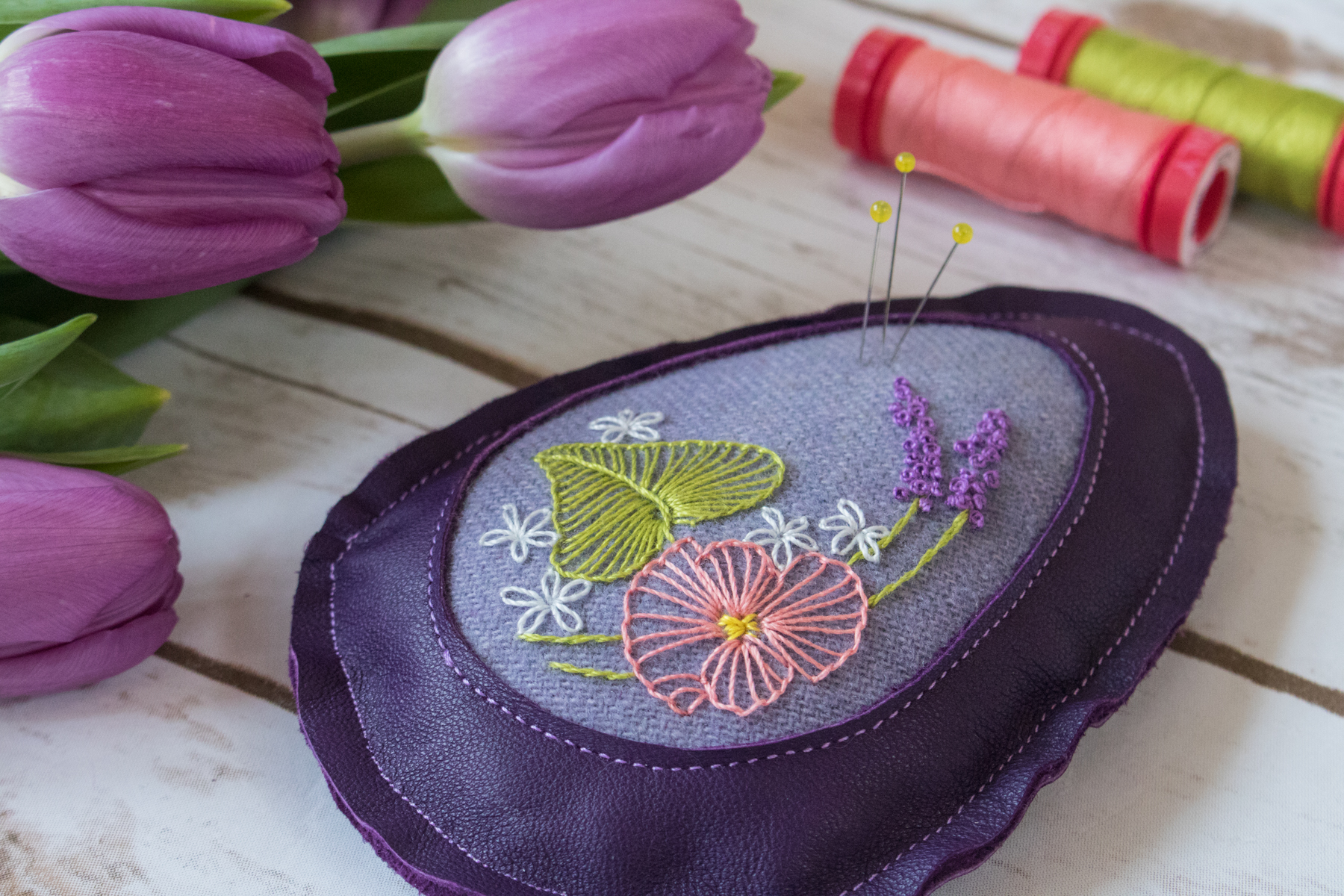
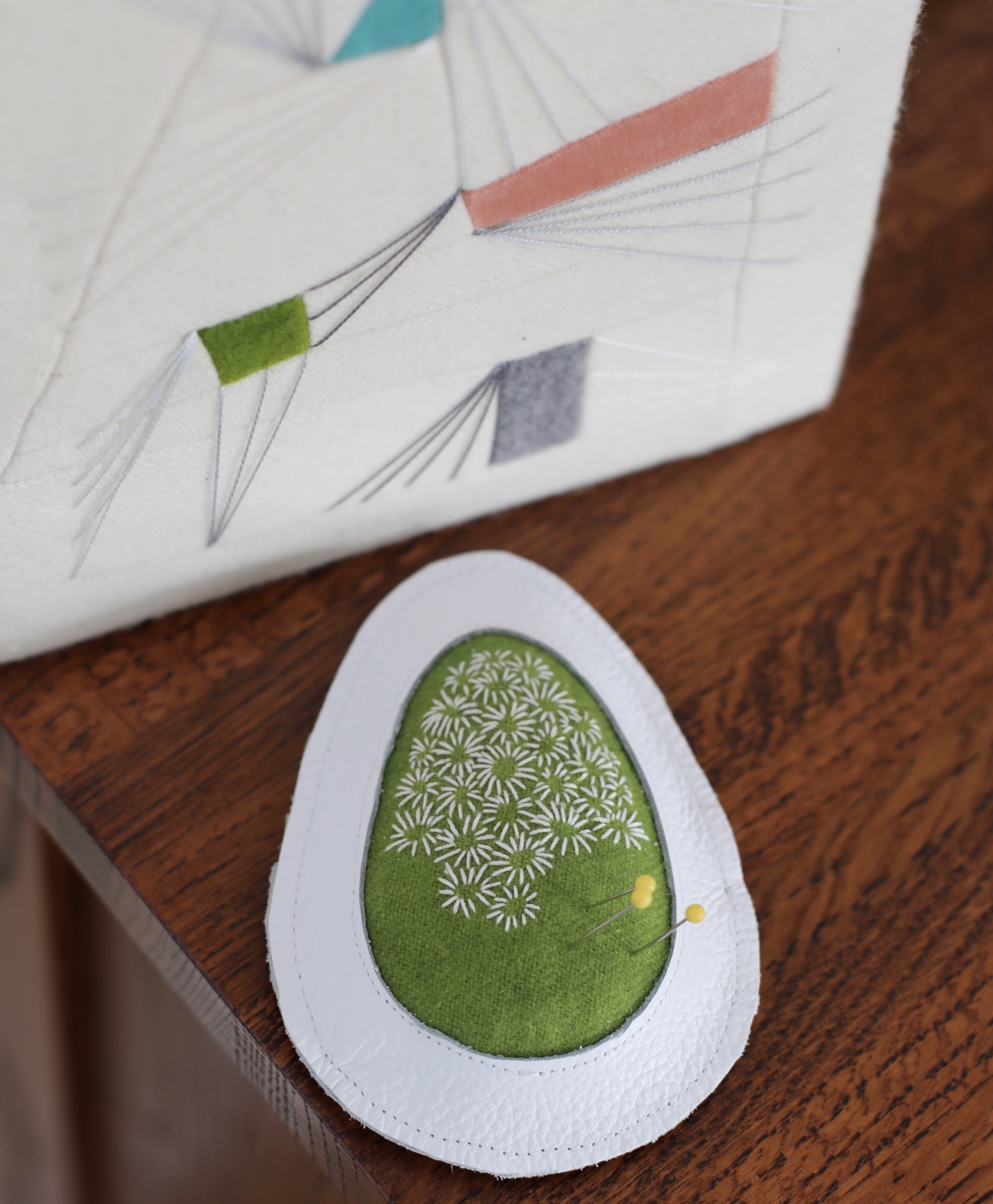
A year ago I made an Easter Egg shaped pincushion out of velvet and repurposed leather.  We expanded on this idea and invite anyone who wants to participate to make a similar pincushion and, if interested, incorporate repurposed leather (Earth Day is coming up after all, and repurposed leather is typically thin enough to easily sew on a domestic sewing machine. Be bold. Be brave. Let’s sew leather!).

In this tutorial we give everyone some guidelines but the emphasis is PLAY and MAKING THIS PROJECT YOUR OWN.  Don’t celebrate Easter?  No biggie, make a similar pincushion in another shape.  We will be following on Instagram so please tag your makes #eastereggpincushion (as well as tagging @nightquilter and @entropyalwayswins) so we can all enjoy.  To celebrate this group project we will both randomly be giving participants some of our own pincushions as well as supplies to make them. All you need to do to be eligible is to play along, tag us, and tag #eastereggpincushion so that we can find you!


Suggested Supplies

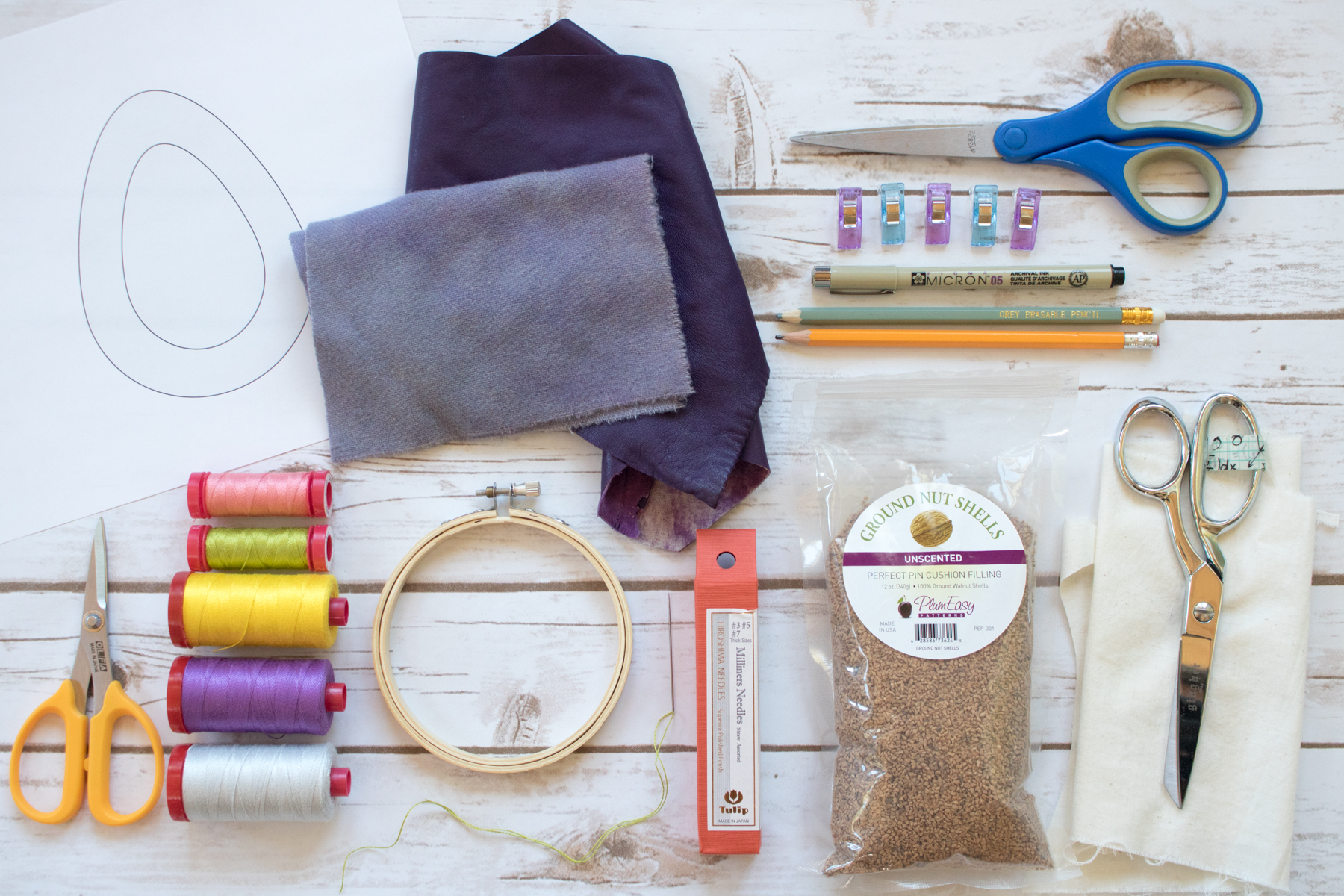
Thin leather (~6×12 inches)

Wool felt, velvet, jeans or any other material for the inner portion of the pincushion (~6×6 inches)

Embroidery hoop (a 4” hoop will *just* fit the inner egg)

Egg Pincushion Template (print HERE) (note updated the pdf 3/20/2017)

Embroidery thread (embroidery floss, perle cotton, or 12wt thread works. Use what you have!)

Embroidery or other needle (Kitty uses Tulip size 3 milliners)

Double sided fabric tape or fabric glue (optional)

Sewing machine with a walking foot

Leather sewing machine needle 

Thread (Kitty and Hillary used 40wt Aurifil thread)
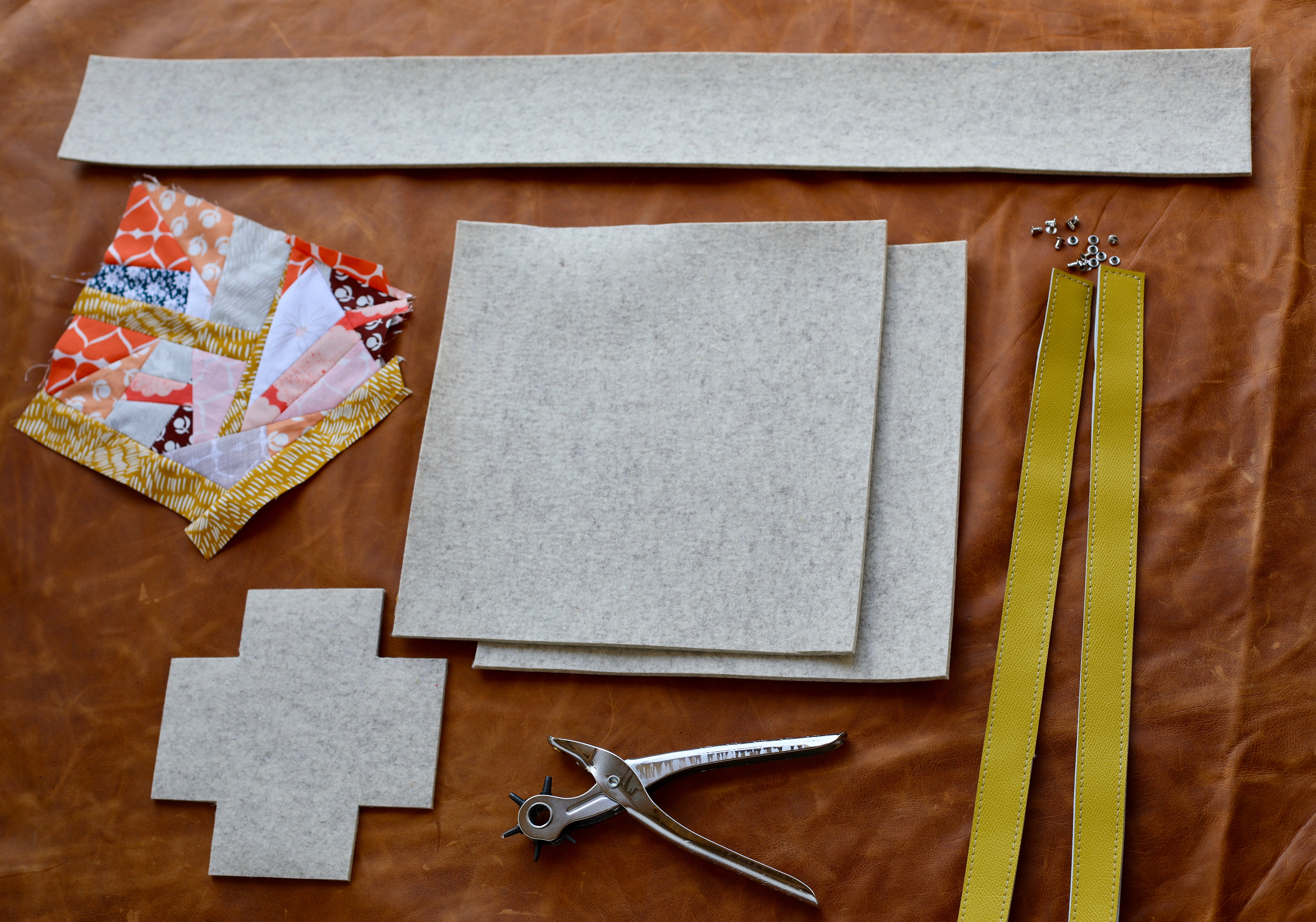
Chalk or other removable marker 

Muslin or other scrap fabric (6×12 inches)

Craft clips (both Clover wonderclips or Evergreen Art Supply craft clips work great)

Small Funnel

Crushed Walnut shell or other favored pincushion fill

IMG_6548

Step 1: Templates and Leather

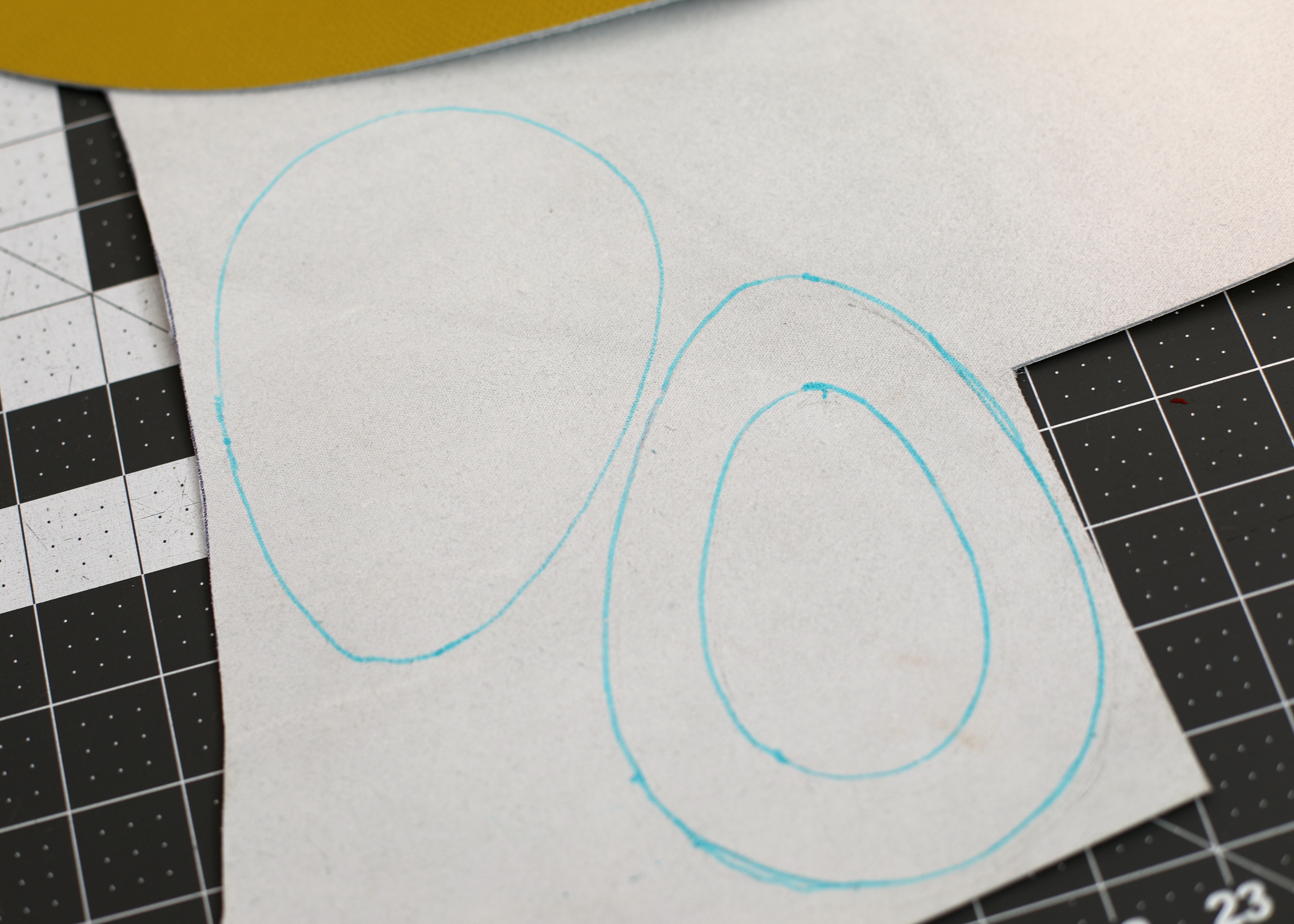
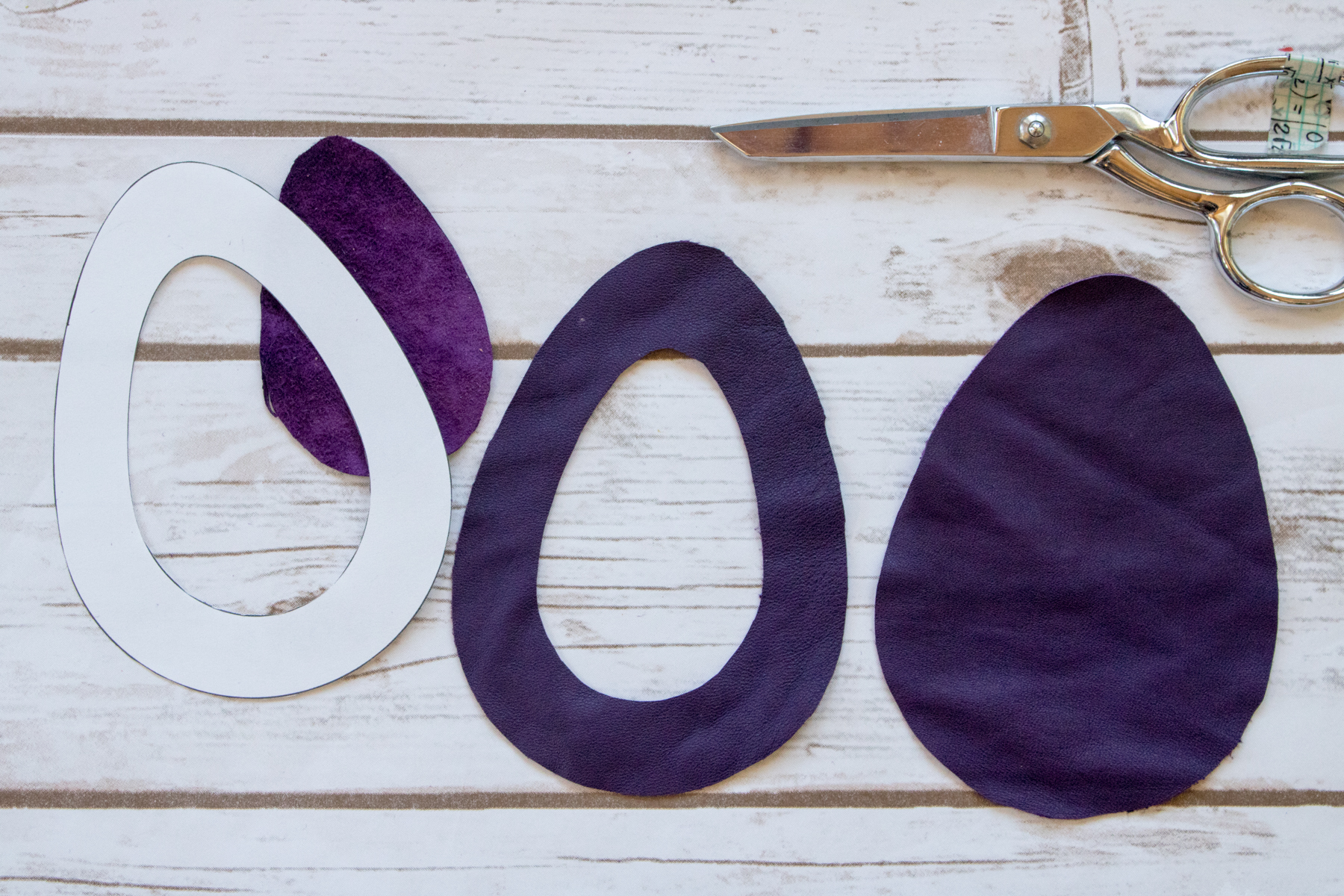
Print the Easter Egg Pincushion HERE and cut along both inner and outer egg outlines.

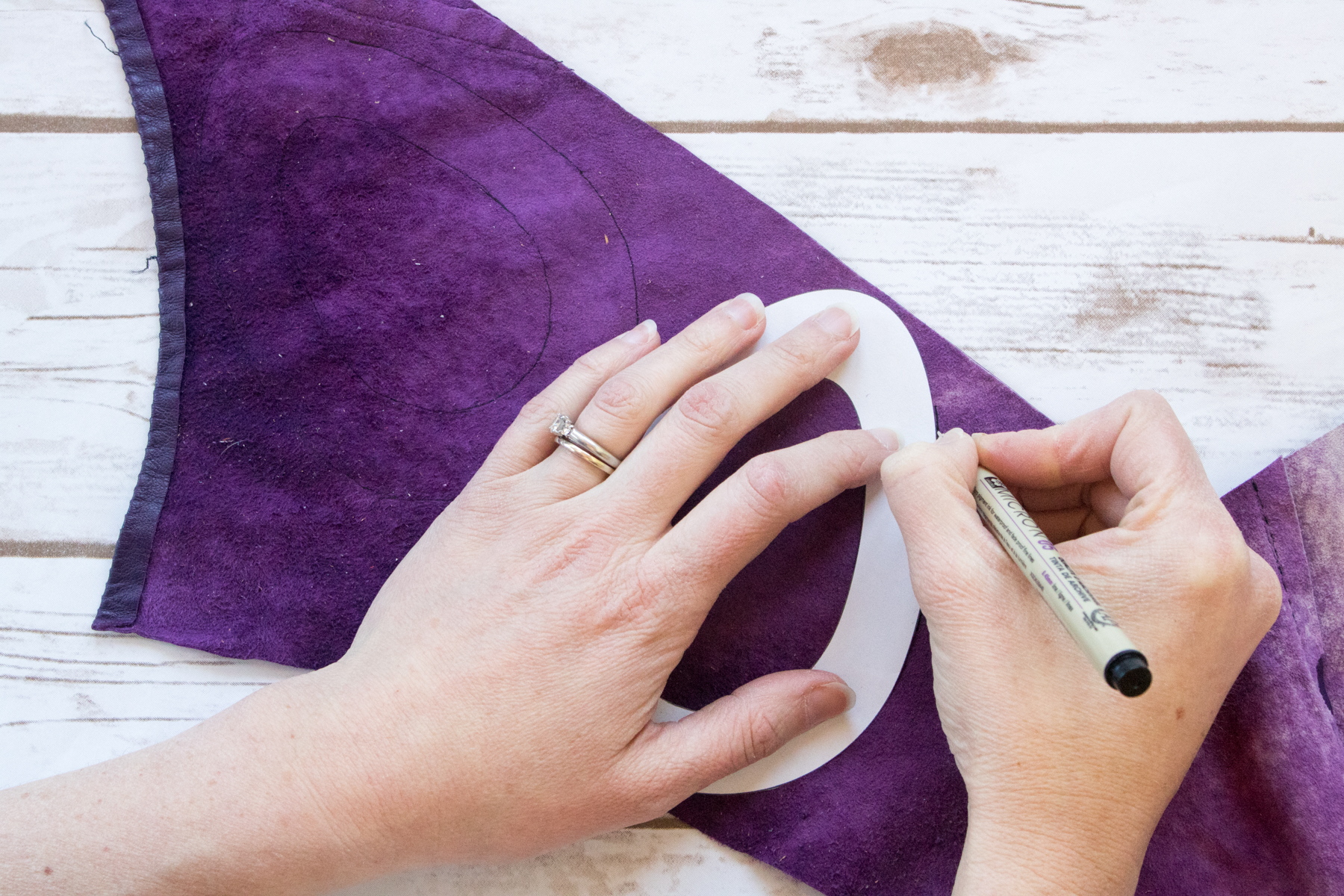
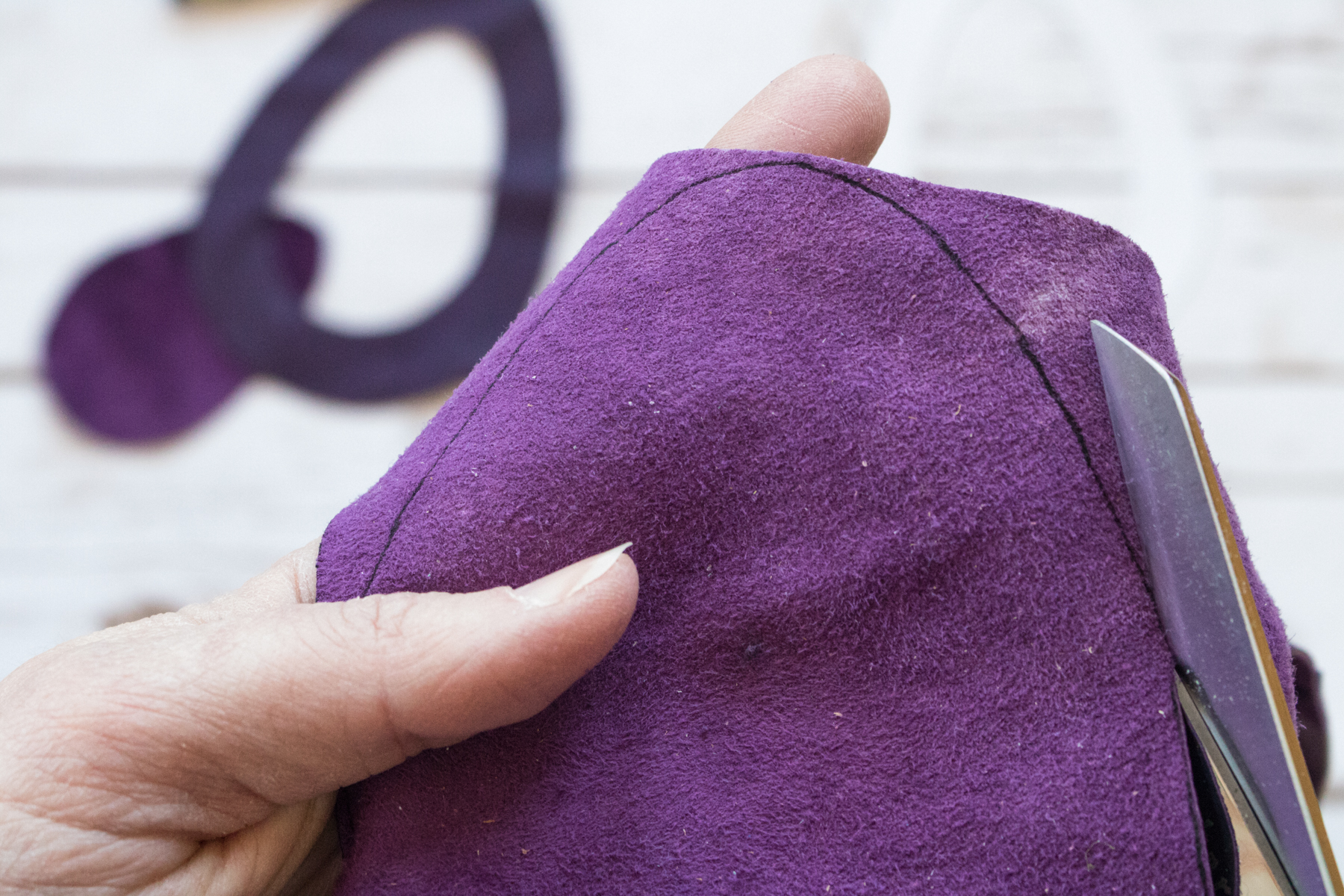
Trace the template onto the wrong side of the leather, marking out two eggs–one with only the outline and one with both the inner and outer lines drawn. Carefully cut along the marked lines, remembering to cut one piece along only the outer egg outline and cut the other piece along both the inner and outer egg outlines. Set your leather pieces aside.

1S3A9202

IMG_6554

IMG_6558

IMG_6560

Step 2: Embroidery

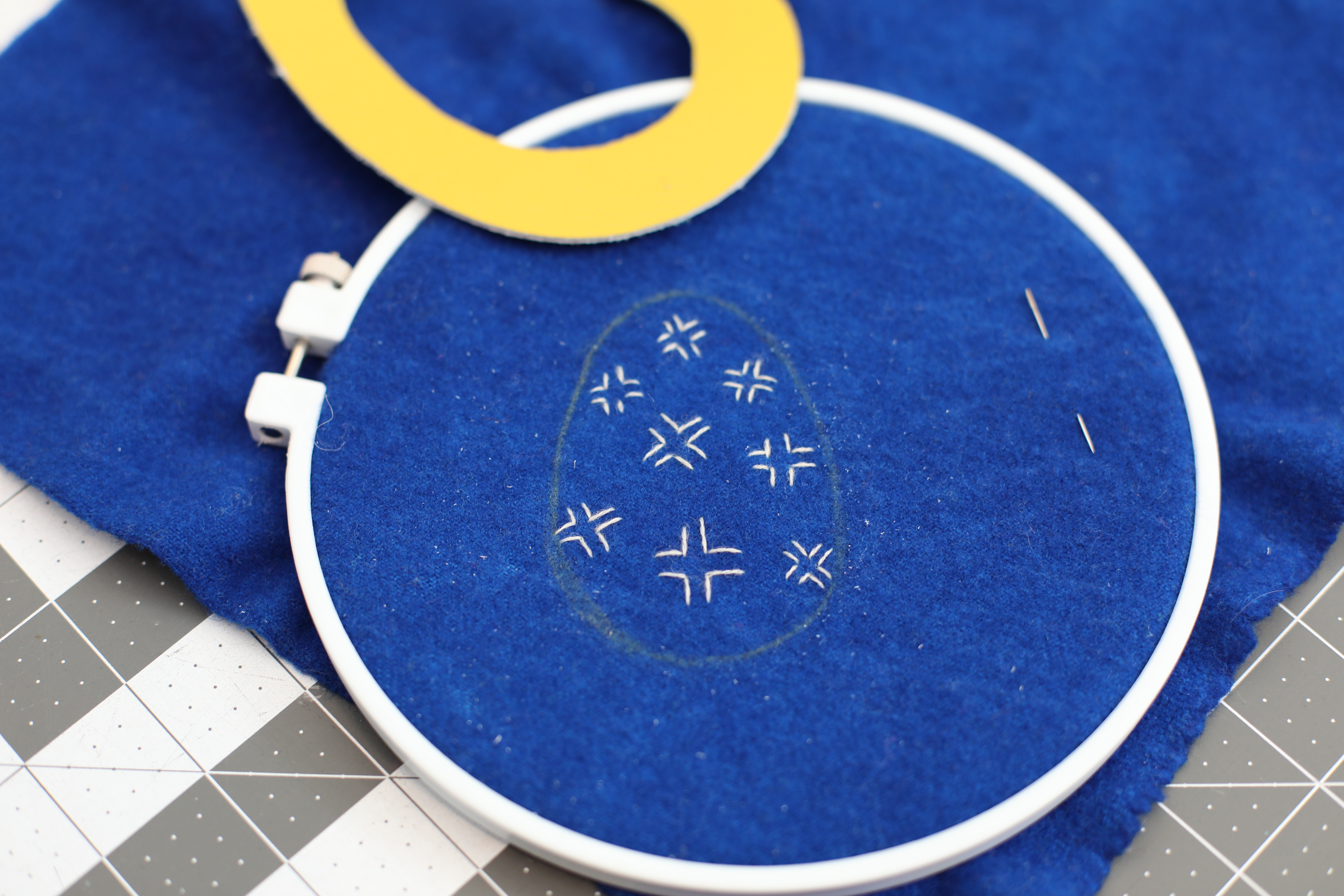
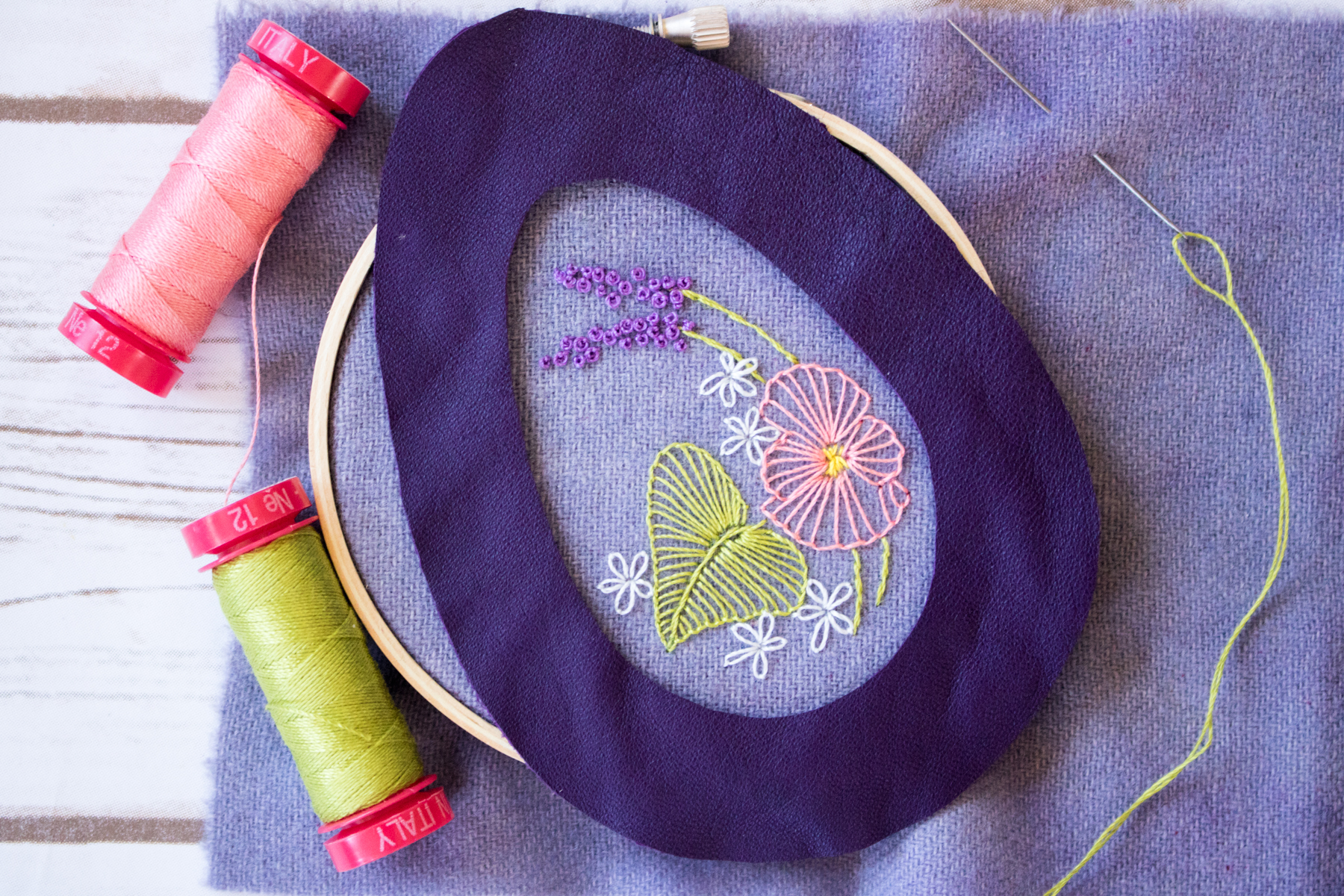
Using chalk or water soluble marker, trace the inner egg outline onto on your embroidery surface (felt, velvet, jeans, etc) so you will know the limitations of your embroidery design.  Adorn at your heart’s desire with embroidery, applique, etc.  You are welcome to copy our experiments but please feel free to try your own ideas.

1S3A9208

IMG_6578

Step 3: Attach the Embroidery to the Leather Upper

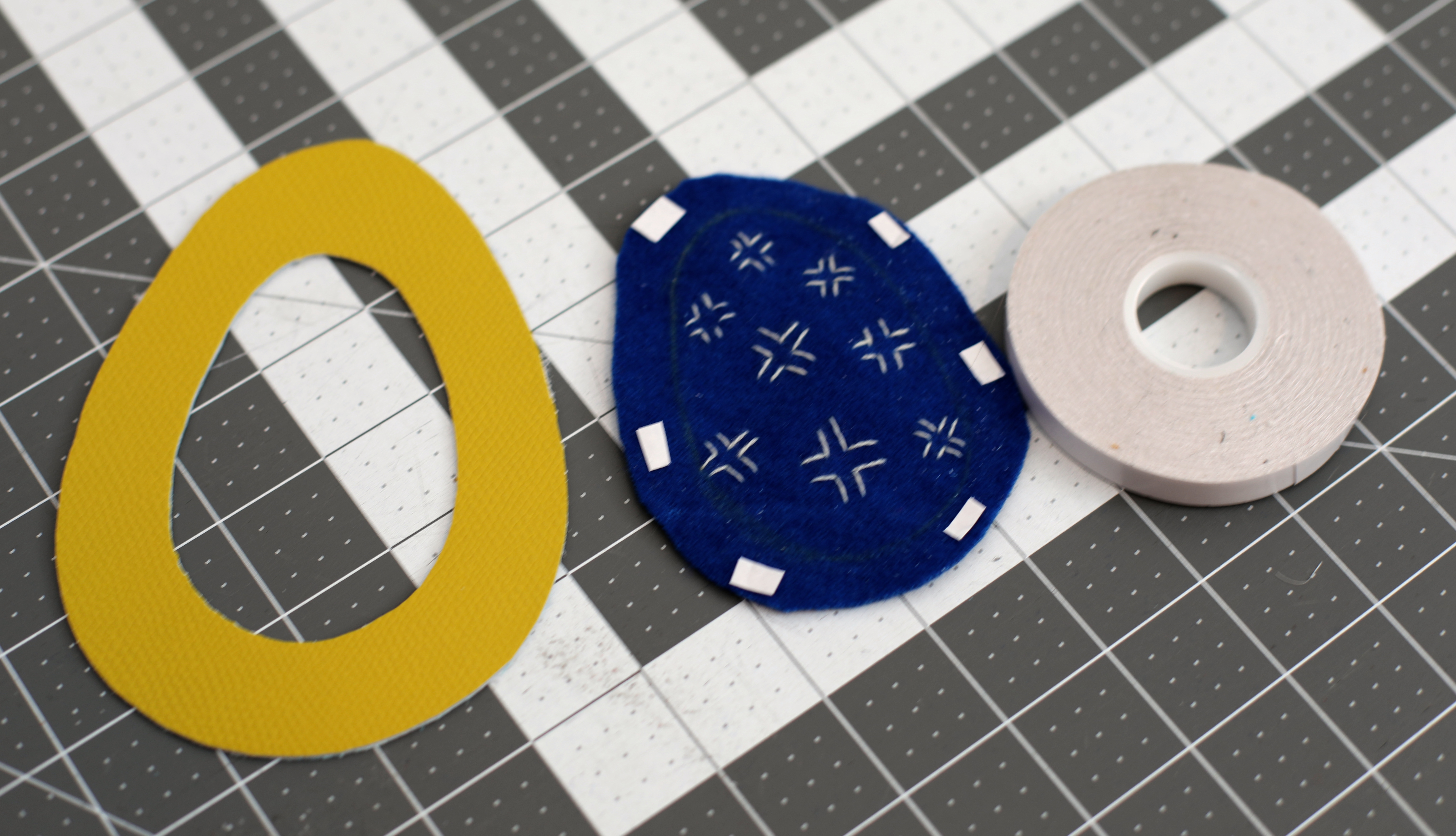
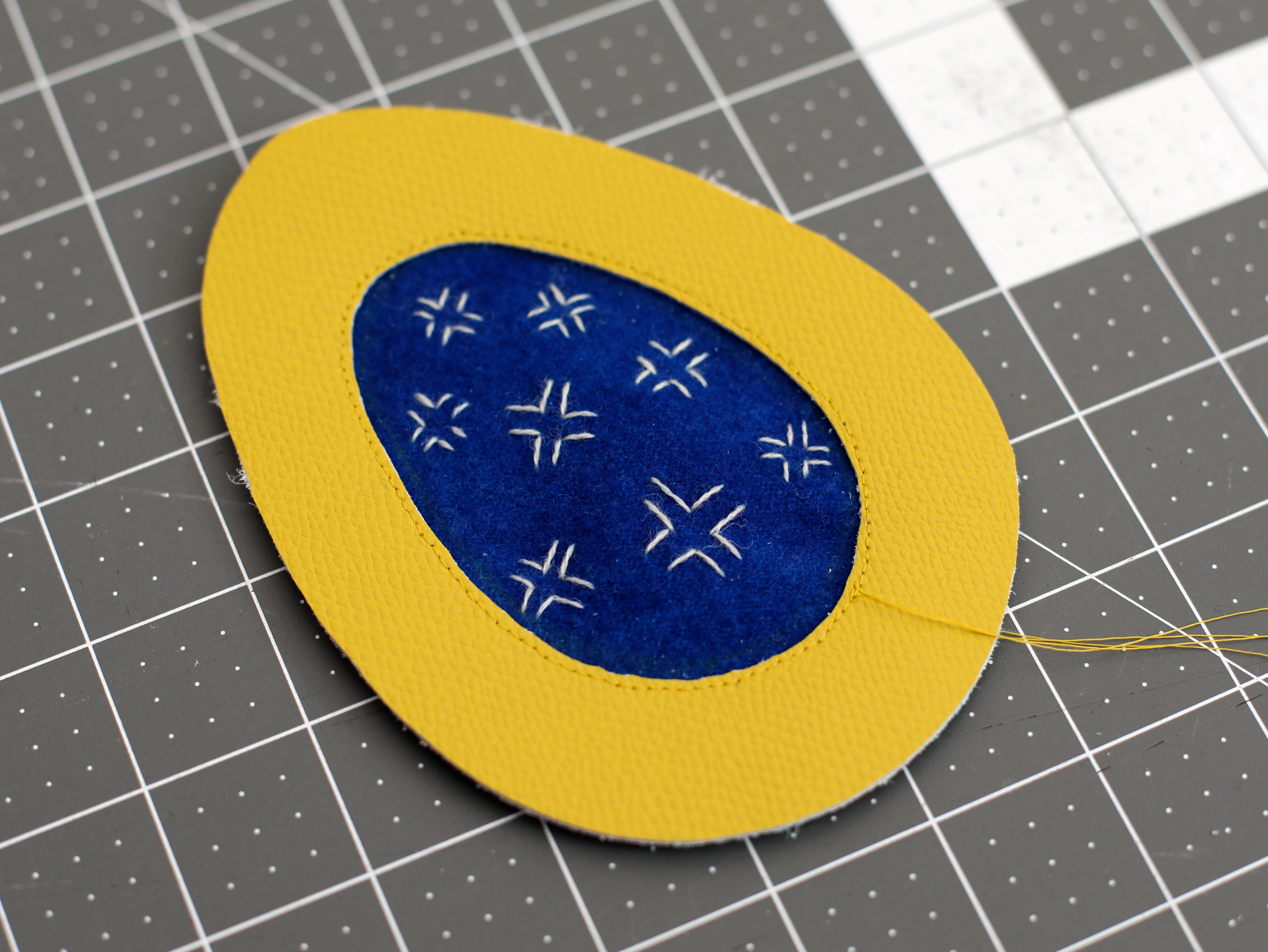
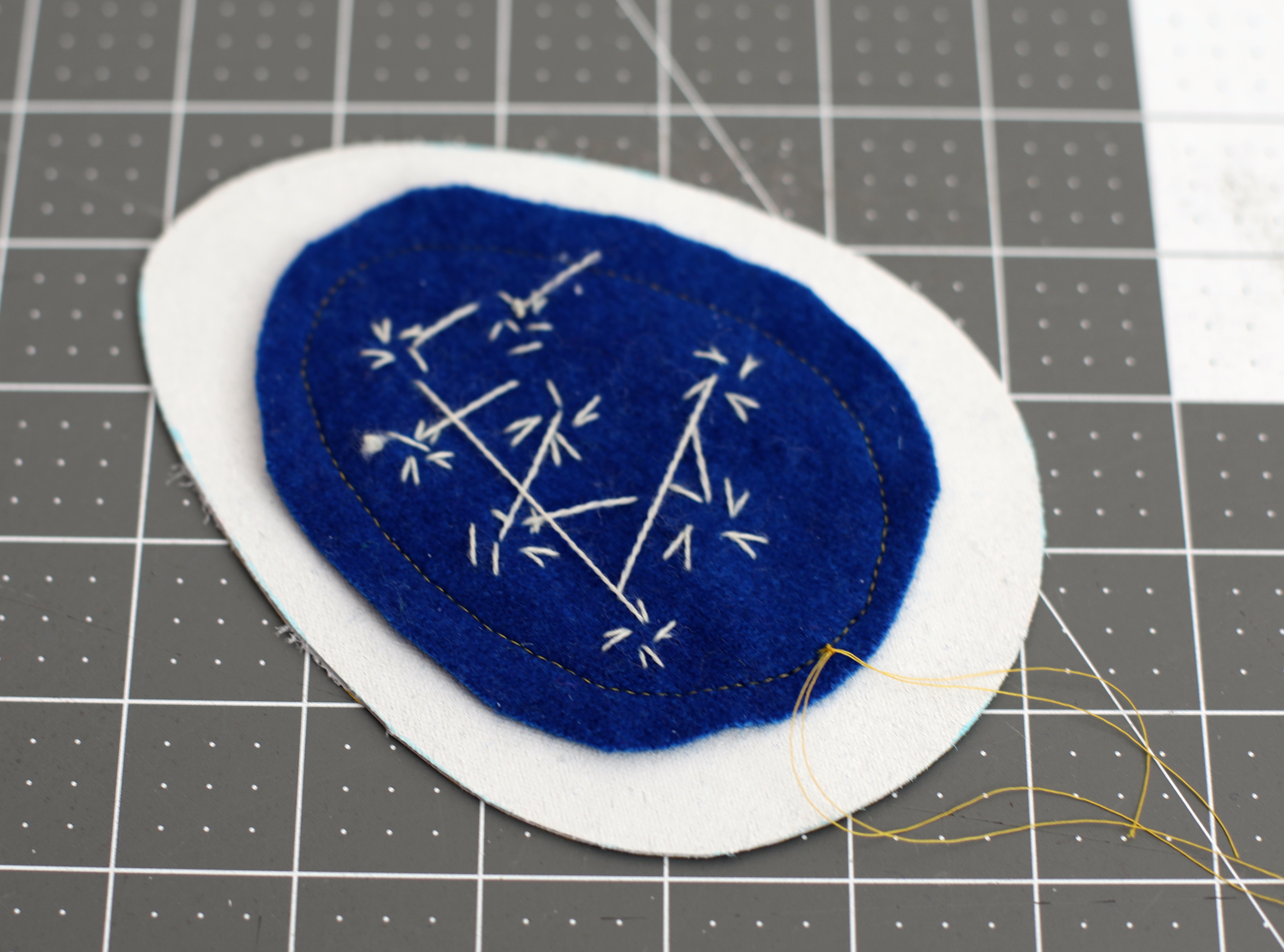
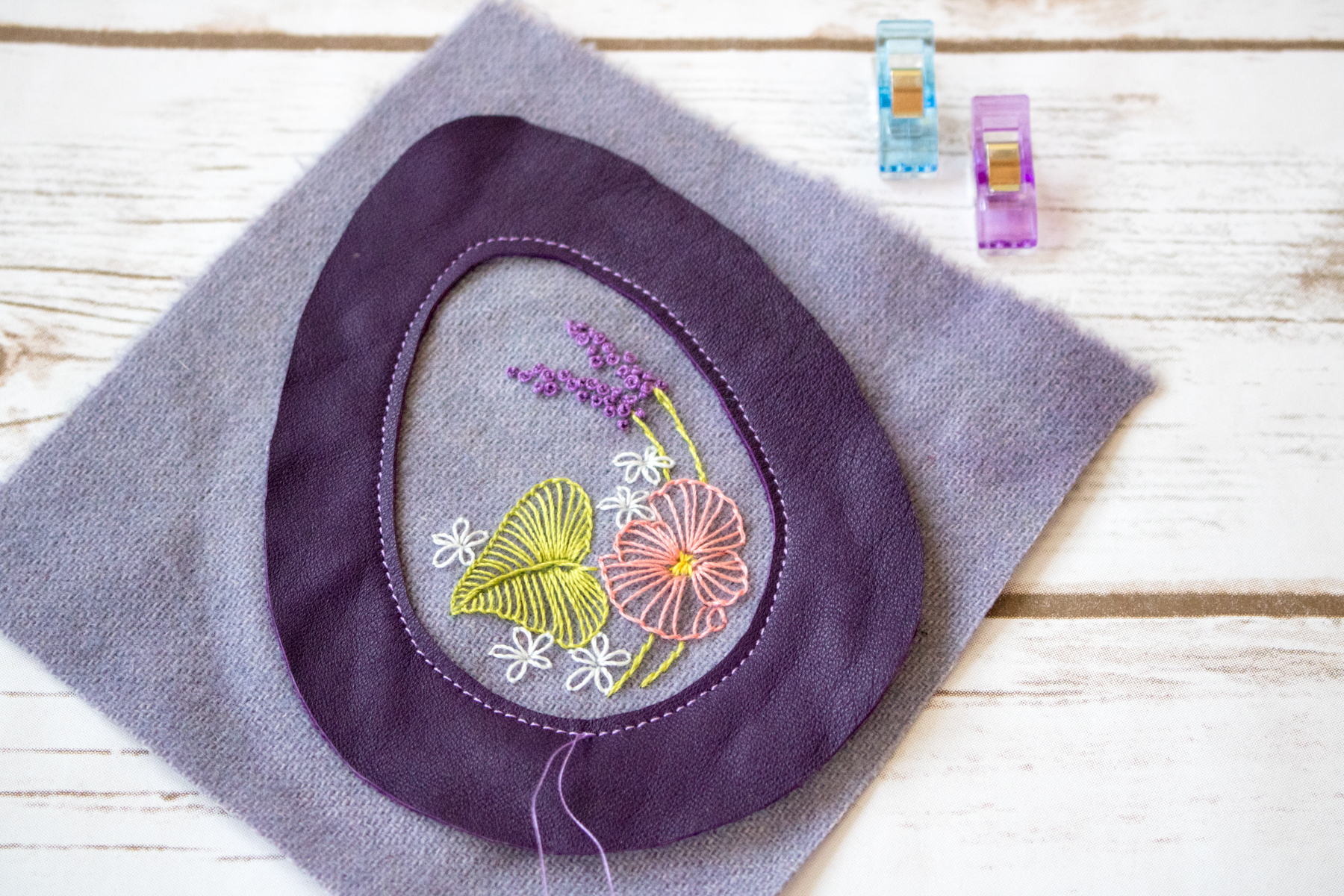
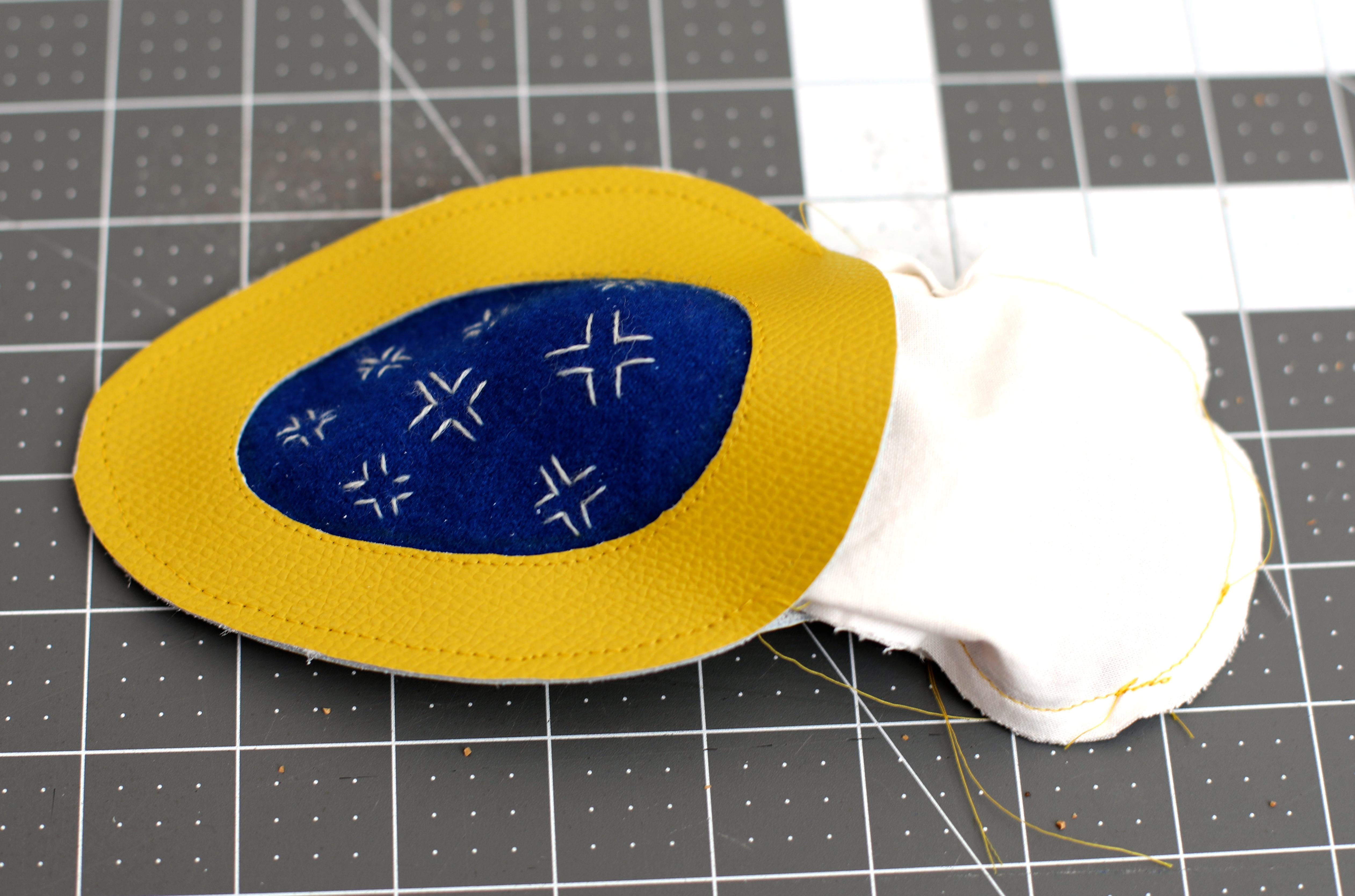
Align your embroidered material so that the embellishments fit within the window of your leather upper (the egg with the hole cut out of the middle). Secure the right side of your embroidery to the wrong side of your leather upper with double sided tape, glue, or other method. Then, using a ¼ or ⅛ inch seam allowance, top stitch the two together along the inner egg as shown. Thread the top threads to the back of the piece, tie all loose ends together and trim. Finally, trim the seam allowance of your embroidered material carefully about ½” away from the stitched line so that it remains easily inside the outer margins of the egg.

1S3A9209

1S3A9216

1S3A9217

IMG_6596

IMG_6606

Step 4: Make an Inner Pincushion

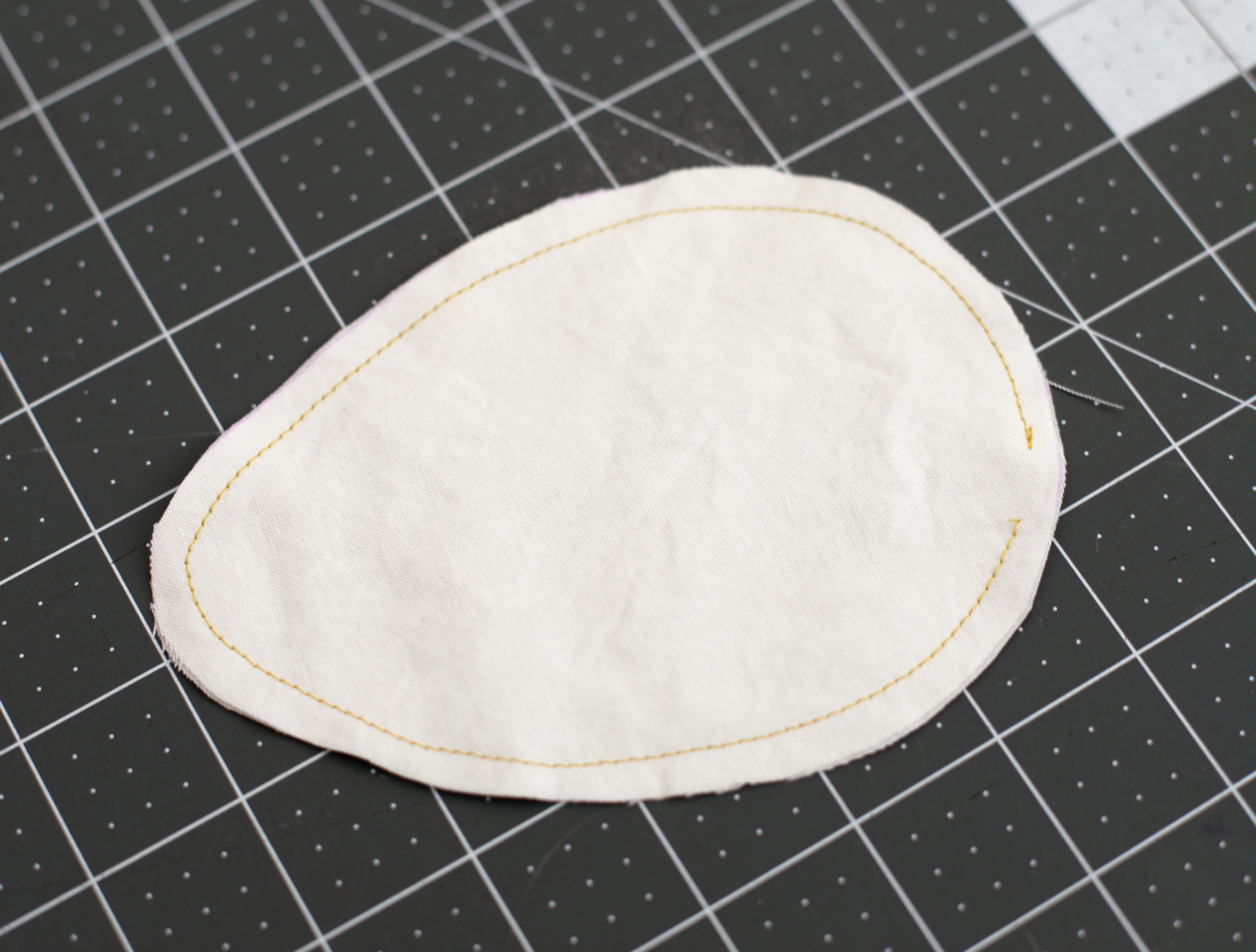
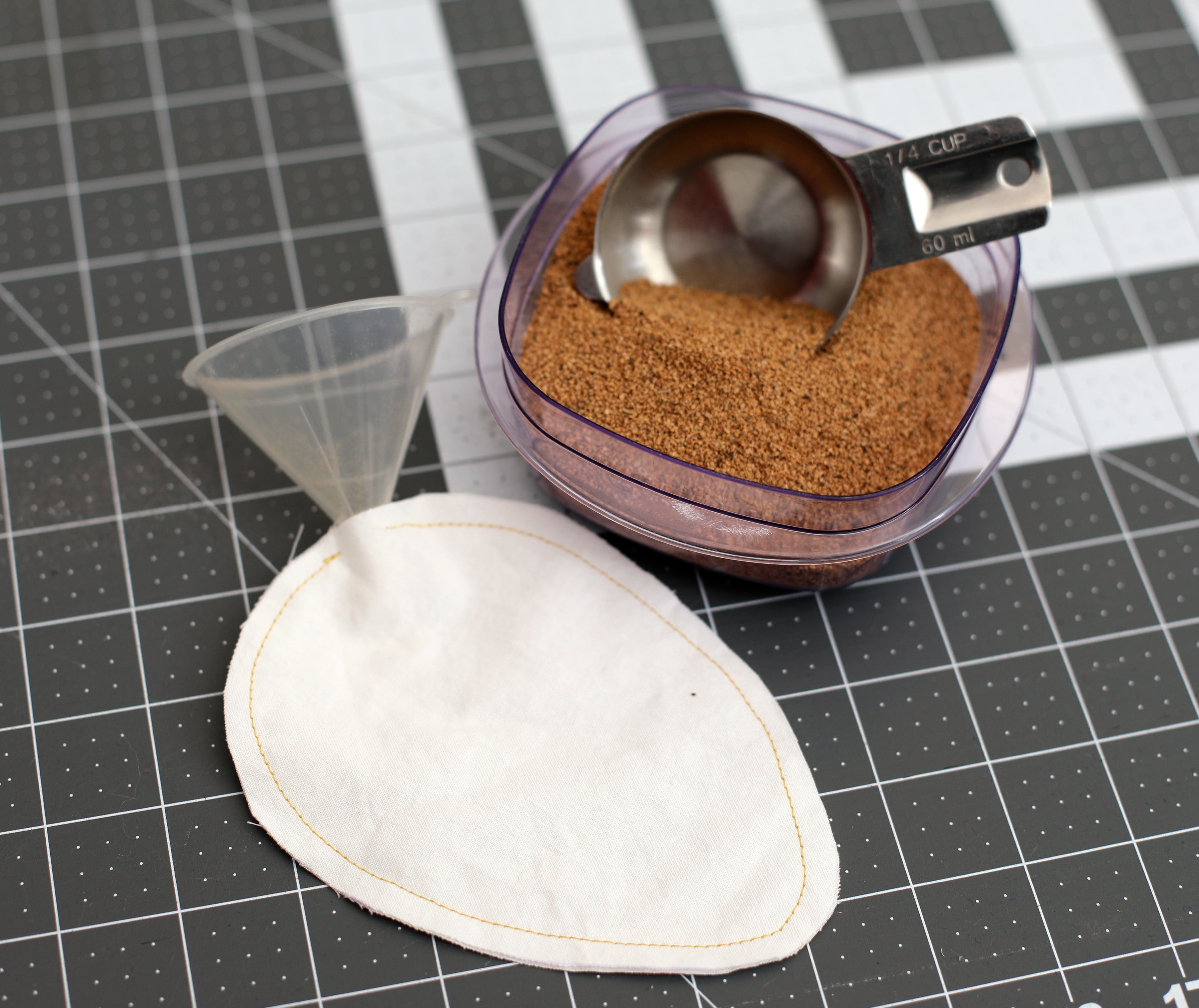
Using only the outer margin of your Egg Template, trace and cut two pieces of muslin.  Sew the two pieces together using a ¼ inch seam allowance, leaving a small opening to use for filling.  Fill with crushed walnut shells (a funnel can be helpful for this).  One half cup of crushed walnut shells for this project seems to be the right amount. Use, a little more if you want a more rounded pincushion.  Sew closed the opening of the inner pincushion.

1S3A9223

1S3A9232

Step 5: Finishing your Pincushion

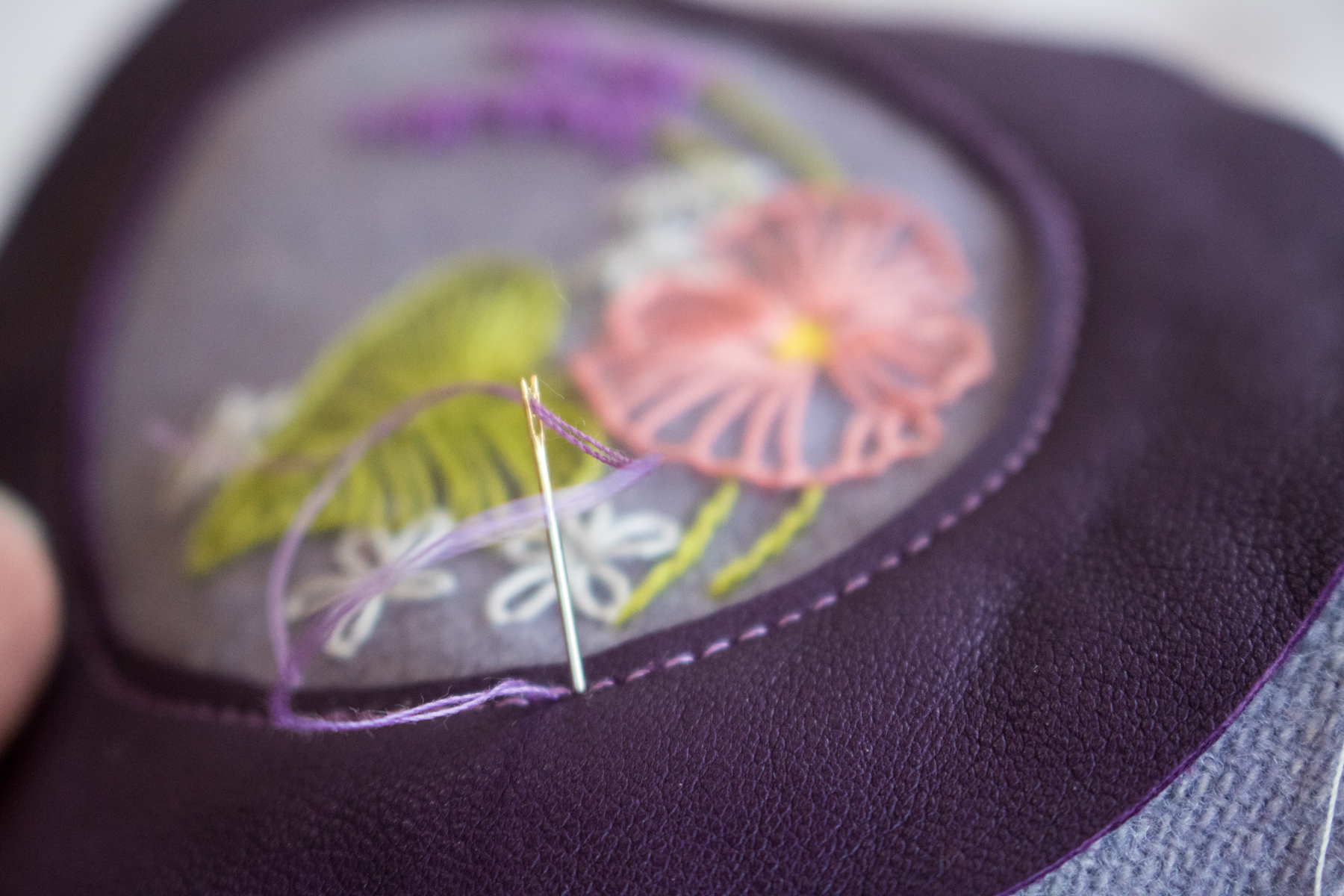
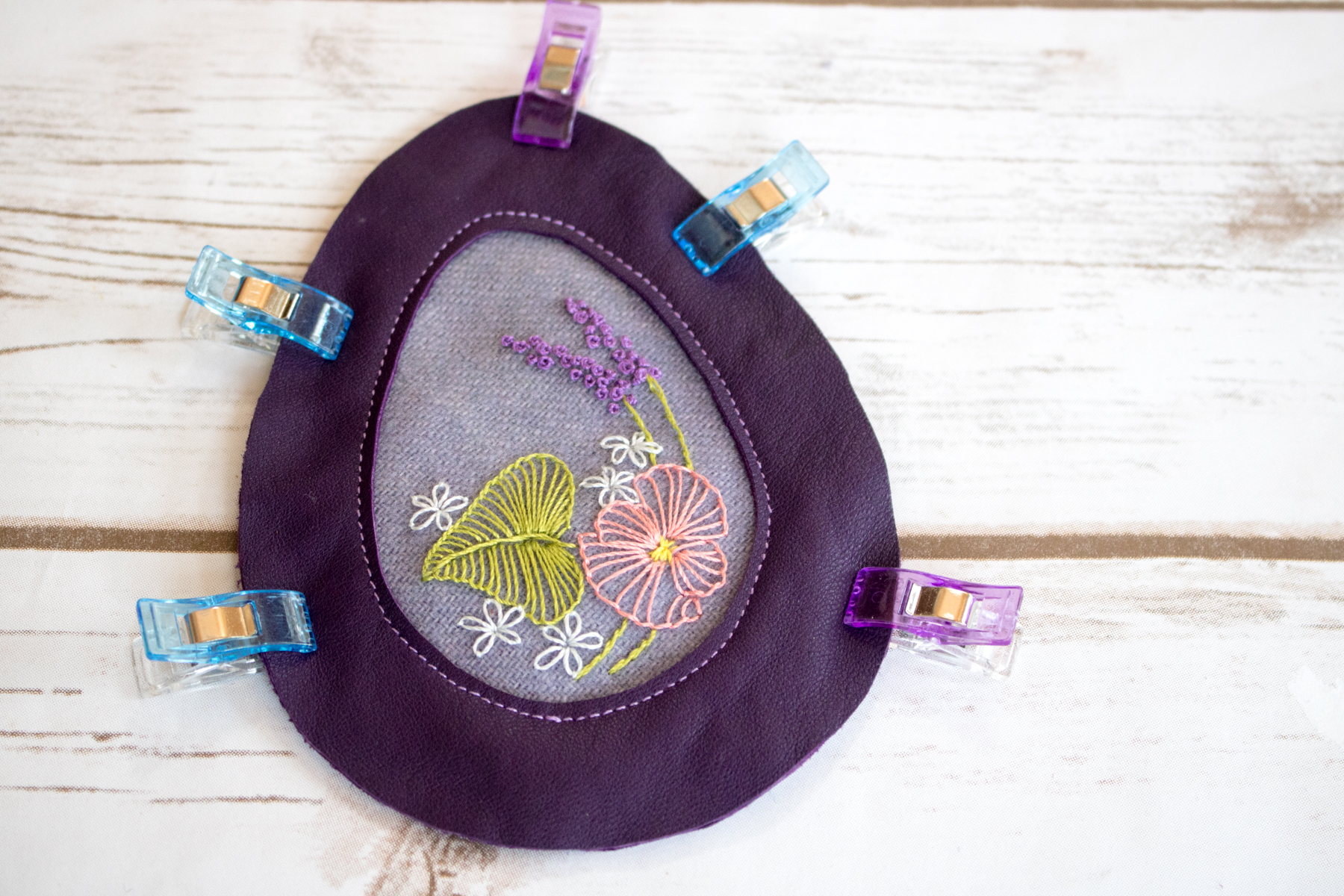
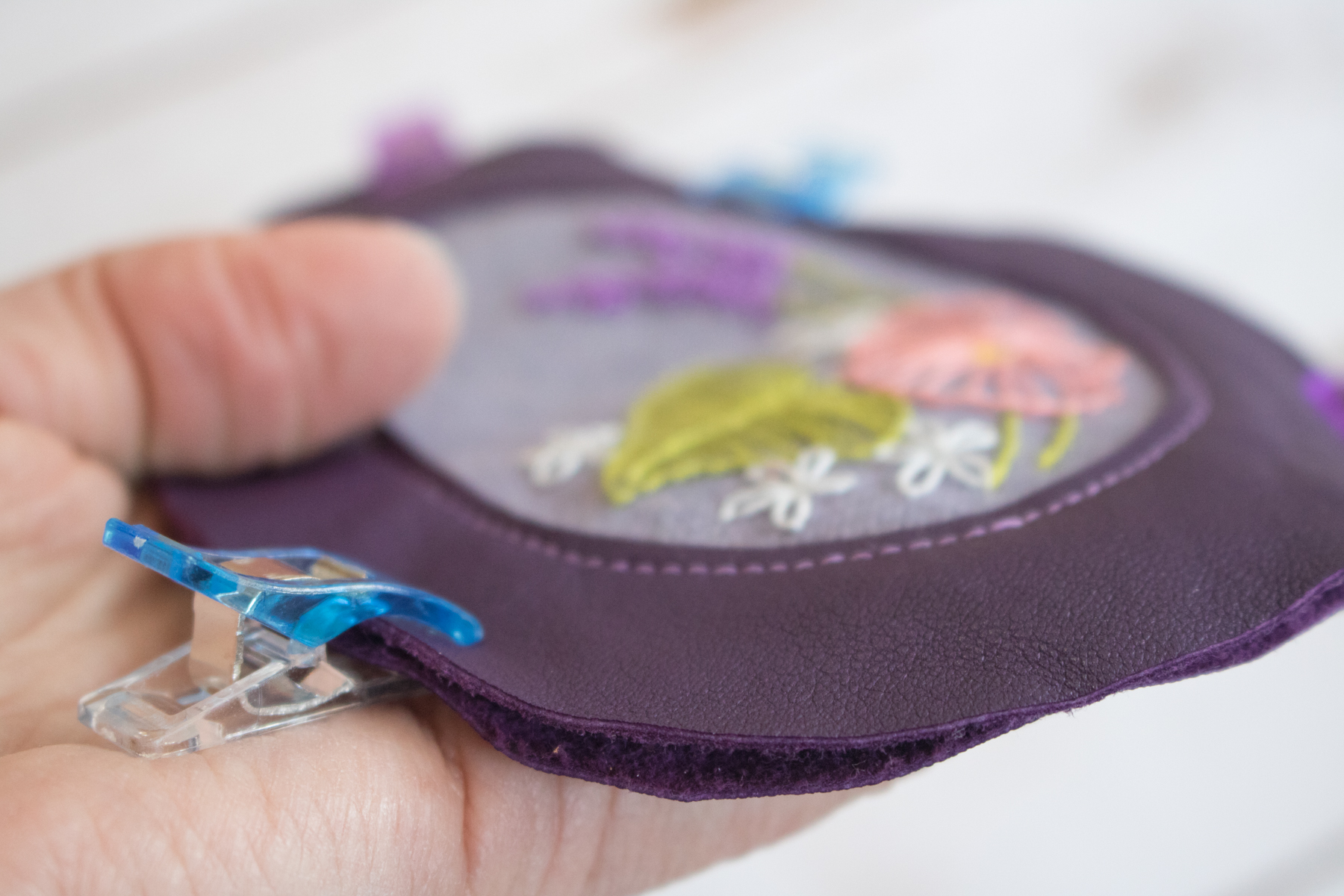
Place the two leather egg pieces wrong sides together and secure with wonderclips. (Note that pinning will create visible holes in the leather–use clips!)  Sew around the outer margin of the egg using a ¼ seam allowance, leaving an opening at least 3 inches long unsewn.  Stuff your filled and fully closed inner pincushion through this opening.  Ensuring the inner pincushion remains entirely inside, top stitch the remaining way around the outer edge of the egg.  Thread the top threads to the back of the piece, tie all loose ends together and trim or bury.

IMG_6622

IMG_6624

1S3A9235

1S3A9236

IMG_6669

Step 6: Share your creation with us!

Tag your pincushion on Instagram #eastereggpincushion as well as tagging @nightquilter and @entropyalwayswins or link to the blog posts.   We can’t wait to see what you create! Enjoy!!

FullSizeRender

IMG_4712

IMG_4713

Sew Mama Sew and Art Show Details

Last month Kristin and Beth of Sew Mama Sew sweetly asked me to share details of a tile block I made up while creating this quilt top as a commission for one of my oldest friend’s.  Go see their intro about me here: Introducing Hillary Goodwin from Entropy Always Wins | Sew Mama Sew | Outstanding sewing, quilting, and needlework tutorials since 2005 and my Tile Block tutorial here: Tile Blocks Tutorial | Sew Mama Sew | Outstanding sewing, quilting, and needlework tutorials since 2005. I’m thrilled to get this quilt finished and enlisted the help of long arm quilter Jessie Ziegler (threaded quilting studio) for a quilt collaboration.  That negative white space is going to look yummy with her quilting.
IMG_2936

In other news, some mini quilts for an art show in Seattle beginning next month are in process.  I am honored and excited to be sharing space with many gifted artists.  A big bonus is that Seattle is where i went to undergrad and Medical School and many friends and family still are Seattle residents.   It will be fun to share my work there.   For details of the show (and an introduction to an inspiring maker) see Anna’s post here: It’s Official! I Left My Job to Become a Quiltmaker | Quilting Queerly.

Hillary
5/325 Quilt Complete

9L4A6482

IMG_1548

9L4A6538

IMG_1617

IMG_1616

9L4A6622

IMG_1618

-You are more likely to die these days from a Prescription Narcotic Overdose then a car accident.(CDC – Facts – Drug Overdose – Home and Recreational Safety – Injury Center)

-There were enough narcotics sold in 2010 in the US to distribute 40 Percocet and 25 Norco to every citizen in the country. (Addiction USA: Painkiller sales soar across nation – NY Daily News)

These may seem like shocking statistics but they are not at all surprising to those of us who work in the Medical Field and despite this news Narcotics remain an important tool especially for acute pain and end of life care.

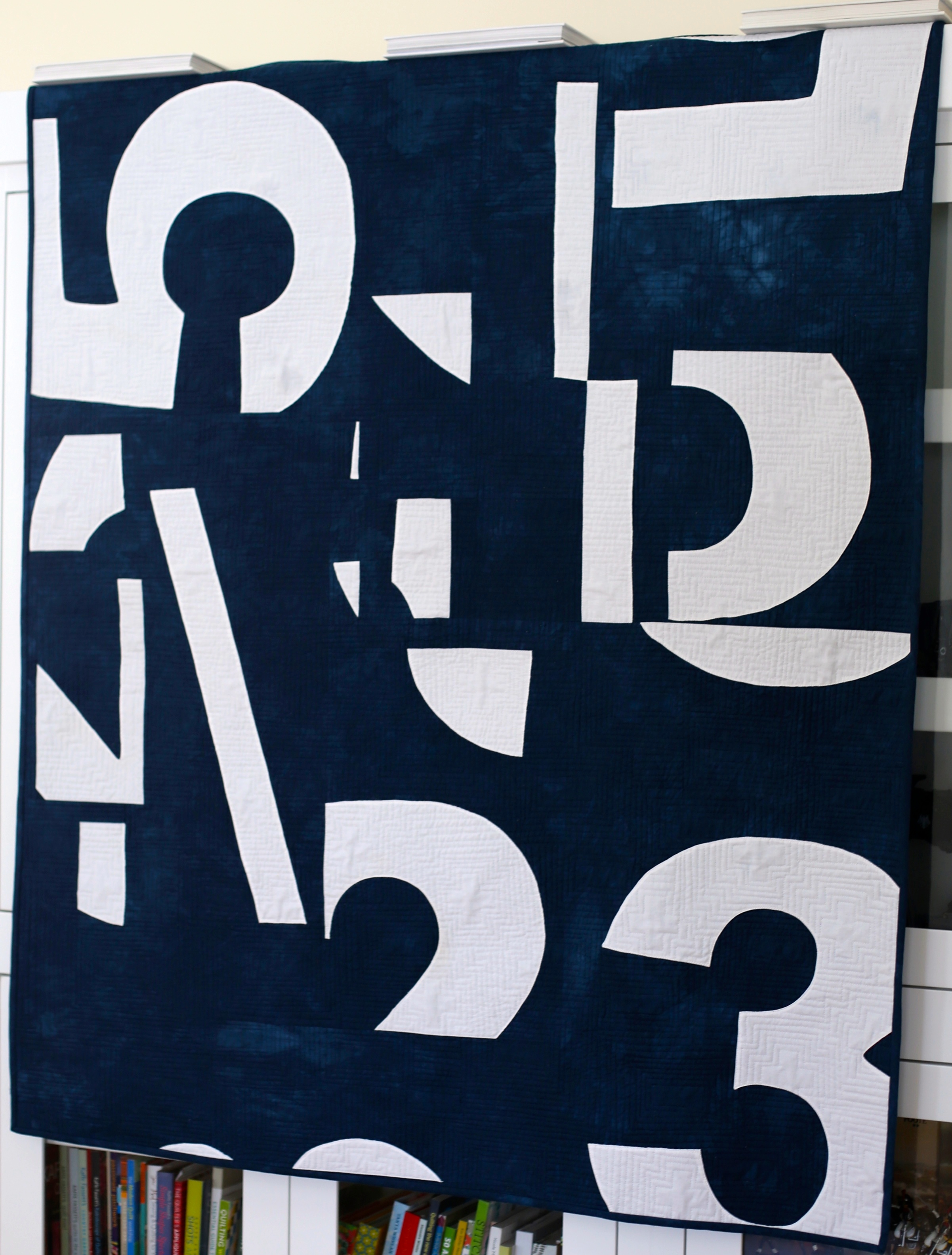
I finished my 5/325 Quilt, a statement piece highlighting the mixed blessings of prescription narcotics (in this case, the most common formulation of hydrocodone/acetaminophen).  To see the process behind my quilt top construction go here: 5/325 | Entropy Always Wins.

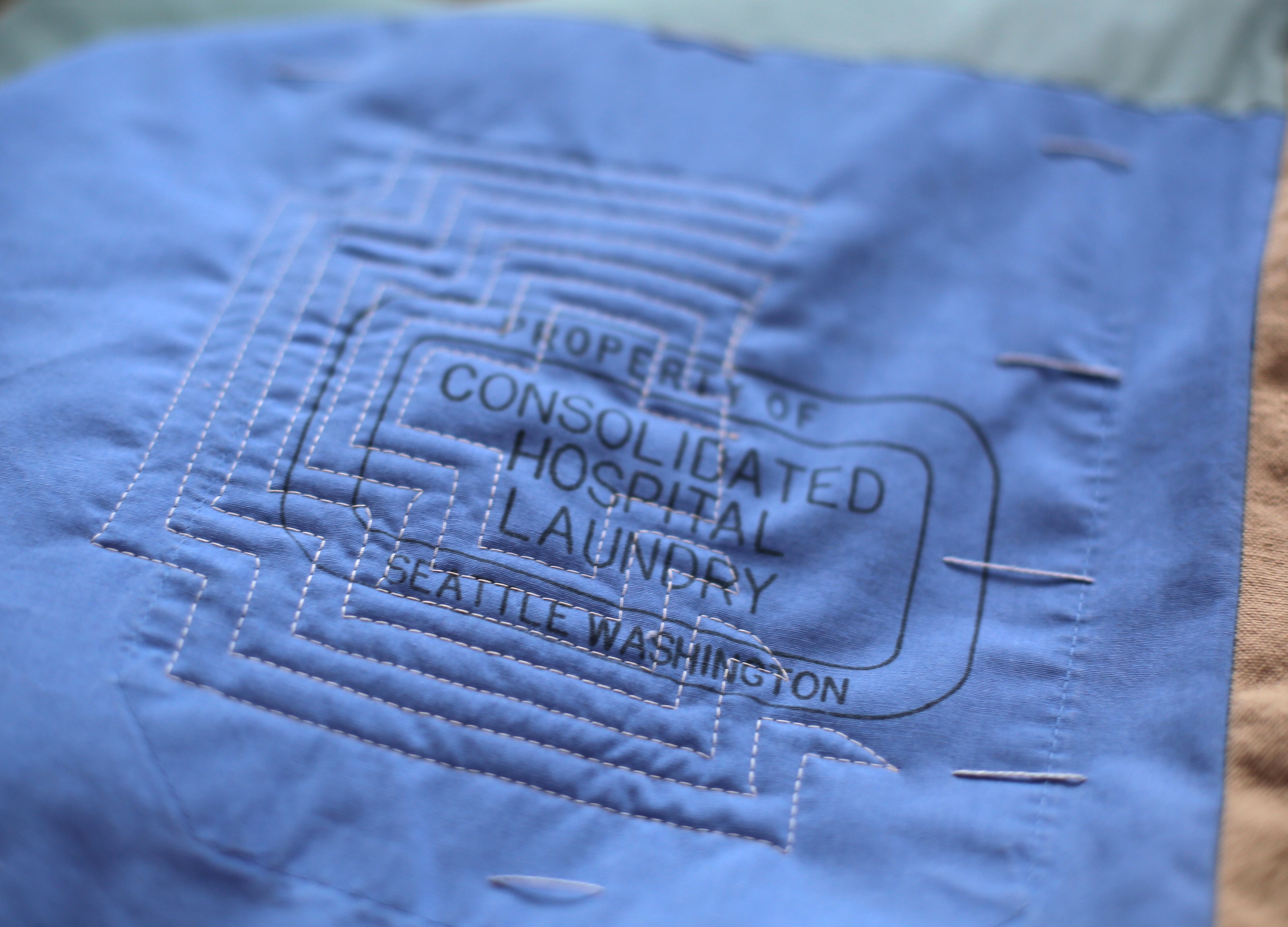
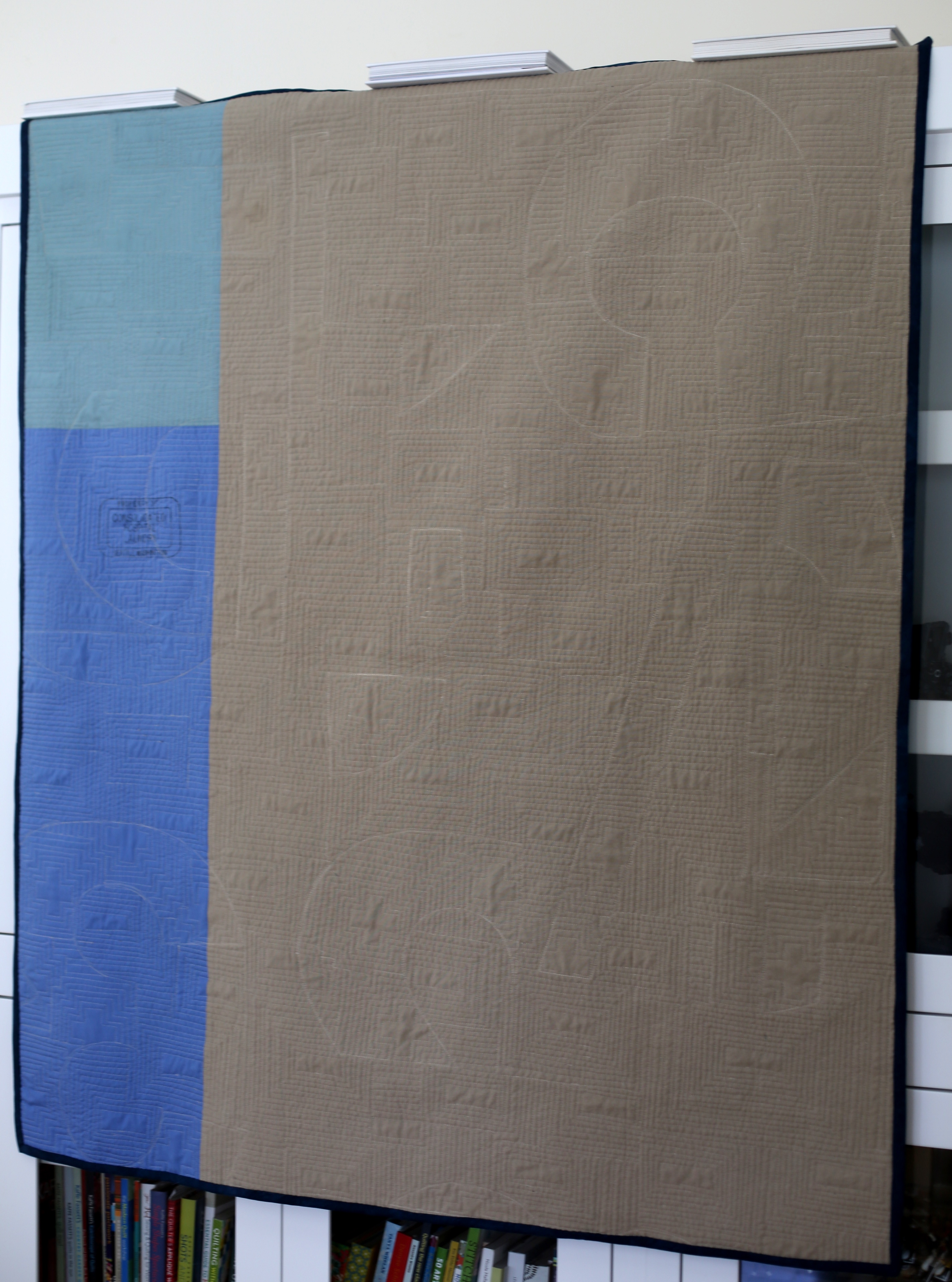
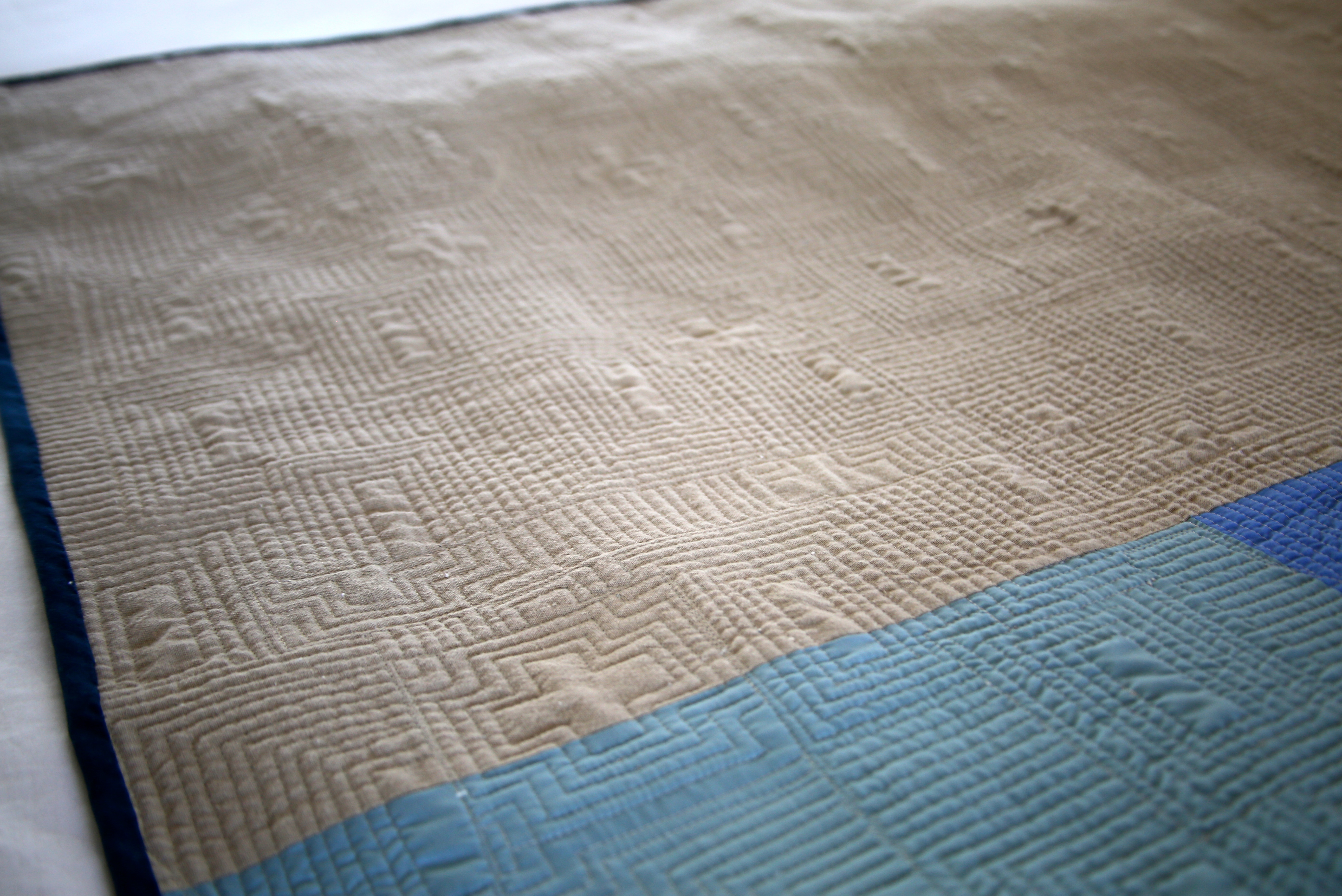
Once again, I used Kona Cotton in White and Hand Dyed Fabric in Blue by Kim Eichler-Messmer (Kim E-M Quilts).  Trying to echo the pluses and minuses of narcotics, in the white spaces I machine quilted echoing Plus Signs and in the Blue fabric quilted Minus Signs using Aurifil thread.  I hope the echo effect reflects the impact both pain control and addiction have on the community as a whole.  For the back, I used linen in khaki and scrub bottoms from my time working in Seattle and Cleveland.

I will begin soon to look for venues to get this quilt and it’s message out.

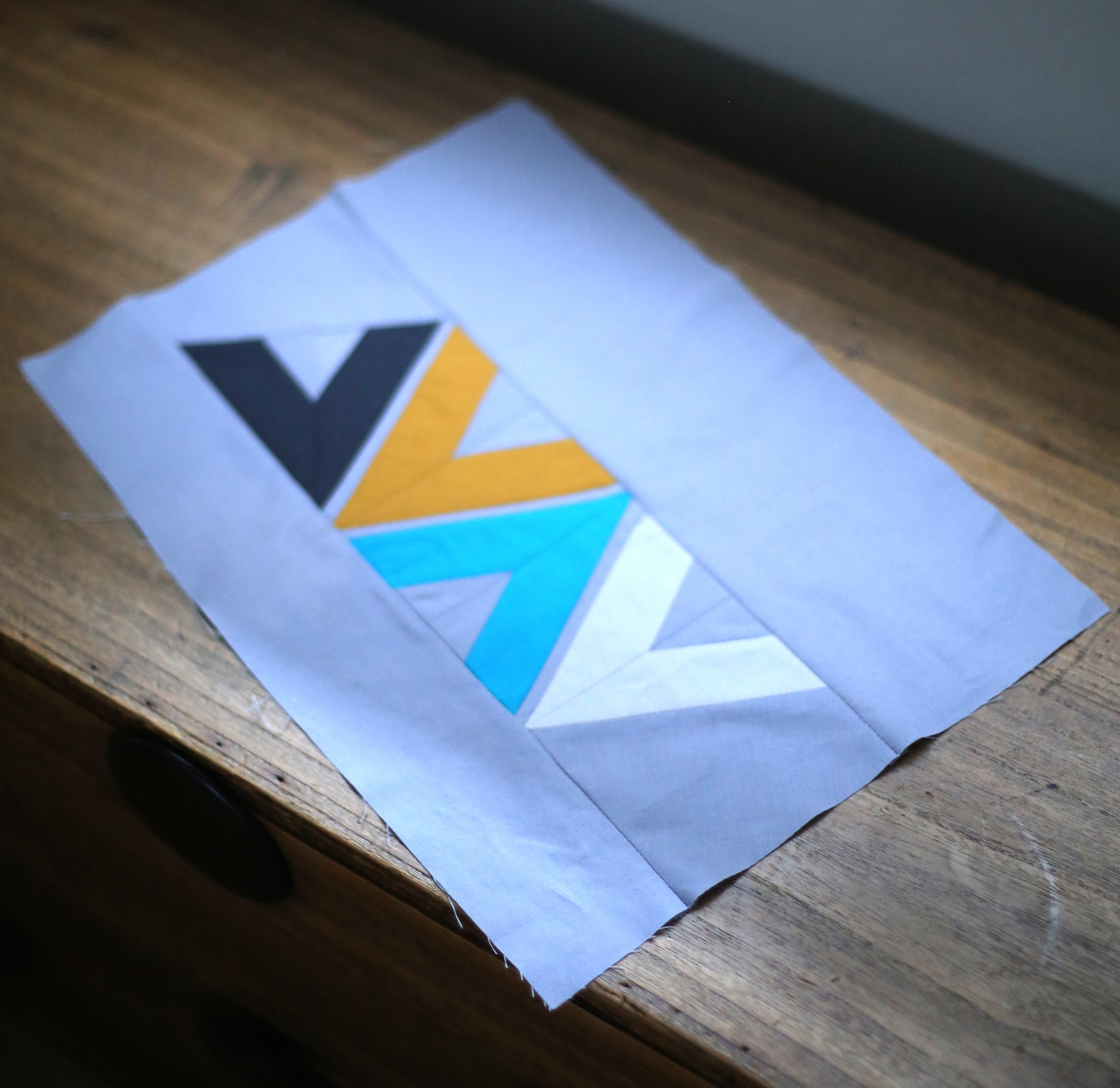
In other news, I finished a quilt block for the Bee Sewcial group.  Kari is leading us down a more graphic design path this month.  I had an idea that morphed as I was making it, once again without a drawn up plan.  It is miraculous that these turned out to be equilateral triangles that made the whole thing work.  I would like to explore this design concept more.  See Kari’s blog post here: Craft Happy: Bee Sewcial: February.

IMG_1589

I am also prepping for Quiltcon next week and am so excited to meet many of you.  I grew my “garden” of linen flowers and will bestow them on my Bee Sewcial and “Nude is Not a Dress Color” friends.  Say “HI” if you spot me!

IMG_1599

I am waiting on some buttons to pass out as well.  Did I really make and order up buttons to share? (so not me but love the message)

IMG_1578

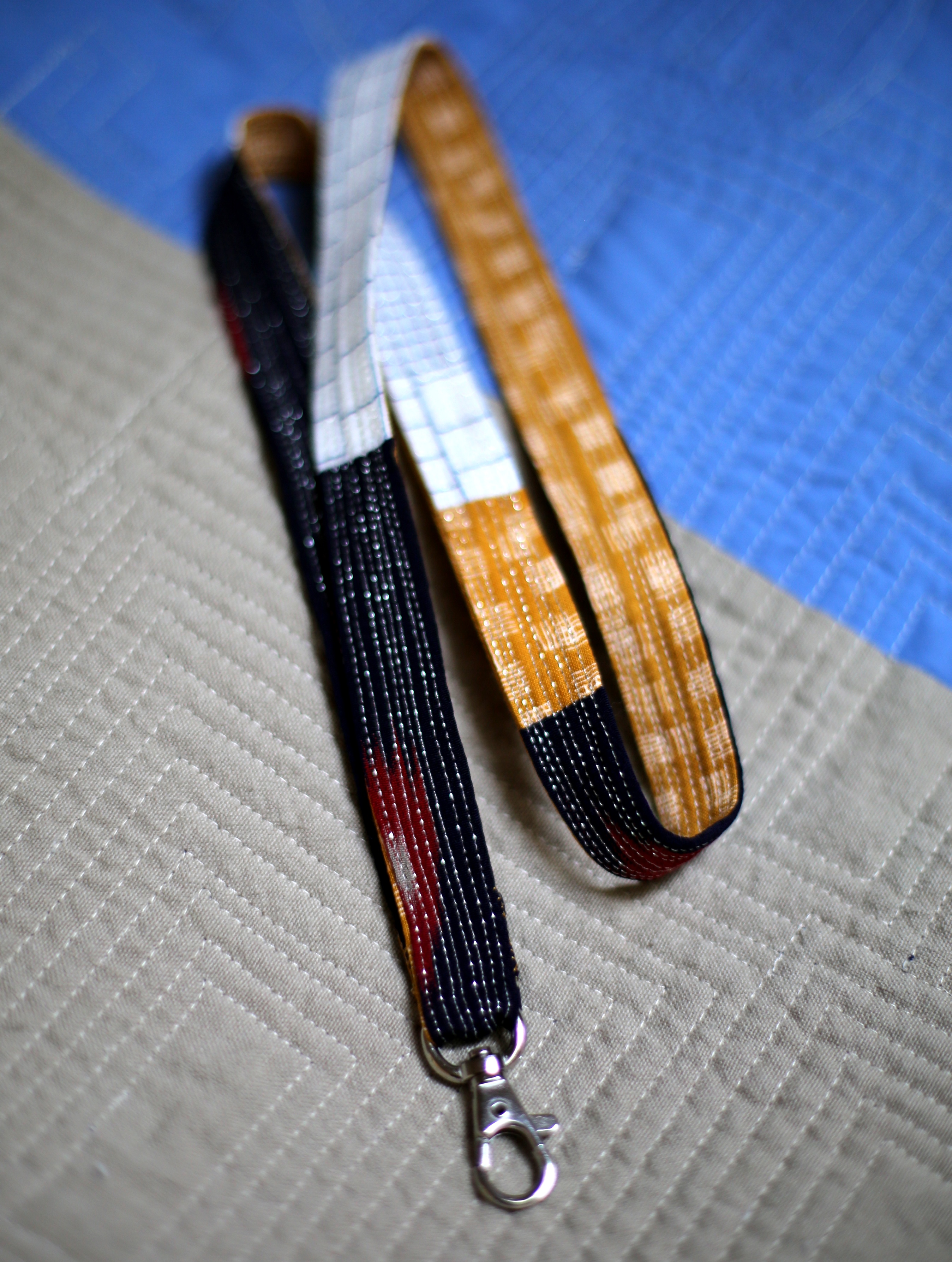
Lastly, check out the gorgeous lanyard Stephanie (Spontaneous Threads.) made me.  It it constructed out of Doe Fabric and a repurposed Sari.  I am one lucky duck.

IMG_1597

Hillary
Comics Inspired Sweatshirt Tutorial

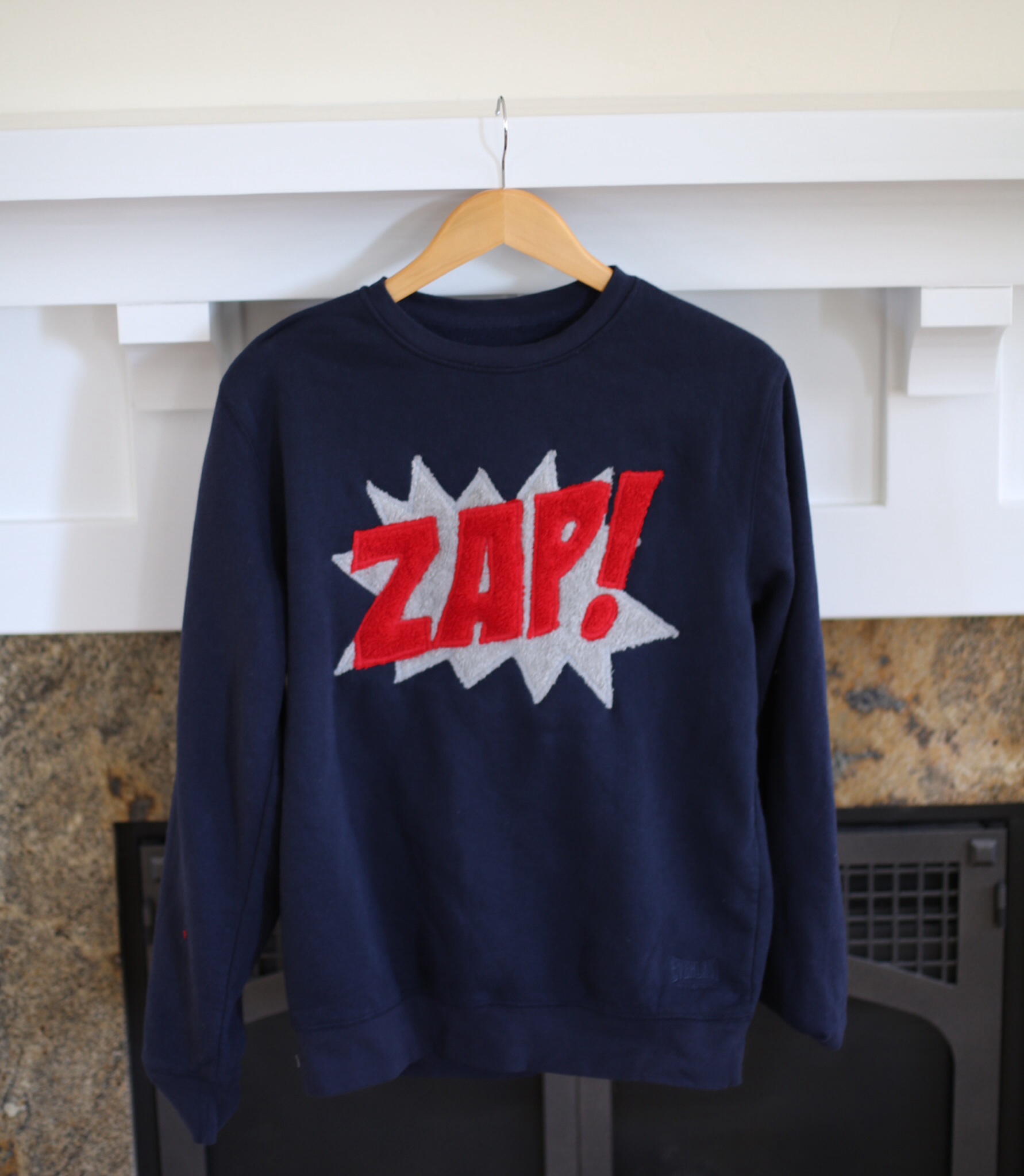
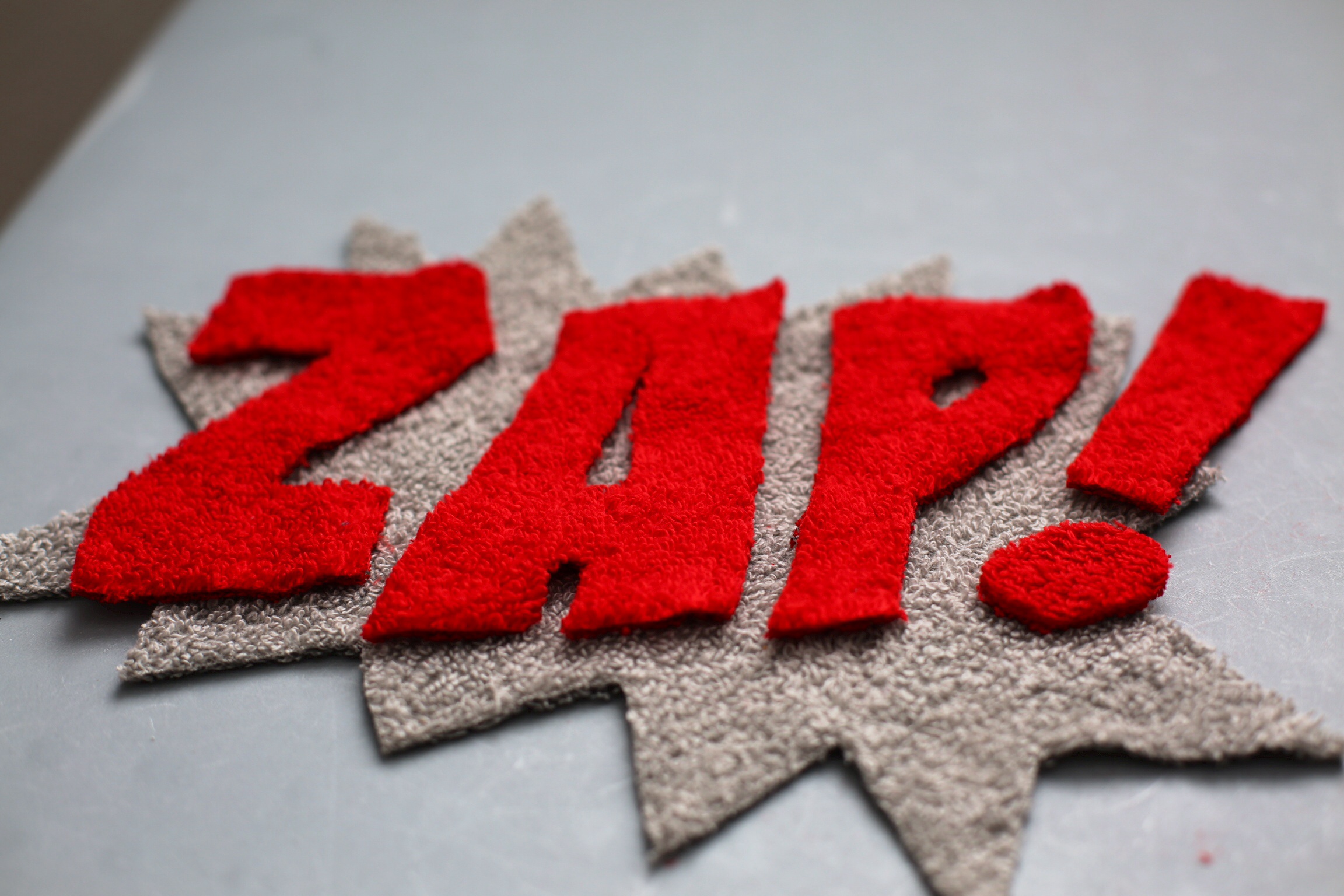
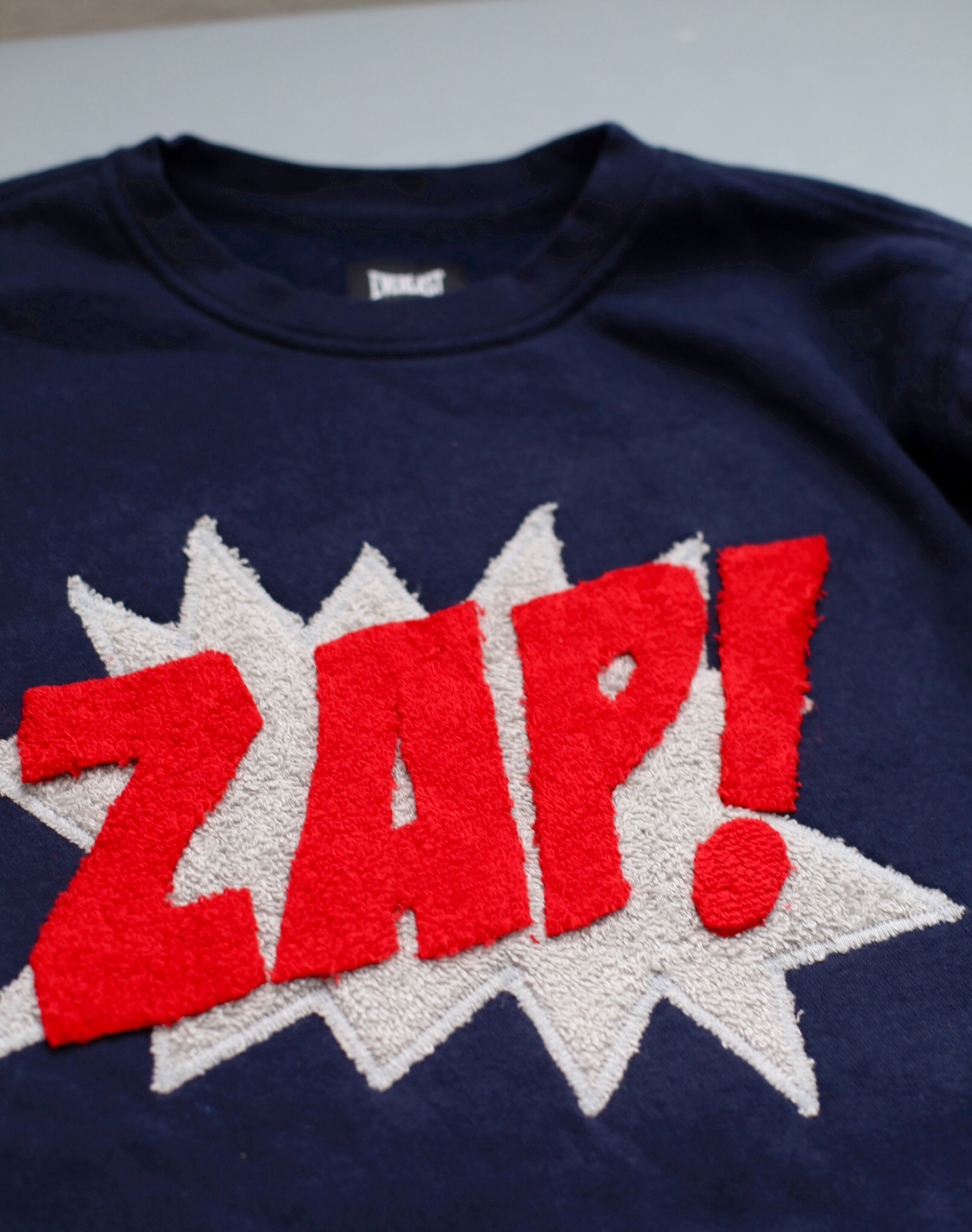
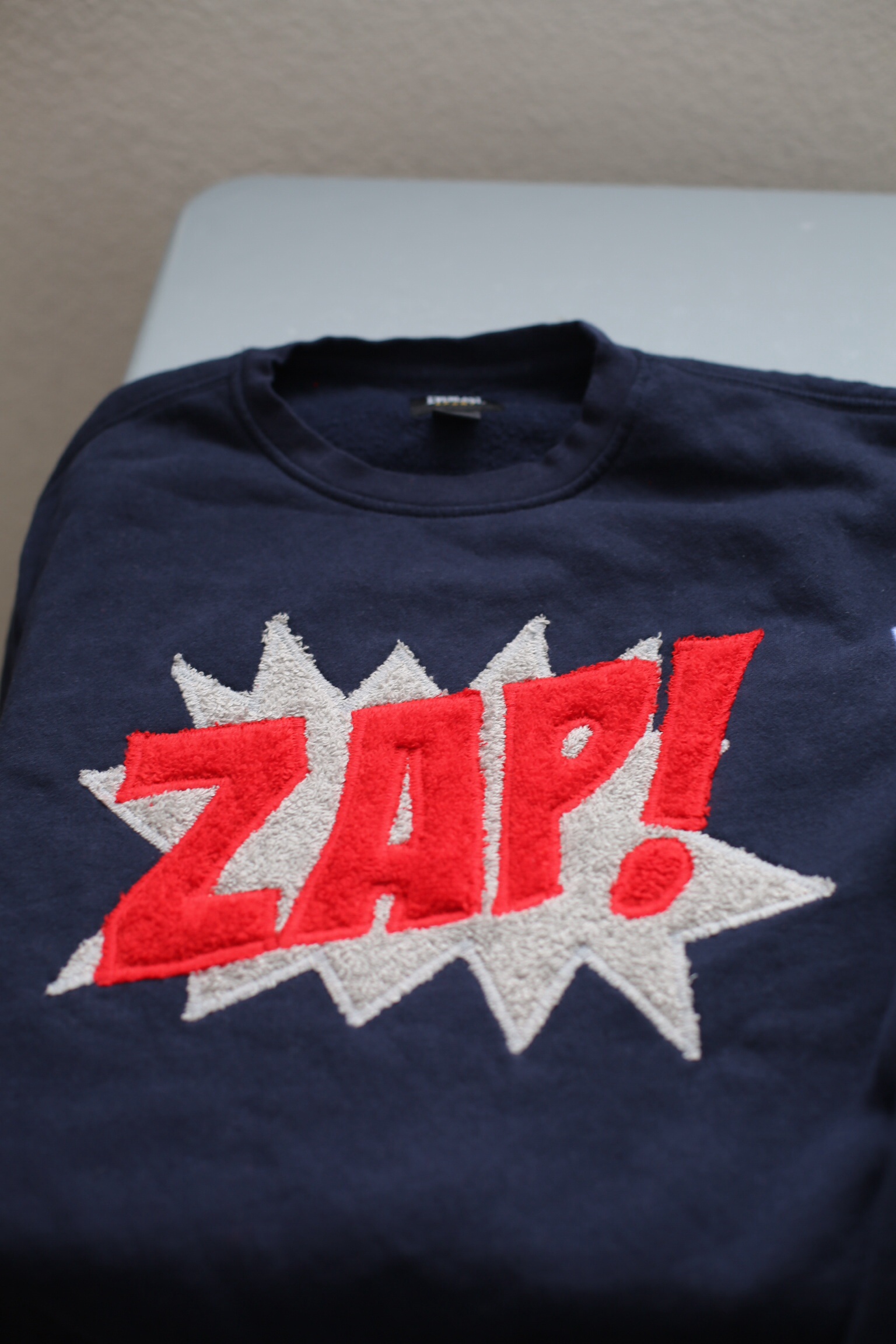
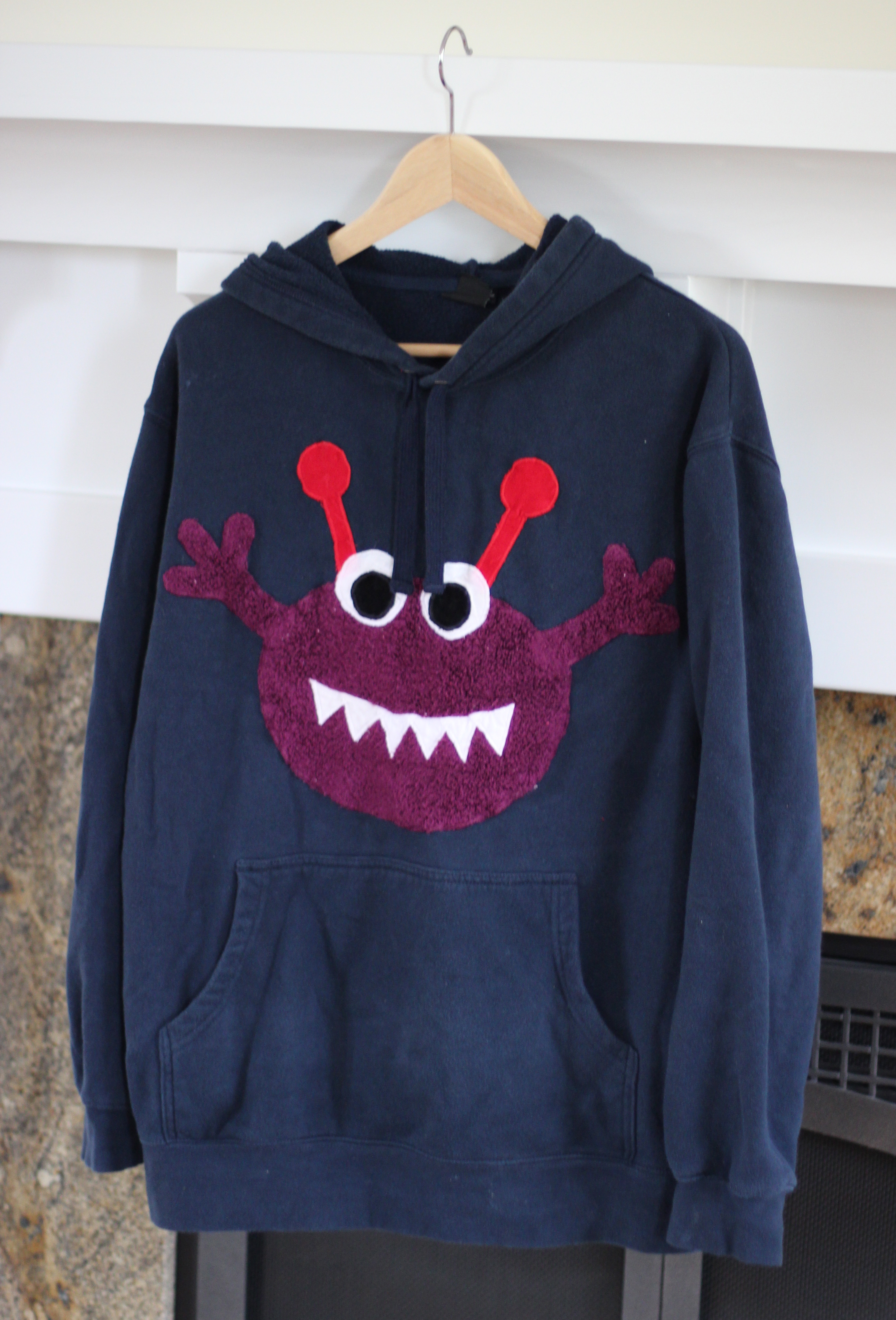
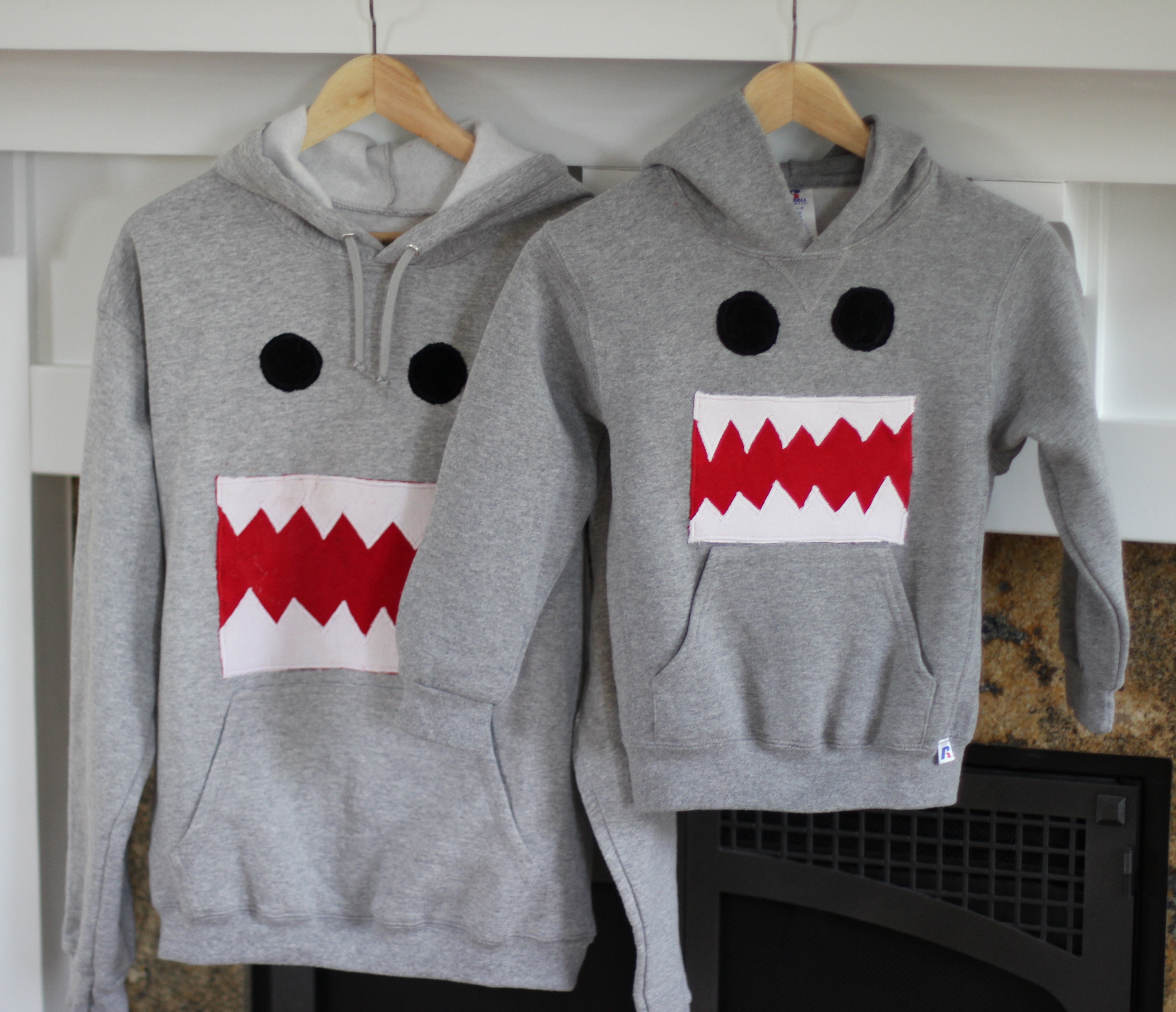
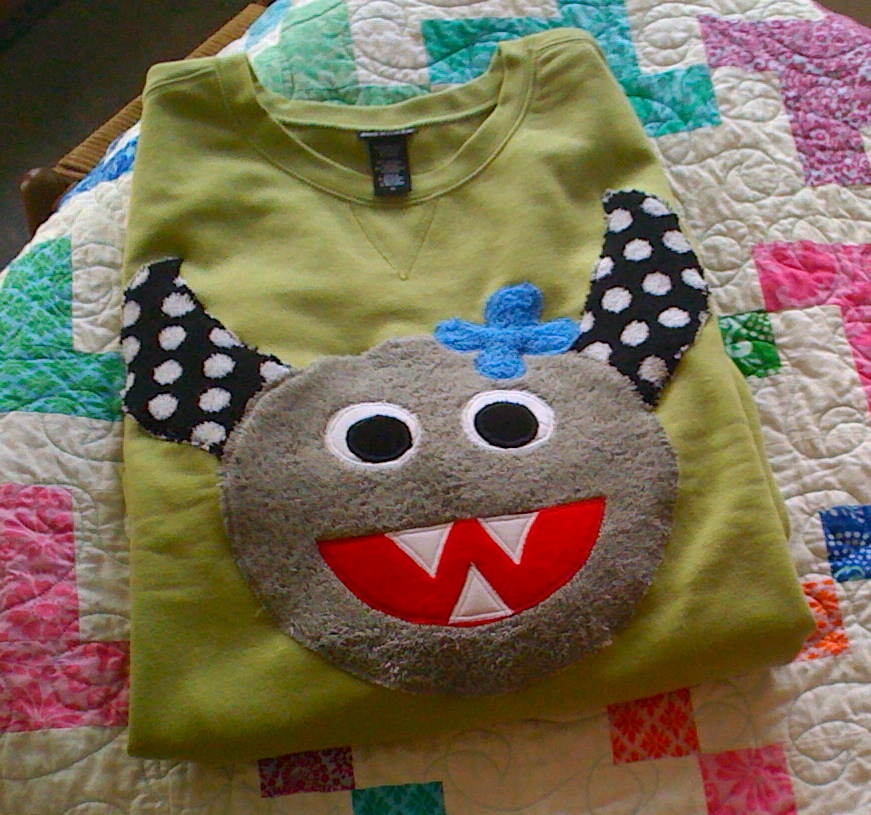
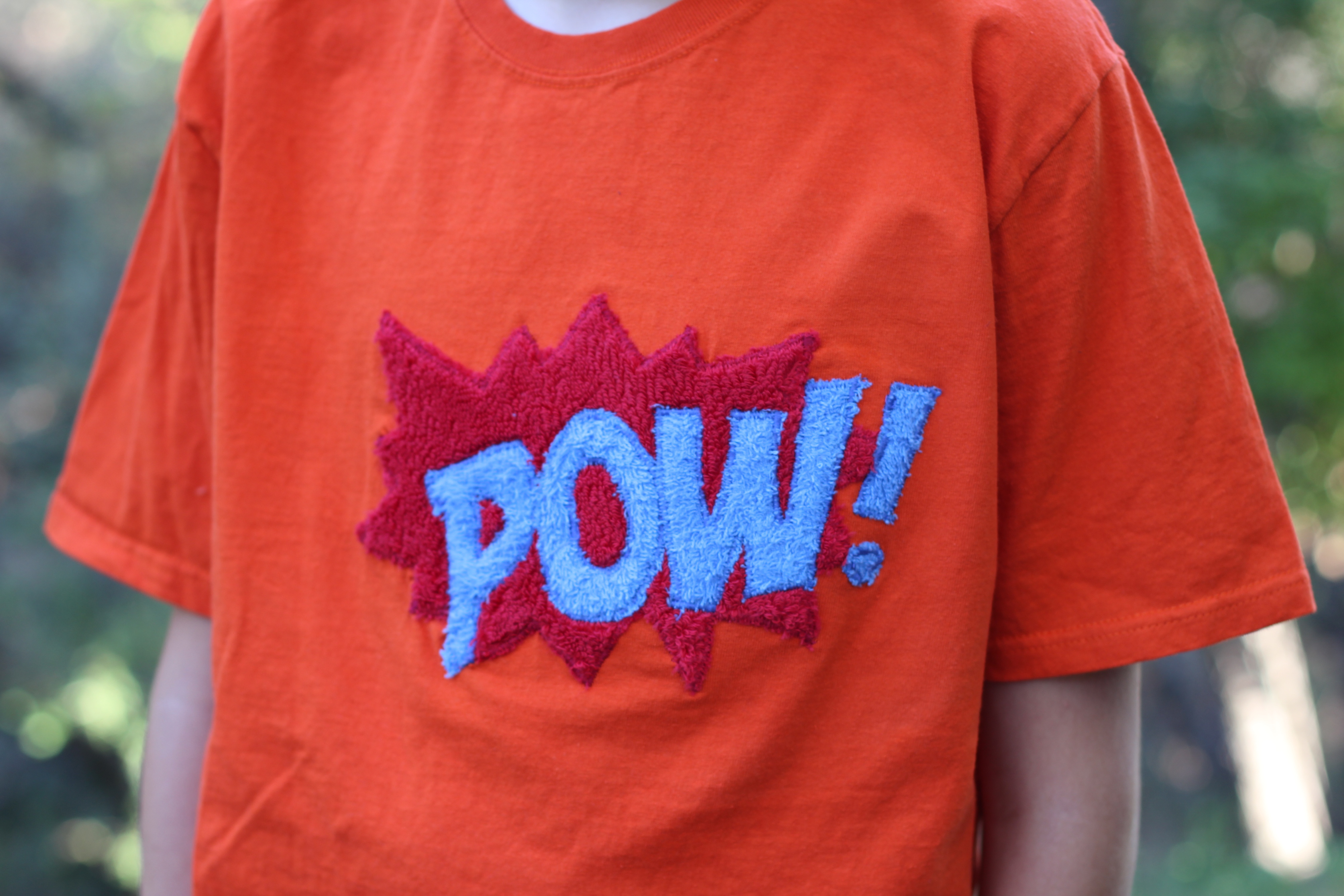
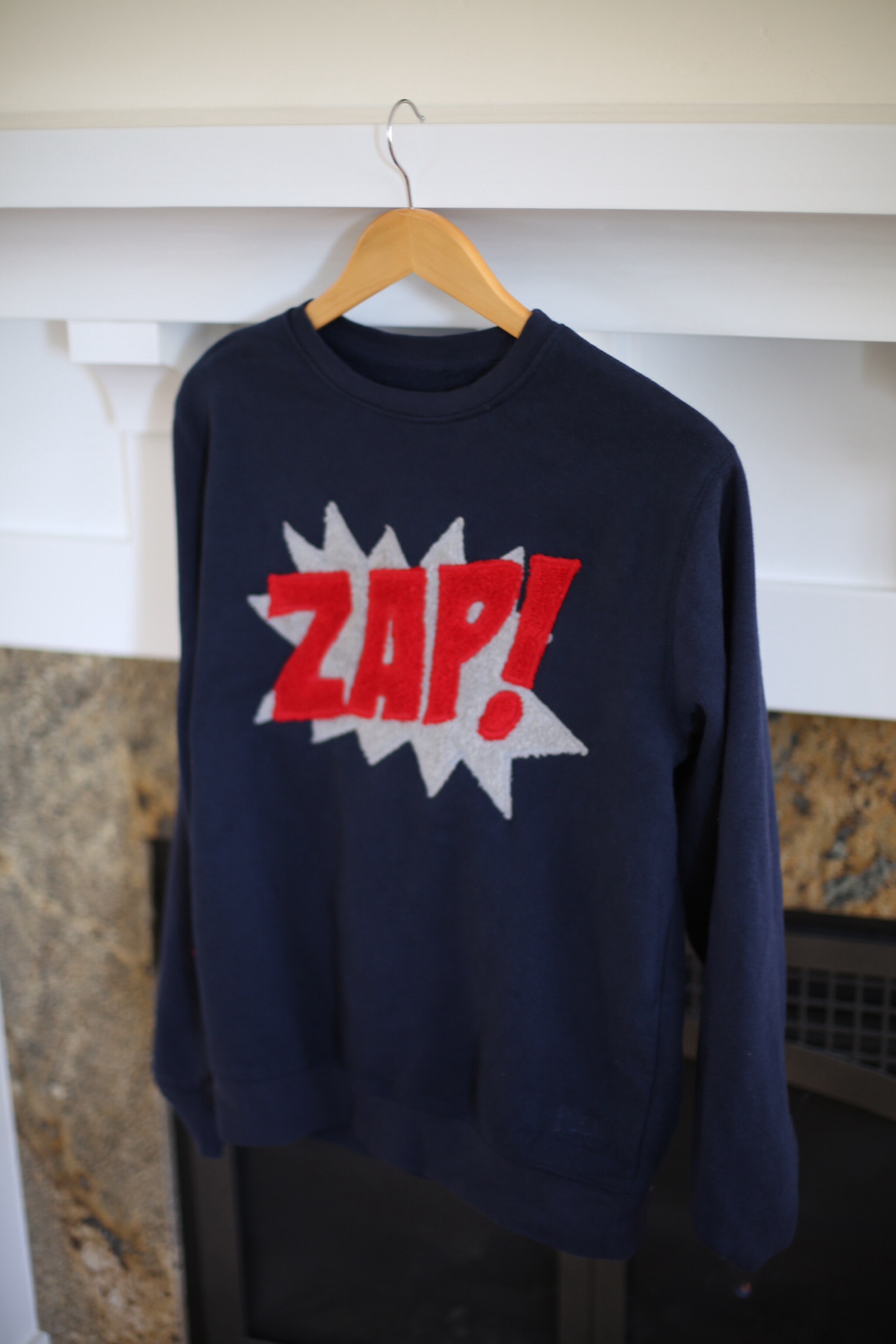
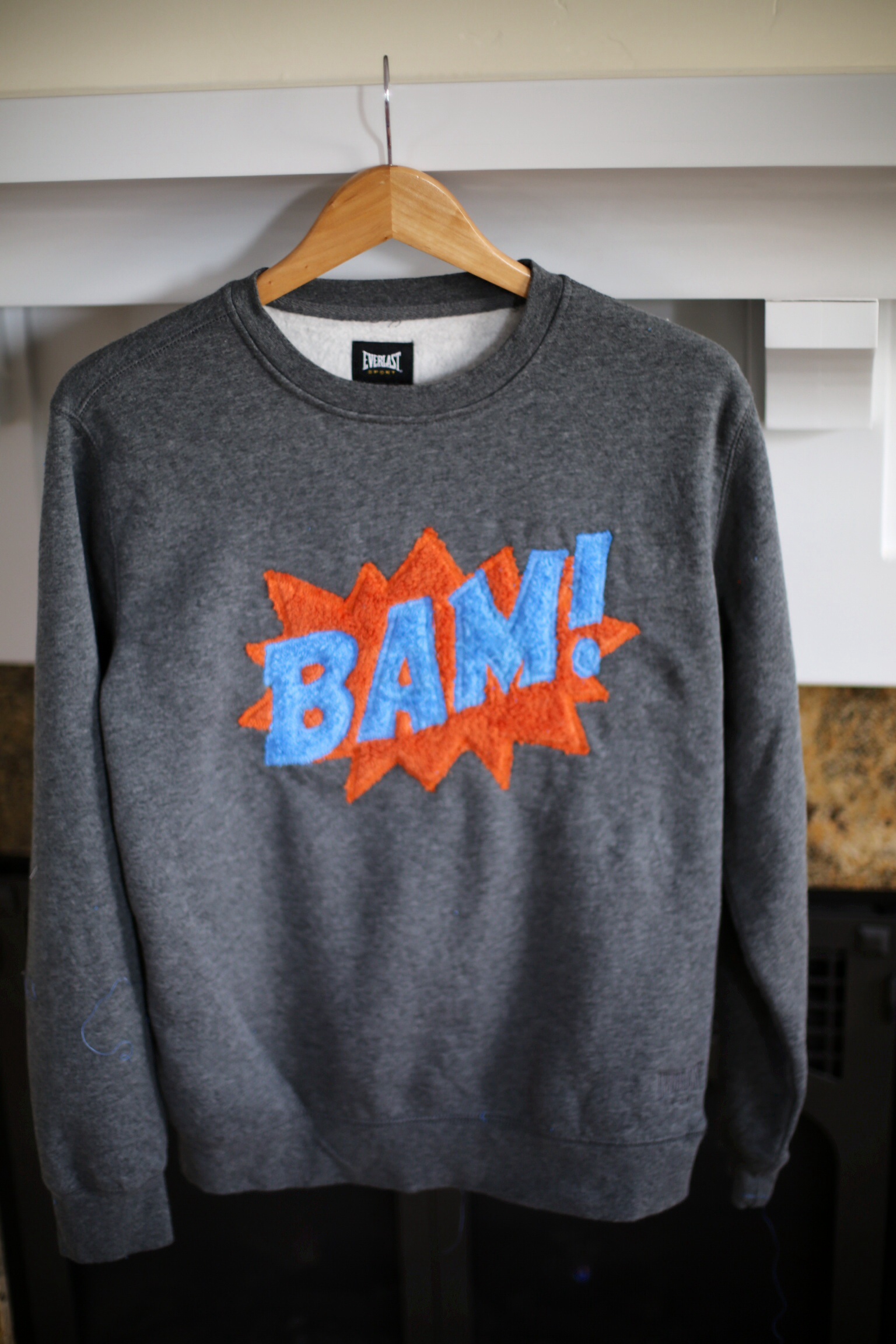
Over the last couple of weeks I have sewn up some of my favorite handmade gifts for worthy kiddos.  This time around I leaned on Comics inspired graphics as subject matter but over the years I have made multiple variations of these towel shirts.  They have taken on the forms of monsters.  They have displayed beakers for a kid science day.  I once made one of these sweatshirts for my kids’ swimming teacher with fish, bubbles and all.  The possibilities are endless with your imagination as a guide.  And do you want to know the best part: THEY ARE SUPER EASY AND INEXPENSIVE TO MAKE!

image

And because we all could use simple, inexpensive, handmade gifts that even teens like in our arsenal, I thought I would share my methods.

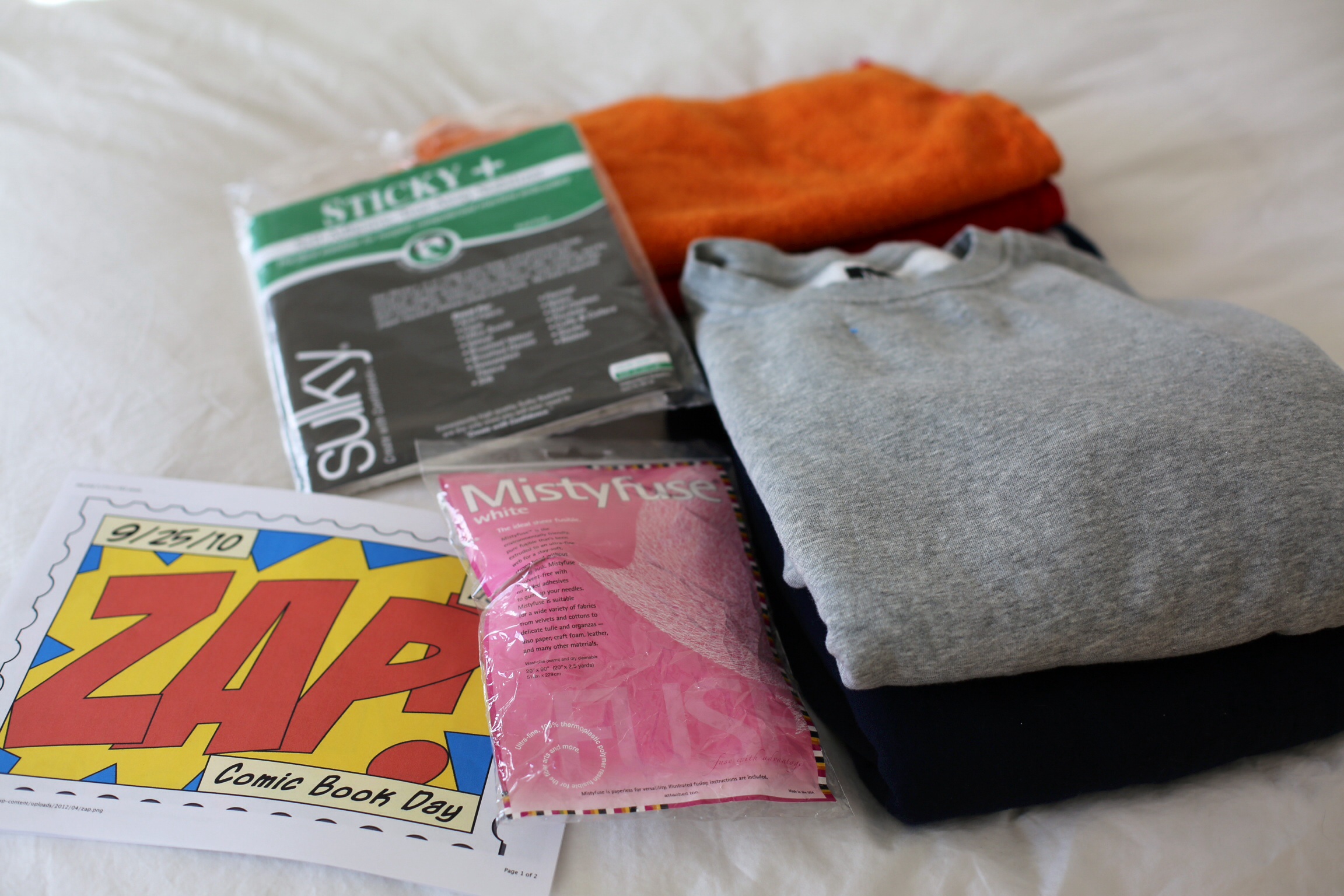
Supplies:

Sweatshirt or tshirt

Towels (old or new)

Thread to match your towels

Misty Fuse

Stick on Stabilizer (I used Sulky Sticky +)

Graphic Design for your shirt, Scissors, an iron, sewing machine and marking pen

image

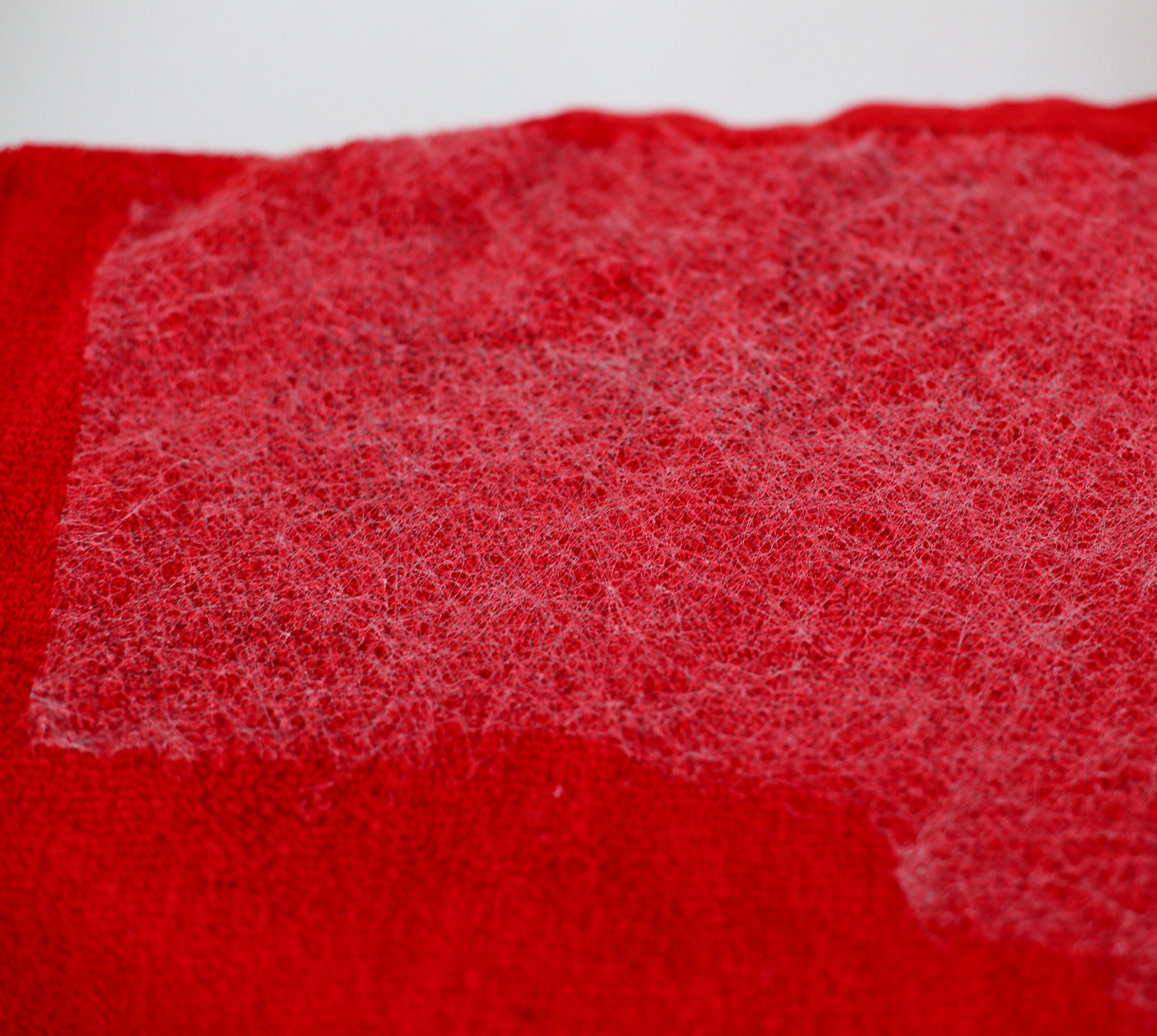
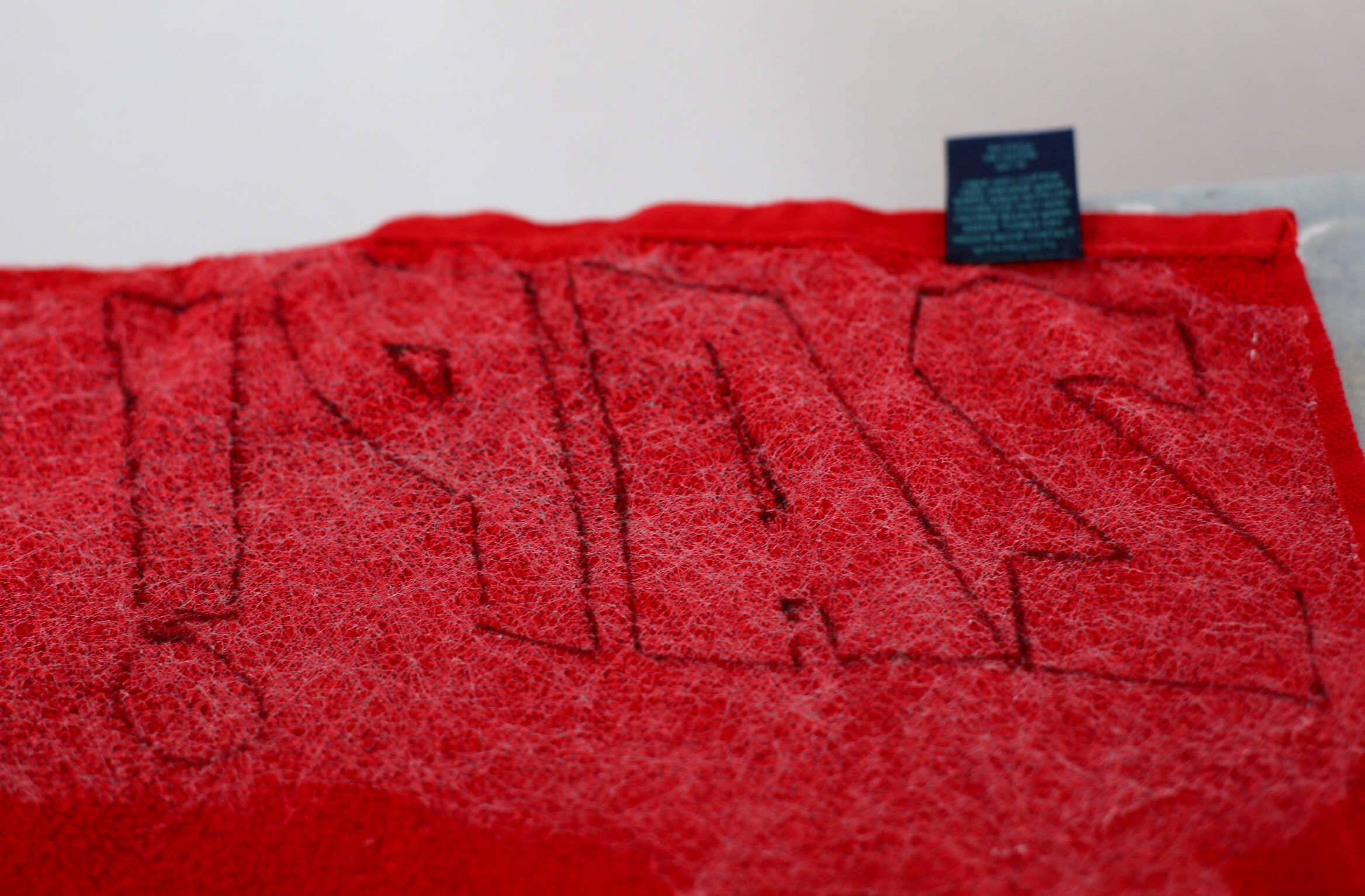
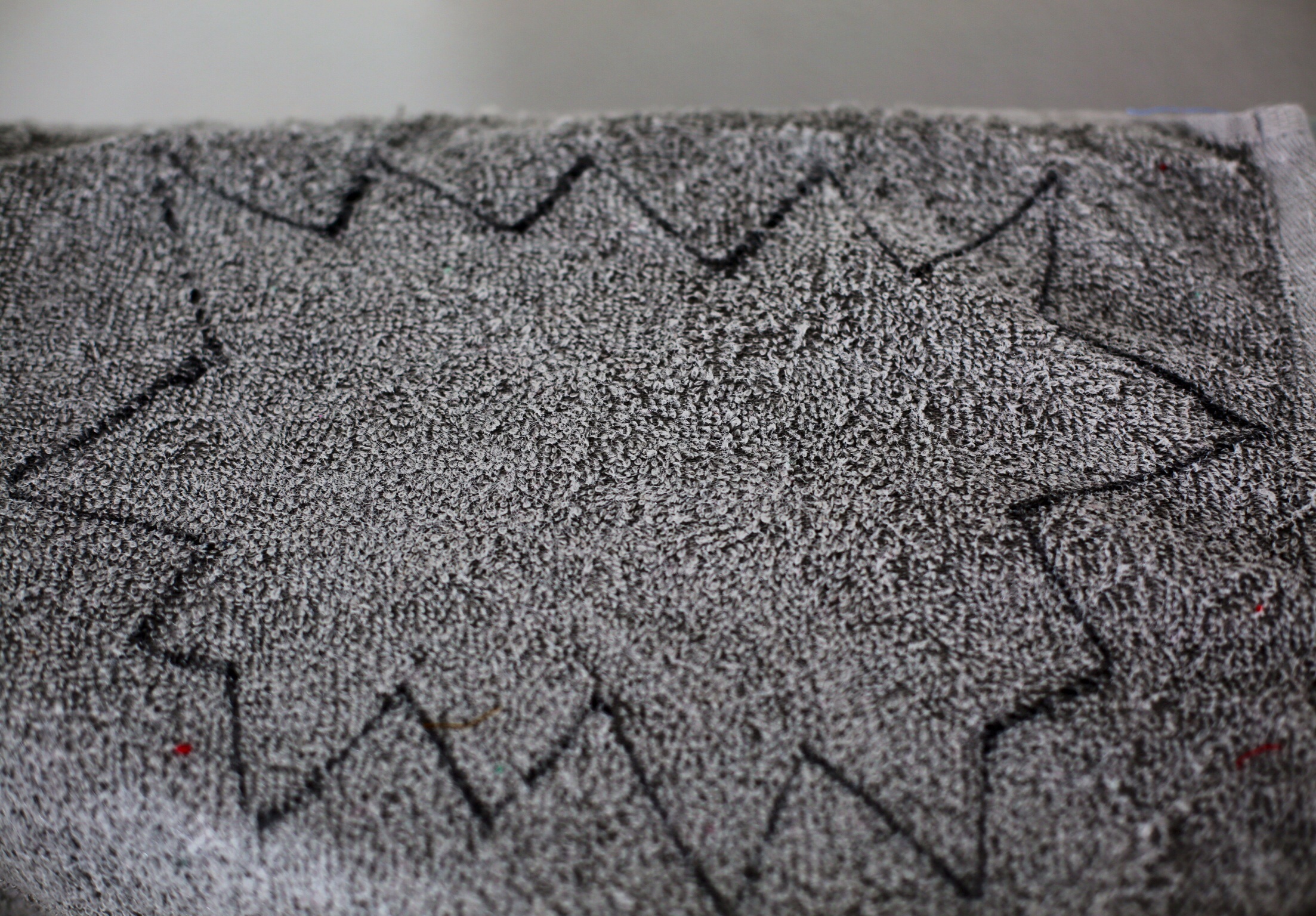
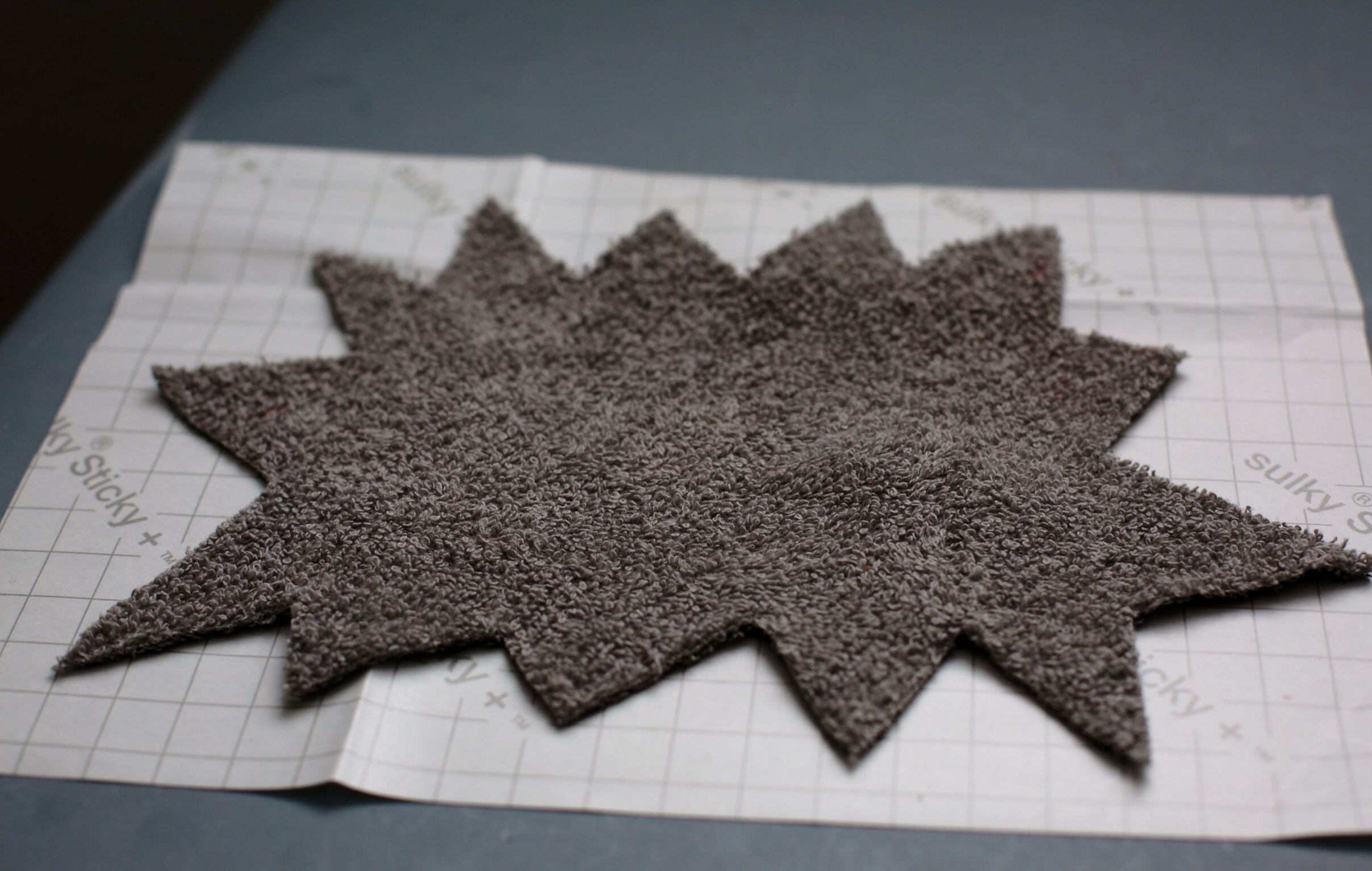
Step One: Cut out the graphic design you will use.  Iron on Misty Fuse to the back of the towels.  Flip the graphic design outline so the front is facing the Misty Fuse side of the towel and draw around it.  Cut out the towel pieces you will use on your shirt.

image

image

image

image

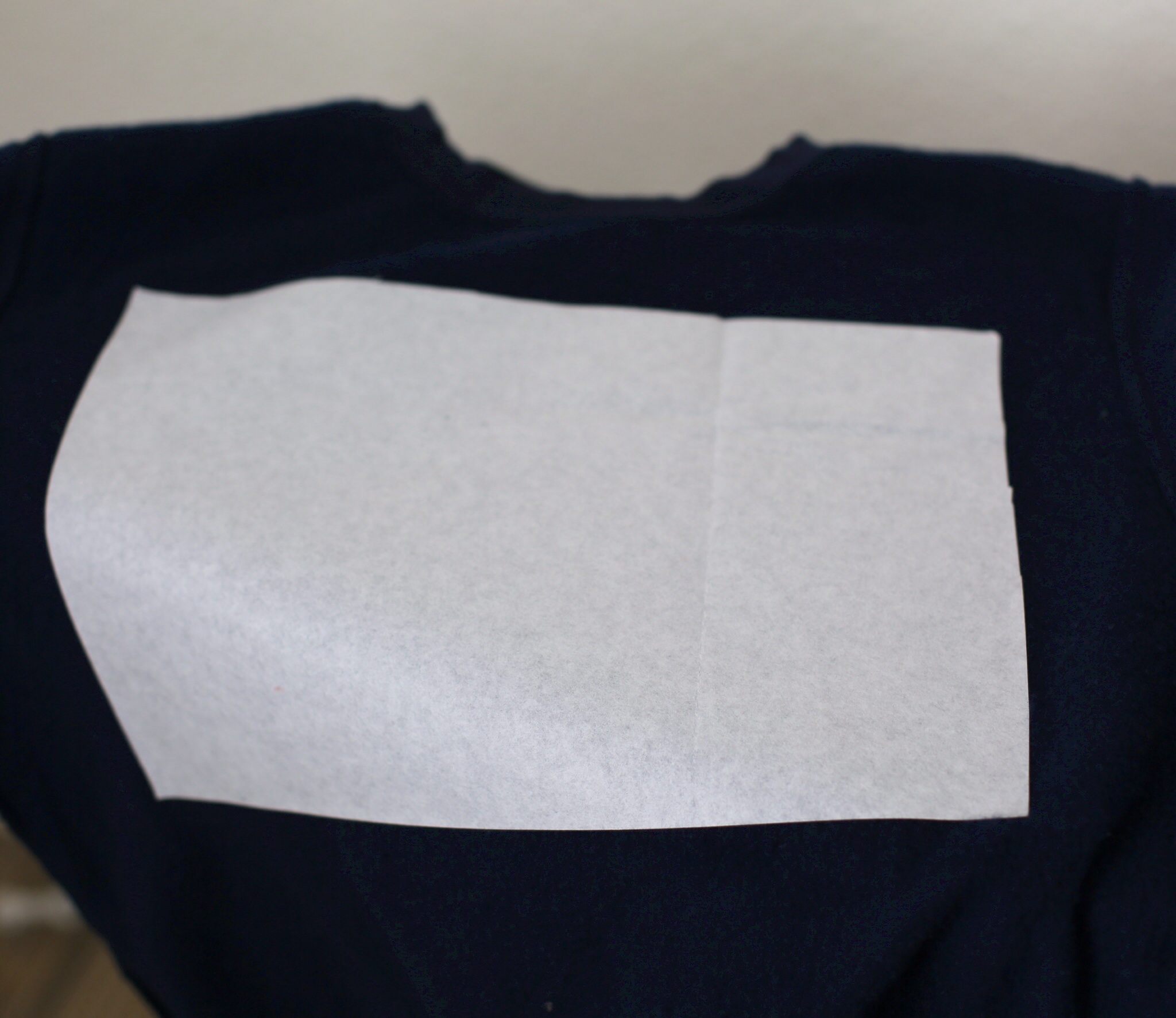
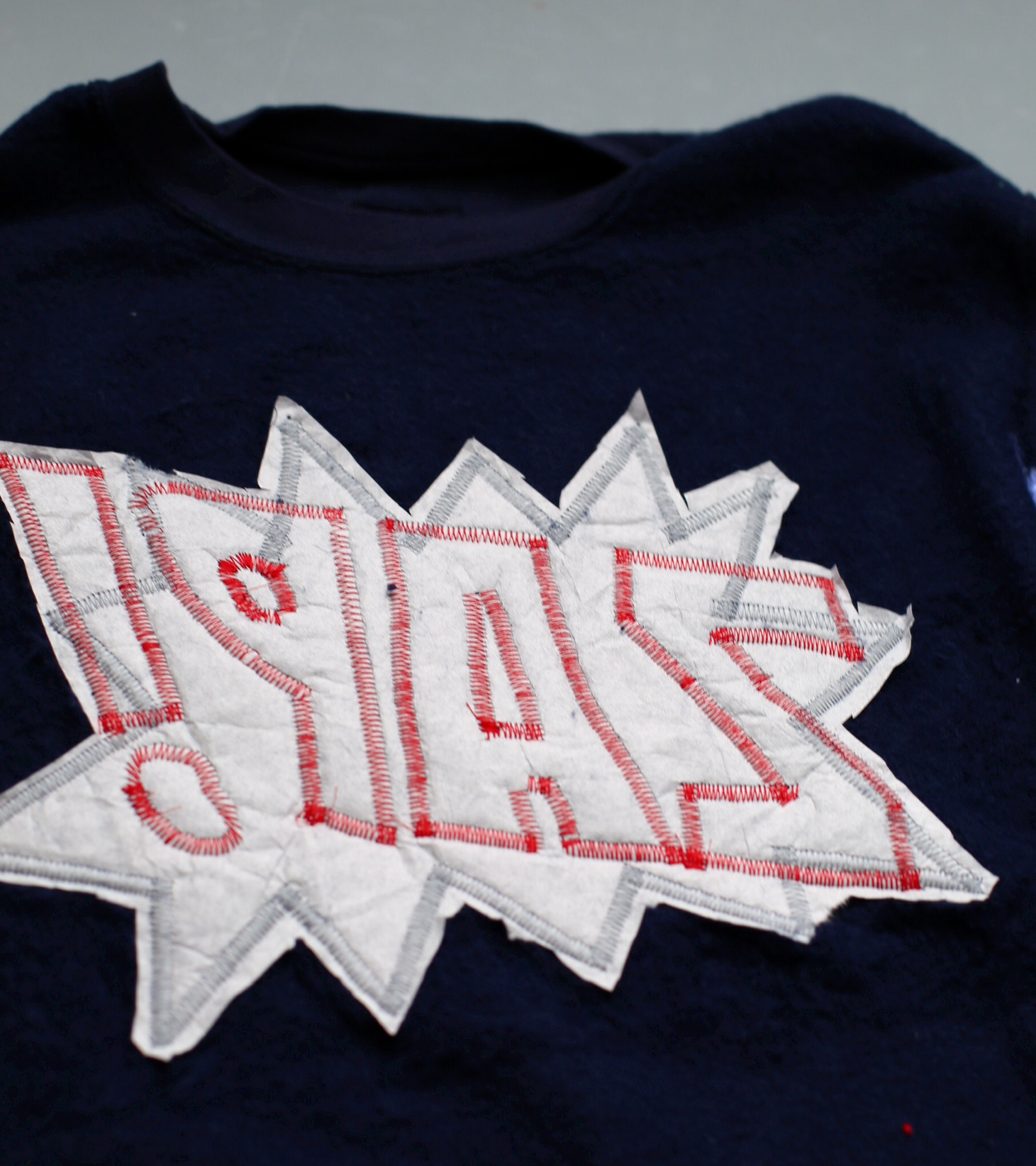
Step 2: Place your cut out graphic over the fusible stabilizer and cut out the appropriate size.  Flip the shirt/sweatshirt inside out and peal off the paper.  Place the fusible backing on the inside of the shirt in the position you plan to put your graphic image.

image

image

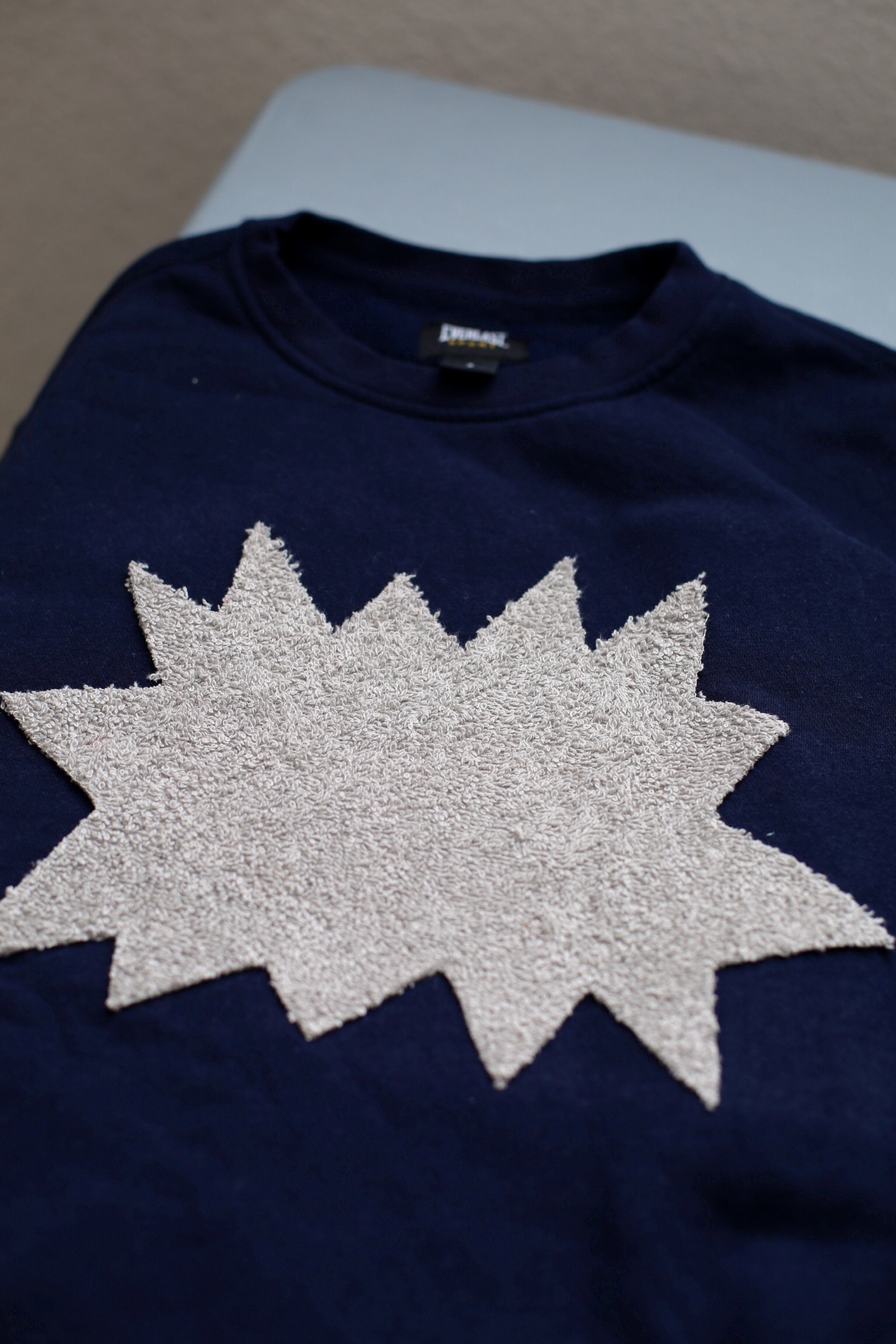
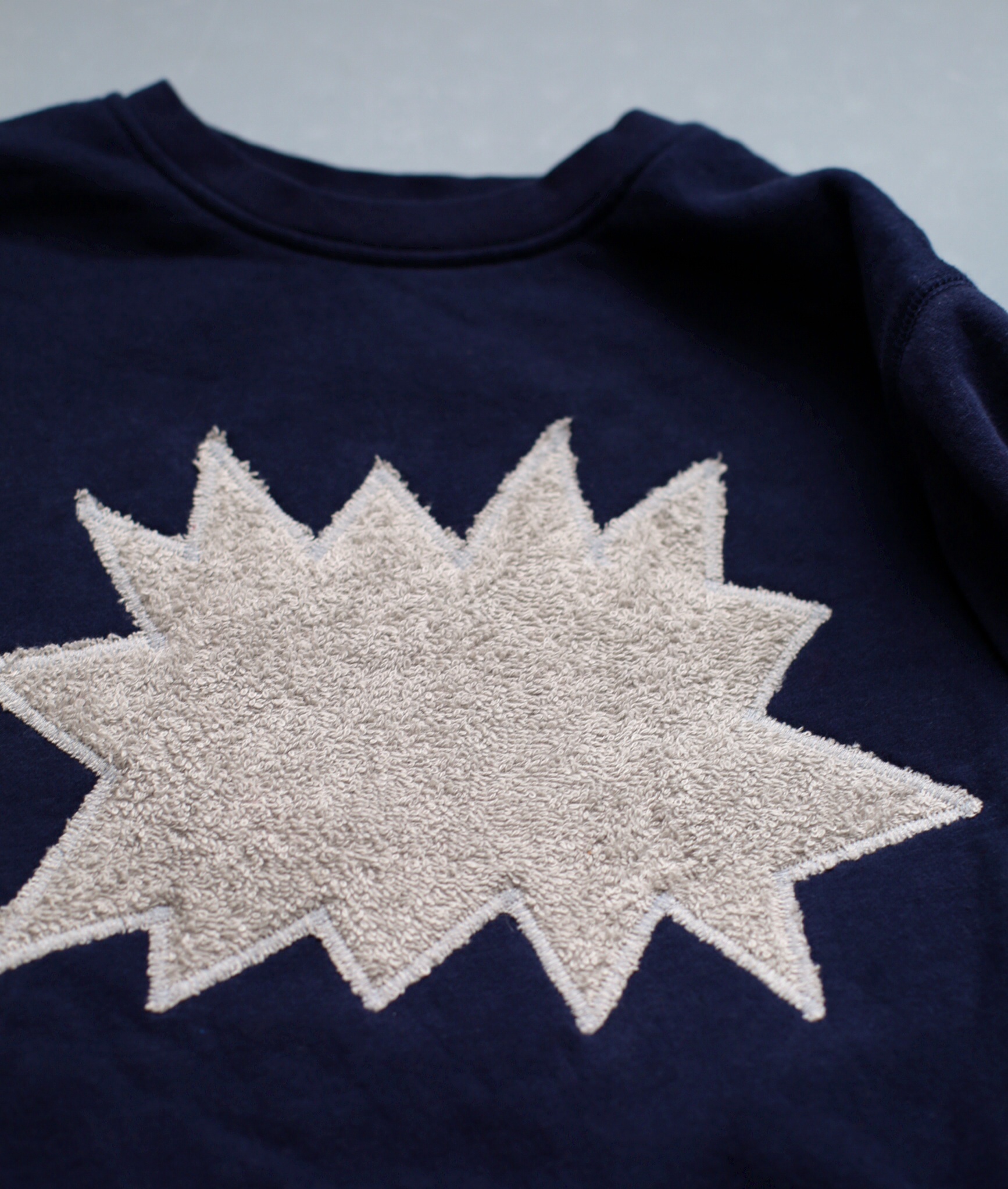
 Step 3: Flip the shirt/sweatshirt right side out again and center your background graphic image making sure to position it over the stabilizer on the inside of the shirt.  Iron on the first background image then using a zigzag stitch with thread that matches the towel, zigzag around all edges.

image

image

Step 4: Repeat the last step with your top graphics and iron in place.  Zigzag using thread that matches your towel around all edges.  When all graphics have been fused and sewn in place use scissors to trim any frayed threads.

image

image

Step 5: Turn the shirt/sweatshirt inside out and trim or pull away the excess stabilizer.

image

Now wasn’t that easy?!  The one thing to remember with these towel shirts is that with time, the fabric can fray a bit and may need a “haircut” to trim them off.  After a few washes this is rarely necessary but I always tell gift recipients when I give them away.
IMG_5224

IMG_5219

IMG_0017

image

image


Happy Creating.
 

Hillary